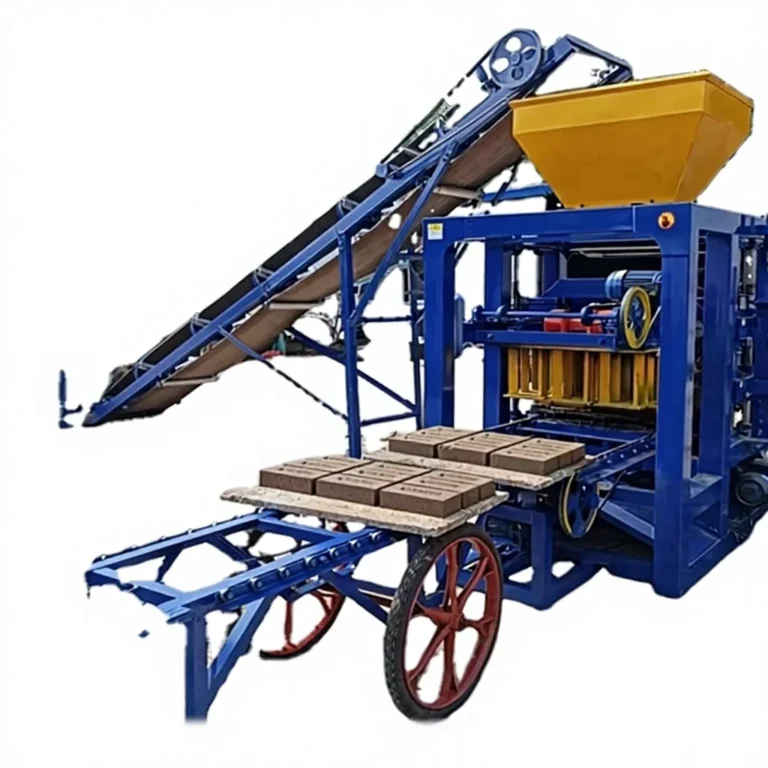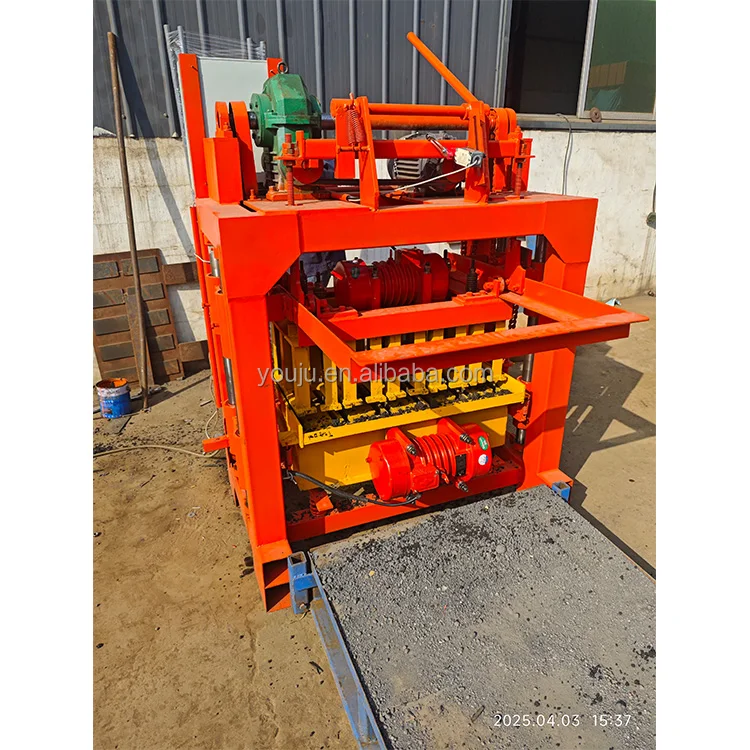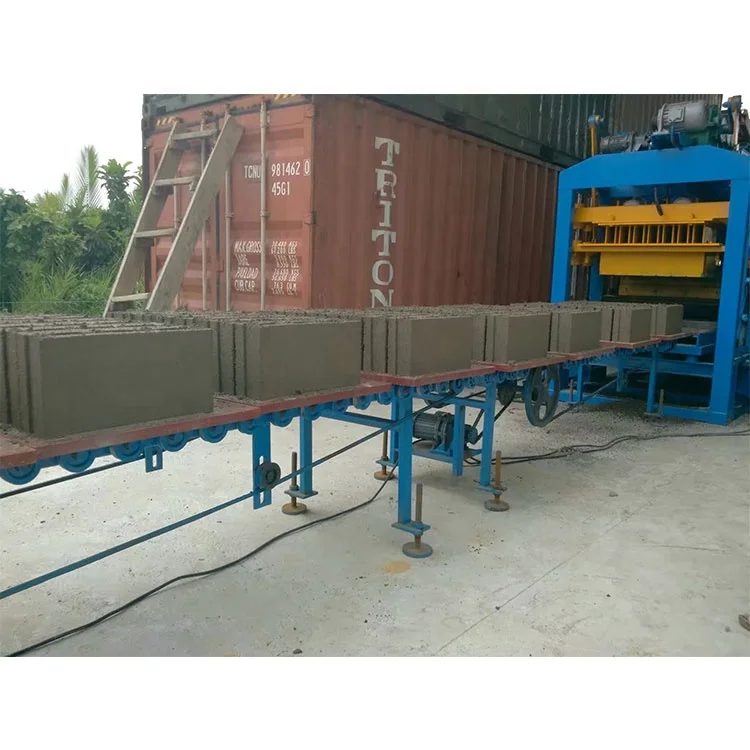
Description
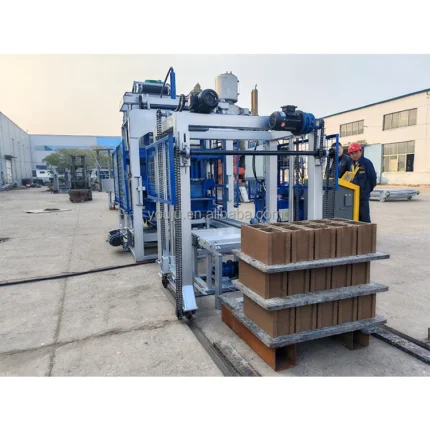
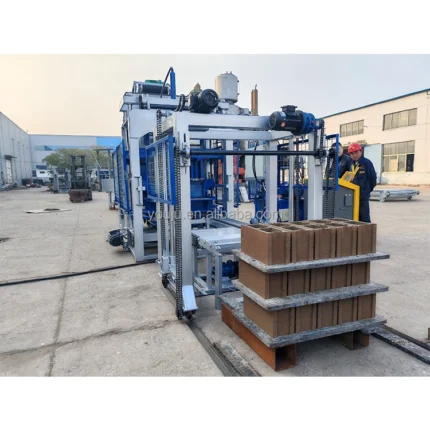
Integrated System Logic — The QTJ4-25 operates as a matched line where PLC timing coordinates press cycling with upstream batching and downstream handling.
Technical Specifications
| Parameter | Value |
|---|---|
| Model | QTJ4-25 |
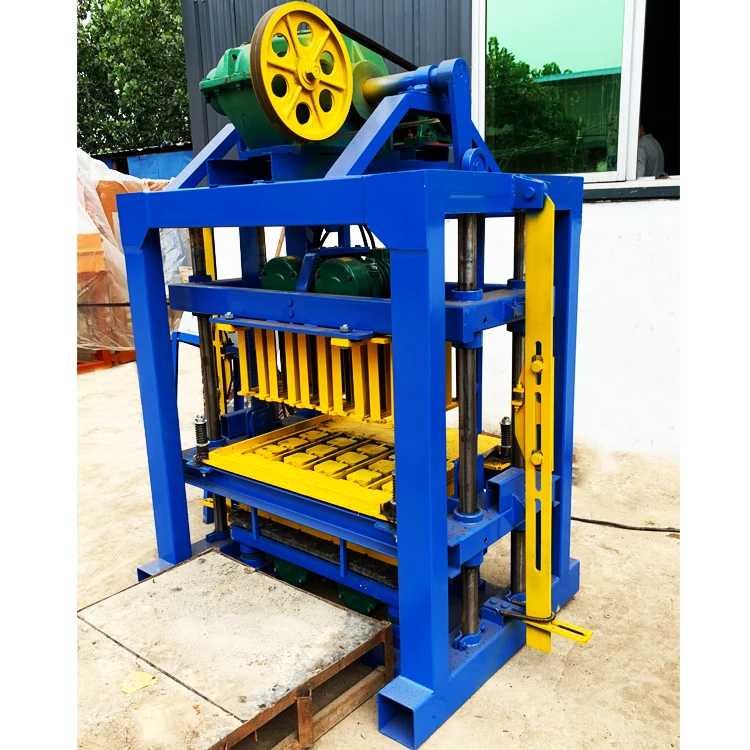
| Product Type | Stationary Block Making Machine |
| Overall Dimension | 306017302580mm |
| Total Mass | 4T |
| Rated Pressure | 16-21MPa |
| Vibration Force | 45.5KN |
| Vibration Frequency | 4200 (r/min) |
| Main Vibration Form | Platform Vibration |
| Pallet Size | 850*550mm |
| Molding Cycle | 25-30 (s) |
| Demolding Method | Vibration |
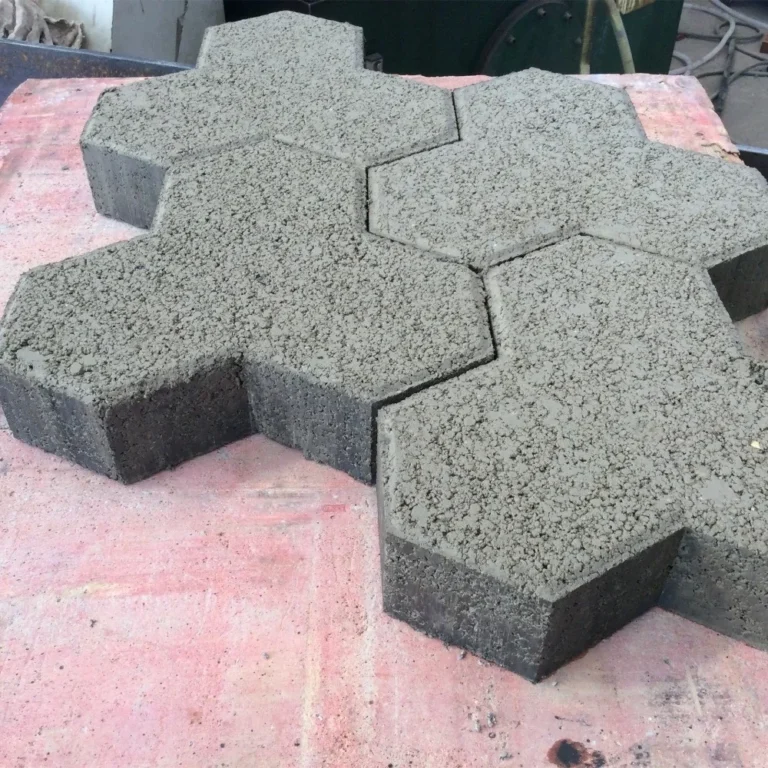
| Applied Products | Concrete blocks, hollow/solid blocks, pavers, interlocking blocks, curbstone, colored pavers |
| Raw Material | Crushed stone, sand, cement, dust, fly ash, gravel, slag |
| Control System | PLC or MCC control (basis to be confirmed) |
| Automation Level | Manual, semi-automatic, or automatic options (basis to be confirmed) |
| Voltage & Frequency | Configurable to target site (basis to be confirmed) |
| Warranty | 1 year |
Application Suitability
| Application | Material or Output |
|---|---|
| Hollow block production | Crushed stone, sand, and cement mix |
| Solid block manufacturing | Fly ash, gravel, and cement blends |
| Paving block and curbstone forming | High-density aggregate and pigment mixes |
| Interlocking brick production | Fine sand and cement ratios |
| Colored paver manufacturing | Cement, sand, and oxide pigments |
The Automation Gap Between Quoted Cycle Time and Actual Daily Shift
A 25-second molding cycle only translates to real output when pallet feeding and stacking do not bottleneck the press.
Plant owners often quote a cycle time based on a single format without accounting for manual pallet handling or stacker delays. When the automatic block machine is left waiting for an operator to place the next pallet, the theoretical cycle time means very little at the end of an eight-hour shift. The control logic must sync every station to the press heartbeat. [NEED_CITE: synchronization of block line station cycle times]
Dialing In the PLC Logic for Stationary Lines
The QTJ4-25 stationary block machine can be configured from basic relay control through to full PLC management. When an owner moves from manual to automated pallet feeding, the control system must manage the exact dwell time the mix needs under vibration before the stacker engages. This coordination removes the operator from the most repetitive tasks and keeps batch-to-batch density consistent.
Why Stacker and Press Timing Must Be Locked Together
I have seen lines where the stacker logic was not perfectly dialed into the press cycle, causing pallets to collide on the transfer belt. The plant sits dead while someone rewrites the sequence. For the QTJ4-25, the molding cycle of 25 to 30 seconds gives the PLC a fixed window to clear the wet block, return the empty pallet, and feed the next mix batch without the press idling. [NEED_CITE: PLC sequence coordination in concrete block lines]
How Vibration Force and Pressure Interact with the Mix
The 45.5kN vibration force combined with 16 to 21MPa rated pressure compacts the raw material into the mold cavity. Platform vibration at 4200 r/min drives the aggregate deep into the corners of interlocking and paver molds. If the local sand is finer than what the default mix assumes, the vibration time must be adjusted in the PLC to prevent surface cracking or low block strength.
The Hidden Cost of an Unmatched Automation Level
Choosing an automation tier without mapping the plant’s actual workforce and curing area leads to expensive idle equipment. If the automatic stacker cubes blocks faster than the local forklift can move them to the curing yard, wet pallets pile up on the line. This forces the PLC to hold the press cycle, turning an investment in automation into a new bottleneck. [NEED_CITE: curing area logistics and block line pacing]
Why Configuration Verification Matters Here
- Matched system specification: The press, mold, pallet, and handling equipment are sized together so the 850×550mm pallet cycle aligns with the curing rack spacing.
- Mix-driven setup: The QTJ4-25 vibration and pressure settings are adjusted against your local aggregate and target block density, not a default catalog table.
- Selectable automation path: You can start with semi-automatic manual pallet handling and add the automatic stacker or cubing station later without replacing the press.
- Control language and voltage: The PLC display language and electrical frequency are confirmed before the control cabinet ships, preventing delays during on-site commissioning.
Documentation & Verification
- Line layout showing station spacing for the 850×550mm pallet flow
- Capacity calculation stating the exact block format and mix assumed
- PLC address map and electrical schematic matching your site voltage
- Factory test record running your specified mold and cycle sequence
- Mold drawing and format list for your selected block profiles
Installation, Commissioning & Support
- Foundation must handle the 4T mass and platform vibration frequency of 4200 r/min
- Dedicated electrical circuit sized for the total power draw of the configured line
- Machine dismantled for container loading and reassembled on your foundation
- PLC parameters and molding cycle set against your raw material during commissioning
- Operator training on mold change sequence and control panel navigation
- Wear parts list covering vibration springs, hydraulic seals, and mold liners
Preparing Your Technical Inquiry
To confirm the right automation tier for the QTJ4-25, please provide your target block formats, the daily output you need for each format, and the local raw materials you plan to use. We also need your site voltage, the control panel language your operators read, and whether your curing area uses standard pallet racking or open yard space. This information allows us to match the PLC logic and handling equipment to your actual shift plan.
Frequently Asked Questions
Q: How do I know the real daily output if only the molding cycle is quoted?
A: The molding cycle of 25 to 30 seconds is only one part of the shift. Real daily output depends on how fast the pallet feeder returns an empty board and how the stacker clears wet blocks. We provide a capacity calculation that states the block format, mix design, and handling speed assumed, so you see the full line throughput, not just the press speed.
Q: Can I start with semi-automatic and add the stacker later?
A: Yes. The QTJ4-25 is built with an upgrade path in mind. You can begin with manual pallet handling and add the automatic stacking or cubing stations later. The PLC can be expanded to manage the new stations without replacing the core press control cabinet.
Q: What happens if the PLC language does not match my operators?
A: If the display language is not confirmed before production, the control panel arrives with text your team cannot read, delaying commissioning. We lock in the HMI language and voltage frequency during the proposal stage so the machine starts producing on day one.
Q: Will the 850×550mm pallet fit my existing curing racks?
A: Pallet size must match your curing yard forklift and rack spacing. We verify the 850×550mm pallet dimensions against your existing handling equipment before finalizing the line layout to avoid double-handling or racking modifications after arrival.