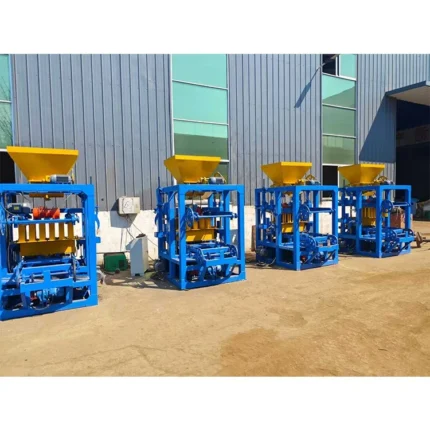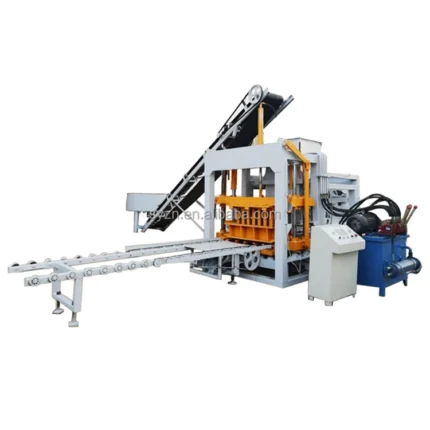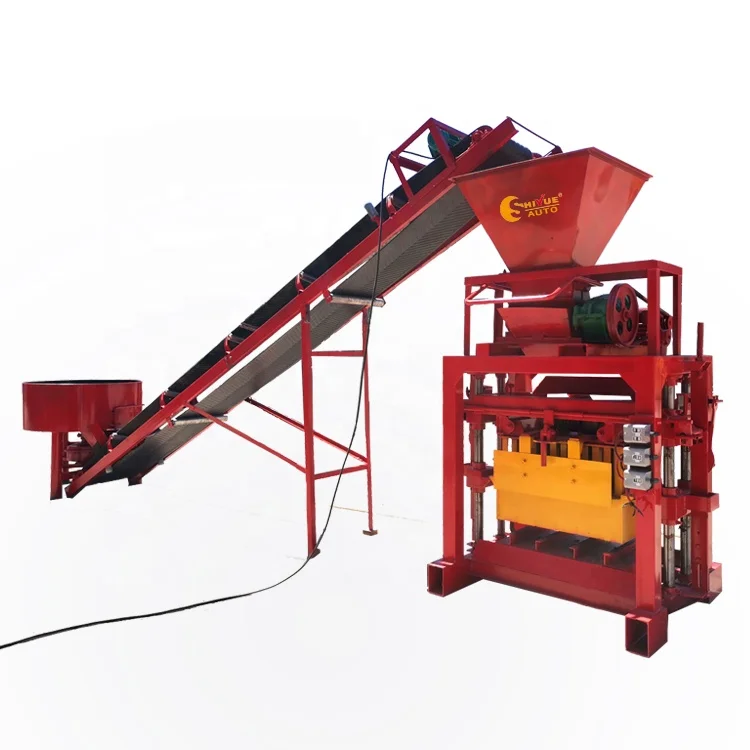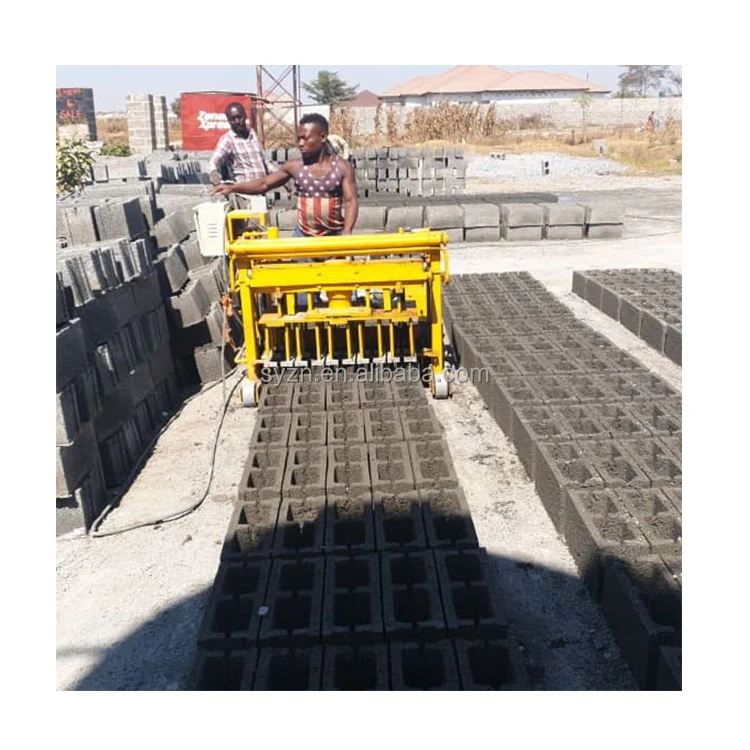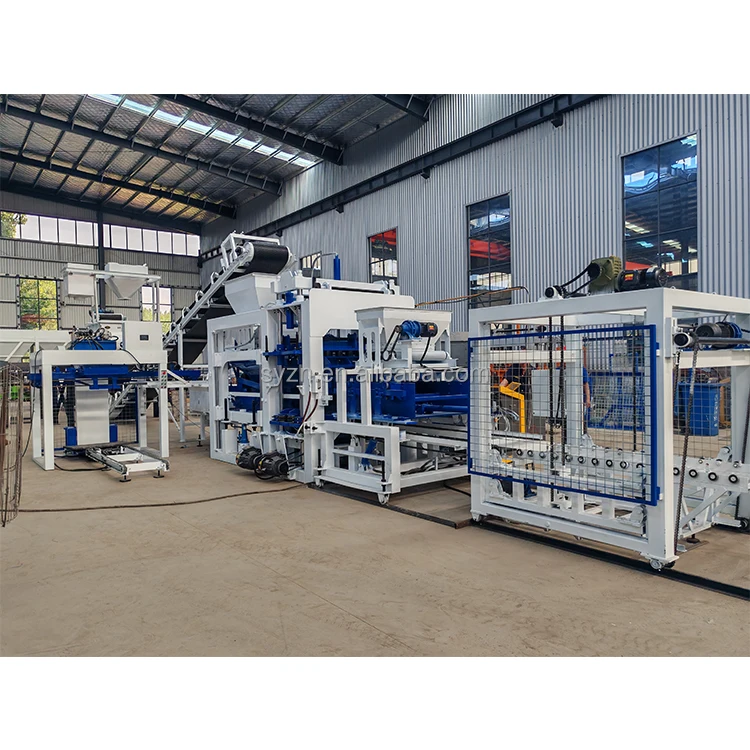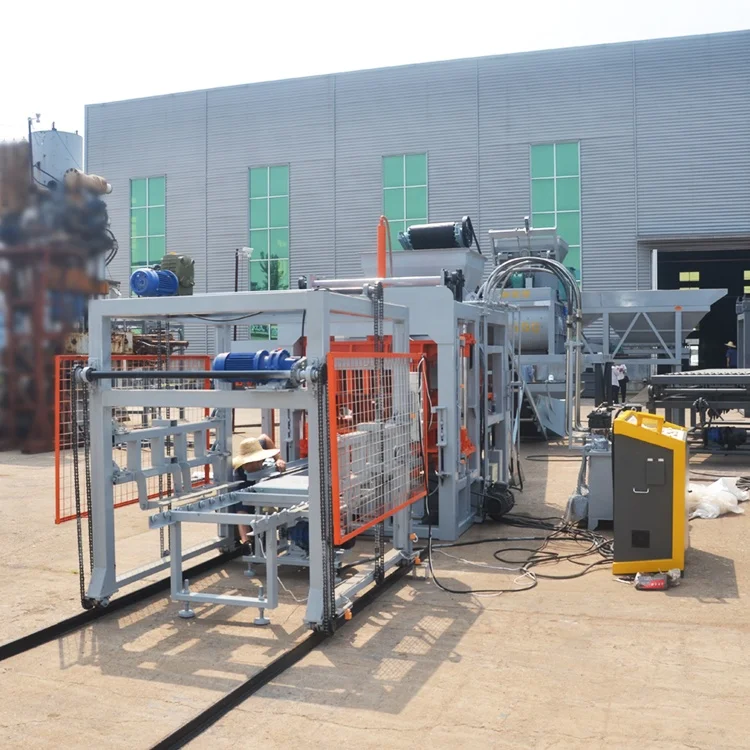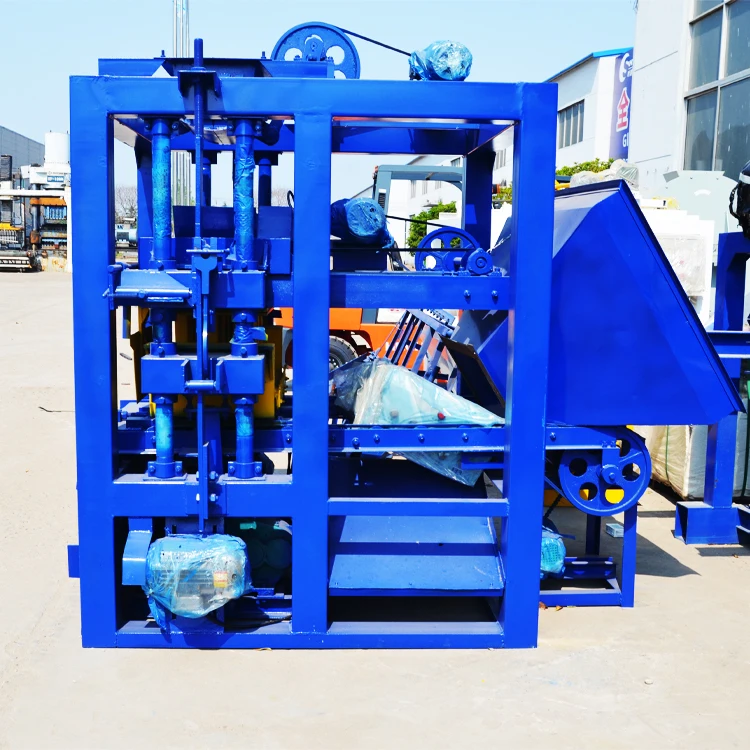

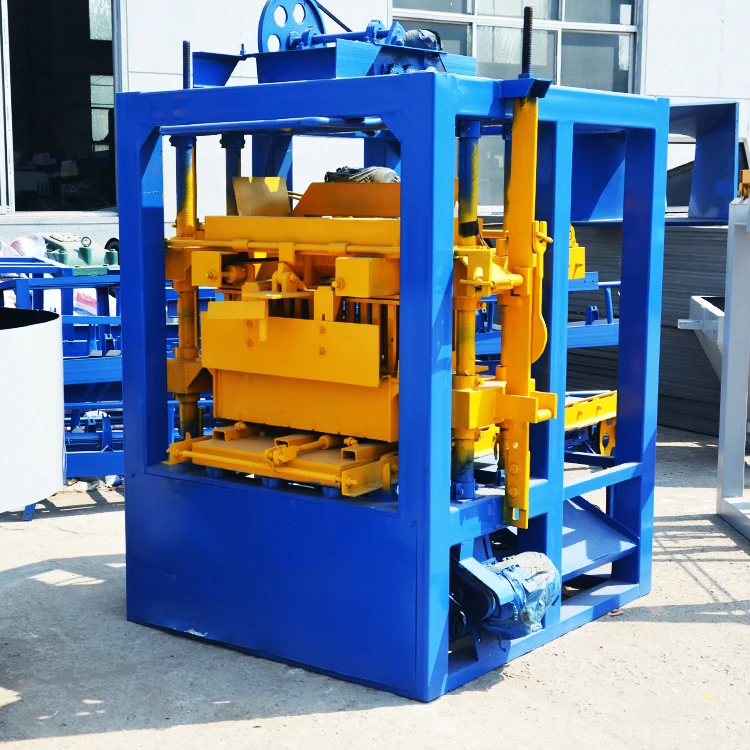
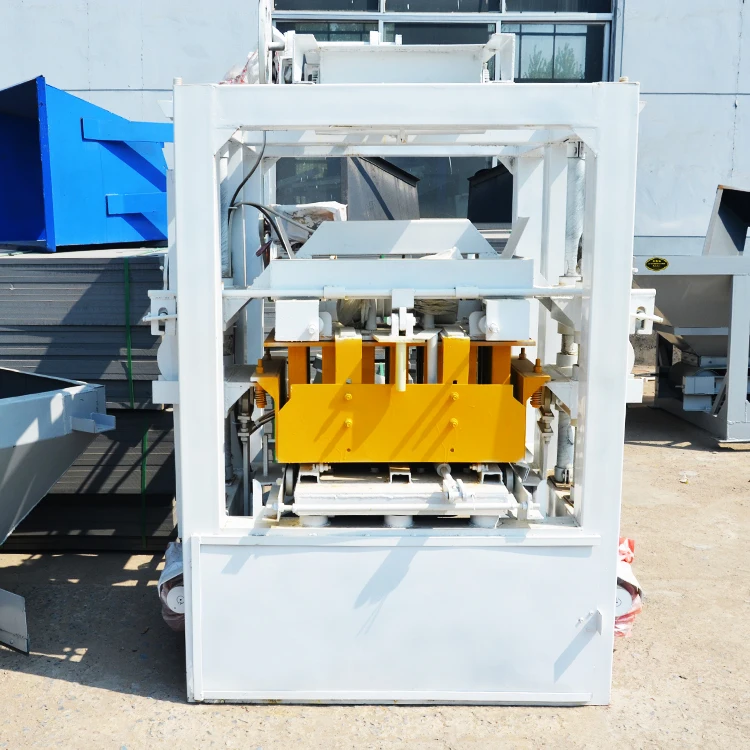

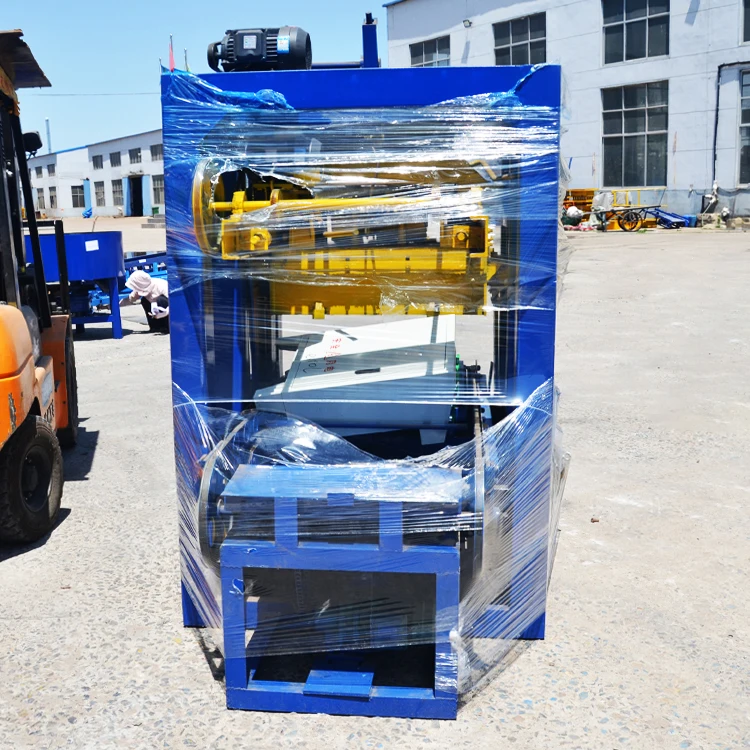
Description
Configured control logic — the QTJ4-26 ships with PLC display language, voltage, and frequency locked to your plant before the control panel is powered on for the first time.
Technical Specifications
| Parameter | Value |
|---|---|
| Model | QTJ4-26 |
| Product Type | Small and Medium Type Block Making Machine |
| Overall Dimensions (L×W×H) | 2060×1730×2580 mm |
| Molding Cycle | 26 s |
| Vibration Frequency | 4200 r/min |
| Exciting Power (Vibration Force) | 35.5 kN |
| Total Power | 14.25 kW |
| Mixer Model | JQ350 |
| Pallet Size | 850×450×20 mm |
| Total Weight | 1800 kg |
| Automation Level | Semi-automatic (four guide pillars, automatic mould movement) |
| Applied Products | Concrete blocks, hollow block (8 inch, 6 inch), solid brick |
| Raw Materials | Crushed stones, sand, cement, dust, fly ash |
| Output Capacity (Hollow Block 390×190×190 mm) | 480 pcs/hr, 3800 pcs/8hr (4 pcs/mould) |
| Output Capacity (Hollow Block 400×150×200 mm) | 600 pcs/hr, 4800 pcs/8hr (5 pcs/mould) |
| Output Capacity (Solid Brick 240×115×53 mm) | 2100 pcs/hr, 17000 pcs/8hr (18 pcs/mould) |
| Hydraulic Pressure | Not applicable (vibration-based forming) |
| Voltage & Frequency | Configurable to buyer’s site supply (basis to be confirmed) |
| Control System | PLC with selectable display language (basis to be confirmed) |
| Standards | CE documentation available where applicable |
Application Suitability
| Application | Material or Output |
|---|---|
| Small to medium-scale block plants | Hollow blocks and solid bricks from crushed stone, sand, cement, and fly ash |
| On-site construction block manufacturing | 8 inch and 6 inch hollow blocks produced directly at housing project locations |
| Building material distributors expanding format range | Solid brick 240×115×53 mm and multiple hollow block sizes on a single machine platform |
| First-time block plant entrepreneurs | Lower-investment semi-automatic line producing consistent concrete masonry units |
What Happens When the PLC Speaks a Language Your Operator Cannot Read
A control panel in the wrong language turns a 30-minute commissioning into a full-day standstill.
I was in Jakarta when a QTJ4-26 arrived at a small block yard outside Surabaya. The PLC screen was still displaying Chinese characters from the factory default. The operator stared at the alarm codes and refused to press start. We lost an entire shift before I could push a firmware update remotely that night [NEED_CITE: PLC interface language options for exported industrial machinery]. Since then, every automatic QTJ4-26 block making machine we dispatch goes through a voltage, frequency, and display-language checklist signed off by the buyer before the crate is closed.
How the QTJ4-26 Removes the Operator from the Mould Cycle
The four guide pillars and automatic mould movement take the heaviest manual task away from the operator. On older vibration machines, the mould had to be lifted, aligned, and lowered by hand, which introduced cycle-to-cycle variation in block height. With the automatic QTJ4-26 block making machine, the PLC controls the mould descent and withdrawal, keeping block dimensions repeatable across an eight-hour shift.
Why Vibration Force and Mix Design Must Be Matched Before the Machine Ships
The dual vibration motors under the mould deliver 35.5 kN at 4200 r/min, which is calibrated for a standard concrete mix of crushed stone, sand, cement, and fly ash. If your local aggregate is lighter — such as volcanic scoria common across parts of Indonesia — the exciting power may need adjustment to reach target block density [NEED_CITE: vibration force requirements for lightweight aggregate block production]. Confirming the mix design during the inquiry stage avoids weak blocks that crack during curing.
Reading the Specs That Actually Determine Daily Output
The 26-second molding cycle is the heartbeat of the line. At four cavities per mould for 390×190×190 mm hollow blocks, that cycle yields 480 pieces per hour. Switch to 400×150×200 mm blocks with five cavities, and the same cycle produces 600 pieces per hour. Solid brick at 18 cavities reaches 2100 pieces per hour. These figures assume continuous pallet feeding and no unplanned stops; real daily throughput depends on how well the mixer, pallet handler, and curing rack keep pace with the press.
The Hidden Cost of Skipping Voltage Confirmation
A 14.25 kW machine wired for 380 V / 50 Hz will not start on a 440 V / 60 Hz supply without a transformer or motor swap. I have seen block yards in the Philippines wait weeks for a replacement motor because the voltage was assumed rather than confirmed [NEED_CITE: industrial voltage and frequency standards across Southeast Asian markets]. The total power draw also determines whether your existing panel board needs an additional dedicated circuit, so confirming electrical specifications early prevents costly rewiring after the machine is already bolted to the floor.
Why Buyers Source the QTJ4-26 from Shandong Shiyue Intelligent Machinery
Block machinery is the single focus here, so the QTJ4-26 is specified as a matched system — machine, mould, pallet, and mixer — rather than assembled from unrelated suppliers. The configuration is set against your actual mix design and target block format, not a catalogue default. Mould drawings cover the formats your market sells, and custom tooling can be produced from buyer-supplied drawings. Automation level is selectable, meaning you can start semi-automatic and add pallet feeding or stacking later. Installation support includes operator training so your crew can run the machine independently from day one.
Documentation & Verification
- Factory test record showing cycle time and block dimensions for your chosen format before dispatch
- Mould drawing and format list confirming every block size the tooling can produce
- Voltage, frequency, and PLC display language confirmation sheet signed before shipment
- Pallet specification matching 850×450×20 mm dimensions to your curing rack and forklift
- Operation and maintenance manual with wear parts list and replacement intervals
Installation, Commissioning & Support
- Foundation pad must support 1800 kg static weight plus dynamic vibration load across the 2060×1730 mm footprint
- Dedicated circuit rated for 14.25 kW total power with voltage and frequency matching the confirmed specification
- Machine arrives with mould and guide pillars pre-assembled; mixer and pallet stack are separate for container loading
- First-run commissioning includes vibration frequency calibration against your local aggregate and mix ratio
- Operator training covers PLC navigation, mould change procedure, and daily greasing of the four guide pillars
- Wear parts list identifies high-wear items with recommended reorder quantities for the first year of production
Starting the Conversation
Tell us which block format your market moves fastest — whether that is 390×190×190 mm hollow block or 240×115×53 mm solid brick — and the daily output you need to hit. Share your local voltage and frequency, the language your operators read, and whether your curing yard already has pallets or forklifts in place. If you can send a sample of your aggregate, we will confirm the vibration settings before the machine leaves the factory.
Frequently Asked Questions
Q: How is the 480 pcs/hr capacity for 390×190×190 mm hollow blocks calculated?
A: That figure comes from a 26-second molding cycle with four cavities per mould, assuming continuous operation. If you switch to 400×150×200 mm blocks with five cavities, the same cycle produces 600 pieces per hour. Solid brick at 18 cavities reaches 2100 pieces per hour. Real output depends on pallet feeding speed and curing rack availability keeping pace with the press.
Q: What voltage options are available, and can the PLC display my local language?
A: The automatic QTJ4-26 block making machine is configurable for common industrial voltages and frequencies across export markets. The PLC display language is set before shipment once you confirm the operator’s preferred language. We verify both items on a written checklist before the control panel is powered on for the final factory test.
Q: How long does a mould change take on the QTJ4-26?
A: The four guide pillars and automatic mould movement simplify the swap, but the exact time depends on operator familiarity and whether the new mould is pre-staged. We provide a step-by-step procedure during commissioning. Mould change time is confirmed during the factory test so you know what to expect before the machine ships.
Q: Can the QTJ4-26 be upgraded with automatic pallet feeding or stacking later?
A: Yes. The semi-automatic platform is designed to accept add-on modules such as automatic pallet feeding and stacking as your production volume grows. The PLC architecture supports these upgrades without replacing the main controller, so the transition is a hardware addition rather than a full system swap.
Q: What raw material mix works best with the 35.5 kN vibration force?
A: The vibration system is calibrated for standard concrete mixes using crushed stone, sand, cement, and fly ash. Lighter aggregates like volcanic scoria may require frequency adjustment to achieve target block density. Share your local material source during the inquiry, and we will confirm the vibration settings during the factory test.