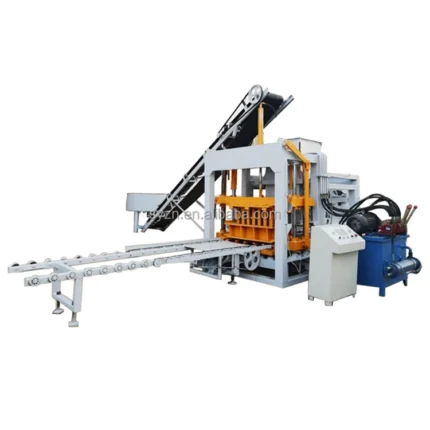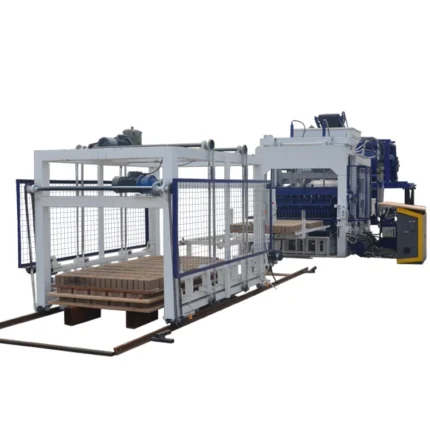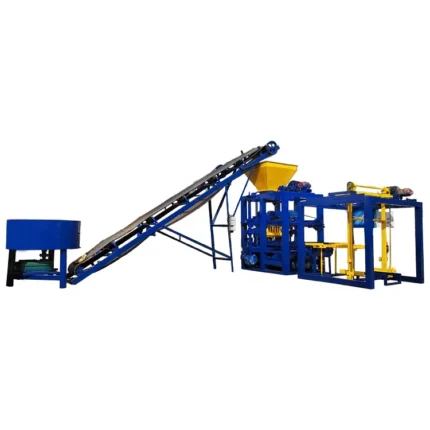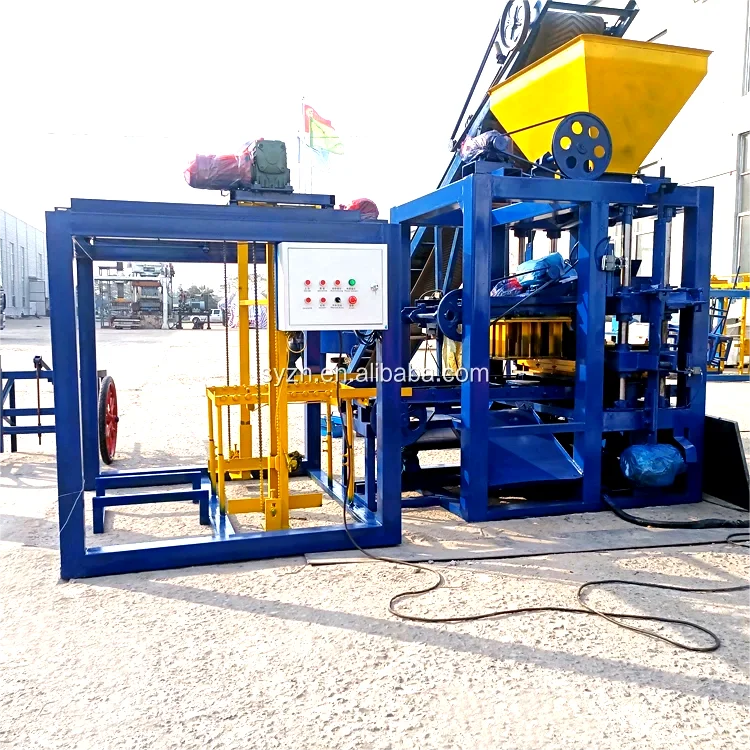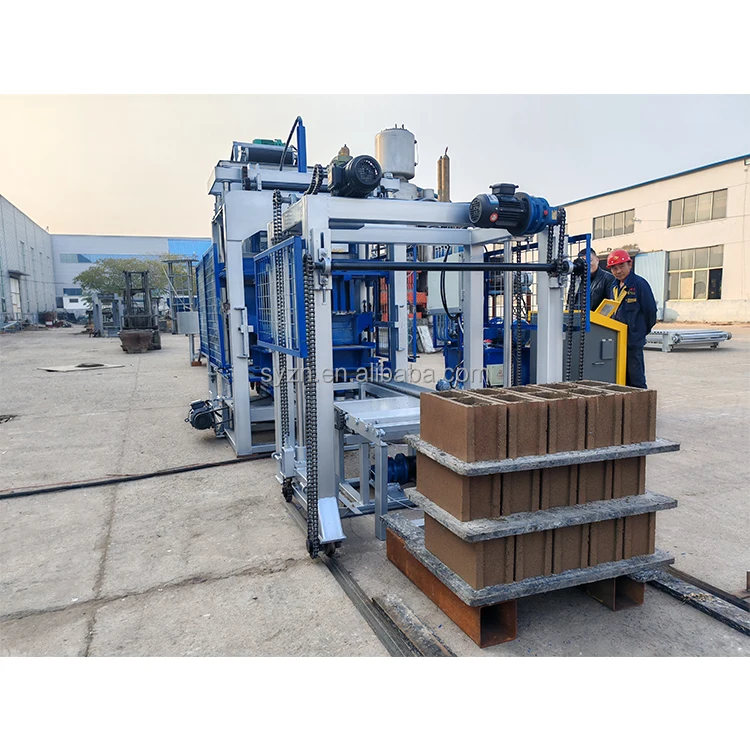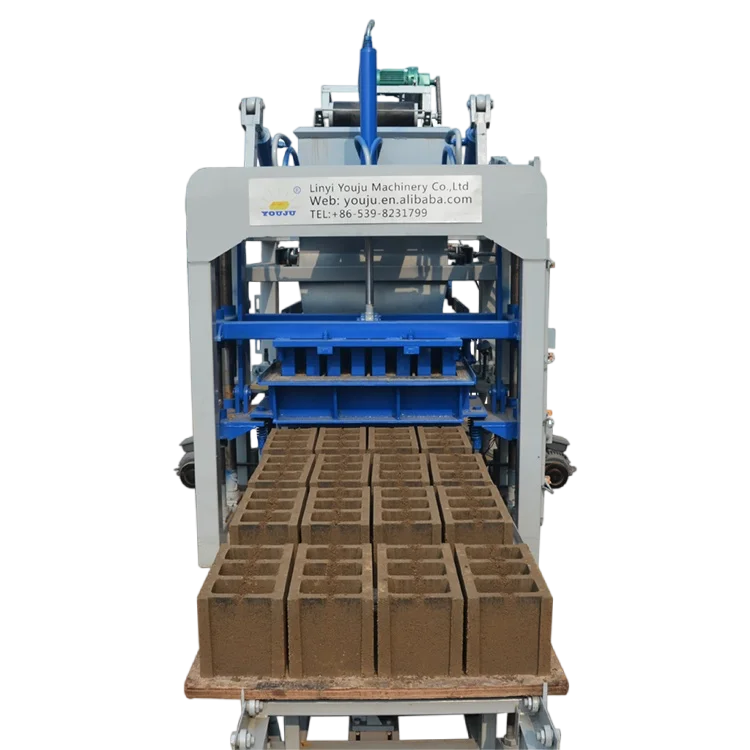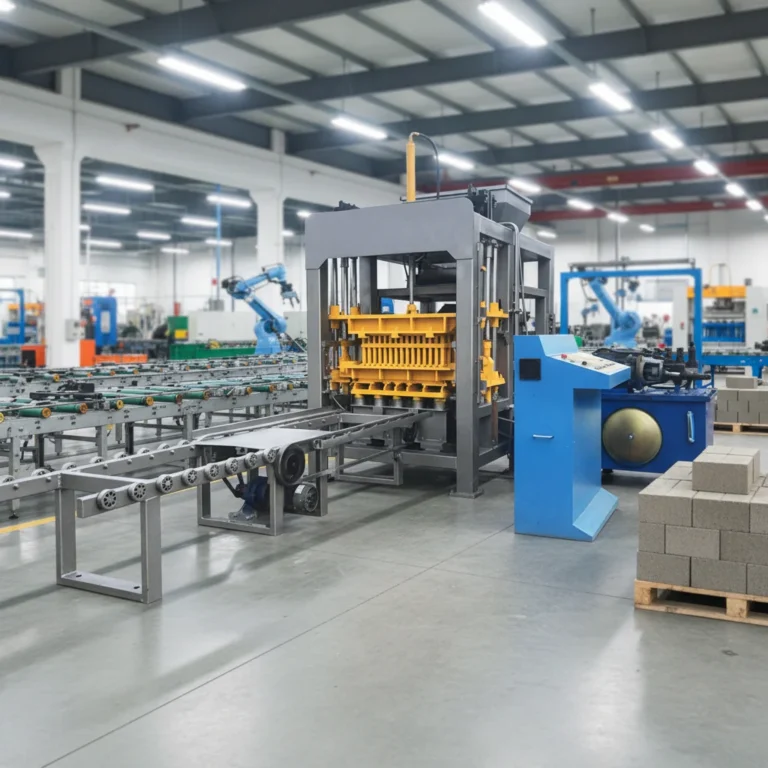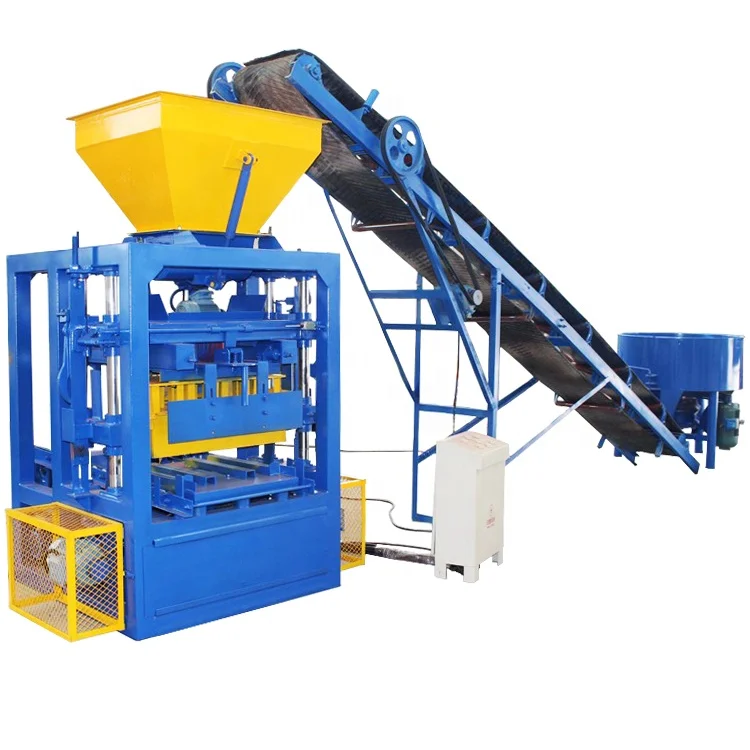
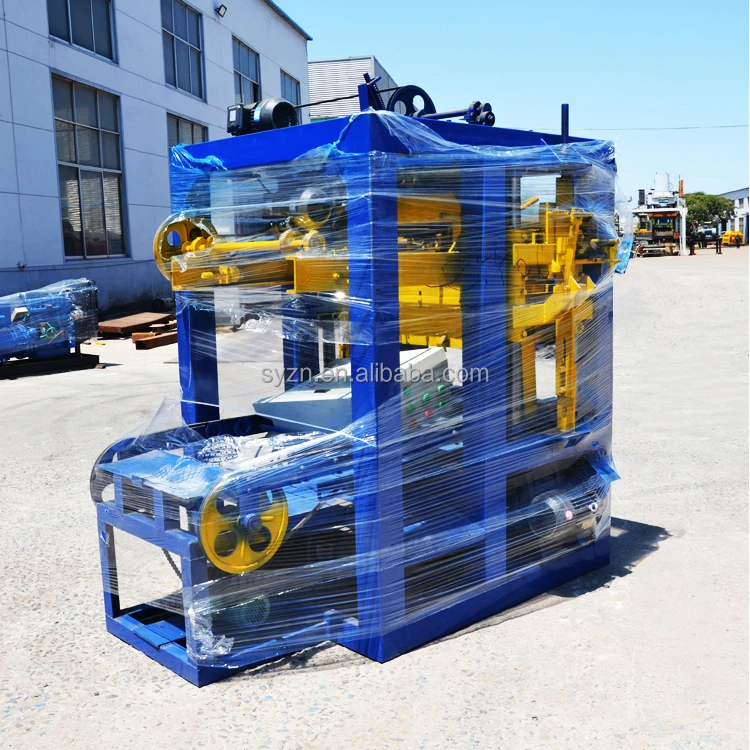
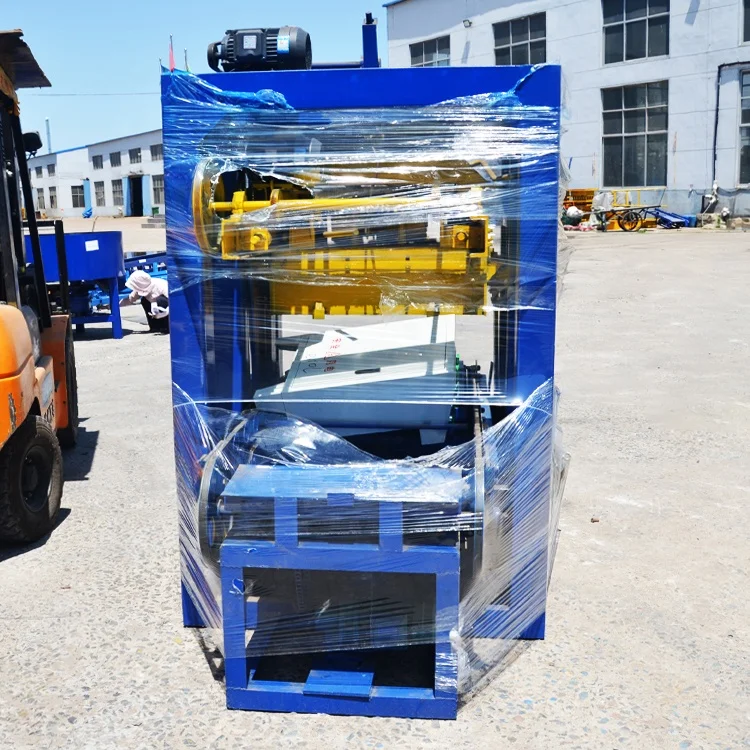
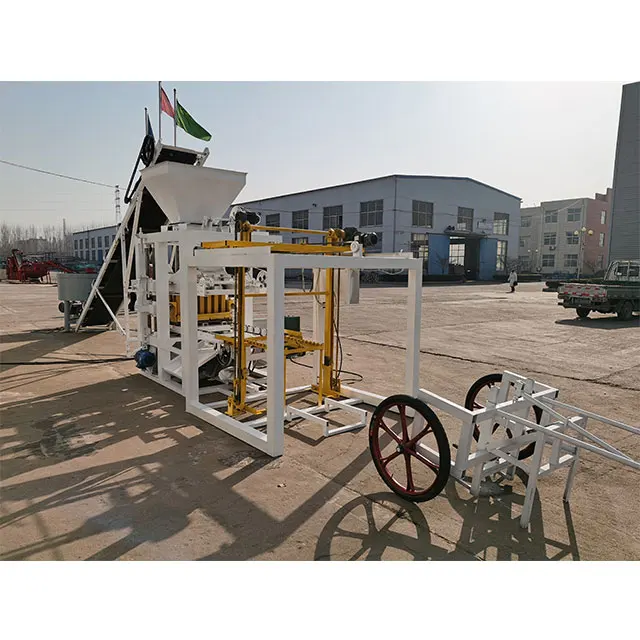


Description
Controlled Cycles, Confirmed — every voltage, frequency, and HMI language on the QTJ4-26 is locked down before the panel leaves the factory, matching the intelligent control focus of this machine class.
Technical Specifications
| Parameter | Value |
|---|---|
| Model | QTJ4-26 |
| Product Type | Concrete Block Making Machine |
| Overall Dimensions (L×W×H) | 2060×1730×2580 mm |
| Molding Cycle | 26 s |
| Vibration Frequency | 4200 r/min |
| Exciting Power (Vibration Force) | 35.5 kN |
| Rated Power | 14.25 kW |
| Mixer Model | JQ350 |
| Pallet Size | 850×450×20 mm |
| Net Weight | 1800 kg |
| Applied Products | Hollow blocks (8 inch, 6 inch), solid bricks, interlocking bricks |
| Automation Level | Semi-automatic (four guide pillars, automatic mould movement) |
| Control System | Configurable (PLC or relay logic, basis to be confirmed) |
| Voltage & Frequency | Configurable to target market (basis to be confirmed) |
| Output Capacity | Up to 480 pcs/h for 390×190×190 mm hollow block, 600 pcs/h for 400×150×200 mm hollow block, 2100 pcs/h for 240×115×53 mm solid brick |
Application Suitability
| Application | Material or Output |
|---|---|
| Hollow block production for wall construction | Crushed stone, sand, cement, fly ash |
| Solid brick manufacturing for load-bearing structures | Cement, stone dust, sand |
| Interlocking brick production for paving and landscaping | Aggregate blends with cement binder |
| Small-to-medium block plant operations | Semi-automatic cycle with manual pallet handling |
| On-site contractor block making | Locally sourced raw materials including fly ash |
Why Voltage and Language Must Be Settled Before the Machine Ships
The automatic QTJ4-26 block machine PLC controlled configuration only delivers consistency when electrical and interface parameters match the destination site from day one.
I spent years on the buyer side, watching new block plants stall for weeks because the control panel arrived wired for a voltage the local grid could not supply, or the operator screen displayed text no one on the floor could read. Those delays cost more than any line item in the quotation. For the QTJ4-26, confirming voltage, frequency, and HMI language is the first engineering step, not an afterthought [NEED_CITE: voltage and frequency standards by export market]. The semi-automatic platform depends on repeatable cycle timing, and that timing is only stable when the electrical supply and control logic are specified to the actual site conditions.
Matching the Control System to the Operator
The QTJ4-26 supports configurable control options, from relay logic for straightforward manual oversight to a PLC-controlled setup that governs the 26-second molding cycle with repeatable precision. For buyers stepping up from fully manual egg-laying machines, this means the automatic QTJ4-26 block machine PLC controlled variant can remove operator timing guesswork from each press stroke. The choice between relay and PLC depends on the skill level of the available workforce and the degree of batch-to-batch consistency the plant requires.
Synchronizing the Press with the Rest of the Line
A 26-second cycle sets the rhythm for everything upstream and downstream. The JQ350 mixer must deliver a fresh batch to the hopper within that window, and the operator handling 850×450 mm pallets must clear and replace them at the same pace. When the automatic QTJ4-26 block machine PLC controlled system manages cycle initiation and vibration duration, the press no longer waits on human reaction time, and the line output becomes a function of the system design rather than operator endurance [NEED_CITE: block plant line synchronization principles].
Reading the Vibration and Molding Specs
The 35.5 kN vibration force at 4200 r/min drives compaction energy directly into the mould cavity through dual motors positioned beneath the mould table. Higher frequency with controlled force produces denser blocks from stiff, low-slump mixes, while the four guide pillars maintain alignment so the mould seals evenly on every stroke. The 26-second cycle is a baseline that assumes the mix reaches the mould promptly and the pallet is in position; any delay upstream extends the real-world interval. Rated power of 14.25 kW covers vibration motors, mould movement, and the mixer draw, which informs the dedicated circuit specification the site electrician must prepare before arrival.
The Cost of Skipping the Confirmation Step
When voltage and control language are left unconfirmed, the machine arrives and the commissioning clock starts ticking against an unreadable interface or a tripped main breaker. I have seen plants run manual overrides for weeks because the PLC could not communicate with the local supply, defeating the consistency that the automatic QTJ4-26 block machine PLC controlled system is built to provide. Mould alignment drifts, cycle timing varies, and block strength scatters across batches — all traceable to a control environment that was never matched to the site [NEED_CITE: commissioning delays from electrical mismatch in exported machinery].
What Sets This Sourcing Decision Apart
Block machinery is our single focus, so the QTJ4-26 is specified as a matched system — press, mould, pallet, and handling — rather than assembled from disconnected suppliers. Configuration is set against the buyer’s actual mix design and local aggregate, not a catalogue default. Voltage, frequency, and control language are confirmed before production begins, documented in a verification sheet that travels with the machine. Moulds are designed for the formats the buyer’s market actually sells, and the automation level is selectable so a plant can start semi-automatic and add pallet feeding or stacking later. Installation support includes operator training on the specific control interface shipped with the unit.
Documentation & Verification
- Line layout and capacity calculation stating the block format assumed for the QTJ4-26
- Voltage, frequency, and PLC display language confirmation sheet signed before production
- Hydraulic and electrical schematic matching the as-built control panel configuration
- Factory test record on the buyer’s specified block format and mix parameters
- Wear parts and mould list with documented replacement intervals for vibration components
Installation, Commissioning & Support
- Foundation pad sized to the 2060×1730 mm footprint with vibration isolation provisions
- Dedicated circuit rated for the 14.25 kW total draw at confirmed voltage and frequency
- Mould and vibration motor alignment check during on-site commissioning of the QTJ4-26
- Operator training on the shipped PLC or relay interface, conducted in the confirmed language
- Vibration motor and guide pillar bushing inspection schedule provided at handover
What to Include in Your Inquiry
Provide the target block format and daily output expectation so the cycle calculation reflects your actual product. Specify the local voltage, frequency, and preferred control language to eliminate commissioning delays. Share your available raw material sources and any existing mixer or pallet inventory so the QTJ4-26 line integrates without redundant equipment.
Frequently Asked Questions
Q: How does PLC control on the QTJ4-26 reduce variation in block density?
A: The PLC governs vibration duration and mould movement timing within the 26-second cycle, removing operator reaction time from each stroke. This produces consistent compaction energy across batches, so block density and strength remain stable throughout the shift regardless of operator fatigue or experience level.
Q: What is the upgrade path from semi-automatic to fully automatic pallet handling?
A: The QTJ4-26 platform supports adding automatic pallet feeding, stacking, and cubing modules as volume grows. The base machine’s 26-second cycle and guide pillar alignment remain unchanged, so upstream and downstream automation integrates without replacing the press or reconfiguring the mould system.
Q: How are voltage, frequency, and control language confirmed before shipment?
A: A verification document specifying electrical parameters and HMI language is signed off before production begins. The factory test record then validates the as-built panel against those confirmed values, ensuring the QTJ4-26 arrives ready for immediate connection to the site supply.
Q: How does the 26-second cycle synchronize with mixing and pallet handling?
A: The JQ350 mixer must deliver a batch within the cycle window, and the operator must clear and replace 850×450 mm pallets at the same pace. Line layout planning accounts for these intervals so the press cycle is not extended by upstream or downstream delays.
Q: What control system options are available for different target markets?
A: The QTJ4-26 can be configured with PLC or relay logic, with HMI language set to the buyer’s requirement. Voltage and frequency are matched to the destination grid standard, documented in the confirmation sheet that accompanies the machine through production and testing.