

Description
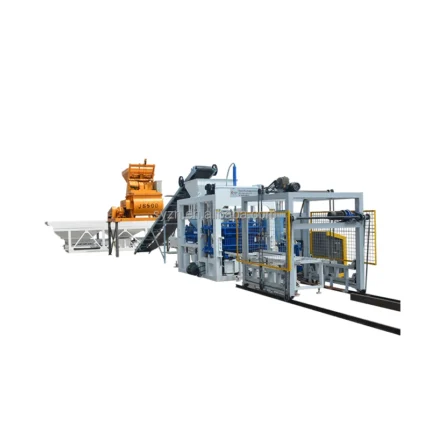
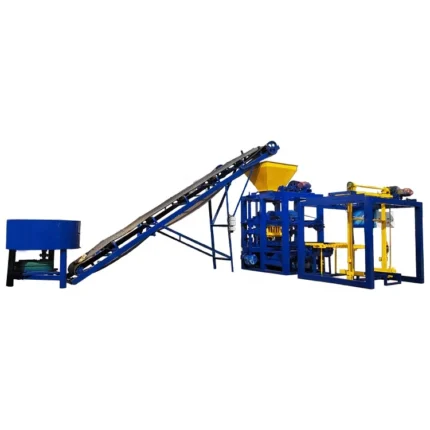
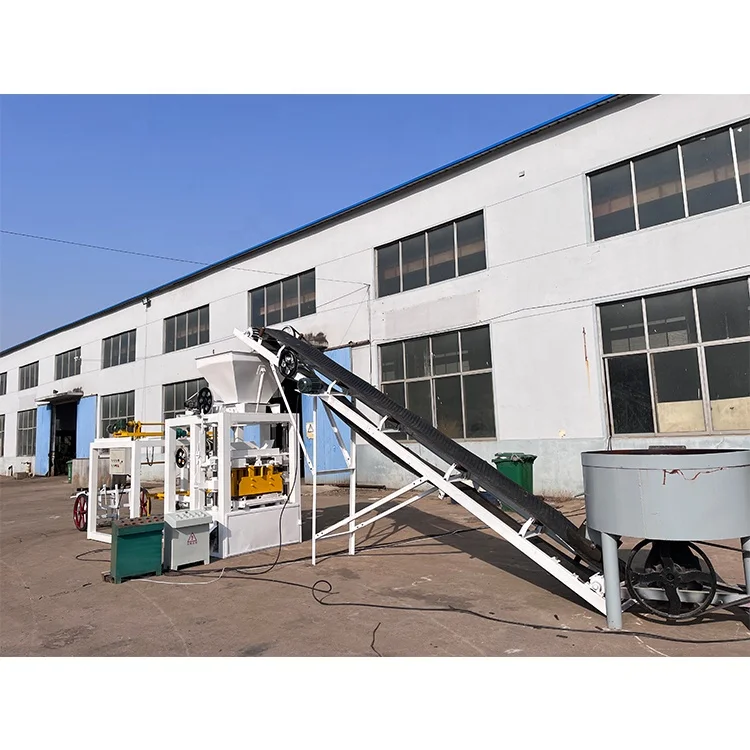
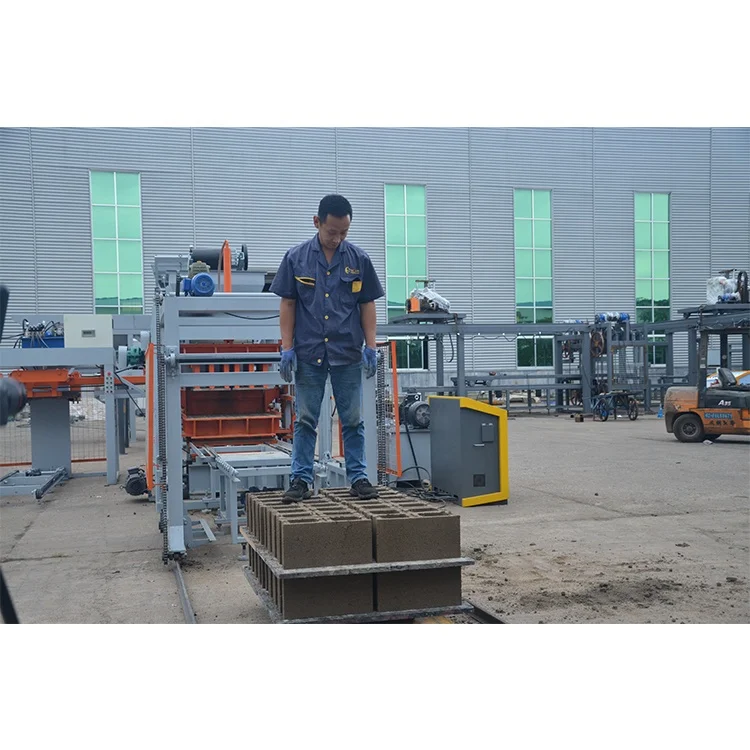
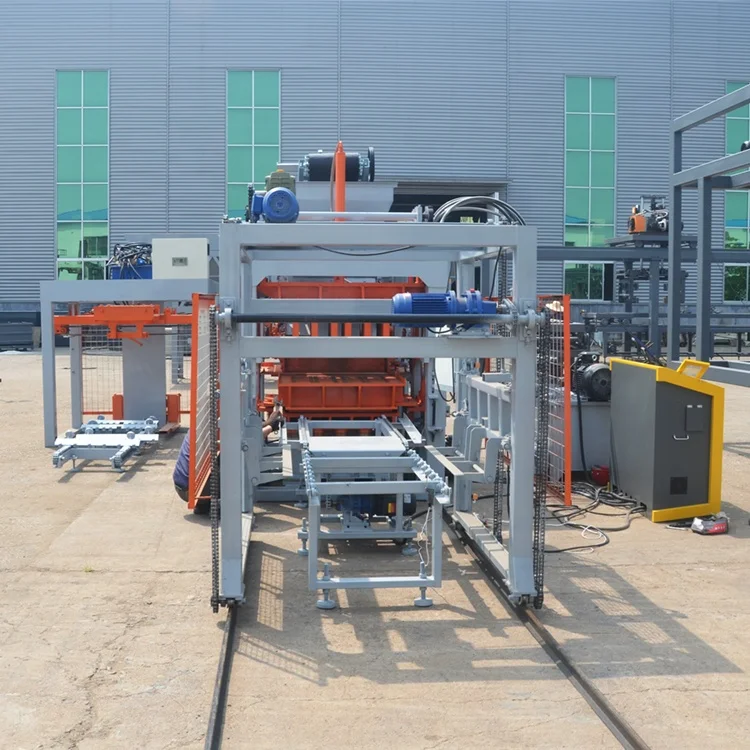
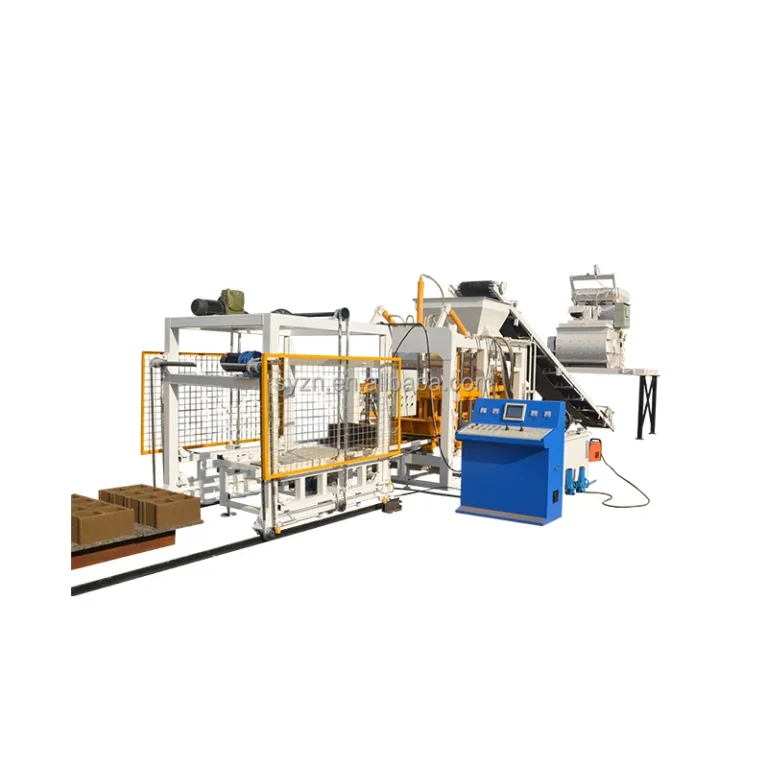
Matched System Control — The QTJ4-35 pairs PLC automation with a specified pallet size, vibration profile, and cycle time so the block plant operates as one coordinated line rather than a collection of mismatched stations.
Technical Specifications
| Parameter | Value |
|---|---|
| Model | QTJ4-35 |
| Product Type | Automatic Concrete Block Making Machine |
| Overall Dimensions (L×W×H) | 1350 × 1460 × 1800 mm |
| Moulding Cycle | 35 seconds |
| Vibration Frequency | 2800 r/min |
| Vibration Force | 30 KN |
| Total Power | 11.15 kW |
| Mixer Model | JQ350 |
| Pallet Size | 850 × 450 × 20 mm |
| Total Weight | 1500 kg |
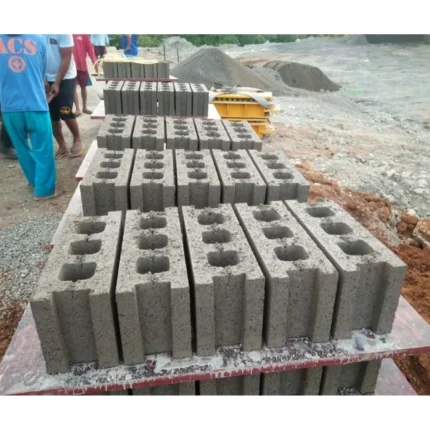
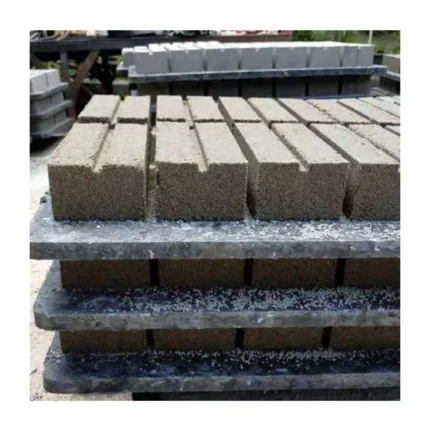
| Applied Products | Hollow block (8 inch, 6 inch), solid brick |
| Raw Materials | Crushed stone, sand, cement, stone dust, fly ash |
| Output Capacity | 408 pcs/hr based on 400×200×200mm hollow block (4 pcs/mould) |
| Output Capacity | 510 pcs/hr based on 400×150×200mm hollow block (5 pcs/mould) |
| Output Capacity | 2100 pcs/hr based on 240×115×53mm solid brick (18 pcs/mould) |
| Control System | PLC configurable (language and voltage to be confirmed) |
| Frame Construction | Four-lead channel steel stander |
| Standards | CE declaration where applicable (basis to be confirmed) |
Application Suitability
| Application | Material or Output |
|---|---|
| Small-to-medium hollow block plants | 8-inch and 6-inch hollow blocks from crushed stone, sand, and cement |
| Solid brick production runs | Standard 240×115×53mm bricks using fly ash or stone dust blends |
| Contractor on-site block making | Local aggregate mixes including quarry dust and river sand |
| First plant entrepreneurs | Semi-automatic operation with an automation upgrade path |
| Format expansion for existing manufacturers | Additional block formats via mould change on a shared pallet size |
Why the Control Language Must Be Locked Down Before Shipping
An automatic concrete block making machine PLC controlled in the wrong language is a manual machine with extra wiring.
I once spent three weeks on a site outside Manila where a block machine sat powered off because the operator could not read the fault codes on the display. The PLC was configured in Chinese, the buyer had assumed English, and nobody confirmed before production. The automatic concrete block making machine PLC controlled interface should be the first item on the shipping checklist, not an afterthought at commissioning. [NEED_CITE: PLC interface language standards for exported industrial machinery]
Removing the Operator from the Cycle
The QTJ4-35 places the moulding cycle, vibration timing, and material feed sequence under PLC management, which means the 35-second cycle repeats identically whether it is the first block of the shift or the last. Consistency in compaction depends less on the operator watching a timer and more on the controller executing the same sequence every time.
Where Automation Ends and Manual Work Begins
This machine automates the press cycle and vibration sequence, but pallet handling, block stacking, and curing rack movement remain manual operations at this tier. That is a deliberate configuration choice — a plant can start with manual pallet transfer and add automatic stacking or pallet feeding as production volume justifies the investment. The upgrade path is built into the electrical architecture rather than requiring a full control system replacement. [NEED_CITE: block production line automation upgrade sequencing]
Reading the Vibration and Pressure Numbers Together
The 30 KN vibration force at 2800 r/min determines how tightly the aggregate pack settles into the mould cavity before the hydraulic head applies pressure. A higher frequency without sufficient force produces surface finish but weak cores; force without frequency leaves air pockets. On the QTJ4-35, these two values are balanced for the 850 × 450 mm pallet area and the 35-second cycle, meaning the mix design must match this energy input to produce consistent block strength across formats.
The four-lead channel steel stander absorbs vibration load across the frame rather than concentrating it at the mould table, which keeps dimensional accuracy stable as the machine accumulates operating hours. Total power draw of 11.15 kW including the JQ350 mixer means the electrical supply must be confirmed at the local voltage and frequency before the motor windings are specified.
The Cost of Skipping the Voltage Conversation
When voltage and frequency are assumed rather than confirmed, the result is a motor that overheats on the first production day or a PLC that fails to initialize. I have seen plants run generators to compensate for a mismatch that should have been resolved during the quotation stage. The electrical configuration of the QTJ4-35 must match the buyer’s supply before production begins, because rewinding motors in the destination country costs more than specifying correctly upfront. [NEED_CITE: voltage and frequency standards by export market]
Why Procurement Flows Through Here
Block machinery is the single focus of the production team behind the QTJ4-35, so the machine, mould, pallet, and handling equipment are specified as one matched system rather than assembled from separate suppliers.
Configuration is set against the buyer’s actual mix design and local aggregate, not pulled from a catalogue default that may not suit regional raw materials.
Mould design covers the block formats the buyer’s market actually sells, with custom drawings accepted for non-standard dimensions.
The automation level is selectable, allowing a buyer to commission the QTJ4-35 in semi-automatic mode and add pallet feeding or stacking modules later.
Installation support includes operator training on the PLC interface, ensuring the control language and fault code literacy are addressed before the first production run.
Documentation & Verification
- Line layout showing capacity per block format with cycle time assumptions stated
- Machine specification sheet with hydraulic and electrical schematic for the QTJ4-35
- Mould drawing and format list covering hollow block and solid brick dimensions
- Pallet specification confirming 850 × 450 × 20 mm dimensions and material grade
- Factory test record demonstrating cycle time and output on the buyer’s selected format
- Operation and maintenance manual in the confirmed control language
Installation, Commissioning & Support
- Foundation must support 1500 kg static load plus dynamic vibration across the channel steel frame
- Electrical supply confirmed at local voltage and frequency before motor and PLC configuration
- Machine ships as a single assembly with mixer, requiring only pallet table alignment on arrival
- First production run supervised to verify 35-second cycle and block density per format
- Operator training covers PLC fault codes, mould change procedure, and daily lubrication points
- Wear parts list and mould inventory supplied at delivery so first replacement is planned in advance
What to Include with Your Inquiry
Provide the block formats your market demands and the daily output you need to meet, along with your local aggregate types and mix proportions. Confirm the available voltage, frequency, and preferred PLC display language at your installation site. If you are upgrading from an existing line, note the current pallet size and curing rack dimensions so the 850 × 450 mm pallet can be evaluated against your setup.
Frequently Asked Questions
Q: What does automatic control actually handle on the QTJ4-35?
A: The PLC manages the moulding cycle timing, vibration sequence, and material feed within each 35-second cycle. Pallet placement, block removal from the pallet, stacking, and curing area transport remain manual at this configuration tier. This keeps the initial investment contained while leaving electrical provision for future pallet feeding and stacking modules.
Q: Which block format does the hourly output figure assume?
A: Output varies by format. The QTJ4-35 produces 408 pieces per hour based on 400×200×200mm hollow blocks at 4 per mould, 510 pieces per hour on 400×150×200mm hollow blocks at 5 per mould, and 2100 pieces per hour on 240×115×53mm solid bricks at 18 per mould. Each figure assumes the standard 35-second cycle.
Q: Can the PLC display be set to the operator’s local language?
A: Yes, the control interface language is confirmed before production begins. This must be documented during the quotation stage so the PLC firmware is loaded correctly at the factory. Changing language after arrival typically requires a technician visit or firmware reload, which delays commissioning.
Q: Is it possible to start with semi-automatic operation and add automation later?
A: The QTJ4-35 electrical architecture supports adding automatic pallet feeding and stacking modules as production volume grows. The upgrade does not require replacing the PLC or rewiring the press cycle, only adding the peripheral modules and their sensors to the existing control system.
Q: How is the electrical system matched to my local power supply?
A: Voltage and frequency are confirmed during the quotation stage and documented before motor winding and PLC hardware selection. The 11.15 kW total power draw including the JQ350 mixer requires a stable supply at the specified configuration to prevent overheating and control system faults during operation.