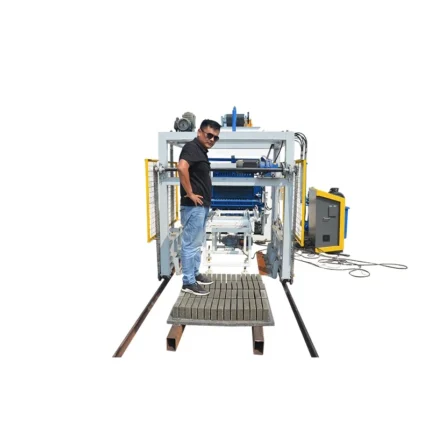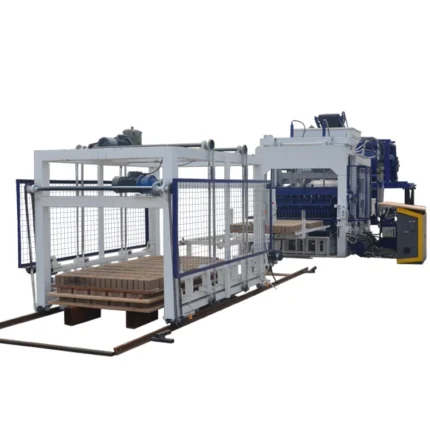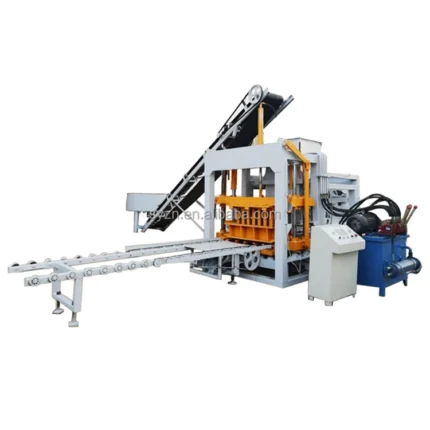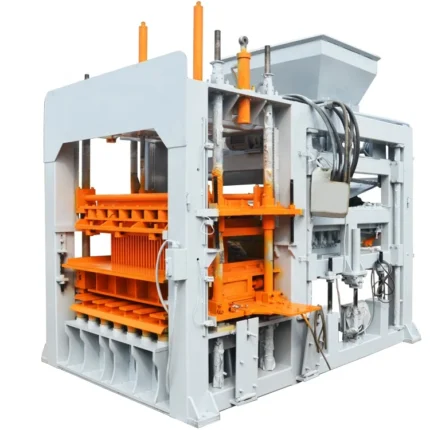



Description
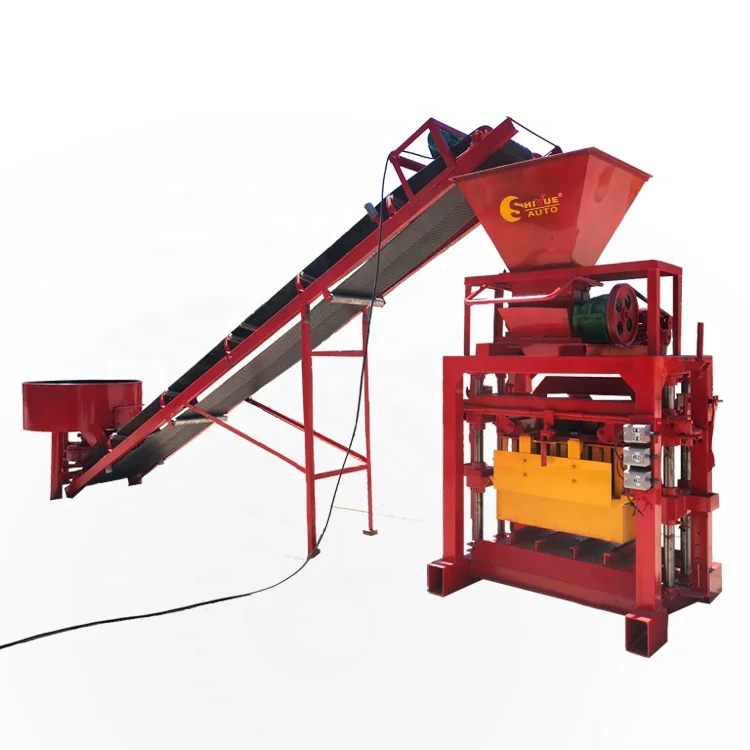
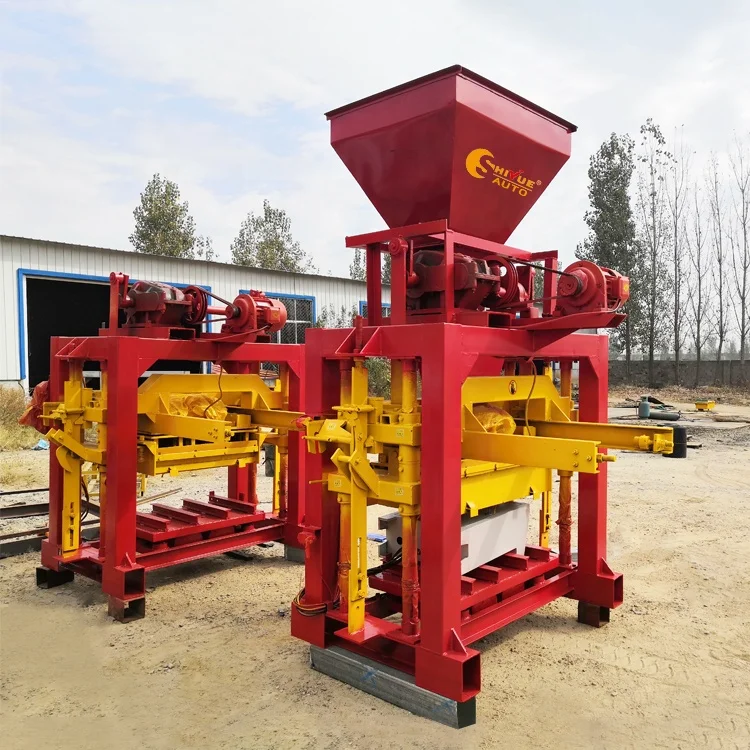
Matched Vibration and Cycle Control — the QTJ4-35 block machine pairs a 35-second molding cycle with 30 kN vibration force at 2800 r/min, tuned for fly ash and crushed stone mixes so density stays consistent across every pallet run.
Technical Specifications
| Parameter | Value |
|---|---|
| Model | QTJ4-35 |
| Product Type | Concrete Block Making Machine |
| Overall Dimensions (L×W×H) | 1350×1460×1800 mm |
| Molding Cycle | 35 s |
| Vibration Frequency | 2800 r/min |
| Exciting Power (Vibration Force) | 30 kN |
| Rated Power | 11.15 kW |
| Mixer Model | JQ350 |
| Pallet Size | 850×450×20 mm |
| Net Weight | 1500 kg |
| Applied Products | Hollow block (8 inch, 6 inch), solid brick, concrete blocks |
| Raw Materials | Crushed stones, sand, cement, dust, fly ash |
| Output Capacity | 408 pcs/h based on 400×200×200 mm hollow block, 4 pcs/mould |
| Output Capacity | 510 pcs/h based on 400×150×200 mm hollow block, 5 pcs/mould |
| Output Capacity | 2100 pcs/h based on 240×115×53 mm solid brick, 18 pcs/mould |
| Automation Level | Semi-automatic with upgrade path available |
| Control System | PLC or relay configurable (confirm before shipment) |
| Voltage & Frequency | Configurable to buyer’s local grid (confirm before shipment) |
| Forming Method | Vibration-only, no hydraulic system |
| Stacking Method | Manual |
Application Suitability
| Application | Material or Output |
|---|---|
| Small-scale hollow block production | Fly ash, sand, crushed stone, cement blends |
| Solid brick manufacturing for local construction | Cement and dust or fine aggregate mixes |
| On-site block production for housing projects | Locally sourced crushed stone and cement |
| First plant setup for entrepreneurs | Standard concrete mix designs with 8 inch and 6 inch formats |
| Format expansion for existing concrete product lines | Hollow block and solid brick added to current range |
Why Voltage and Language Must Be Locked Before the Crate Closes
Confirm PLC display language and voltage in writing before production starts — not after the automatic QTJ4-35 block machine arrives on your dock.
I once watched a semi-automatic line sit idle for three days in South America because the PLC defaulted to English while the operator only read Spanish. Remote video calls, language pack uploads, and a very patient electrician later, the press finally ran. That delay cost more than a round-trip flight would have. Voltage mismatches are worse — a 380V/50Hz machine plugged into a 440V/60Hz grid burns out motors before the first cycle completes [NEED_CITE: voltage and frequency standards by export market]. These two questions belong at the top of any PLC controlled block machine inquiry, right after block format and daily volume.
What Automation Actually Removes from the Operator
The QTJ4-35 ships as a semi-automatic press, meaning the vibration, cycle timing, and material feed can be managed through the control system while pallet handling remains manual. Adding a PLC controlled block machine package introduces programmable cycle sequences, fault diagnostics on the display, and repeatable timing that does not drift as the shift wears on. The operator no longer guesses when to release the mould — the controller handles it every 35 seconds.
Where the Upgrade Path Leads
Start with manual pallet feeding and hand stacking, then add automatic pallet feeding when volume justifies it. The frame and vibration assembly on this automatic QTJ4-35 block machine stay the same; only the peripheral stations change. Full stacking and cubing modules bolt on later without replacing the press itself. This staged approach keeps initial investment contained while leaving room to reduce labour as demand grows [NEED_CITE: typical automation upgrade sequences for semi-automatic block lines].
Reading the Numbers That Actually Matter
The 35-second molding cycle governs how fast each pallet clears the press, but the real constraint in daily output is how quickly an operator can remove the finished pallet and slide a fresh one in. The 30 kN vibration force at 2800 r/min is what compacts the fly ash and crushed stone mix into a dense block — insufficient force leaves hollow blocks fragile at the corners, while excessive force cracks thin-wall formats. Pallet size at 850×450×20 mm must match the curing racks already in your yard; a mismatched pallet means rebuilding your entire curing area or running two separate pallet inventories. The JQ350 mixer feeds the press, and its batch capacity should align with the cycle rate so the hopper never starves mid-run.
The Cost of Skipping Configuration Confirmation
When voltage, frequency, and control language arrive unconfirmed, commissioning stalls before the first block is pressed. Operators standing around an idle machine burn wages without producing inventory. Pallets that do not fit existing curing racks force a second capital purchase nobody budgeted for. A vibration force mismatched to the local aggregate produces blocks that fail compressive strength tests on site — a problem discovered only after the first batch is already stacked and sold [NEED_CITE: block compressive strength testing standards].
Why Buyers Source This Line Here
Block machinery is the single focus, so the QTJ4-35 press, JQ350 mixer, pallets, and moulds are specified as one matched set rather than assembled from unrelated suppliers. Configuration starts from the buyer’s actual mix design and local aggregate, not a catalogue default that assumes materials you cannot source. Moulds for every format the local market sells — including custom drawings — ship with the machine so format changes do not cancel out a full shift. Automation level is selectable at order, meaning a buyer can start semi-automatic and add PLC control, automatic pallet feeding, or stacking later. Every unit ships with voltage, frequency, and display language confirmed in writing before the crate is sealed.
Documentation & Verification
- Factory test record on your specific block format before dispatch
- Mould drawing and format list matching your local market dimensions
- Voltage, frequency, and PLC language confirmation signed off before production
- Pallet specification sheet matched to your existing curing rack spacing
- Operation and maintenance manual with wear parts and mould replacement list
Installation, Commissioning & Support
- Foundation pad leveled to 1350×1460 mm footprint with anchor bolt provisions
- Dedicated electrical circuit sized for 11.15 kW rated power at confirmed voltage
- Machine shipped as single unit at 1500 kg — forklift unload at site required
- PLC language pack and cycle parameters set during on-site commissioning visit
- Operator training covers mould change procedure and daily vibration assembly inspection
- Wear parts list supplied with recommended reorder intervals for vibration pads
Before You Send the Inquiry
To size the QTJ4-35 correctly, share the block formats your market actually buys — not just hollow block, but the specific dimensions and wall thickness. Confirm your local voltage and frequency, the language your operators read, and whether your curing yard uses pallets close to 850×450 mm. Let us know if you are feeding an existing mixer or need the JQ350 included, and whether you plan to add automatic pallet handling later so the frame can be pre-drilled for the upgrade.
Frequently Asked Questions
Q: What automation level does the QTJ4-35 ship with, and what can be added later?
A: The QTJ4-35 ships as a semi-automatic block machine with manual pallet handling. Buyers can specify PLC control, automatic pallet feeding, and stacking modules at order or add them after installation. The press frame accepts these upgrades without replacement, so automation scales with your production volume over time.
Q: How is PLC display language and control configuration confirmed before shipment?
A: Voltage, frequency, and PLC display language are confirmed in writing during the order stage, before production begins. The factory tests the control panel with these settings loaded and includes a signed configuration sheet in the shipping documentation so there are no surprises at commissioning.
Q: How do I verify real daily output against the quoted cycles per hour for my block format?
A: Request a capacity calculation that states the exact block format assumed — for example, 408 pieces per hour is based on a 400×200×200 mm hollow block at 4 pieces per mould. Ask for the same calculation for every format you plan to produce so daily targets are realistic.
Q: What pallet handling and stacking options are available, and how do they affect labour?
A: The QTJ4-35 starts with manual pallet feeding and hand stacking. Automatic pallet feeding removes one operator from the cycle, and a stacking module eliminates hand-carrying finished pallets to the curing area. Each added station reduces the headcount on the line and improves shift-to-shift consistency.
Q: Can the QTJ4-35 be upgraded to fully automatic stacking and cubing without replacing the press?
A: Yes. The vibration assembly, frame, and mould mounting on the QTJ4-35 remain unchanged when stacking and cubing modules are added. Peripheral stations bolt onto the existing line layout, so the upgrade is a matter of adding equipment around the press rather than replacing the press itself.