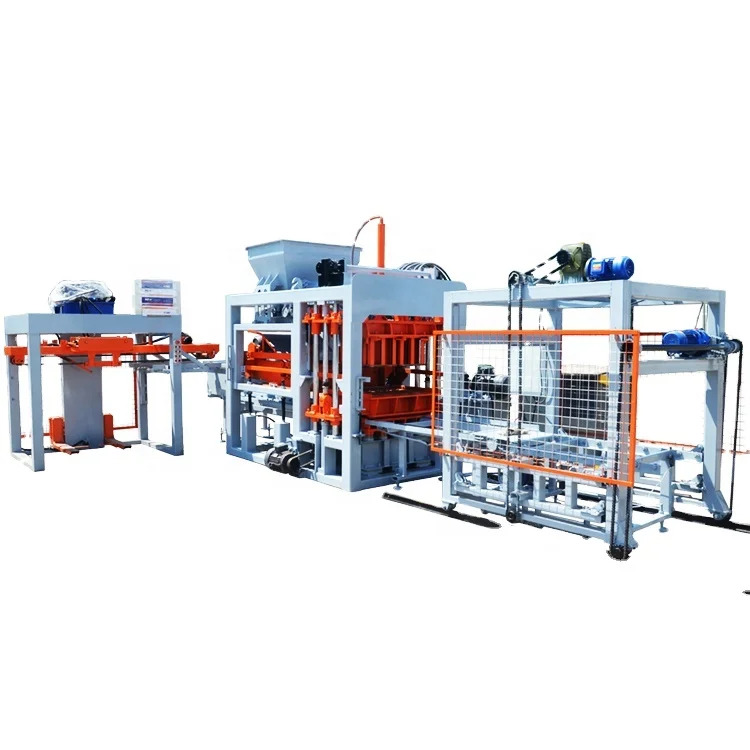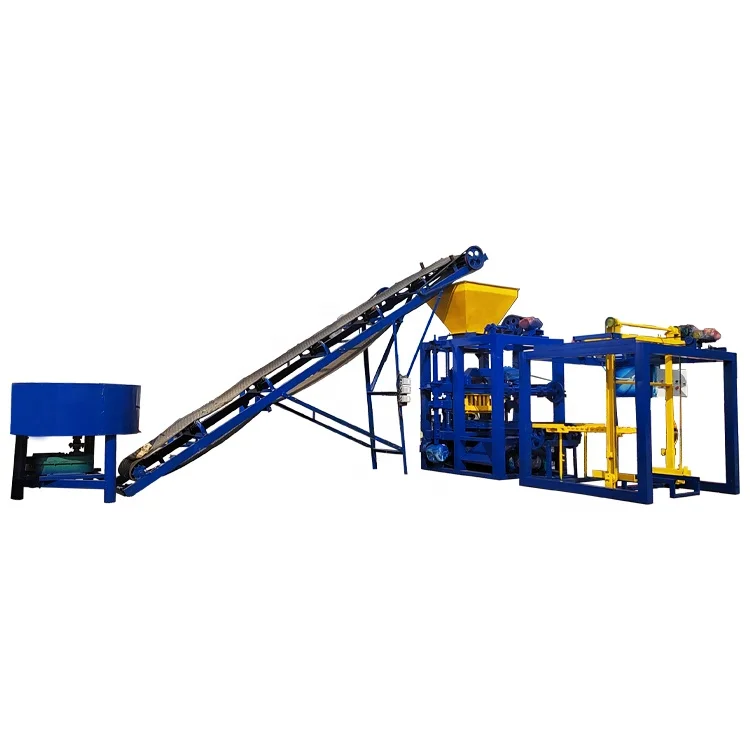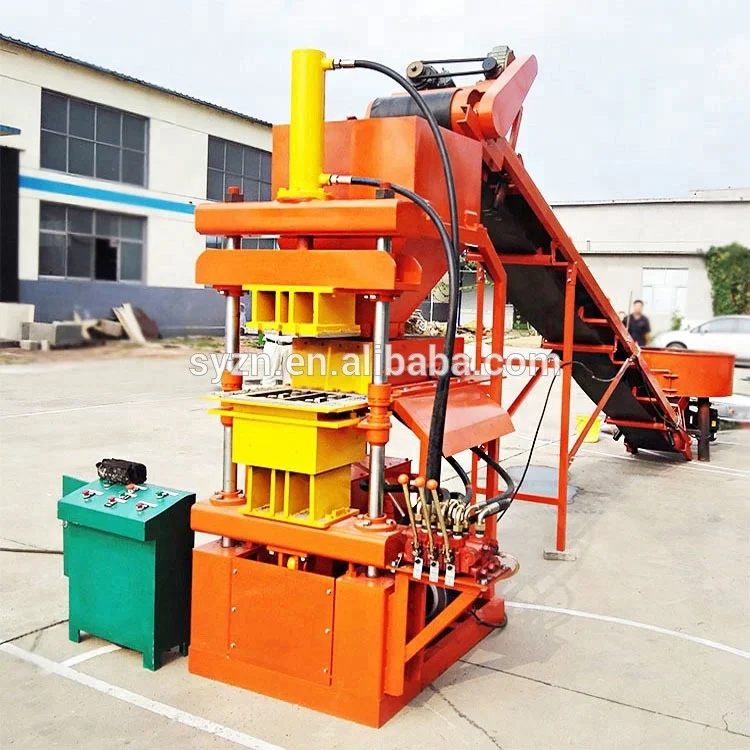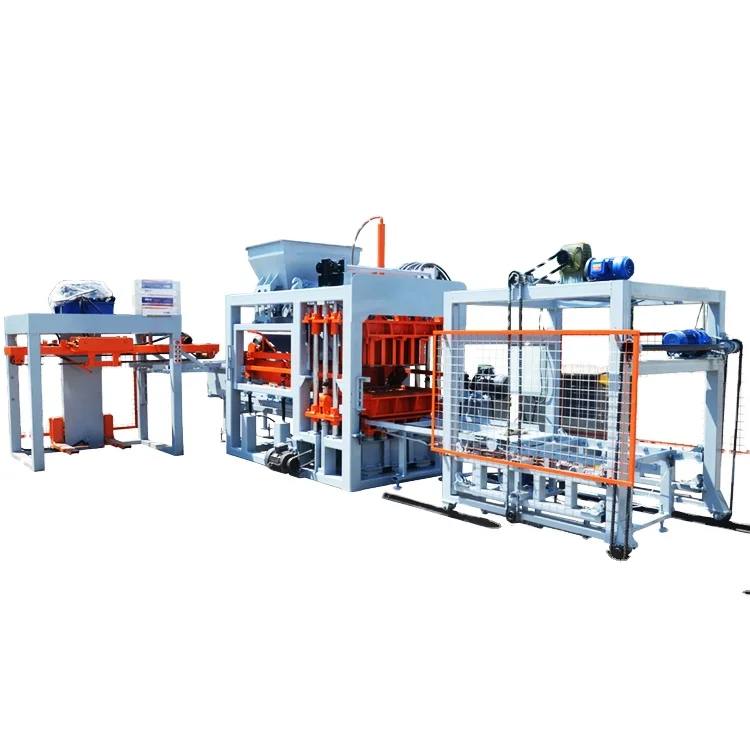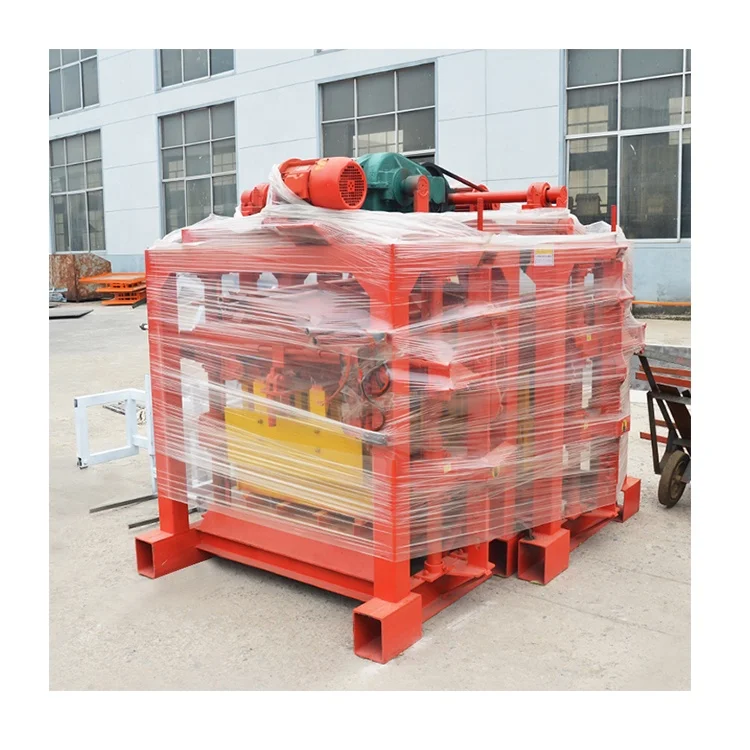


Description
Matched Vibration System — The QTJ4-40 semi-automatic press pairs bed-mould vertical vibration with upper-mould compression vibration, tuned to the buyer’s local aggregate rather than a catalogue default.
Technical Specifications
| Parameter | Value |
|---|---|
| Model | QTJ4-40 |
| Product Type | Concrete Block Making Machine |
| Rated Power | 9.5 kW |
| Molding Cycle | 40 s |
| Theoretical Productivity (400×200×200 mm hollow block, 4 pcs/mould) | 360 pcs/h, 2800 pcs/day |
| Theoretical Productivity (400×150×200 mm hollow block, 5 pcs/mould) | 450 pcs/h, 3600 pcs/day |
| Theoretical Productivity (225×112.5×60 mm solid brick, 9 pcs/mould) | 800 pcs/h, 6400 pcs/day |
| Output Capacity | 2000–2500 pcs / 8 hours (basis not stated in source — confirm block format) |
| Pallet Size | 850×450 mm |
| Overall Dimensions (L×W×H) | 1350×1460×1800 mm |
| Net Weight | 1 T |
| Vibration System | Bed mould vertical vibration + upper mould compression vibration |
| Mould Actuation | Top die push and pull with automatic scraper |
| Automation Level | Semi-automatic |
| Voltage | According to buyer’s local voltage (verify against manufacturer catalog) |
| Raw Materials | Concrete, sand, cement, fly ash, lime, gypsum |
| Control System | Not stated in source |
| Certification | Not stated in source |
Application Suitability
| Application | Material or Output |
|---|---|
| Hollow block production for wall construction | Concrete and fly ash mixes with local crushed stone or river sand |
| Solid brick production for load-bearing structures | Cement, sand, and lime blends at standard moulding moisture |
| Paver and interlocking brick production | Concrete mixes with fine aggregate for surface finish |
| Small to medium-scale block plant start-up | Semi-automatic operation with room for later PLC automation |
Why "Cycle Time" Means Nothing Without the Block Format Attached
Every output figure on this page is tied to a specific block size and mould cavity count — not a single headline number.
I have watched buyers sign contracts based on a quoted hourly capacity, only to discover on commissioning day that the figure assumed a small solid brick while they needed hollow blocks. The QTJ4-40 semi-automatic concrete block machine delivers different throughputs depending on whether you are pressing four-cavity hollow blocks or nine-cavity solid bricks, and the gap is significant. When a supplier quotes one capacity number without naming the format, the daily output you actually bank can fall far short of the plan. This automatic QTJ4-40 block machine page lists each format separately so your investment case matches your production floor. [NEED_CITE: capacity calculation methods in block machine quotations]
How PLC Control Fits Into a Semi-Automatic Start
The QTJ4-40 ships as a semi-automatic press with top-die push-pull actuation and an automatic scraper, keeping the moulding cycle repeatable without a full PLC cabinet on day one. When output demand grows, the control architecture allows a PLC-controlled concrete block machine upgrade that adds automatic pallet feeding, stacking, and cubing. This path lets entrepreneurs begin with lower capital and layer in automation as the market absorbs more volume.
Vibration Matching to Your Actual Mix Design
Dual vibration — bed vertical plus upper compression — is only effective when the force and frequency suit the buyer’s aggregate gradation and cement ratio. In West Africa I have seen red laterite with high clay content absorb vibration energy that should have compacted the block core, leaving weak centres and high rejection rates. The QTJ4-40 vibration parameters are therefore set against the buyer’s own mix sample before the machine leaves the factory, not dialled to a generic concrete recipe. [NEED_CITE: aggregate variability effects on block density]
Reading the Specs That Actually Shape Daily Output
The 9.5 kW rated power must cover both vibration motors and hydraulic actuation within the 40-second moulding cycle; if your mix demands longer vibration to reach target density, the cycle stretches and daily output drops accordingly. Pallet size at 850×450 mm dictates how many blocks cure per rack tier and which forklift mast width can slot between rack uprights — order the wrong pallet dimension and you rearrange your entire curing yard. The theoretical productivity figures (360 pcs/h for 400×200×200 mm hollow blocks, 800 pcs/h for solid bricks) assume continuous pallet supply and no mould change downtime; in practice, factor in pallet circulation time and format switches when you calculate your shift plan.
The Hidden Cost of Skipping Voltage Confirmation
I arrived at a site where the PLC display showed error codes in a language the operators could not read, and the motor windings were wired for 380 V while the local grid delivered 415 V. The automatic QTJ4-40 block machine sat idle for weeks while replacement contactors were air-freighted. Voltage, frequency, and control language must be locked in writing before production starts — not discovered at the container door. Buyers who skip this confirmation step hand over commissioning delays that no warranty covers. [NEED_CITE: voltage and frequency standards by export market]
Why Source the QTJ4-40 Through This Configuration Process
Block machinery is our single focus, so the QTJ4-40 press, moulds, pallets, and handling equipment are specified as one matched system. Configuration is set against your actual mix design and target block format, not pulled from a catalogue default. Mould design covers the formats your local market buys, including custom drawings for non-standard dimensions. The semi-automatic starting point means you can commission quickly and upgrade toward PLC-controlled concrete block machine automation as demand scales. Installation support includes operator training so your crew understands cycle tuning from the first shift.
Documentation & Verification
- Capacity calculation sheet stating block format assumed for every output figure
- Mould drawing and format list showing cavity count per block size
- Pallet specification matched to your curing rack layout and forklift
- Voltage, frequency, and PLC display language confirmation before production
- Factory test record on your mix sample before dispatch
- Hydraulic and electrical schematic for local maintenance teams
Installation, Commissioning & Support
- Foundation pad sized to the QTJ4-40 footprint of 1350×1460 mm with vibration isolation
- Dedicated 9.5 kW circuit with breaker rating confirmed against local voltage
- Machine shipped as single unit at 1 T net weight, no field assembly of main frame
- First-run cycle tuning against your local aggregate and target block density
- Operator training on top-die push-pull mechanism and automatic scraper timing
- Wear parts list covering vibration springs, scraper blades, and hydraulic seals
What to Include in Your First Inquiry
Share the block formats you intend to sell — hollow, solid, paver, or interlocking — along with the daily volume your market can absorb. Confirm your local voltage and frequency so the motor and control panel are wound correctly before shipment. Tell us about your existing curing area dimensions and forklift capacity so pallets and rack spacing align from the first production run.
Frequently Asked Questions
Q: How is output capacity verified and which block format does it assume?
A: Each output figure on this page names the block dimensions and mould cavity count behind it — for example, 360 pcs/h assumes a 400×200×200 mm hollow block on a four-cavity mould. We provide a capacity calculation sheet so you can cross-check against your target format before placing an order.
Q: What automation level does the QTJ4-40 ship with and how is it upgraded later?
A: The machine ships semi-automatic with top-die push-pull and automatic scraper. As volume grows, you can add PLC-controlled pallet feeding, stacking, and cubing without replacing the press itself, keeping initial capital modest while leaving a clear upgrade path.
Q: How are voltage, frequency, and control language confirmed before shipment?
A: We require written confirmation of your site voltage, frequency, and preferred PLC display language before production begins. The factory test record then verifies motor rotation and control response against those exact values.
Q: Which mould formats are available and what is the mould change procedure?
A: Moulds cover hollow blocks, solid bricks, pavers, and interlocking bricks in standard and custom sizes. The top-die push-pull system and automatic scraper allow mould swaps within a shift, provided operators follow the documented change sequence.
Q: How does the pallet size relate to curing rack layout and site forklift?
A: The 850×450 mm pallet defines rack tier spacing and forklift tine width. We match pallet specification to your existing curing yard and handling equipment so blocks move from press to rack without rearranging your site infrastructure.