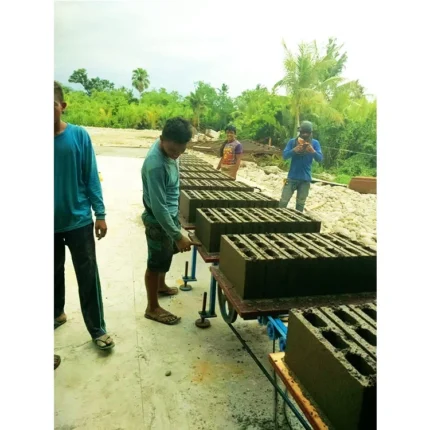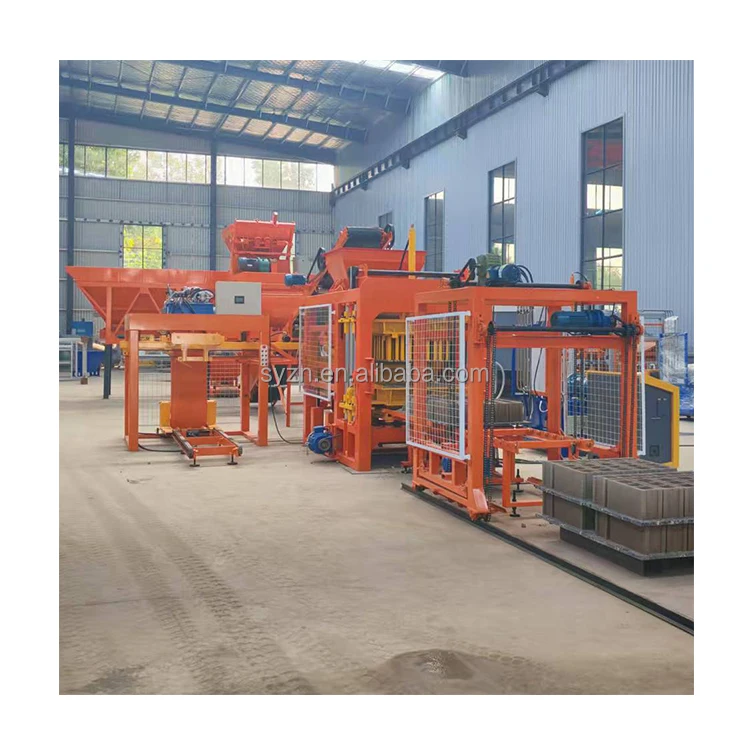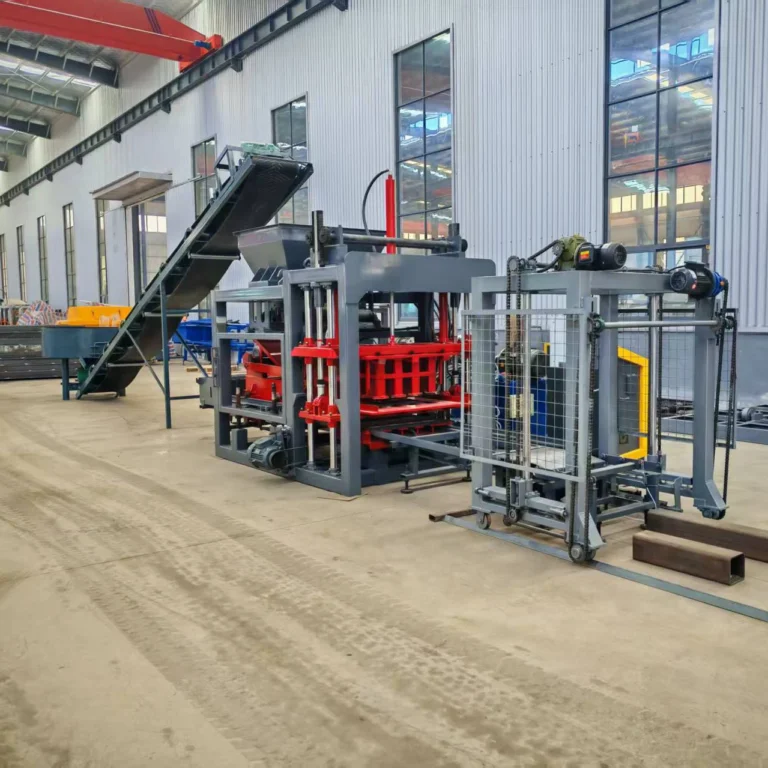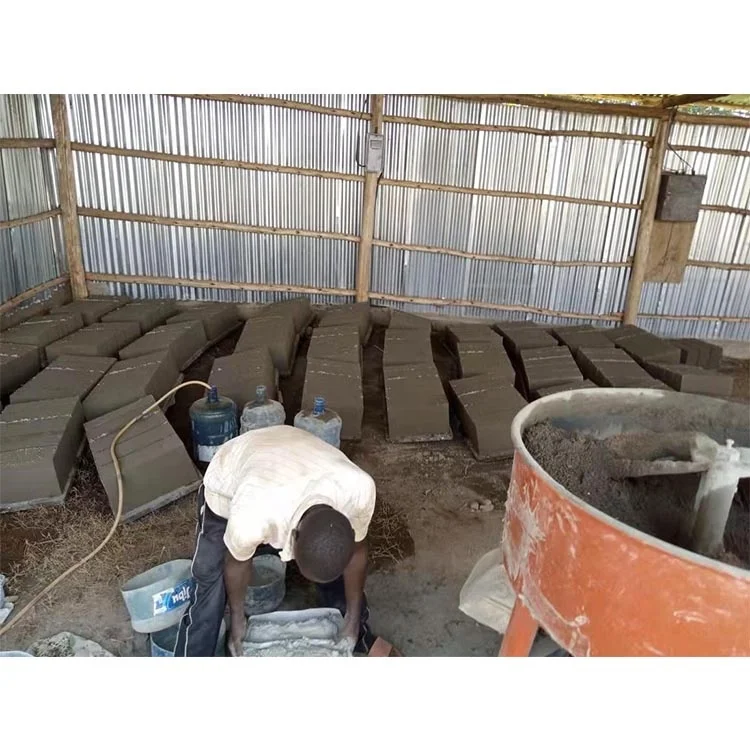
Description
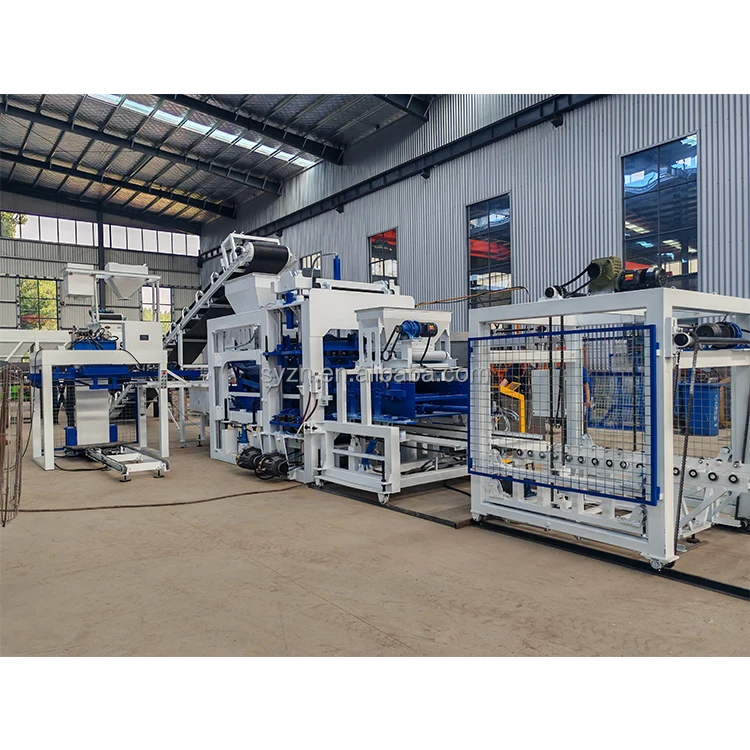
Automation readiness built in — the QTJ4-40 semi-automatic block machine leaves a clear path from manual pallet handling to PLC-controlled operation, so you add consistency as volume grows instead of replacing the press.
Technical Specifications
| Parameter | Value |
|---|---|
| Model | QTJ4-40 |
| Product Type | Semi-Automatic Concrete Block Making Machine |
| Machine Power | 9.5 kW |
| Molding Cycle | 40 s |
| Theoretical Output (400×200×200 mm hollow block, 4 pcs/mould) | 360 pcs/h, 2,800 pcs/day |
| Theoretical Output (400×150×200 mm hollow block, 5 pcs/mould) | 450 pcs/h, 3,600 pcs/day |
| Theoretical Output (225×112.5×60 mm solid brick, 9 pcs/mould) | 800 pcs/h, 6,400 pcs/day |
| Vibration Method | Bed mould vertical vibration + upper mould compression vibration |
| Control System | Semi-automatic, top die push-pull with automatic scraper |
| Pallet Size | 850 × 450 mm |
| Machine Weight | 1 T |
| Overall Dimensions (L×W×H) | 1350 × 1460 × 1800 mm |
| Voltage | Configured to buyer’s local supply (rating to be confirmed) |
| Automation Level | Semi-automatic, manual pallet handling |
| Raw Materials | Concrete, sand, cement, fly ash, lime, gypsum |
Application Suitability
| Application | Material or Output |
|---|---|
| Small-scale hollow block production | Crushed stone, sand, and cement mixes for wall construction |
| Solid brick manufacturing | Fly ash or clay-based mixes for load-bearing and partition walls |
| Paving brick production | High-density concrete mixes for walkways and yard surfaces |
| On-site block production for contractors | Local aggregate and cement blended at the project location |
| First block plant for entrepreneurs | Low-investment entry with room to add automation later |
What "2,800 Blocks per Day" Actually Means for Your Shift Plan
The number only holds if your block format, mix design, and pallet handling keep pace with the 40-second cycle.
Capacity figures on semi-automatic machines often assume ideal conditions that disappear the moment real aggregate hits the mixer. I once watched a QTJ4-40 lose nearly half its daily output because the buyer’s volcanic aggregate was heavier than the river sand used during factory testing. The vibration time was not adjusted, density dropped, and blocks failed the strength check. Before you plan shifts around a headline number, confirm which block format the calculation assumes and whether your local material has been tested in the press [NEED_CITE: aggregate density effects on vibration compaction].
How Dual Vibration Shapes Block Density Uniformity
The QTJ4-40 uses bed mould vertical vibration combined with upper mould compression vibration. This two-direction approach forces the concrete mix into the mould cavity from both the base and the squeeze head, reducing air pockets that single-axis vibration leaves behind. When you are running a PLC controlled QTJ4-40 block machine, the vibration parameters can be tuned to match the weight and gradation of your specific aggregate, keeping density consistent from the first pallet to the last.
The Automation Upgrade Path from Semi-Automatic to Fully Controlled
Starting with manual pallet handling keeps initial investment low, but operator timing becomes the variable that shifts block weight across a run. The QTJ4-40 supports an automatic block machine upgrade path where automatic pallet feeding, PLC-controlled batching, and stacking modules are added as production volume justifies the labour cost. Each module removes one operator-dependent step, tightening the tolerance between consecutive blocks [NEED_CITE: automation stages in concrete block production].
Reading the Specs That Matter on the Shop Floor
The 9.5 kW motor rating sets the upper limit for vibration force available during compaction; if your mix requires higher energy to achieve target density, the press will struggle regardless of cycle time. The 850 × 450 mm pallet size dictates how many blocks cure per rack and what forklift capacity you need — specifying pallets without checking your existing curing area creates a bottleneck the machine itself cannot solve. The 40-second moulding cycle establishes the rhythm that upstream mixing and downstream pallet removal must match; if your mixer takes 90 seconds per batch, the press sits idle for half its cycle. Voltage must be confirmed before production, because a 380 V machine landed on a 220 V site will not run at all [NEED_CITE: voltage and frequency standards by export market].
The Cost of Skipping the Configuration Conversation
Buyers who order from a catalogue page without confirming mix design, pallet size, or control language often discover the gap during commissioning. A PLC display in the wrong language delays operator training. A pallet that does not fit the curing rack means blocks are stacked by hand until new racks arrive. Mould change time on a machine not specified for quick swap can consume most of a shift, negating the format flexibility the buyer paid for. These are not machine defects — they are specification oversights that surface as lost production days [NEED_CITE: common commissioning delays in block plant setup].
Why Sourcing the QTJ4-40 Here Reduces Configuration Risk
Block machinery is our single focus, so the press, mould, pallet, and handling equipment are specified as one matched system rather than assembled from separate suppliers. We set the configuration against your actual mix design and target block format, not a catalogue default. Mould design covers the formats your market sells, with custom drawings available when standard options do not fit. The automation level is selectable — start semi-automatic and add modules as demand grows. Installation and commissioning support includes operator training so your team can run the PLC controlled QTJ4-40 block machine independently from day one.
Documentation & Verification
- Line layout and capacity calculation stating the block format and mix assumed
- Machine specification sheet with voltage and frequency matched to your site
- Mould drawing and format list for every block type in your product range
- Factory test record confirming cycle time and vibration force on your material
- Hydraulic and electrical schematic for on-site maintenance reference
- Operation and maintenance manual in the operator’s working language
Installation, Commissioning & Support
- Foundation pad sized to the 1350 × 1460 mm footprint with anchor bolt layout
- Dedicated 9.5 kW circuit with voltage and frequency confirmed before dispatch
- Machine shipped as a single unit, no partial dismantling required for container loading
- On-site vibration tuning to match your aggregate density and target block strength
- Operator training covering mould change, scraper adjustment, and daily maintenance
- Wear parts list with hydraulic seals and vibration motor bearings identified for reorder
What to Include in Your Enquiry
To size the automatic block machine upgrade correctly, share your target block format and daily output requirement, the local aggregate type and source, and your available workshop footprint. Confirm your site voltage, frequency, and preferred PLC display language so the control panel arrives ready to run. If you have existing curing racks or forklifts, provide their dimensions and load capacity so the 850 × 450 mm pallet integrates without modification.
Frequently Asked Questions
Q: How do I verify real daily output for my specific block format?
A: The published figures assume particular block dimensions — 360 pieces per hour for 400×200×200 mm hollow blocks, 450 for the 150 mm width variant, and 800 for solid bricks. Request a capacity calculation that states your exact block format, wall thickness, and target weight so the daily figure reflects what your press will actually produce on your mix.
Q: What automation level should I start with, and what comes next?
A: The QTJ4-40 ships as a semi-automatic press with manual pallet handling. The automatic block machine upgrade path adds automatic pallet feeding first, then PLC-controlled batching and stacking. Each stage removes one operator variable, so you invest in automation only where inconsistency shows up in your production data.
Q: How do I confirm voltage, frequency, and control language before shipment?
A: Provide your local supply rating and preferred PLC display language at the enquiry stage. These values are locked into the electrical schematic and control configuration before production begins, so the panel arrives wired and programmed for your site without rework during commissioning.
Q: How does the dual-vibration system affect block strength across batches?
A: Bed mould vertical vibration fills the cavity while upper mould compression vibration consolidates the top surface. Together they reduce density variation between the block base and face. When parameters are matched to your aggregate weight, batch-to-batch strength stays within tolerance without operator adjustment.
Q: Will the 850 × 450 mm pallet work with my existing curing setup?
A: Measure your curing rack spacing and forklift fork width before confirming the order. If your racks were built for a different pallet size, blocks will need manual restacking until replacement racks arrive. Sharing rack dimensions at the enquiry stage lets us adjust pallet specification or curing layout to avoid the mismatch.