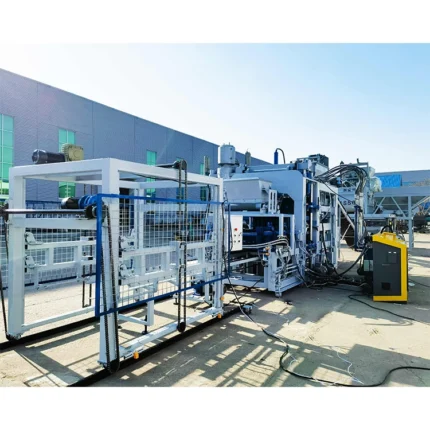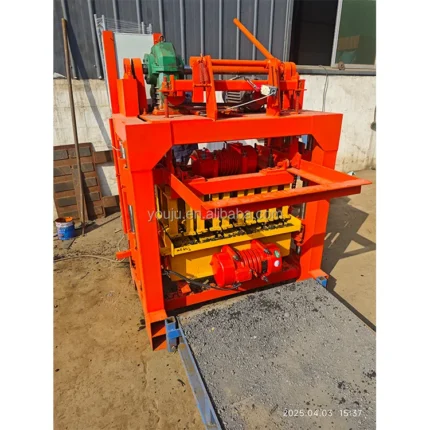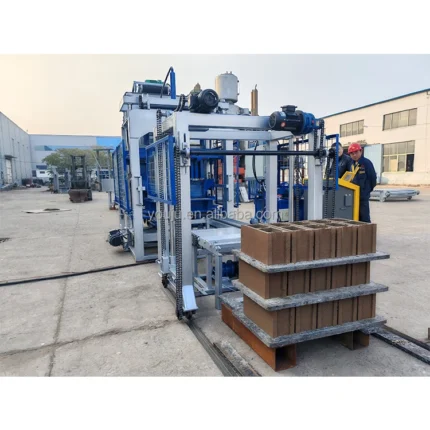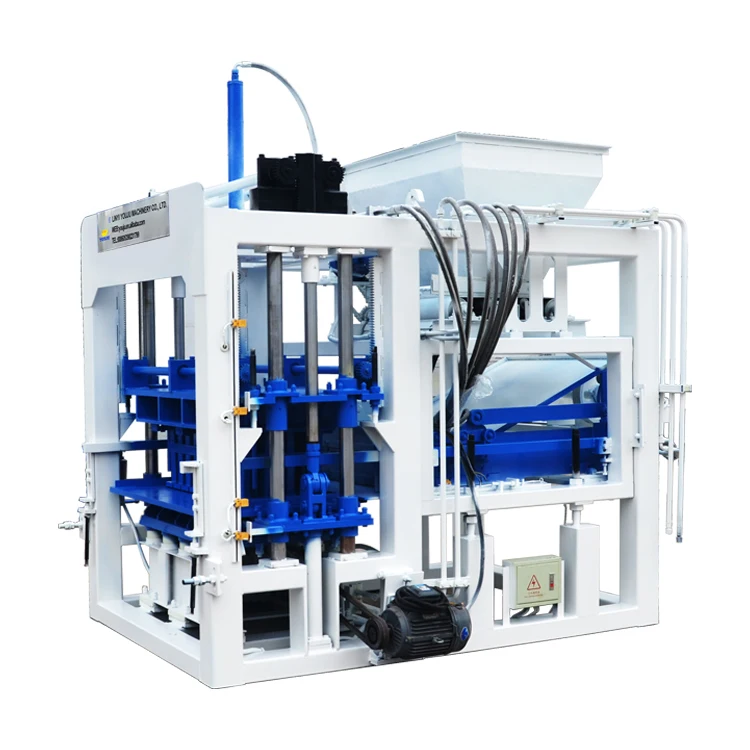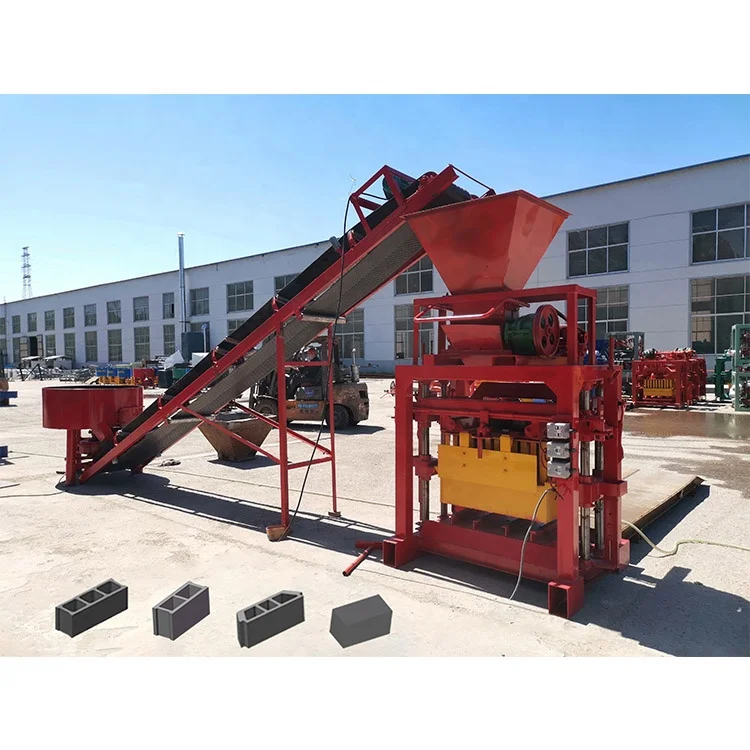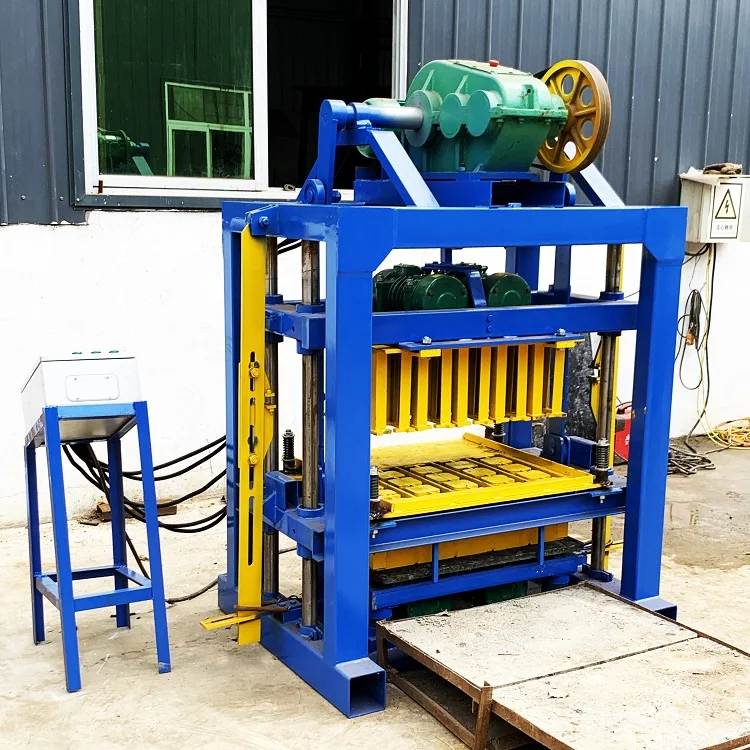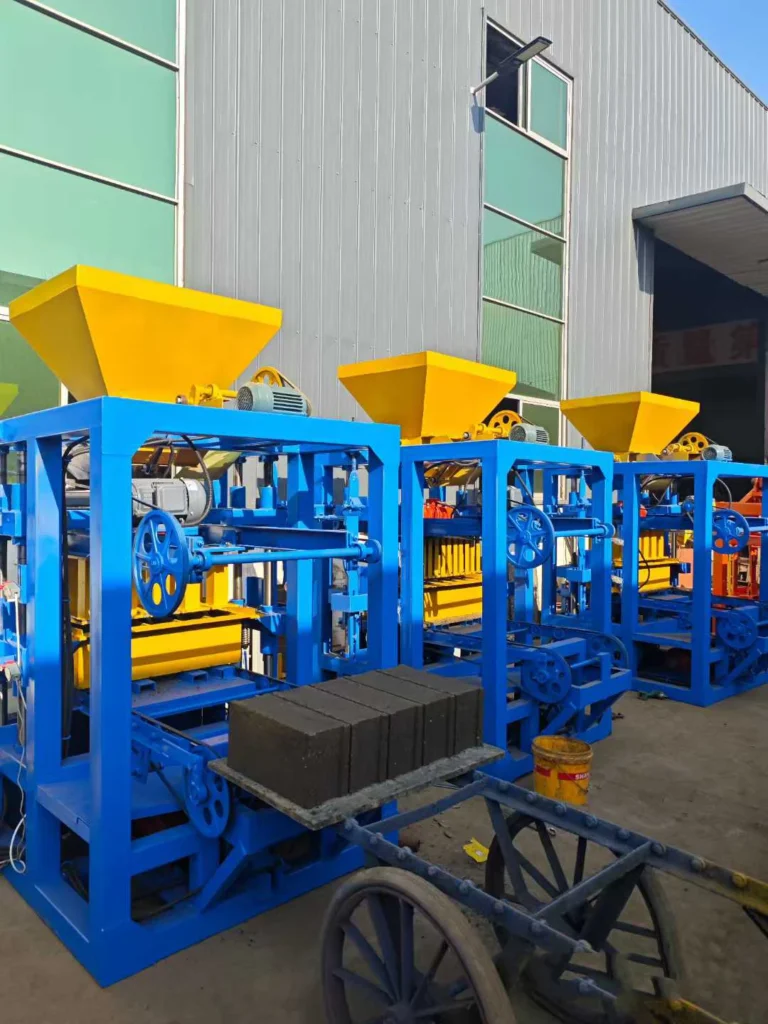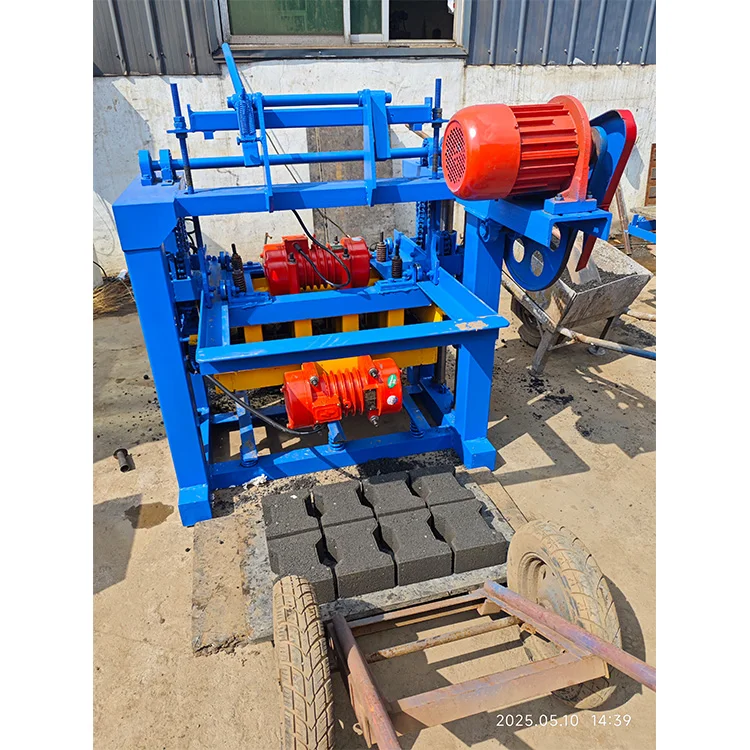
Description
Matched Vibration to Your Mix — The QTJ4-40 dual vibration system is configured against the buyer’s actual aggregate and mix design, not a factory default, ensuring block density stays consistent from the first cycle to the last.
Technical Specifications
| Parameter | Value |
|---|---|
| Model | QTJ4-40 |
| Product Type | Semi-Automatic Hydraulic Block Making Machine |
| Overall Dimensions (L×W×H) | 1350×1460×1800 mm |
| Machine Weight | 1.2 T |
| Machine Power | 10.4 kW |
| Molding Cycle | 40 s |
| Output Capacity (Hollow Block 400×200×200 mm) | 360 pcs/hour, 2880 pcs/day (4 pcs/mould) |
| Output Capacity (Hollow Block 400×150×200 mm) | 450 pcs/hour, 3600 pcs/day (5 pcs/mould) |
| Output Capacity (Solid Block 225×112.5×60 mm) | 800 pcs/hour, 6400 pcs/day (9 pcs/mould) |
| Pallet Size | 850×450×20 mm |
| Vibration System | Bed mould vertical vibration + upper mould compression vibration |
| Automation Level | Semi-automatic |
| Voltage | Configurable to local voltage and frequency |
| Raw Materials | Concrete, sand, cement, fly ash, lime, gypsum |
| Key Features | PLC control ready, hydraulic pressure, dual vibration, semi-automatic pallet handling |
Application Suitability
| Application | Material or Output |
|---|---|
| Hollow block production (8", 6", 5", 4") | Crushed stone, sand, cement, fly ash blends |
| Solid block production for load-bearing walls | Dense aggregate and cement mixes |
| Paving block manufacturing | High-strength concrete with fine aggregate |
| On-site construction block production | Locally sourced sand and gravel with cement |
| Small to medium plant daily runs | Multiple block formats with periodic mould changes |
Why the Vibration Question Matters More Than the Cycle Time
Block strength lives or dies on whether vibration force and hydraulic pressure match your specific mix and aggregate.
I have watched plants in West Africa run an automatic QTJ4-40 block making machine on a laterite-heavy mix and pull crumbling blocks off the pallet because the factory vibration setting was tuned for clean river sand. The cycle time looked impressive on paper, but half the daily output was rejected at the building site. A PLC controlled semi-automatic block machine only delivers consistency when someone first maps the vibration profile to what is actually in the hopper [NEED_CITE: relationship between aggregate grading and vibration frequency in block compaction]. Without that step, every batch is a gamble.
What Semi-Automatic Control Actually Removes From the Operator
The QTJ4-40 takes the two decisions that cause the most batch-to-batch variation — vibration duration and compression pressure — out of the operator’s hands. The PLC holds the programmed cycle, so the 40-second molding sequence repeats identically whether it is the first block of the shift or the last. This is where an automatic QTJ4-40 block making machine earns its name: the human operator loads the mix and handles pallets, but the press itself does not drift. For plants moving off manual egg-laying machines, that single shift in control responsibility changes the rejection rate noticeably.
Where the Upgrade Path Leads
Semi-automatic is a deliberate midpoint. The QTJ4-40 is configured so that pallet feeding and stacking can be added as separate automation stations later without replacing the host press. A plant owner who starts with manual pallet handling today can bolt on an automatic stacker when volume justifies it, keeping the same PLC architecture and mould inventory. This staged approach keeps capital expenditure aligned with actual market demand rather than projected demand [NEED_CITE: phased automation investment in small-scale block plants].
Reading the Numbers Behind the Datasheet
The 10.4 kW total power rating covers both the vibration motors and the hydraulic pump running simultaneously during the press cycle. On a 400×200×200 mm hollow block at four cavities per mould, the bed mould vertical vibration and upper mould compression vibration work together — the bed vibration settles the mix into the mould cavity while the upper compression squeezes out voids. The 850×450×20 mm pallet size is not arbitrary; it determines how many blocks cure per rack tier and what forklift fork length the curing yard needs. The 40-second cycle is measured from press close to press open, so actual throughput depends on how fast the operator or feeder can swap pallets on the semi-automatic table.
When the Wrong Pallet Size Costs More Than the Machine
Buyers who skip the pallet conversation end up with blocks curing on the ground or stacked by hand because the pallets do not fit existing racks. On the QTJ4-40, the 850×450 mm pallet was chosen to match a standard curing rack layout, but if your yard already runs a different pallet dimension, the whole handling chain breaks. Mould change is another hidden time sink — if the shift schedule assumes ten minutes but the actual change takes forty, the format flexibility you paid for disappears before lunch [NEED_CITE: mould change procedures and time impact on daily block plant scheduling]. Voltage mismatch is quieter but more expensive: a machine wired for 380V/50Hz landing in a 440V/60Hz market will burn the pump motor within the first week.
Why Sourcing the QTJ4-40 Here Is Different
Block machinery is the only thing this operation builds, so the press, mould, pallet, and handling equipment are specified as one matched set rather than pulled from separate catalogues. The vibration profile on every QTJ4-40 is set against the buyer’s submitted mix sample and target block format, not left at a generic factory default. Mould design covers the formats the buyer’s local market actually sells, including custom drawings when standard cavity counts do not fit. Voltage, frequency, and PLC display language are confirmed before production starts, so commissioning on arrival is a plug-and-run exercise, not a multi-week troubleshooting session.
Documentation & Verification
- Line layout showing QTJ4-40 placement with pallet flow and curing rack spacing
- Capacity calculation sheet stating block format and cycle assumption per mould
- Hydraulic and electrical schematics matching as-built machine wiring
- Factory test record on buyer-specified block format and mix before dispatch
- Voltage, frequency, and PLC language confirmation sheet signed before production
Installation, Commissioning & Support
- Foundation pad leveled to QTJ4-40 footprint of 1350×1460 mm with anchor bolt template
- Dedicated power circuit sized for 10.4 kW continuous draw at confirmed local voltage
- Machine shipped as single unit with mould and pallet set in same container
- On-site vibration tuning against local aggregate during first production run
- Operator training on PLC cycle parameters and semi-automatic pallet handling sequence
- Wear parts list covering hydraulic seals, vibration springs, and mould liner plates
What to Include With Your Inquiry
Send the block format you sell most, the daily volume you need to hit, and a sample or description of the aggregate available locally. Confirm your site voltage, frequency, and preferred PLC display language so the control panel is built to match. If you already have pallets, mixers, or curing racks in place, share their dimensions so the line is configured around what exists rather than replaced.
Frequently Asked Questions
Q: What automation level does the QTJ4-40 provide and can it be expanded later?
A: The QTJ4-40 runs as a semi-automatic press with PLC-controlled vibration and hydraulic cycles while the operator handles pallet loading manually. Automatic pallet feeding and stacking modules can be added later using the same control architecture, so the upgrade does not require a new host machine or rewired panel.
Q: How does the PLC maintain block consistency across different formats?
A: Each mould format has its own stored cycle profile in the PLC, controlling vibration duration, compression pressure, and feed time independently. When the operator selects the format, the controller applies the matching parameters, removing guesswork and keeping density uniform across the entire production run.
Q: What is the mould change time on the QTJ4-40?
A: Mould change involves unbolting the current mould from the vibration table, lifting it out, lowering the replacement mould, and re-securing the bolts. With standard tools and a practiced operator, the physical swap takes a defined portion of the shift. Exact timing should be verified during the factory test against your planned format rotation.
Q: Can voltage, frequency, and display language be set for my market before shipment?
A: Yes. Voltage and frequency are confirmed during the quotation stage and the motor, transformer, and PLC hardware are matched to your local grid. The control display language is programmed before factory testing, so operators see their own language from the first power-on at the site.