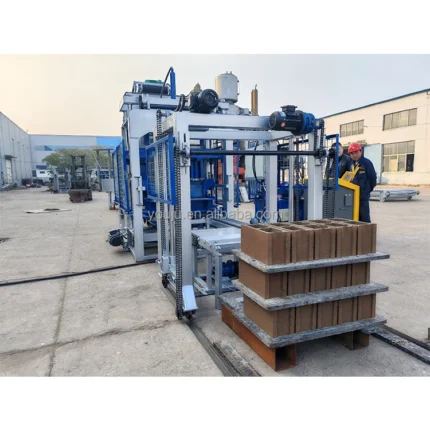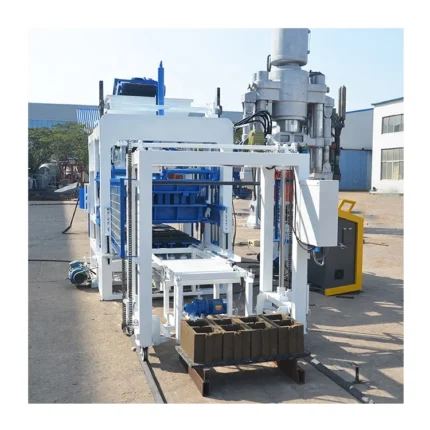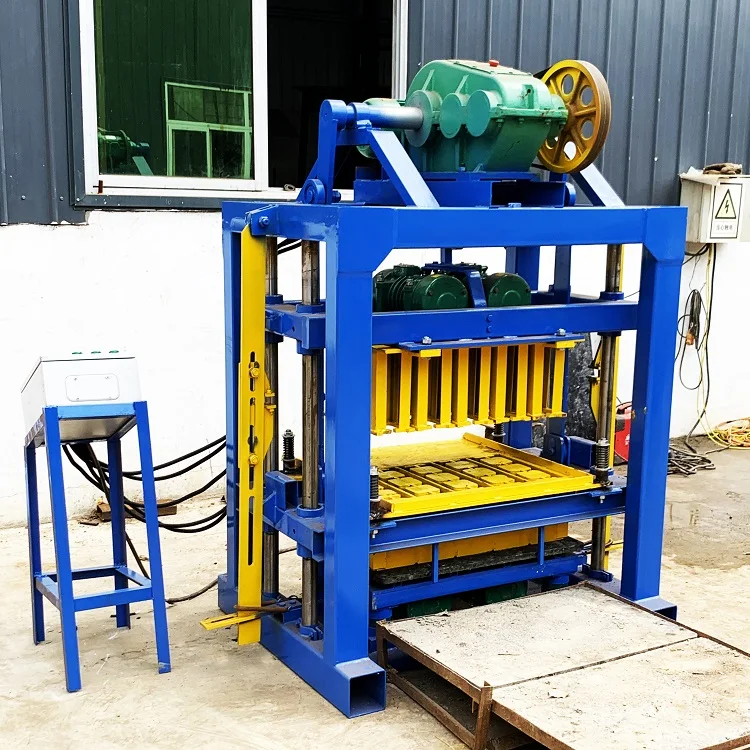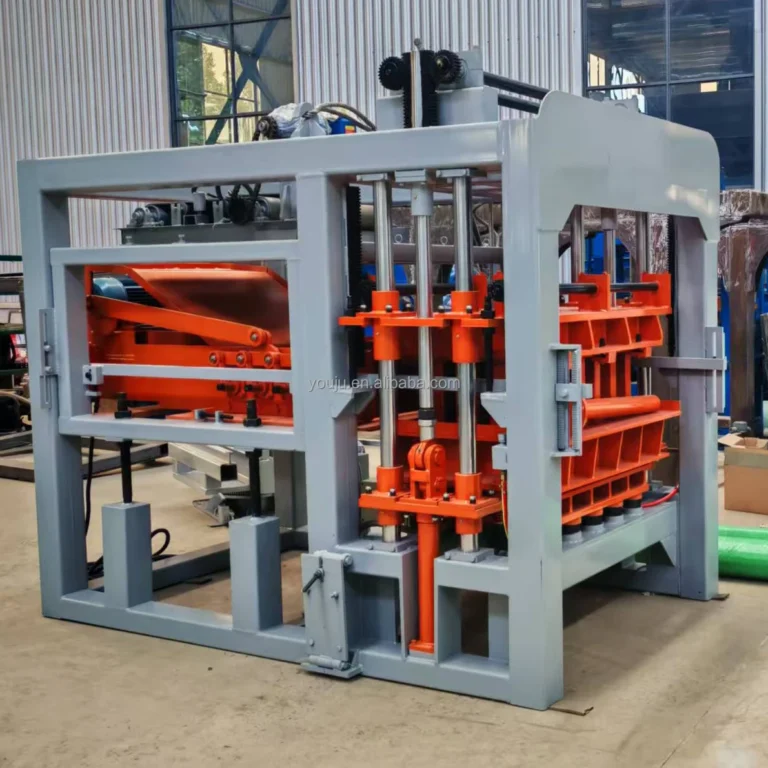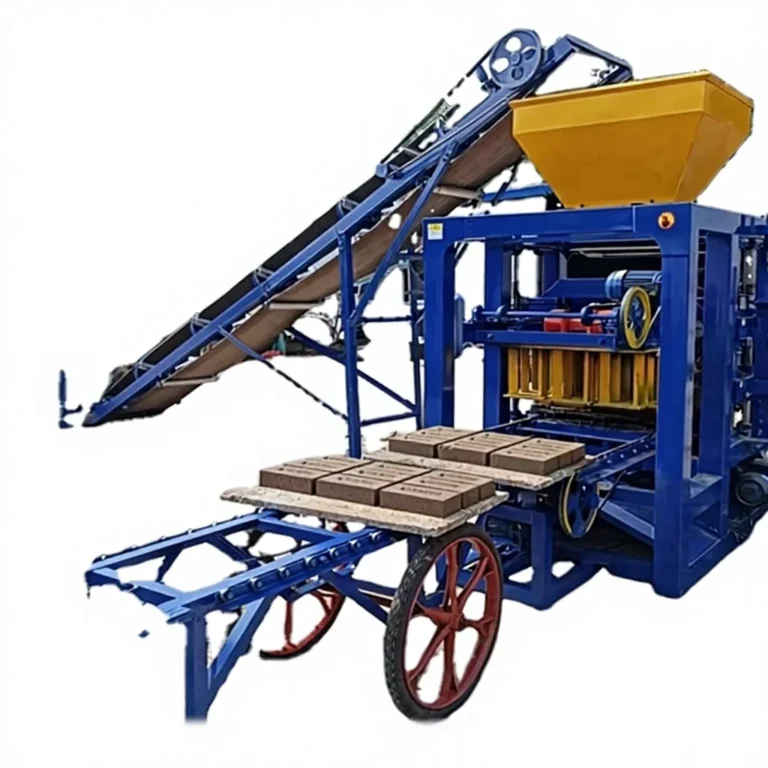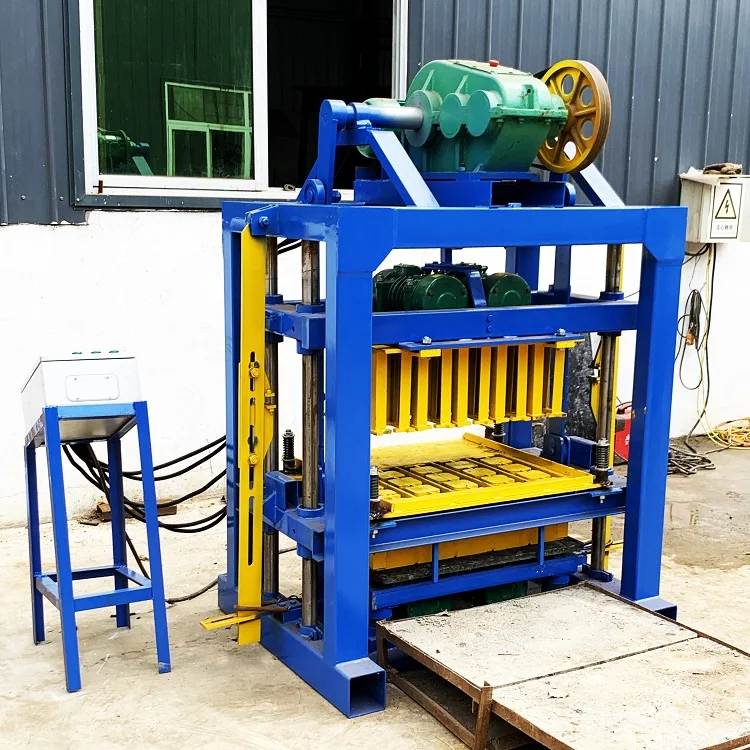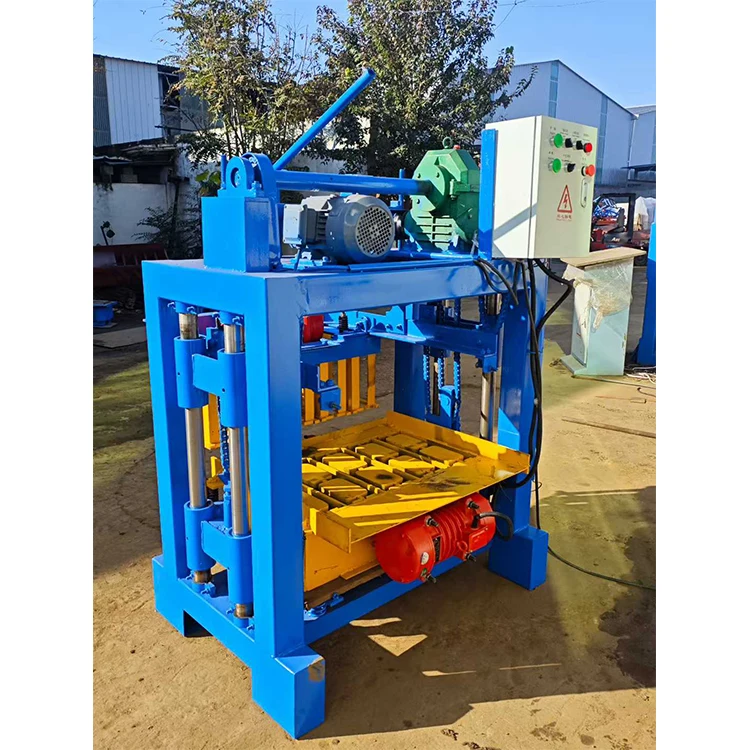
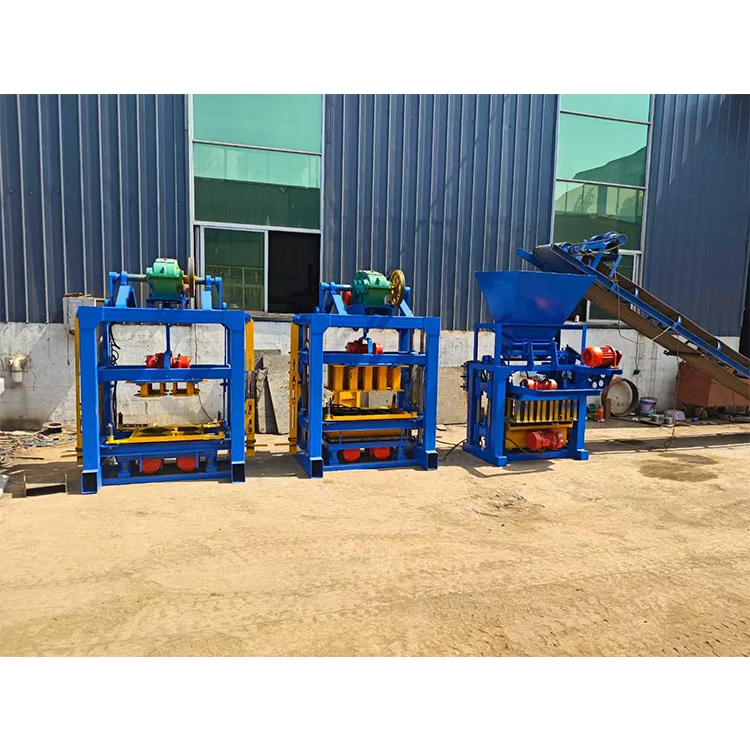
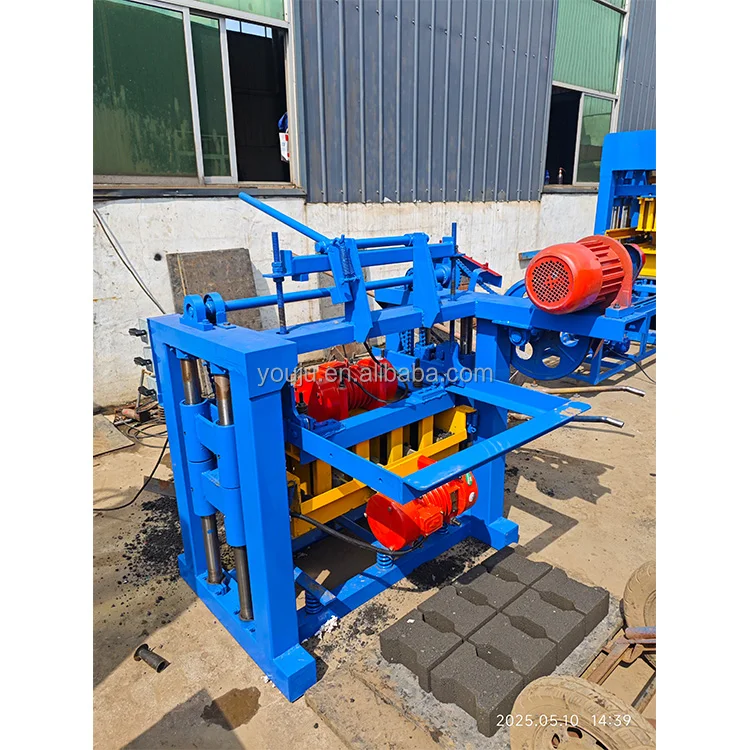
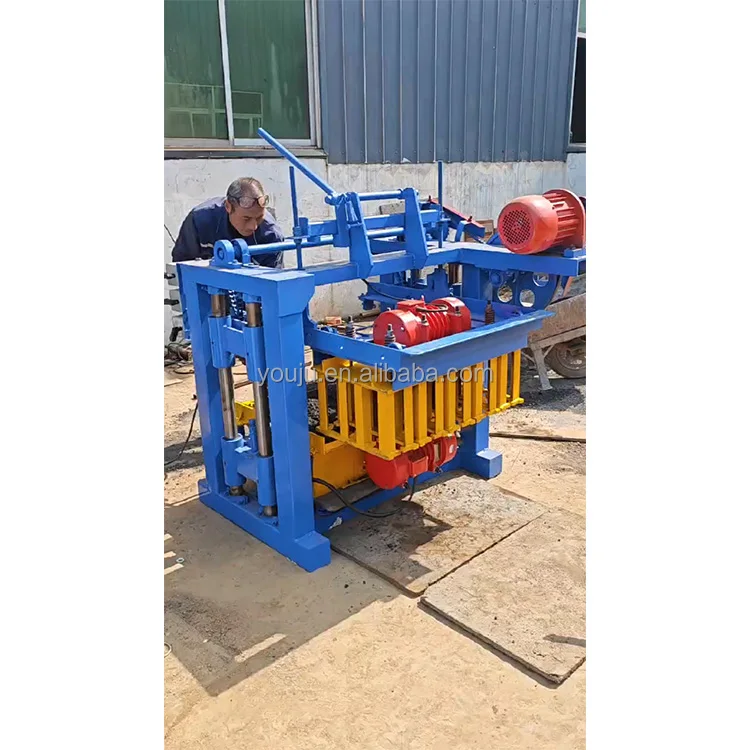
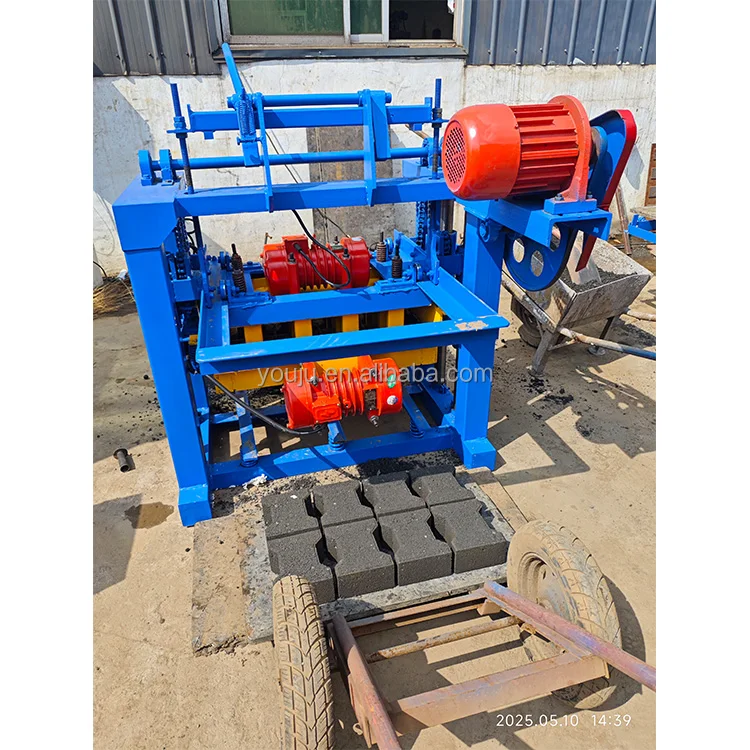
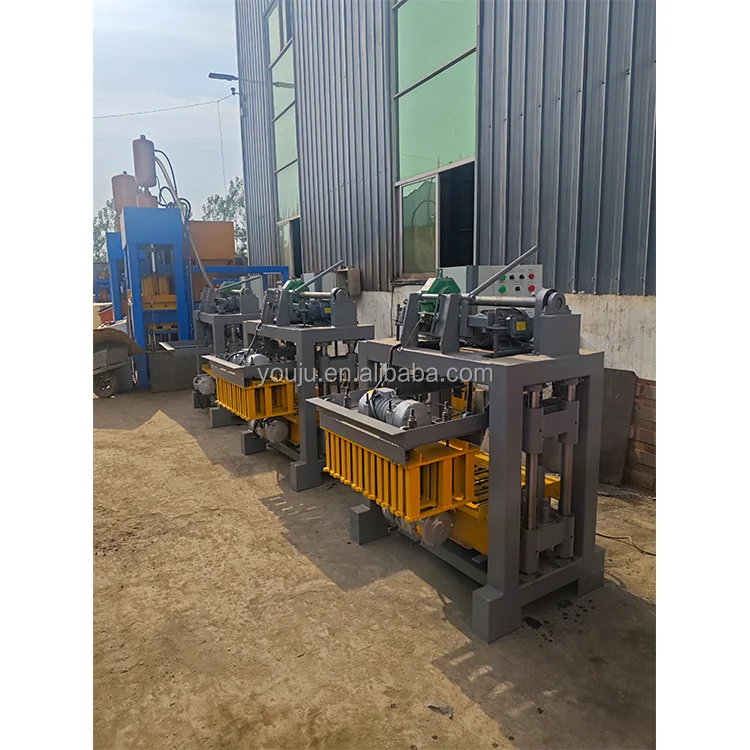
Description
System-Matched Configuration — every electrical and control parameter is confirmed against your site supply before the QTJ4-40 leaves the factory.
Technical Specifications
| Parameter | Value |
|---|---|
| Model | QTJ4-40 |
| Product Type | Stationary Concrete Block Making Machine |
| Machine Type | Stationary, mechanical-electric combination |
| Rated Power | 10.4 kW |
| Voltage & Frequency | Three-phase four-wire (confirm with buyer’s site supply) |
| Control System | Electrical control components with mechanical interlocking (PLC available as upgrade option) |
| Overall Dimensions (L×W×H) | 1350 × 1460 × 1800 mm |
| Net Weight | 1200 kg |
| Output Capacity | 2400 pcs/hour based on 400×200×200 mm hollow block, 5 pcs/mould |
| Moulding Cycle | 40 s |
| Vibration Frequency | 2800 r/min |
| Vibration System | Table vibration feeding + upper/lower vibration molding |
| Pallet Size | 850 × 450 × 20 mm |
| Mould Format Included | 400×200×200 mm hollow block (1 mould set) |
| Automation Level | Manual (operator-dependent pallet handling and block removal) |
| Mixer Supplied | JQ350 vertical mixer |
| Stacking Method | Manual |
| Assembly State | Skid-mounted main frame, mixer assembled on-site |
Application Suitability
| Application | Material or Output |
|---|---|
| Small-scale hollow block production | Crushed stone, sand, cement, water |
| On-site block manufacturing for contractors | Locally available aggregates with mix design confirmation |
| First plant for entrepreneurs | Solid and hollow concrete blocks in regional building markets |
What the Cycle Time Actually Means on the Shop Floor
A 40-second moulding cycle sounds straightforward until you realise it only holds when the operator keeps pace with manual pallet feeding and block removal — the real bottleneck on any automatic stationary block machine is rarely the press itself.
Cycle consistency depends on how well the surrounding stations keep up with the press.
I have watched operators in West Africa struggle with control panels displayed entirely in Chinese, losing the first day of commissioning just trying to identify which button starts the vibration sequence. When the electrical interlocking logic is not explained in a language the local electrician reads, fault diagnosis becomes guesswork. The QTJ4-40 ships with mechanical-electric interlocking that coordinates the upper and lower vibrators with mould lifting, but if the panel labels and PLC display language are not confirmed before dispatch, that coordination is invisible to the people who need to maintain it. [NEED_CITE: PLC display language confirmation before export machinery dispatch]
Where Automation Starts and Stops on This Press
The QTJ4-40 as supplied is a manual operation — the operator places the pallet, triggers the cycle, and removes the finished block by hand. For buyers evaluating an automatic stationary block machine, the question is not whether to automate but which stations to automate first. Pallet feeding, stacking, and cubing are separate modules that can be added to this baseline platform, each one removing a manual step that introduces cycle variation.
The Control Layer and What It Removes from the Operator
Mechanical interlocking prevents the upper vibrator from engaging before the mould is fully seated, which protects block density consistency across batches. When a PLC controlled block machine configuration is selected, that same logic moves into programmable routines — the operator no longer needs to memorise the sequence, and batch-to-batch timing drift drops noticeably. [NEED_CITE: PLC retrofit options for mechanical-electric block presses] The upgrade path matters because most first-plant buyers start with manual pallet handling and add automation as volume grows, so the control architecture needs to accept those additions without a full rewiring.
Reading the Specs That Actually Affect Block Quality
The 2800 r/min vibration frequency works together with the table vibration feeding and upper/lower vibration molding system to compact the mix in two stages — material settles into the mould cavity during the feed phase, then the upper and lower vibrators lock it into final density. If your local aggregate is coarse or poorly graded, the vibration force must be sufficient to drive particles into tight contact; otherwise, block strength falls below what the market requires for load-bearing walls. The 850 × 450 × 20 mm pallet size is a fixed constraint that determines how many blocks cure per square metre of yard space and whether your existing forklift can handle loaded pallets without modification. The JQ350 vertical mixer included in the configuration must complete a batch within the press cycle time; if mixing takes longer than 40 seconds, the press sits idle between cycles, and daily output drops below the rated figure.
The Cost of Skipping the Voltage Conversation
I have arrived at sites in South Asia where the machine was wired for 380V/50Hz while the local grid delivers 415V/60Hz — the motor overheats within the first hour, and the control board fails before anyone thinks to check the nameplate. When voltage, frequency, and control display language are treated as afterthoughts, commissioning delays stretch into weeks while replacement components ship from the factory. [NEED_CITE: voltage and frequency mismatch consequences in exported industrial machinery] The QTJ4-40 draws 10.4 kW across a three-phase four-wire supply, and confirming those electrical parameters before production starts is a non-negotiable step that costs nothing when done early and weeks of downtime when skipped.
Why Buyers Source This Configuration Here
Block machinery is the single product focus, so the QTJ4-40 is specified as a matched system — press, mould, pallet, mixer, and control language are confirmed together rather than assembled from disconnected suppliers. Machine configuration is set against your actual mix design and local aggregate, not pulled from a catalogue default. Mould design covers the block formats your market sells, with custom drawings available when standard sets do not match. Automation level is selectable, meaning a buyer can start with manual pallet handling and add automatic stacking or cubing later without replacing the press. Installation support includes operator training on the specific control interface your team will use every day.
Documentation & Verification
- Factory test record run on your specified block format before dispatch
- Electrical schematic with confirmed voltage, frequency, and control language
- Mould drawing and format list matching your target product range
- Operation and maintenance manual in your operator’s working language
- Wear parts list with part numbers for first replacement order
Installation, Commissioning & Support
- Flat, solid cement foundation required; vibration platform levelled to ≤1° unevenness
- Three-phase four-wire supply at confirmed voltage dedicated to the 10.4 kW rated load
- Skid-mounted main frame arrives assembled; JQ350 mixer bolted and wired on-site
- Rain and moisture protection required for all power, water, and raw material stations
- Operator training covers mechanical interlocking logic and fault identification on the control panel
- First mould change supervised to confirm change time and tool requirements
Before You Send the Inquiry
Share the block formats your market actually sells, the daily output target for each format, and the local aggregate you plan to use. Confirm your site voltage, frequency, and the language your electrician reads on control displays. Let us know whether you need manual pallet handling to start or if automatic stacking is part of the initial scope.
Frequently Asked Questions
Q: How is the 2400 pcs/hour figure calculated, and does it apply to the block formats I sell?
A: That capacity is rated at 2400 pieces per hour based on a 400×200×200 mm hollow block with 5 pieces per mould and a 40-second cycle. For smaller solid blocks or interlocking pavers, the pieces-per-mould count and cycle time change, so real hourly output shifts. Request a per-format capacity table before ordering.
Q: Can PLC control and automation stations be added in stages?
A: The mechanical-electric baseline accepts PLC retrofit and add-on modules for automatic pallet feeding, stacking, and cubing. The upgrade scope depends on your existing press configuration, so confirm which modules are compatible before committing to a phased automation plan.
Q: How do I balance the mixer batch cycle with the press moulding cycle?
A: The JQ350 vertical mixer must complete one batch within the 40-second press cycle to avoid idle time. If your mix design requires longer mixing, the press waits between cycles. Confirm batch time against your target mix before finalising the line layout.
Q: What electrical details must I confirm before the machine ships?
A: Voltage, frequency, and control display language must all be locked in before production. The QTJ4-40 draws 10.4 kW on a three-phase four-wire supply, and arriving at site with mismatched electrical parameters delays commissioning by weeks.
Q: How does pallet size affect my curing area and forklift setup?
A: The 850 × 450 × 20 mm pallet determines how many blocks cure per square metre and whether your current forklift can handle loaded pallets. Measure your curing yard and forklift capacity before ordering to avoid layout changes after delivery.