

AAC Block Line Manufacturer for Bahrain Refugee Housing Projects
The biggest cost in importing an AAC line is not the equipment price, but the demurrage fees caused by documentation errors.
Procuring an AAC block production line China solution for urgent humanitarian projects requires prioritizing logistics precision and customs compliance over initial purchase price. Success depends on accurate HS code classification, detailed packing lists for frame cargo, and a split-logistics strategy that balances sea freight for heavy machinery with air freight for critical spares.
I still remember the smell of stale salt air and diesel at Jebel Ali port. It was not the scent of opportunity, but of stagnation. A full set of steam brick equipment, destined for a contractor in Kuwait, sat rusting under the sun. The issue was not mechanical failure or manufacturing defect. It was a single digit error in the HS code classification on the commercial invoice. The customs broker had grouped the autoclave components under a generic machinery code rather than the specific category for aerated concrete production units. The result was forty days of silence, followed by a phone call from a client whose voice shook with rage. The demurrage charges accumulated daily, eventually exceeding the profit margin of the entire order. That shipment taught me that in the Middle East, paperwork is as critical as steel. When you are sourcing an AAC block production line China based manufacturer for a time-sensitive project like refugee housing in Bahrain, the ability to clear customs quickly is more valuable than a five percent discount on FOB terms.
Bahrain’s ports are smaller and more rigorous than the major hubs in Dubai or Dammam. For a government-backed housing initiative, every day of delay translates to idle labor and missed shelter deadlines. The following guide breaks down how to structure your procurement to avoid these pitfalls, drawing from years of handling complex exports to the Gulf Cooperation Council region.
Why Do AAC Lines Get Stuck in Bahrain Ports?
Documentation errors, not equipment quality, are the primary cause of logistical delays in GCC imports.
Many buyers assume that once the bill of lading is issued, their responsibility ends. This is a dangerous misconception. In my experience, the majority of hold-ups occur because the description of goods does not match the physical reality of the cargo, particularly for complex industrial lines. An AAC plant is not a single machine; it is a collection of dozens of components, from raw material processing mills to high-pressure autoclaves and cutting stations.
When customs officers in Bahrain inspect a shipment, they look for consistency. If the packing list says "steel structure" but the container holds precision hydraulic cutters, the inspection stops. I have seen shipments held for weeks because the certificate of origin lacked specific details about the manufacturing process, leading to doubts about preferential tariff treatments. [NEED_CITE: GCC Customs Union regulations on industrial machinery import documentation]
Consider a recent case involving a mid-sized housing project in the region. The buyer opted for a low-cost supplier who provided vague descriptions on the invoice, labeling the entire line simply as "construction equipment." Upon arrival, the port authorities required a detailed breakdown to verify duty exemptions for humanitarian infrastructure. The lack of itemized serial numbers and technical specifications forced a manual review process. The equipment sat in the yard while engineers flew in to verify the contents against the vague paperwork. The cost of flying in technical staff and paying daily storage fees far outweighed any savings achieved during the negotiation phase.
To prevent this, your supplier must provide a pre-shipment document audit. This includes verifying that the HS codes align with the latest GCC harmonized system updates. [NEED_CITE: International Trade Standards HS Code guidelines for concrete production machinery] A reliable AAC block production line China exporter will not just send you a proforma invoice; they will walk you through the exact wording that will appear on the customs declaration. This proactive step ensures that when the ship docks, the paperwork is already approved in the system, allowing for immediate release.
How to Structure Your Order for Smooth Clearance?
Accurate HS coding and granular packing lists are non-negotiable for frame cargo shipments.
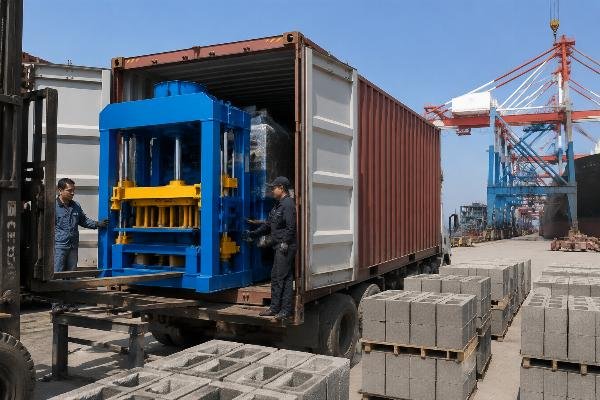
An AAC line is bulky. It does not fit neatly into standard dry containers. Most of the heavy components, such as the autoclaves and mold boxes, require flat-rack or open-top containers, often referred to as frame cargo. This type of shipping introduces complexity because each piece must be securely lashed and individually documented.
A common mistake is grouping multiple distinct machines under one line item in the packing list. For example, listing "AAC Line Parts" as a single entry for ten different containers. This triggers a red flag for customs inspectors who need to assess duties for each specific type of machinery. Some components may qualify for lower duty rates due to their use in affordable housing projects, while others do not. Without separation, the entire shipment may be subjected to the highest applicable rate, or worse, held for valuation disputes.
I recall a shipment where we split a full AAC block production line China setup into twelve separate containers. Each container had its own unique packing list, cross-referenced with a master manifest. We listed every bolt, motor, and control panel with its respective weight and dimensions. This level of detail allowed the Bahraini customs broker to pre-clear the shipment before the vessel arrived. When the inspector opened the first container, the physical count matched the document exactly. The inspection took hours instead of days.
| Documentation Element | Standard Practice | Optimized Practice for GCC |
|---|---|---|
| Goods Description | Generic (e.g., "Machine") | Specific (e.g., "Hydraulic AAC Cutting Machine Model X") |
| HS Code Usage | Single code for entire line | Individual codes for each major component |
| Packing List Detail | Total weight per container | Itemized weight and dimensions for each piece |
| Certificate of Origin | General format | Detailed with manufacturer seal and chamber of commerce legalization |
[NEED_CITE: Construction Project Management benchmarks for import documentation accuracy]
Furthermore, ensure that the wooden packaging meets international phytosanitary standards. Bahrain strictly enforces rules against untreated wood. If your pallets or crates lack the IPPC mark, they will be rejected or require expensive fumigation at the port, causing further delays. Your manufacturer should use heat-treated wood or metal crates for all structural supports.
What Logistics Strategy Fits Refugee Housing Timelines?
Balance sea freight for main units with air freight for critical spares to mitigate installation downtime.
Refugee housing projects operate on tight political and humanitarian timelines. You cannot afford to wait three months for a replacement part if a critical component fails during commissioning. While sea freight is cost-effective for the heavy machinery, it is too slow for emergency repairs.
A strategic approach involves splitting the logistics. Ship the main production line—the mixer, pourer, cutter, and autoclaves—via sea freight. These items are heavy, bulky, and not urgently needed until the civil works are complete. However, identify the critical spare parts that are prone to wear or failure during the initial startup phase. These include PLC modules, hydraulic seals, sensor arrays, and specialized cutting wires.
Send these critical spares via express courier services like DHL or FedEx. They will arrive within days, long before the main equipment docks. This allows your local installation team to familiarize themselves with the components and have replacements on hand immediately. I have seen projects stall for weeks because a single faulty sensor halted the entire automated line, and the replacement was stuck on a slow boat. By air-freighting these small but vital items, you create a buffer against operational delays.
Additionally, consider the timing of your order relative to the construction schedule. Do not ship the equipment until the foundation is ready. Storing large AAC machinery in a humid port environment can lead to corrosion of electrical panels and hydraulic systems. Coordinate closely with your civil contractor to ensure the site is prepared for immediate installation upon clearance. A AAC block production line China supplier with experience in turnkey projects will help you plan this timeline, ensuring that the equipment arrives just-in-time for installation, reducing storage costs and risk of damage.
Which Supplier Capabilities Ensure On-Time Delivery?
Choose manufacturers with proven MENA export experience and CE/SGS certification to mitigate regulatory risks.
Not all manufacturers are equipped to handle the stringent requirements of the Middle Eastern market. Many factories focus solely on production and lack the internal expertise to manage complex export documentation. When evaluating potential partners, look for evidence of previous successful exports to the GCC region.
Ask for references or case studies from similar projects. A supplier who has previously navigated the customs procedures in Bahrain, Saudi Arabia, or the UAE will understand the nuances of local regulations. They will know which documents need legalization, which HS codes are accepted, and how to package equipment to withstand the harsh maritime environment.
Certification is another critical factor. CE and SGS certifications are not just badges of quality; they are often mandatory for clearing customs and securing government tenders. [NEED_CITE: GCC Customs Union regulations on safety and quality standards for imported machinery] These certifications verify that the equipment meets international safety and performance standards, reducing the likelihood of technical inspections that can delay clearance.
Moreover, consider the supplier’s ability to provide after-sales support. Installing an AAC line requires specialized knowledge. A supplier that offers remote diagnostic assistance and on-site training can significantly reduce the learning curve for your local operators. This is crucial for refugee housing projects where the workforce may not have prior experience with automated concrete production. Training ensures that the line runs efficiently from day one, maximizing the social impact of the project.
Conclusion
Logistics precision is the hidden driver of project success in humanitarian construction.
Sourcing an AAC block production line China for Bahrain’s refugee housing initiatives demands more than just finding the lowest price. It requires a strategic approach to customs compliance, documentation accuracy, and logistics planning. By prioritizing correct HS classification, detailed packing lists, and a split-shipping strategy for spares, you can avoid costly delays and ensure timely delivery. Partnering with a manufacturer who understands the specific regulatory landscape of the Middle East further mitigates risk, turning a complex procurement process into a smooth operational success.
Leave a Reply