

Block Cuber Spare Parts Stocking Guide for Developers | Shiyue Manufacturer
Buying every spare part in bulk is a trap that drains working capital while leaving your most critical vulnerabilities exposed.
Effective block cuber spare parts stocking requires a tiered inventory strategy that prioritizes locally available hydraulic seals and industrial-grade sensors over bulk generic components, specifically designed to counteract the accelerated wear caused by tropical humidity and unstable power grids.
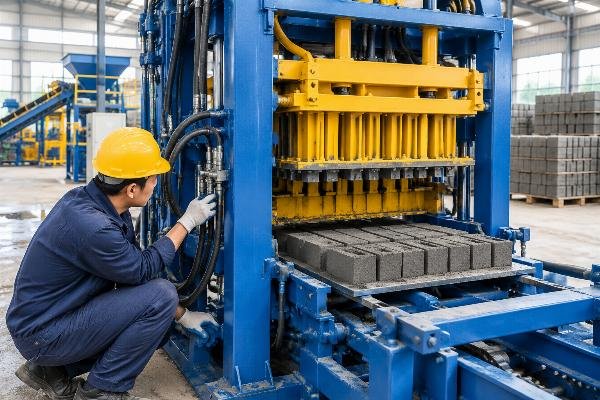
The rain had just started in Surabaya when the call came. A client’s fully automatic line had stopped cold. The issue was not a major mechanical failure but a minor seal leak in the hydraulic cylinder of the block cuber. Because he had opted for a "cost-saving" approach by skipping the recommended seal kit, we were forced to air freight a single set from Linyi. The part cost was negligible, but the downtime lasted twenty days. During that period, the crew remained on payroll, fresh concrete batches were wasted, and the production schedule for a government housing project slipped. This scenario is not an anomaly; it is the standard consequence of ignoring the specific environmental stressors that define operations in Southeast Asia, Africa, and Latin America. [NEED_CITE: impact of humidity on hydraulic seal degradation rates]
Managing a block manufacturing plant in emerging markets means fighting two invisible enemies: moisture and voltage fluctuation. These factors do not just wear down machines; they change the failure profile of every component. A block cuber spare parts stocking guide must therefore move beyond simple manufacturer recommendations and adapt to local logistics realities. The goal is not to have everything on hand, but to have the right things within reach when the grid flickers or the monsoon arrives.
Why Do Block Cubers Fail Unexpectedly in Tropical Climates?
Humidity and power instability are not merely background conditions; they are active agents of mechanical decay. In regions like Indonesia or Nigeria, the ambient moisture level consistently challenges the integrity of hydraulic systems and electrical enclosures. Standard maintenance schedules derived from temperate climate data often fail here because they underestimate the rate of corrosion and insulation breakdown.
Hydraulic systems are particularly vulnerable. Water ingress into hydraulic oil leads to cavitation and seal swelling. When a block cuber operates in a high-humidity environment without adequate filtration or frequent oil changes, the seals harden and crack far faster than their rated service life suggests. [NEED_CITE: hydraulic failure modes in high-humidity environments] I have seen cylinders that should last years fail within months because the local team used standard commercial seals instead of those rated for tropical industrial use. The difference is not in the price tag but in the material compound’s resistance to hydrolysis.
Electrical instability presents another layer of risk. Voltage spikes are common in areas where the grid infrastructure is under development. These spikes do not always trip breakers; sometimes, they degrade sensitive components gradually. Proximity sensors and PLC inputs are the first casualties. A sensor that works perfectly in a factory with stable power may burn out repeatedly in a plant relying on a fluctuating local supply. This is why industrial-grade sensors with built-in surge protection are not a luxury but a necessity for reliable operation.
The lesson is clear: environmental factors dictate the failure rate. Ignoring them leads to a reactive maintenance culture where you are always chasing the next breakdown. By understanding how humidity and power quality affect specific components, you can predict which parts will fail and stock them accordingly. This proactive approach transforms maintenance from a cost center into a reliability strategy.
How to Categorize Spare Parts for Optimal Stocking?
Not all spare parts are created equal. Treating them as a homogeneous group leads to either excessive inventory costs or critical shortages. A tiered inventory model divides components into three classes based on criticality, failure frequency, and lead time. This method ensures that capital is not tied up in slow-moving items while keeping essential parts readily available.
Class A items are critical components with high failure rates or long lead times. These must be kept in local stock at the plant. For a block cuber, this includes hydraulic seal kits, proximity sensors, and filter elements. The cost of holding these items is minimal compared to the cost of a single day of downtime. If a seal fails, you need to replace it immediately. Waiting for shipping is not an option.
Class B items are fast-moving but less critical or have moderate lead times. These can be stored in a regional hub or ordered with express shipping. Examples include solenoid valves, relay modules, and standard bearings. While important, a short delay in receiving these parts may not halt production entirely if temporary workarounds exist. However, having them available within a few days prevents minor issues from escalating.
Class C items are slow-moving, durable components with very long lead times. These include structural frames, large motors, and main PLC units. These parts rarely fail and are expensive to store. It is more cost-effective to rely on central warehouse stock or manufacturer direct shipping for these items. The key is to ensure that the supplier has a reliable express shipping option, such as DHL or FedEx, to minimize wait times if a rare failure occurs.
| Inventory Class | Component Examples | Stocking Location | Lead Time Tolerance |
|---|---|---|---|
| Class A | Seal kits, Sensors, Filters | On-site Local Stock | Immediate |
| Class B | Solenoids, Relays, Bearings | Regional Hub / Express | Few Days |
| Class C | Motors, PLC Units, Frames | Central Warehouse | Weeks |
This classification system allows plant managers to optimize working capital. Instead of guessing what to buy, you allocate resources based on data-driven risk assessment. [NEED_CITE: inventory management best practices for industrial machinery] The result is a leaner inventory that provides higher reliability.
Which Components Require Immediate Local Availability?
Identifying the right Class A items is the core of any effective block cuber spare parts stocking guide. These are the components that fail first and cause the most disruption. In tropical climates, the list is specific and non-negotiable.
Hydraulic seal kits are the top priority. As mentioned earlier, humidity accelerates seal degradation. Having multiple sets of seals for cylinders, pumps, and valves on hand is essential. These kits are small, inexpensive, and easy to store. Yet, their absence can stop production for weeks. I always recommend keeping at least three full sets of seals for every critical hydraulic circuit.
Proximity sensors are the second most critical item. These small devices detect the position of pallets and molds. They are exposed to dust, vibration, and electrical noise. In unstable power environments, they fail frequently. Keeping a stock of industrial-grade sensors ensures that you can replace them quickly without waiting for international shipping. It is crucial to use sensors that match the original specifications in terms of voltage and switching distance.
Filter elements for hydraulic and fuel systems are also vital. Clogged filters reduce efficiency and cause overheating. In dusty environments, air filters need frequent replacement. Having a supply of these consumables prevents premature wear on pumps and engines. They are cheap to buy in bulk and take up little space, making them ideal for local stocking.
Other items to consider include fuses, relay modules, and emergency stop buttons. These electrical components are prone to damage from power surges and physical wear. Having them on hand allows for quick repairs during routine maintenance or unexpected failures. The key is to focus on items that are small, cheap, and critical to continuous operation.
What Is the Real Cost of Waiting for Parts?
Many plant managers hesitate to stock spare parts due to the upfront cost. However, the true cost of waiting is often hidden in lost production, wasted materials, and labor inefficiencies. Calculating this cost reveals the financial logic behind maintaining a strategic inventory.
Consider the case of a mid-sized block plant in East Africa. The owner decided to save money by not stocking hydraulic hoses. When a hose burst, production stopped for ten days while waiting for a replacement. During this time, the plant lost thousands of blocks in potential revenue. Additionally, the concrete mix prepared for the run had to be discarded, resulting in material waste. The crew was still paid, adding to the loss. The total cost of this single incident was many times higher than the price of a year’s supply of hoses.
Labor costs are another significant factor. When a machine is down, skilled technicians are idle. Their time is valuable, and keeping them waiting for parts is an inefficient use of resources. Furthermore, emergency shipping fees for individual parts are exorbitant. Air freight costs can exceed the value of the part itself, especially for heavy items. By stocking critical parts locally, you avoid these emergency fees and keep your team productive.
There is also the reputational cost. For contractors working on government projects or tight deadlines, delays can lead to penalties and loss of future contracts. Reliability is a key selling point in the construction industry. A plant that consistently meets delivery schedules builds trust with clients. Conversely, frequent breakdowns damage your reputation and make it harder to secure new business.
The calculation is straightforward: compare the annual cost of holding inventory against the potential loss from a single major downtime event. In most cases, the risk mitigation provided by a well-stocked inventory far outweighs the holding costs. This is especially true for Class A items, which are low-cost but high-impact.
How to Implement a Preventive Maintenance Schedule?
Stocking parts is only half the battle. The other half is using them effectively through a preventive maintenance schedule. Regular checks extend part life and reduce the frequency of emergency orders. A well-executed maintenance plan turns reactive repairs into predictable tasks.
Start by creating a concrete block machine maintenance checklist tailored to your local conditions. This checklist should include daily, weekly, and monthly tasks. Daily tasks might include checking oil levels, inspecting sensors for dirt, and listening for unusual noises. Weekly tasks could involve cleaning filters and tightening loose connections. Monthly tasks should cover more in-depth inspections, such as checking seal condition and testing electrical components.
Involve your operators in this process. They are the first to notice changes in machine behavior. Train them to recognize early signs of wear, such as slow cylinder movement or erratic sensor readings. Encourage them to report these issues immediately so that they can be addressed before they lead to failure. This proactive approach reduces the likelihood of unexpected breakdowns.
Use your stocked spare parts during scheduled maintenance rather than waiting for failure. For example, replace seals and filters at regular intervals based on operating hours, even if they appear to be functioning well. This preventive swap ensures that components are always in good condition and reduces the risk of sudden failure. It also allows you to plan downtime during off-peak hours, minimizing production impact.
Finally, keep detailed records of all maintenance activities and part replacements. This data helps you refine your inventory strategy over time. You may find that certain parts last longer than expected, allowing you to reduce stock levels. Conversely, you might discover that some components fail more frequently than anticipated, prompting you to increase inventory. Continuous improvement is key to maintaining an efficient and reliable operation.
Conclusion
Strategic inventory management is the backbone of uninterrupted block production in challenging environments.
By categorizing spare parts into tiers and focusing on local availability for critical components like seals and sensors, you protect your plant from the hidden costs of downtime. This approach balances capital efficiency with operational reliability, ensuring that your block cuber runs smoothly regardless of external conditions.
Leave a Reply