

Direct Import Paver Block Machine for Malaysia Precast Suppliers
Buying the biggest machine is not the fastest route to profit; matching vibration frequency to local aggregate density is.
Successful importation of a Direct Import Paver Block Machine Malaysia strategy relies on customizing mold tolerances to ±1mm and tuning hydraulic pressure for local sand mixes, rather than simply selecting the highest capacity unit. Generic equipment often fails because it ignores the specific dimensional standards and material characteristics prevalent in Malaysian precast operations.
I remember standing in a humid workshop in Johor, watching a newly installed line struggle to release interlocking bricks. The operator was frustrated, applying extra oil to the molds, which only attracted more dust and caused further sticking. The issue was not the machine’s power, but the mold clearance. The supplier had provided standard international molds with ±3mm tolerance, but the local clay-sand mix expanded slightly during curing. By switching to precision-machined molds with tighter tolerances and adjusting the vibration amplitude, the release became smooth. This detail is often overlooked when buyers focus solely on the price of a Direct Import Paver Block Machine Malaysia. [NEED_CITE: impact of mold tolerance on brick release efficiency]
This experience highlights why technical compatibility matters more than initial cost. When evaluating options for a Direct Import Paver Block Machine Malaysia, buyers must look beyond the brochure specifications.
Why Do Generic Paver Machines Fail in Malaysia?
Local brick dimensions and aggregate types require customized molds and vibration settings that generic imports rarely provide.
Many investors assume that a machine working well in China or Europe will perform identically in Southeast Asia. However, the raw materials differ significantly. Malaysian aggregates often have higher moisture content and different particle shapes compared to northern hemisphere sources. A generic machine set to standard vibration parameters may over-compact or under-compact the mix, leading to weak edges or surface cracks.
Consider a case where a new plant in Penang faced consistent power fluctuations. The standard 30kW motor on their imported unit struggled to maintain consistent vibration frequency during voltage drops. This resulted in uneven density across the paver blocks. Upgrading to a heavy-duty motor setup with a stabilized power supply resolved the issue, ensuring consistent output regardless of grid stability. [NEED_CITE: relationship between motor power stability and concrete compaction quality]
When sourcing a Direct Import Paver Block Machine Malaysia, it is crucial to discuss these local conditions with the manufacturer. Ask about the machine’s ability to handle variable aggregate sizes and whether the vibration system can be tuned. A one-size-fits-all approach often leads to costly adjustments after arrival.
The failure of generic machines is rarely due to poor build quality, but rather a mismatch between the machine’s default settings and the local production environment. Customization is key to avoiding these pitfalls.
Key Specs to Check Before Importing
Focus on mold precision, motor power stability, and PLC automation levels to ensure consistent quality and reduced downtime.
Before finalizing any purchase, buyers should request detailed specifications on three critical components. First, mold steel thickness and heat treatment standards determine durability. Thin molds may warp under high pressure, altering brick dimensions over time. Second, hydraulic pressure settings must be adjustable to achieve the required density for interlocking pavers. Third, the PLC control logic should allow for easy adjustment of cycle times to match operator skill levels.
| Specification Factor | Generic Import Standard | Optimized for Malaysia |
|---|---|---|
| Mold Tolerance | ±3mm | ±1mm |
| Motor Power | Standard Rating | Heavy-Duty with Stability Control |
| PLC Automation | Basic Cycle Control | Adjustable Logic for Local Mixes |
| Vibration Tuning | Fixed Frequency | Variable Amplitude and Frequency |
A contractor in Kuala Lumpur once chose a manual line over a semi-automatic QT6-15 model to save costs. However, the manual line required significantly more labor and produced inconsistent output, delaying project completion. The semi-automatic option, while initially more expensive, offered higher daily output and better consistency, leading to a faster return on investment. [NEED_CITE: comparison of manual vs semi-automatic block machine productivity]
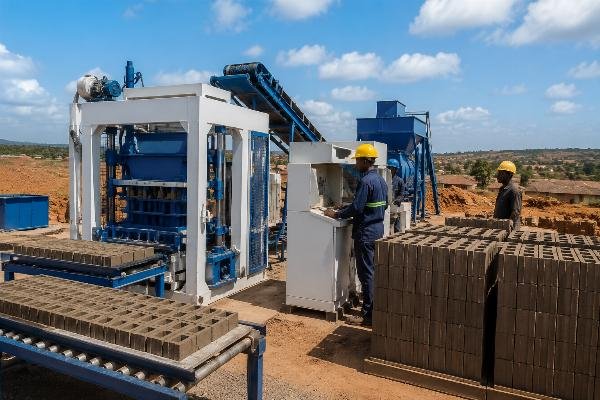
Shiyue’s QT6-15 and QT8-15 models are designed with these factors in mind. They offer CE certification and custom mold design services, ensuring that the equipment meets the specific needs of Malaysian producers. When evaluating a Direct Import Paver Block Machine Malaysia, verify that the supplier can provide these customized solutions.
Checking these specs beforehand prevents surprises during installation and operation. It ensures that the machine performs as expected from day one.
QT Series vs. Mobile Egg-Layers: Which Fits Your Business?
Compare fixed high-output lines for large projects against mobile units for flexible, smaller sites to align capacity with market demand.
Choosing between a stationary QT series machine and a mobile egg-layer depends on your business model. Stationary lines, such as the QT6-15 or QT10-15, are ideal for large-scale precast plants supplying major infrastructure projects. They offer high output and consistent quality but require a fixed foundation and significant space.
Mobile egg-layers, like the QMY6-25, are suitable for smaller sites or contractors who need to move equipment between locations. They produce blocks directly on the ground, reducing handling costs but offering lower output and less precise dimensions. An investor in a rural area might find the mobility of an egg-layer advantageous, while a supplier in an urban center would benefit from the high volume of a stationary line.
| Machine Type | Best For | Output Level | Mobility |
|---|---|---|---|
| QT Series (Stationary) | Large Precast Plants | High | Low |
| Mobile Egg-Layer | Small Sites/Contractors | Moderate | High |
A common misconception is that bigger machines always mean better profit. In reality, matching machine capacity to local market demand avoids idle inventory costs. A small contractor buying a large QT12-15 line may struggle to sell the excess output, tying up capital in unsold stock. Conversely, a large supplier using a small mobile unit may miss out on bulk contracts due to insufficient capacity. [NEED_CITE: economic impact of matching production capacity to market demand]
When considering a Direct Import Paver Block Machine Malaysia, assess your current and future project pipeline. Choose the equipment that aligns with your realistic sales volume, not just your aspirational growth.
The right choice balances output capability with operational flexibility, ensuring sustainable business growth.
How to Ensure Smooth Installation and Training?
Turnkey solutions including remote diagnostics and on-site operator training reduce downtime and accelerate production startup.
Importing machinery is only half the battle; getting it running efficiently is the other. Many buyers underestimate the importance of proper installation and training. Without expert guidance, operators may misuse the equipment, leading to premature wear or poor product quality.
A turnkey solution typically includes detailed installation manuals, remote diagnostic support, and on-site training sessions. Remote diagnostics allow technicians to troubleshoot issues via video call, minimizing travel costs and delays. On-site training ensures that operators understand the machine’s nuances, such as optimal mix ratios and maintenance schedules.
For example, a buyer in Indonesia initially struggled with a mobile block machine due to incorrect mold alignment. After receiving remote guidance and a site visit from a technician, the issue was resolved quickly. This experience underscores the value of comprehensive support packages. [NEED_CITE: benefits of on-site training and remote diagnostics for machinery operation]
When sourcing a Direct Import Paver Block Machine Malaysia, inquire about the supplier’s after-sales support. Do they offer remote assistance? Can they provide training materials in your local language? These factors significantly impact the long-term success of your investment.
Smooth installation and thorough training transform a complex machine into a reliable production asset.
Conclusion
Precise customization and robust support define successful machinery imports, not just low upfront costs.
Importing a Direct Import Paver Block Machine Malaysia requires careful attention to mold precision, vibration settings, and local market needs. By prioritizing technical compatibility and comprehensive training, buyers can avoid common pitfalls and achieve sustainable profitability. Focus on solutions that offer tailored specifications and reliable after-sales support to ensure long-term operational success.

Leave a Reply