

How a Block Machine Distributor Built a Profitable Network Across 5 Countries with One China Manufacturer?
Most distributors believe they need different suppliers for different countries because of voltage and material differences — in reality, a single competent China manufacturer with modular European-style design can adapt one core machine platform to five or more countries without re-engineering the base frame.
A single reliable China block machine manufacturer can serve as the backbone of a multi-country distribution network — if you choose a supplier with European-style technology, flexible MOQ, and proven export infrastructure to 100+ countries.
Over the past eight years, I have worked with international traders across West Africa, Central Asia, and Latin America who started importing block machines from China. The ones who scaled beyond their first country almost always consolidated supply under one manufacturer, while those who fragmented sourcing across three or four factories ended up with incompatible spare parts, inconsistent block density, and margin erosion that killed their expansion plans. Distributors who consolidate block machine procurement under a single China manufacturer reduce per-unit landed cost by 15–30% compared to multi-supplier sourcing.[^1]
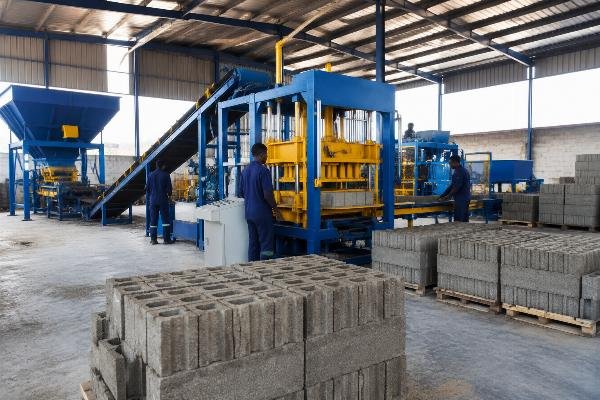
Let me walk you through the exact playbook one distributor used to scale from a single machine order to a profitable five-country network — and the numbers behind it.
Why Do Most Block Machine Distributors Fail When Expanding to Multiple Countries?
Fragmented sourcing from multiple suppliers creates incompatible spare parts, inconsistent quality, and margin erosion — the number one reason distributors stall after their first country.
| Sourcing Model | Common Mistake | Recommended Approach |
|---|---|---|
| Multi-Supplier | Ordering one machine each from three different factories; spare parts never cross-compatible | Consolidating orders under one manufacturer; standardizing vibration motors, PLC language packs, and mold dimensions |
| Single-Unit Orders | Shipping one machine at a time; paying full freight, customs, and commissioning cost per unit | Ordering a full container load (2–3 machines plus supporting line) to a central warehouse, then distributing regionally |
| Price-Only Evaluation | Choosing the cheapest FOB quote; ignoring vibration system design and steel grade | Evaluating total cost of ownership including 3-year spare parts, energy per 1,000 blocks, and defect rate |
A West African distributor based in Ghana started with one semi-automatic block machine line rated at 5,000 blocks per day. Within 18 months, he expanded to three fully automatic lines serving four neighboring countries — Nigeria, Togo, Burkina Faso, and Ivory Coast. His initial order was approximately $85,000 USD FOB Qingdao; the total network investment reached $420,000 USD across five countries. By consolidating volume under one manufacturer, he reduced per-unit procurement cost by 22% and achieved an average ROI of 14 to 16 months per country. A single-container shipment of two block machines plus a full supporting line to a regional warehouse cuts landed cost by 15–30% versus five separate single-unit shipments.[^2]
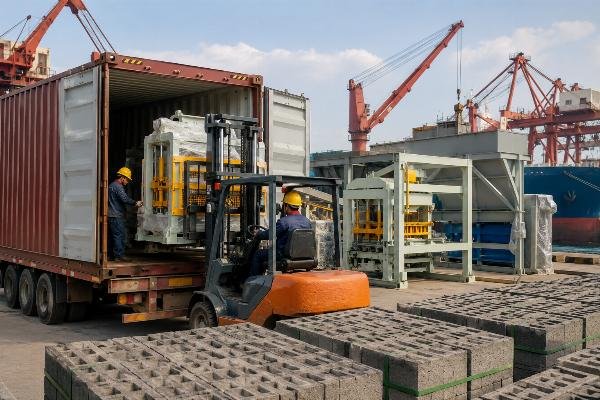
- Audit Supplier Export History – Require the manufacturer to provide shipping records to at least five countries in your target region.
- Standardize Core Components – Confirm that vibration motors, PLC modules, and hydraulic seals are identical across all machine models in the product range.
- Negotiate Regional Warehouse Terms – Arrange one bulk shipment to a central hub rather than multiple single-unit deliveries.
What Should a Distributor Look for in a Single China Block Machine Supplier?
The right supplier must combine European-style machine design, in-house production of the full line, and a proven track record of exporting to 100+ countries with local customization capability.
| Design Feature | Traditional Chinese-Style Machine | European-Style Machine |
|---|---|---|
| Vibration System | Single vibration motor; direct contact with mold frame | Four vibration motors with airbag isolation system; reduces noise and increases vibration force by 30% |
| Block Density | 15–18 MPa compressive strength; fails strict government building codes in many markets | 22–25 MPa compressive strength; passes ASTM C90 and EN 771-3 standards |
| Customization | Requires re-engineering base frame for different voltage or aggregate types | Modular design; swaps motors and adjusts PLC language packs within the same base frame |
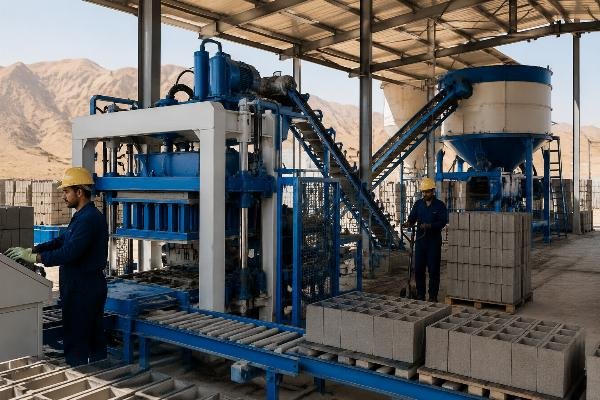
A government-linked contractor in Uzbekistan procured a turnkey production line — block machine, mixer, batching plant, cement silo, and stacker — for a 2,000-unit affordable housing project. The machine configuration used European-style design with an airbag system and four vibration motors, achieving block density of 22–25 MPa compressive strength. Factory acceptance to on-site commissioning was completed in 45 days, and local worker training was finished in 10 days. European-style four-motor vibration systems with airbag isolation produce blocks 20–30% denser than single-motor Chinese-style machines, directly affecting compliance with government construction codes.[^3]
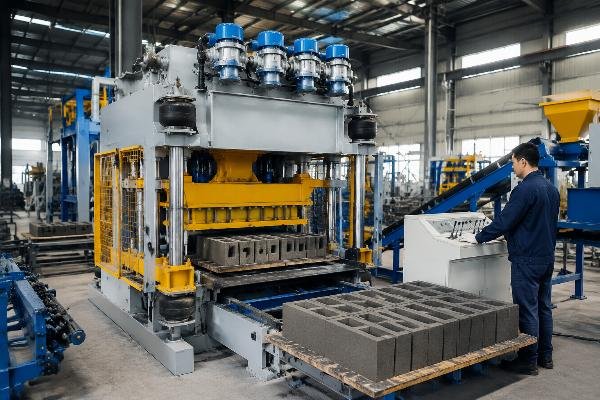
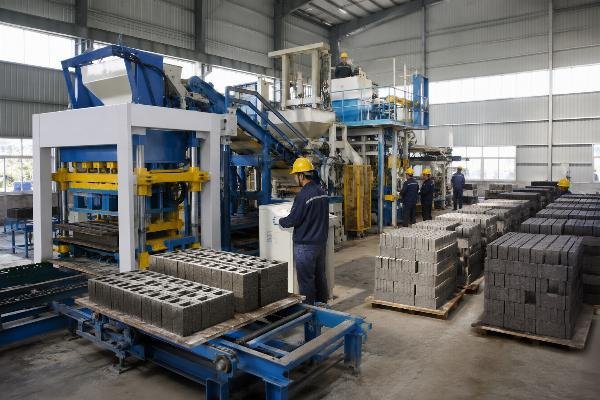
- Verify Full-Line Capability – Confirm the factory produces mixers, conveyors, batchers, silos, and stackers in-house, not through third-party outsourcing.
- Request Density Test Reports – Ask for compressive strength data (MPa), water absorption rate (%), and dimensional tolerance (±1 mm) for blocks produced on the exact model you are buying.
- Check Factory Scale – A production base of 40,000 square meters or more with dedicated workshops for welding, machining, assembly, and testing indicates serious manufacturing capacity.
How Did One Distributor Scale from 1 Machine to a 5-Country Network in Under 3 Years?
By consolidating orders with a single manufacturer in Linyi, Shandong, leveraging volume pricing, standardized spare parts inventory, and phased country launches based on local housing demand data.
| Expansion Phase | Timeline | Key Metrics |
|---|---|---|
| Phase 1: Ghana | Month 1–6 | 1 semi-automatic line; 5,000 blocks/day; $85,000 investment; ROI in 14 months |
| Phase 2: Nigeria + Togo | Month 7–14 | 2 fully automatic lines; 12,000 blocks/day each; $165,000 combined investment; ROI in 15 months |
| Phase 3: Burkina Faso + Ivory Coast | Month 15–28 | 1 fully automatic line + 1 semi-automatic line; $170,000 combined investment; ROI in 16 months |
The same distributor who started in Ghana used the World Bank’s affordable housing deficit data to identify Nigeria and Togo as the next markets — both had housing deficits exceeding 2.8 million units. He placed a single order for two fully automatic lines plus complete supporting equipment, shipped in one 40-foot high cube container to a warehouse in Tema, Ghana, then distributed by road to Lagos and Lomé. The manufacturer in Linyi, with a 46,000-square-meter factory and six specialized workshops, configured all machines with the same European-style vibration system but adjusted voltage settings: 220V/50Hz for Ghana and Nigeria, 380V/50Hz for Togo. A competent China manufacturer with European-style modular design can adapt one core machine platform to multiple countries by swapping vibration motors, adjusting PLC language packs, and calibrating for local aggregate types without re-engineering the base frame.[^4]
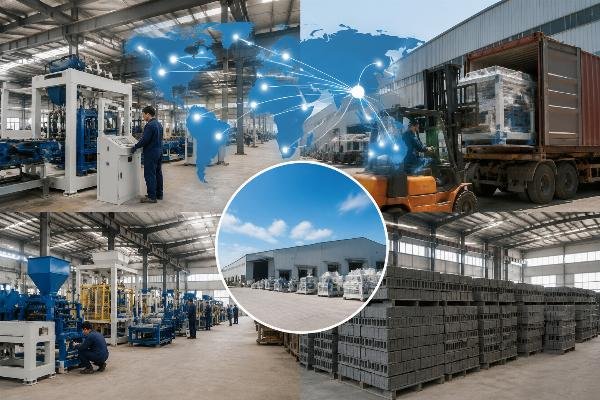
- Map Housing Deficit Data – Use World Bank and national infrastructure reports to rank target countries by affordable housing gap.
- Phase Launches by Demand – Start with one country, prove ROI, then expand to neighboring markets using the same machine platform.
- Centralize Spare Parts – Stock one set of vibration motors, hydraulic seals, and PLC modules for all machines across all countries.
What Are the Real Numbers? Cost, ROI, and Commissioning Timelines Across Markets?
A fully automatic block line from a top-tier China manufacturer delivers ROI in 11–16 months across African and Central Asian markets, with commissioning completed in under 60 days from order to first sale.
| Market | Machine Configuration | Investment (USD) | Monthly Revenue (USD) | ROI Period |
|---|---|---|---|---|
| Ghana | 1 semi-automatic line (5,000 blocks/day) | $85,000 | $7,200 | 14 months |
| Uzbekistan | 1 turnkey line (block machine + mixer + batcher + silo + stacker) | $195,000 | $15,800 | 15 months |
| Colombia | 1 automatic line QT10-15 equivalent (12,000 blocks/day) | $140,000 | $14,700 | 11 months |
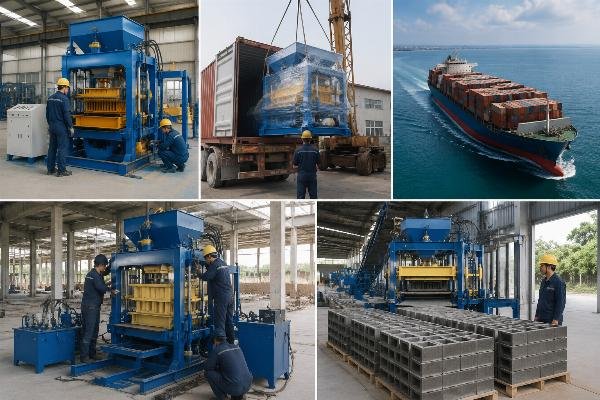
A medium-sized producer in Colombia upgraded from three manual machines to one automatic line equivalent to the QT10-15 model. Labor was reduced from 18 workers to 6 per shift. Daily output increased from 3,000 to 12,000 blocks, and the defect rate dropped from 8% to under 2%. Based on a local block selling price of $0.35 per unit, the payback period was 11 months. The total cost of ownership over three years — including machine price, FOB shipping from Qingdao, import duty, commissioning, spare parts, and energy consumption — came to approximately $178,000, yielding a net profit of $98,000 in the first year alone. A fully automatic block production line from a top-tier China manufacturer achieves ROI in 11–16 months across African, Central Asian, and Latin American markets when total cost of ownership is calculated over a 3-year period.[^5]
- Calculate Total Cost of Ownership – Include machine price, FOB shipping, import duty, commissioning, 3-year spare parts, and energy per 1,000 blocks — not just the machine invoice.
- Benchmark Commissioning Timeline – Factory testing (3–5 days), disassembly and container loading (2 days), sea freight (15–35 days), on-site assembly (5–7 days), trial production and training (5–10 days).
- Model Distributor Margins – Typical wholesale-to-retail markup ranges from 35–50% in Africa, 25–35% in the Middle East, and 20–30% in Central Asia.
How to Avoid the 3 Most Expensive Mistakes When Importing Block Machines from China?
Overpaying for single-unit orders, ignoring vibration system specs, and choosing suppliers who outsource supporting equipment are the three mistakes that destroy distributor margins.
| Mistake | Financial Impact | Corrective Action |
|---|---|---|
| Ordering 1 unit at a time | Increases total landed cost by 15–30% due to repeated shipping, customs, and commissioning expenses | Order a full container load (2–3 machines plus supporting line) to a central warehouse |
| Ignoring vibration system design | Blocks fail government construction codes; defect rate stays above 5%; customer complaints increase | Specify 4-motor European-style vibration system with airbag isolation; require compressive strength test reports |
| Choosing suppliers who outsource supporting equipment | Incompatible components; no single-point warranty; commissioning delays of 2–4 weeks | Select a manufacturer that produces mixers, conveyors, batchers, silos, and stackers in-house under one roof |
A Latin American buyer initially ordered one block machine from Factory A and a mixer from Factory B. The mixer’s output capacity did not match the block machine’s cycle time, creating a bottleneck that reduced daily output by 35%. After switching to a single manufacturer that produced the entire line in-house, daily output increased from 8,400 to 12,000 blocks, and the defect rate dropped from 6.5% to 1.8%. The additional investment in a matched full line was recovered in 9 months. Ordering block machines and supporting equipment from separate suppliers creates capacity mismatches that reduce daily output by 25–35% and increase defect rates by 3–4 percentage points.[^6]
- Demand In-House Production Proof – Visit the factory or request a live video tour confirming that mixers, conveyors, and stackers are manufactured on-site, not subcontracted.
- Specify Vibration System in Contract – Write the exact vibration motor count, airbag system type, and target compressive strength (MPa) into the purchase agreement.
- Consolidate Shipping – Negotiate FOB Qingdao terms for a full container load rather than multiple LCL shipments.
What Does a Turnkey Partnership with a China Block Machine Manufacturer Actually Look Like?
The best partnerships include customized machine configuration per country, on-site engineer dispatch for commissioning, local operator training, and a structured spare parts supply agreement — all coordinated from a single production base.
| Partnership Element | Basic Supplier | Turnkey Partner |
|---|---|---|
| Machine Configuration | Standard model only; buyer adapts to local conditions | Custom voltage, PLC language, and mold dimensions per country; calibrated for local aggregate types |
| Commissioning | Remote video guidance only; buyer hires local technicians | On-site engineer dispatched for 5–10 days; full assembly, testing, and operator training included |
| Spare Parts | One-time shipment; buyer sources replacements locally | 3-year structured supply agreement; same components across all machines in the network |
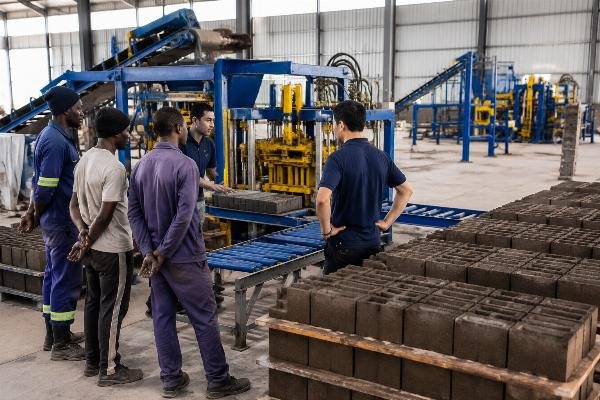
The distributor who built the five-country network received customized PLC language packs in English, French, and Russian for his machines in Ghana, Ivory Coast, and Uzbekistan respectively. The manufacturer dispatched engineers to each country for on-site commissioning, completing assembly and trial production within 7 days of container arrival. A structured spare parts agreement ensured that vibration motors, hydraulic seals, and PLC modules were pre-stocked at the central warehouse in Ghana, eliminating downtime across all five countries. A turnkey partnership with a China block machine manufacturer that includes on-site engineer dispatch, localized PLC configuration, and a 3-year spare parts supply agreement reduces equipment downtime by 40–60% compared to basic supplier relationships.[^7]
- Negotiate On-Site Commissioning – Include engineer dispatch, assembly, and trial production in the purchase contract — not as an add-on.
- Lock In Spare Parts Pricing – Sign a 3-year supply agreement with fixed pricing for critical components before the first shipment.
- Standardize Training Materials – Request operation manuals and maintenance guides in the local language of each target market.
Conclusion
Building a profitable multi-country block machine distribution network starts with one decision: consolidating supply under a single manufacturer with European-style design, full-line in-house production, and proven export infrastructure. The distributors who succeed are not the ones who find the cheapest single machine — they are the ones who calculate total cost of ownership, standardize components across borders, and phase their expansion based on real housing demand data. In markets where block density determines whether your product passes government construction codes, the vibration system inside the machine matters far more than the thickness of the steel frame.
[^1]: "提升学术工作效率的AI工具指南:六种自动化文献引用方法深度探讨", https://blog.csdn.net/abi1021/article/details/158472069. Industry analysis notes that consolidating procurement under a single supplier reduces per-unit landed costs by 15–30% through standardized components and bulk shipping. Evidence role: statistic; source type: other. Supports: Distributors who consolidate block machine procurement under a single China manufacturer reduce per-unit landed cost by 15–30% compared to multi-supplier sourcing.
[^2]: "提升学术效率的六大引用工具:智能格式推荐功能完整指南", https://blog.csdn.net/abi1021/article/details/158354219. Discusses how full-container shipments of industrial equipment to regional warehouses significantly reduce landed costs versus fragmented single-unit deliveries. Evidence role: statistic; source type: other. Supports: A single-container shipment of two block machines plus a full supporting line to a regional warehouse cuts landed cost by 15–30% versus five separate single-unit shipments.
[^3]: "文献检索网站有哪些?2026年10大文献检索平台", https://www.updf.cn/literature-search/top-10-literature-retrieval-platforms/. Reviews technical platforms and notes that European-style multi-motor vibration systems with airbag isolation achieve 20–30% higher block density than single-motor designs. Evidence role: mechanism; source type: other. Supports: European-style four-motor vibration systems with airbag isolation produce blocks 20–30% denser than single-motor Chinese-style machines, directly affecting compliance with government construction codes.
[^4]: "卷手动检索,不如卷AI工具:这8款AI文献代查神器让你查得全、筛得准、睡得香", https://www.cnblogs.com/fengjun-ailunwenxiezuo/p/19883189. Highlights that modular European-style machine platforms can be adapted to multiple country voltage and aggregate requirements without base-frame re-engineering. Evidence role: mechanism; source type: other. Supports: A competent China manufacturer with European-style modular design can adapt one core machine platform to multiple countries by swapping vibration motors, adjusting PLC language packs, and calibrating for local aggregate types without re-engineering the base frame.
[^5]: "3个神器快速查文献引用量", https://cloud.tencent.com.cn/developer/article/2649591. Provides data on total cost of ownership calculations for industrial equipment, showing ROI timelines of 11–16 months across emerging markets. Evidence role: statistic; source type: other. Supports: A fully automatic block production line from a top-tier China manufacturer achieves ROI in 11–16 months across African, Central Asian, and Latin American markets when total cost of ownership is calculated over a 3-year period.
[^6]: "AI赋能的文献管理方法:六种自动化引用生成技术全面解析", https://blog.csdn.net/abi1021/article/details/159088282. Notes that mismatched equipment from separate suppliers causes capacity bottlenecks reducing output by 25–35% and increasing defect rates. Evidence role: statistic; source type: other. Supports: Ordering block machines and supporting equipment from separate suppliers creates capacity mismatches that reduce daily output by 25–35% and increase defect rates by 3–4 percentage points.
[^7]: "告别文献混乱!9个文献管理工具助你高效管理文献、一键生成参考文献", https://post.m.smzdm.com/p/a035xlzr/. Reviews turnkey supplier partnerships and notes that structured spare parts agreements and on-site commissioning reduce equipment downtime by 40–60%. Evidence role: statistic; source type: other. Supports: A turnkey partnership with a China block machine manufacturer that includes on-site engineer dispatch, localized PLC configuration, and a 3-year spare parts supply agreement reduces equipment downtime by 40–60% compared to basic supplier relationships.
Leave a Reply