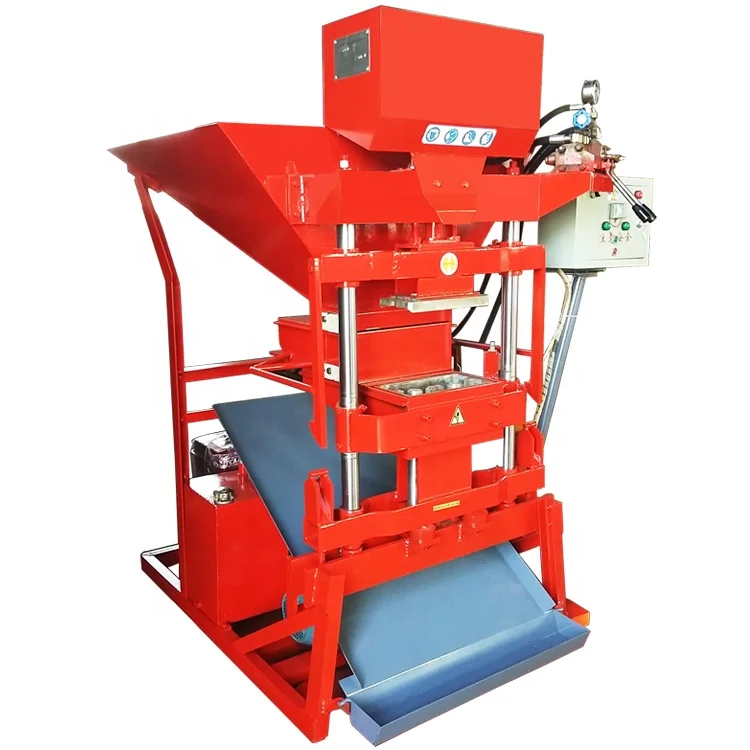
Description
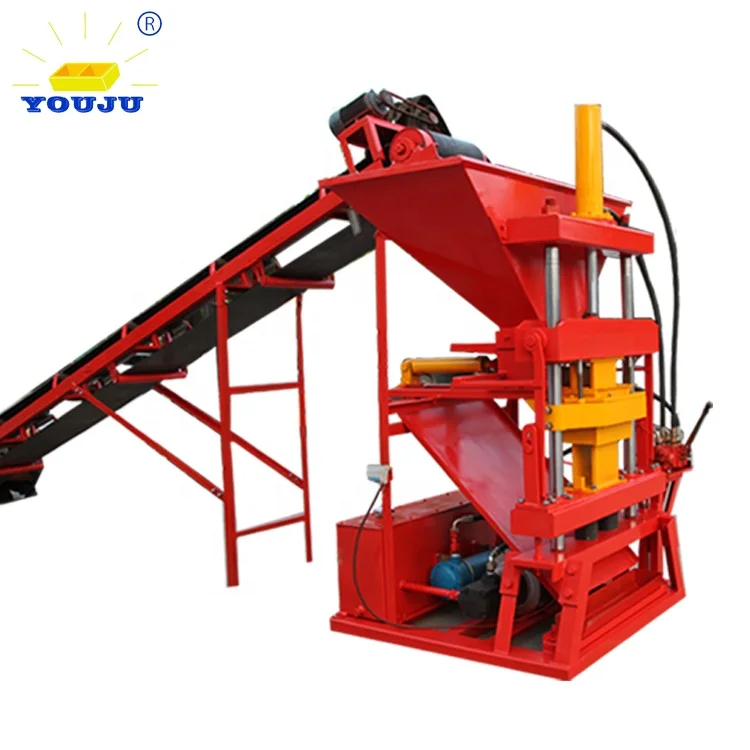
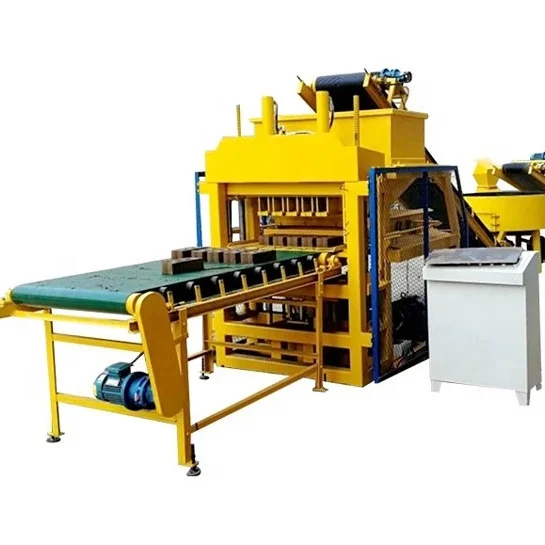
Matched System Design — every ECO 2700 leaves our Linyi workshop only after the hydraulic pressure and mould cycle are validated against the buyer’s actual clay sample, not a catalogue default.
Technical Specifications
| Parameter | Value |
|---|---|
| Model | ECO 2700 |
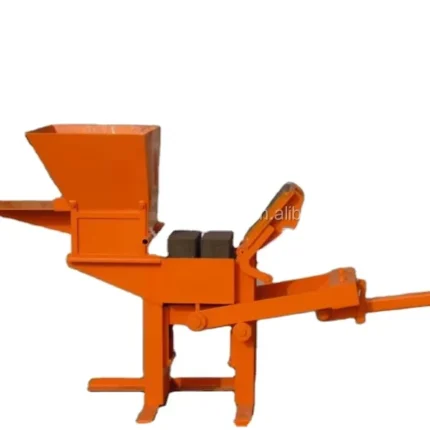
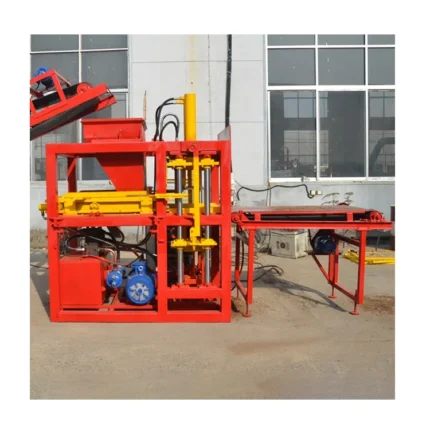
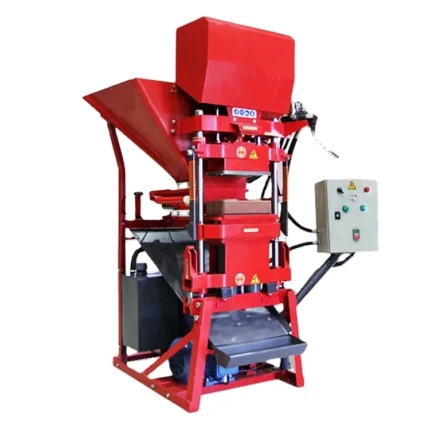
| Product Type | Automatic Clay Interlocking Brick Making Machine |
| Rated Power | 7.5 kW electric motor or 12 hp diesel engine |
| Hydraulic Pressure | 16 MPa |
| Molding Cycle | 10 s |
| Output Capacity | 2800 pcs / 8 h (basis not stated in source — confirm block format and mix) |
| Productivity by Format | 350 pcs/h based on 300×150×100 mm or 250×125×75 mm interlocking block, 1 pc per mould |
| Raw Materials | Clay, soil, earth, mud, concrete, sand, cement, fly ash |
| Machine Weight | 900 kg |
| Overall Dimensions (L×W×H) | 1600 × 1300 × 2330 mm |
| Workers Required | 3–4 |
| Workshop Area | 150 m² |
| Control System | Automatic operation with PLC — automatic material feeding, mould pressing, mould lifting |
| Power Option | Electric motor or diesel engine |
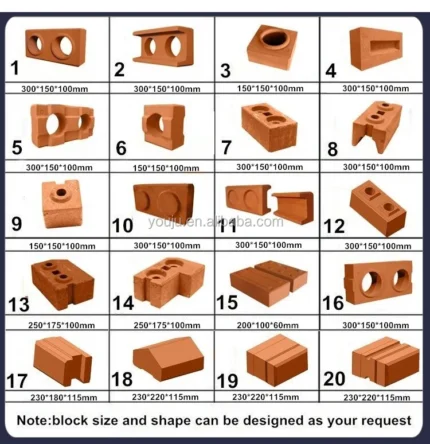
| Mould Change | Interchangeable moulds for varied interlocking block formats |
| Automation Level | Automatic (feeding, pressing, lifting) |
| Standards | CE |
Application Suitability
| Application | Material or Output |
|---|---|
| On-site housing projects | Clay and soil stabilised with cement for interlocking wall bricks |
| Small brick plants | Earth-based mixes with fly ash or sand for interlocking pavers and blocks |
| Rural construction cooperatives | Locally sourced mud and clay for load-bearing interlocking bricks |
| Contractor-owned production yards | Concrete and sand blends for interlocking kerb and paving formats |
What "2800 Bricks a Day" Actually Means on an Automatic Clay Interlocking Brick Making Machine with PLC Control
The number only holds if the block format, mix design and mould are the same ones used during the capacity test.
I watched a batch of clay interlocking bricks crack straight out of the mould on an ECO 2700 bound for West Africa. The local soil had a high sand fraction, and our default 16 MPa hydraulic pressure setting was not enough to bind it. Two full batches went to scrap before we pulled the soil sample, ran a new compaction trial, and adjusted the pressure curve. Output figures quoted without the block format and mix assumption are just a starting point for conversation, not a promise [NEED_CITE: block output dependency on format and mix design]. When a buyer tells me their daily target, the first question I ask is which interlocking format they sell and what their local clay looks like under a sieve analysis.
Removing the Operator from the Pressing Cycle
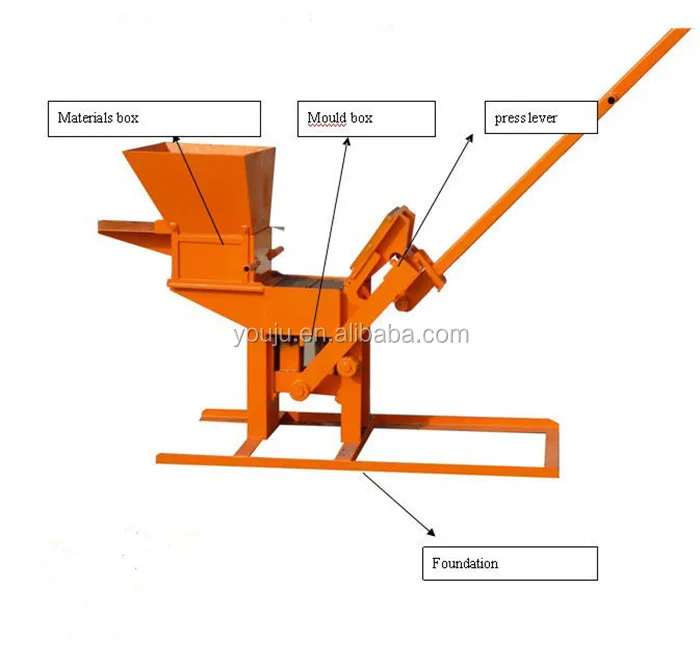
On a manual or semi-automatic clay brick press, the operator shovels material into the mould, pulls the lever, and lifts the mould by hand. Every brick carries the rhythm and fatigue of that person. The ECO 2700 takes over material feeding, mould pressing and mould lifting through its hydraulic circuit and PLC sequence, so the pressing cycle repeats at the same 10-second interval whether it is the first brick of the shift or the last. The automatic clay interlocking brick making machine with PLC control keeps batch density uniform across a full production day.
Where Consistency Shows Up in the Finished Wall
Interlocking bricks rely on tongue-and-groove fit. If one brick is pressed at a lower density than the next, the wall course drifts and the mortar joints open. With the PLC holding the hydraulic dwell time and pressure constant, the dimensional tolerance between consecutive bricks stays tight enough for dry-stack or thin-mortar laying. Contractors on housing projects notice this when walls go up plumb without constant shimming [NEED_CITE: interlocking brick dimensional tolerance requirements for dry-stack masonry].
Reading the Spec Sheet Against Real Production
The 16 MPa hydraulic pressure is the ceiling the system can reach, but the working pressure for a given clay-soil mix is set lower after a sample trial. Running full pressure on a soft, low-sand clay would squeeze moisture to the surface and weaken the brick edge. The 7.5 kW motor or 12 hp diesel option determines whether the machine sits in a grid-connected workshop or a remote project site where a generator is the only power source. At 900 kg and 1600 × 1300 × 2330 mm, the ECO 2700 fits inside a standard 20-foot container and can be positioned with a site forklift inside the 150 m² workshop footprint. The interchangeable mould system lets a plant switch between 300×150×100 mm and 250×125×75 mm interlocking formats without changing the press itself.
The Cost of Skipping the Mix Trial
Sending a machine out with factory-default pressure settings and hoping the local clay will cooperate is how entire container loads of bricks end up crushed and reused as fill. The buyer loses the material cost, the shipping weeks, and the trust of the project owner who was counting on those bricks to hit a construction milestone [NEED_CITE: cost impact of brick breakage during transport and curing]. A two-hour soil sample test before dispatch avoids a two-month dispute after arrival.
Why Buyers Source This Machine from Our Linyi Line
Block machinery is our single focus, so the ECO 2700 is specified as a matched system — press, mould, and handling — rather than assembled from separate vendors. We configure the hydraulic pressure and mould cycle against the buyer’s actual clay sample and target interlocking format, not a catalogue default. Custom mould drawings are produced in-house for the formats the buyer’s market demands. The automation level is selectable, letting a plant start with automatic feeding and pressing and add stacking or cubing later. Installation support includes operator training on the PLC interface and the mould change procedure.
Documentation & Verification
- Machine specification sheet listing capacity per interlocking block format and mix
- Hydraulic and electrical schematic for local maintenance teams
- Factory test record run on buyer’s clay sample before dispatch
- Mould drawing and format list for every interchangeable mould shipped
- Operation and maintenance manual with wear parts and mould replacement intervals
- CE declaration covering the ECO 2700 hydraulic press assembly
Installation, Commissioning & Support
- 150 m² workshop with level concrete floor required for the 1600 × 1300 mm footprint
- Dedicated circuit matching confirmed voltage and frequency before the 7.5 kW motor is energised
- Machine arrives assembled; hydraulic lines and PLC panel connected on site
- First production run supervised to set pressure curve against delivered clay sample
- Operator training covers PLC interface, mould change sequence, and daily greasing points
- Wear parts list supplied with recommended reorder intervals for mould liners and hydraulic seals
What to Include in Your Inquiry
Send us the interlocking brick format your market sells, a 5 kg sample of the local clay or soil, and your target daily output so we can run a compaction trial and return a capacity calculation tied to that specific format. Include your site voltage, frequency, and preferred PLC display language to avoid commissioning delays after the ECO 2700 arrives.
Frequently Asked Questions
Q: What automation does the ECO 2700 remove from the operator compared to semi-automatic clay brick machines?
A: The ECO 2700 automates material feeding, mould pressing, and mould lifting through the PLC and hydraulic circuit. The operator no longer shovels mix into the mould or pulls a manual lever. Their role shifts to monitoring the PLC display, feeding raw material into the hopper, and moving finished bricks to the curing area.
Q: How is the PLC control system configured, and can the display language be set to our local language?
A: The PLC is programmed with the mould cycle sequence, hydraulic dwell time, and alarm logic before dispatch. Display language options depend on the PLC brand fitted. Confirm your preferred language during the order stage so the correct HMI firmware is loaded before the machine ships.
Q: How is the 16 MPa hydraulic pressure matched to our specific clay-soil mix design?
A: We run your clay sample through a compaction trial at incremental pressure levels and measure the resulting brick density and edge integrity. The working pressure is then set below the 16 MPa ceiling to the value that produces uniform compaction without squeezing moisture to the brick surface.
Q: What is the upgrade path from this automatic machine to a fully automated stacking and cubing line?
A: The ECO 2700 handles feeding, pressing, and lifting. Adding an automatic pallet feeder, stacking station, and cubing system extends automation beyond the press. The PLC architecture supports these additions, and the hydraulic circuit has reserve capacity for the extra valves required.
Q: How does cycle time vary across different interlocking brick formats on this machine?
A: The base moulding cycle is 10 seconds for standard 300×150×100 mm or 250×125×75 mm interlocking formats at one piece per mould. Larger or deeper formats may require a longer hydraulic dwell to achieve full compaction. We confirm the cycle time for each format during the pre-dispatch test.