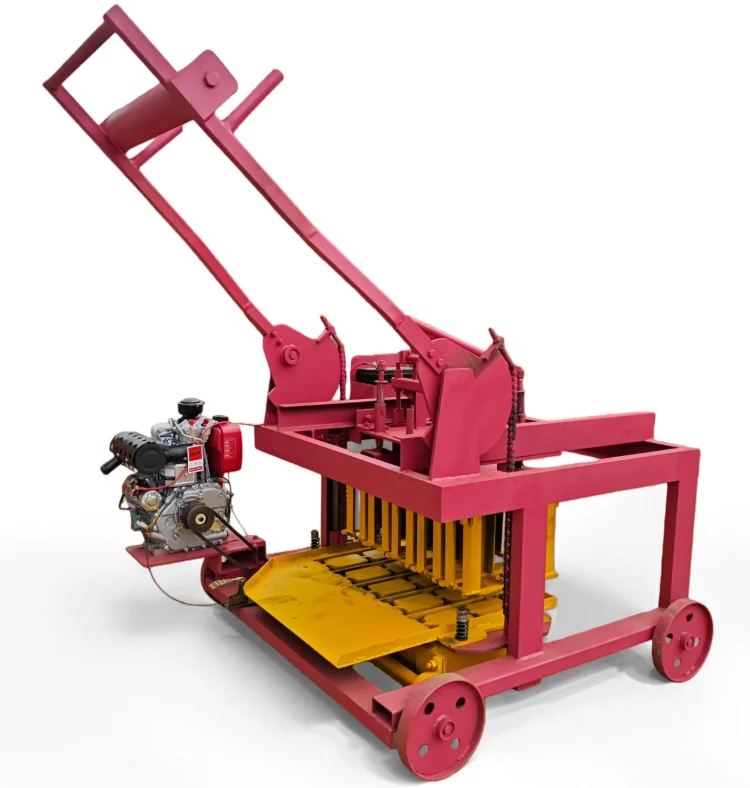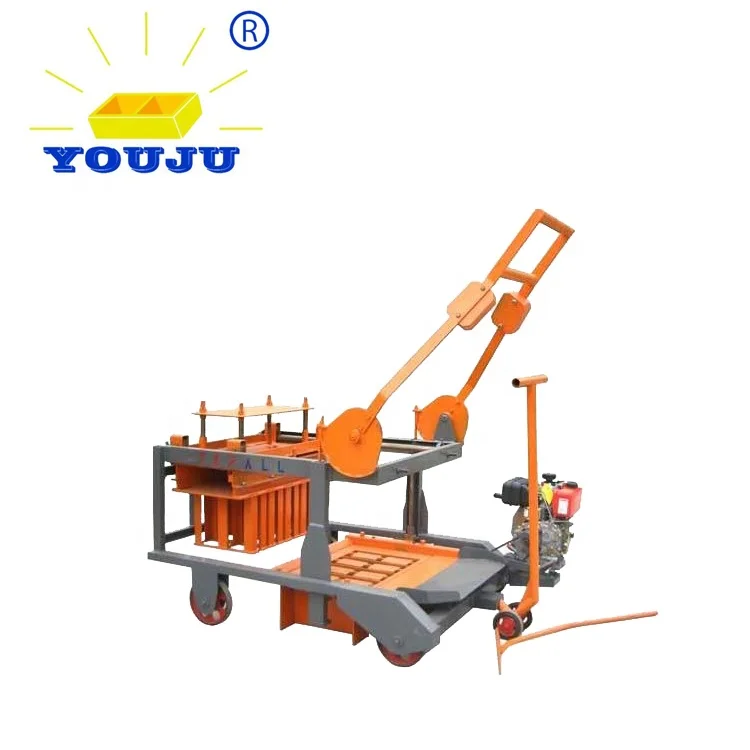
Description
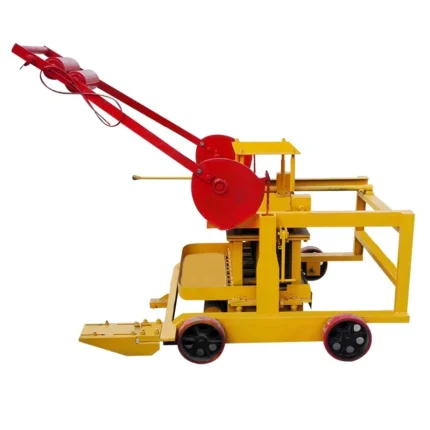
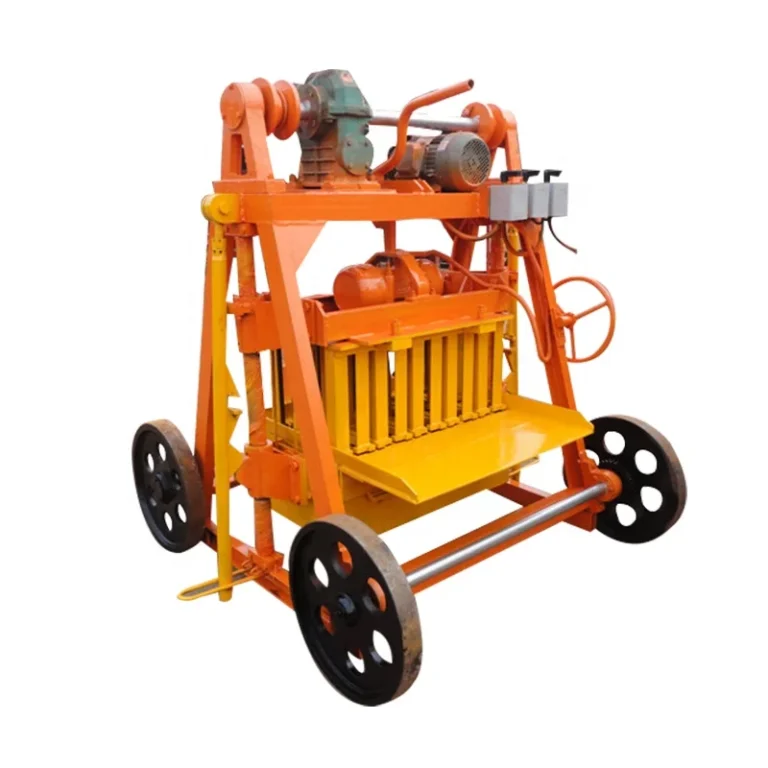
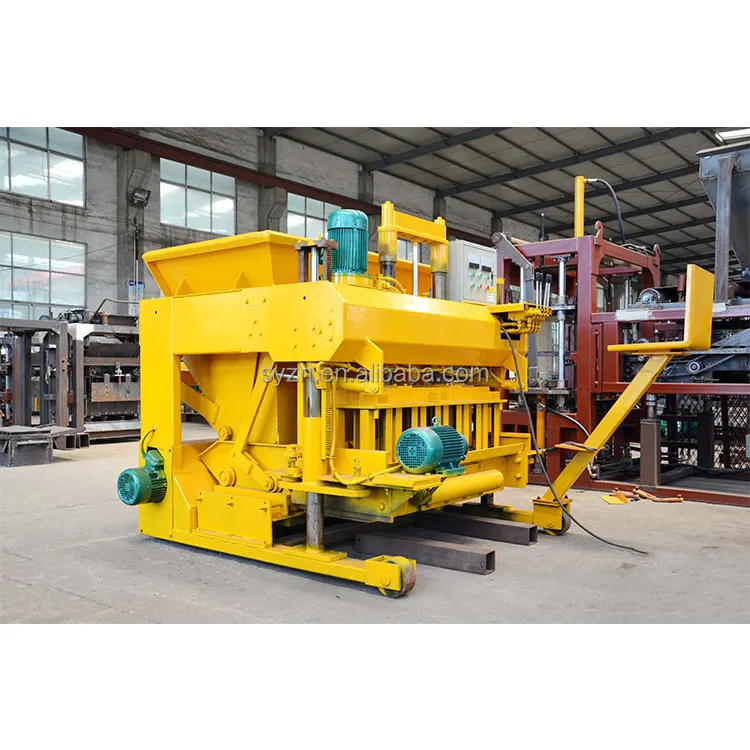
Configurable Control Architecture — the QMR4-45 mobile block machine serves as an automation entry point where PLC-controlled batching and semi-automatic feeding can be added as production scales, rather than forcing a full-system commitment upfront.
Technical Specifications
| Parameter | Value |
|---|---|
| Model | QMR4-45 |
| Product Type | Mobile Egg Laying Block Making Machine |
| Rated Power | 6 kW |
| Power Source Option | 6 kW electric motor or 6–8 HP diesel engine |
| Voltage & Frequency | 220V or 380V (frequency to be confirmed per market) |
| Control System | Manual / semi-automatic operation (PLC upgrade path available) |
| Overall Dimensions | 2420 × 1320 × 1650 mm |
| Net Weight | 810 kg |
| Moulding Cycle | 40–45 s |
| Output Capacity | 3000 pcs/day (8 hours) based on 400×200×200 mm hollow block, 4 pcs/mould |
| Output Capacity (alt) | 3500 pcs/day based on 400×150×200 mm hollow block, 5 pcs/mould |
| Output Capacity (alt) | 4500 pcs/day based on 400×120×200 mm hollow block, 6 pcs/mould |
| Pallet Requirement | None (egg-laying / mobile type) |
| Mould Format | Hollow block (multiple sizes, interchangeable) |
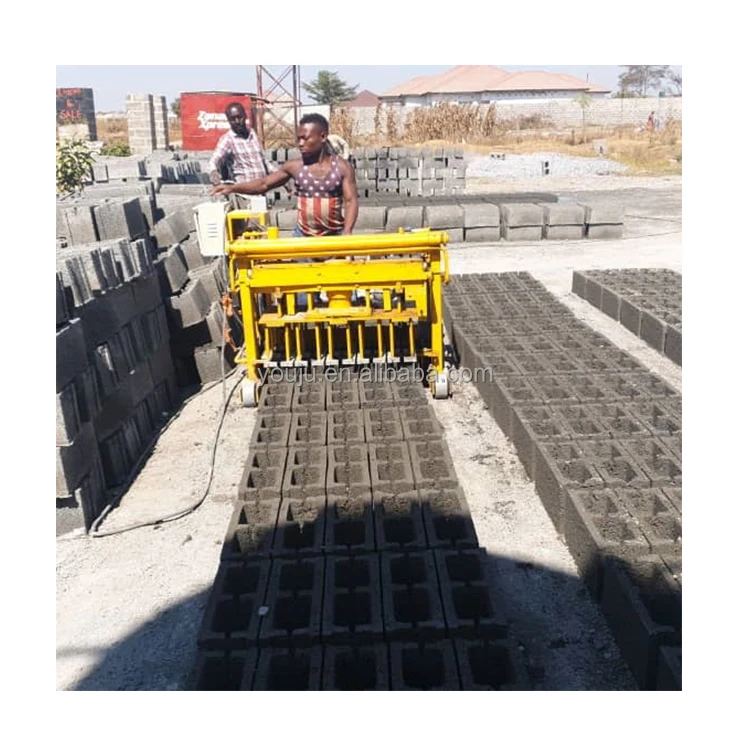
| Stacking Method | On-ground curing |
| Assembly State | Single unit, mobile on wheels |
| Standards | CE declared |
Application Suitability
| Application | Material or Output |
|---|---|
| On-site hollow block production at construction yards | Crushed stone, sand, cement, water — no fixed plant required |
| Small-scale block manufacturing in off-grid areas | Diesel-powered operation where grid electricity is unreliable |
| Housing and development project block supply | 400×200×200 mm, 400×150×200 mm, 400×120×200 mm hollow formats |
| Start-up block plants with minimal capital | Low-infrastructure egg-laying production, no pallet investment |
What "3000 Blocks Per Day" Actually Means on Your Site
The headline output figure only holds if your raw material, block format, and operating hours match the test conditions exactly.
I have watched contractors in West Africa receive a mobile egg-laying machine rated for a specific daily output, only to find that local sand with high clay content slowed the moulding cycle and weakened block integrity. The automatic mobile block machine was never the problem — the mismatch between the machine’s vibration settings and the actual aggregate was. Before confirming an order, sending a raw material sample allows the vibration force and cycle time to be adjusted so the output you see on day one is the output you sustain. [NEED_CITE:]
Where Automation Begins and Where It Grows
The QMR4-45 starts as a manually operated egg-laying unit, which is exactly what a first-time producer or a remote construction contractor needs. There is no pallet system to maintain, no stacking conveyor to troubleshoot, and no PLC to learn before the first block is laid. For buyers who intend to scale, the machine’s control architecture allows a PLC-controlled egg laying block machine configuration to be introduced later — adding batching accuracy, automatic material feeding, or sensor-based cycle timing without replacing the press itself.
The Upgrade Path Most Quotations Leave Blank
When a buyer purchases a mobile unit today and plans to add semi-automatic pallet feeding or an automatic stacker in twelve months, the compatibility question rarely gets asked until the upgrade budget is approved. The QMR4-45 is specified so that batching and feeding modules can be integrated at the machine’s input side while the egg-laying output remains unchanged. Confirming this upgrade path before dispatch prevents a situation where the existing machine must be replaced entirely to gain the automation the plant now requires. [NEED_CITE:]
Reading the Specs That Actually Determine Block Quality
The moulding cycle of 40–45 seconds is the single parameter that governs both daily output and block density. A shorter cycle may increase the piece count but reduces the vibration compaction time, directly lowering compressive strength. The 6 kW rated power drives both the vibration motor and the hydraulic system; if a diesel engine is selected instead, the 6–8 HP rating must deliver equivalent torque at the operating RPM to maintain consistent compaction. The 810 kg net weight provides the static mass that resists vibration displacement during moulding — a lighter frame would transmit more energy into the ground rather than into the block. Voltage and frequency must match the local grid precisely; a 380V motor running on a 415V supply will overheat within weeks, and a 50 Hz motor on a 60 Hz grid will run at higher RPM, altering the vibration frequency the mould was tuned for.
The Cost of Skipping Voltage and Frequency Confirmation
A mobile block machine that arrives with the wrong frequency rating cannot be corrected with a transformer. The motor must be replaced, the vibration tuning recalibrated, and commissioning delayed by weeks while the correct components are shipped. I have seen sites where the machine sat idle for an entire rainy season because the voltage and frequency were assumed rather than confirmed in writing before production. The QMR4-45 supports 220V and 380V configurations, but the Hz value and the control display language must be locked to your market before the unit leaves the factory. [NEED_CITE:]
Why This Machine Is Configured Before It Is Shipped
Block machinery is the single focus here, which means the QMR4-45 is not pulled from a catalogue and boxed. The mould is matched to the hollow block format your market actually sells, and custom mould drawings are accepted when standard sizes do not fit. The power source — electric or diesel — is selected based on your site conditions, not a default warehouse configuration. Automation level is selectable so a buyer can start with manual operation and add PLC-controlled batching when production volume justifies it. Installation support includes operator training on the specific mould change procedure and cycle timing for your chosen block format.
Documentation & Verification
- Line layout showing the QMR4-45 footprint within your site plan
- Capacity calculation stating the exact hollow block format and cycle time assumed
- Voltage, frequency, and control language confirmation sheet signed before production
- Factory test record on your specified mould format before dispatch
- Mould drawing and format list for every interchangeable mould included
- Operation and maintenance manual covering diesel and electric power source variants
Installation, Commissioning & Support
- Level ground surface required; no fixed foundation needed for the 810 kg mobile unit
- Power supply confirmed at 220V or 380V with dedicated circuit matching the 6 kW rated load
- Machine arrives as a single assembled unit on wheels; no on-site structural assembly required
- First-run moulding cycle calibrated to 40–45 s against your raw material sample
- Operator training covers mould change procedure and daily vibration system inspection
- Wear parts list and mould maintenance schedule provided at handover
Before You Request a Quote
To configure the QMR4-45 for your operation, the key details are the exact hollow block dimensions your market demands, the local sand and aggregate type you will use, and whether grid electricity at your site is stable enough for the electric motor or if diesel is required. Share your local voltage and frequency rating along with the preferred control interface language so these are confirmed before production begins.
Frequently Asked Questions
Q: How is daily output verified, and which block format does the 3000 pcs/day figure assume?
A: The 3000 pcs/day figure is based on an 8-hour shift producing 400×200×200 mm hollow blocks with 4 blocks per mould and a 40–45 second cycle. Output changes with each format — 3500 pcs/day for 400×150×200 mm and 4500 pcs/day for 400×120×200 mm. Always verify against the specific mould you will run.
Q: Can the QMR4-45 be upgraded from manual operation to PLC-controlled feeding later?
A: Yes. The machine’s control architecture allows PLC-controlled batching and semi-automatic material feeding to be integrated at a later stage without replacing the press. Confirm the intended upgrade timeline before dispatch so mounting points and wiring pathways are prepared during initial build.
Q: What voltage and frequency configurations are available, and is the control display language confirmed?
A: The QMR4-45 is available in 220V or 380V configurations. Frequency in Hz and control display language must be confirmed in writing before production to match your local grid standards and operator requirements. These details are locked during the pre-production verification stage.
Q: Which mould formats are included, and how long does a mould change take?
A: The QMR4-45 supports interchangeable moulds for multiple hollow block sizes including 400×200×200 mm, 400×150×200 mm, and 400×120×200 mm. Mould change time depends on operator familiarity; the procedure is covered during on-site training. Custom mould designs to buyer drawings are available.
Q: What is the realistic automation upgrade path from this mobile machine?
A: The upgrade path begins with adding PLC-controlled batching for mix consistency, followed by semi-automatic feeding to reduce manual labour at the input side. Full pallet-based automation requires transitioning to a stationary line. Each stage is discussed during the initial configuration to ensure compatibility.