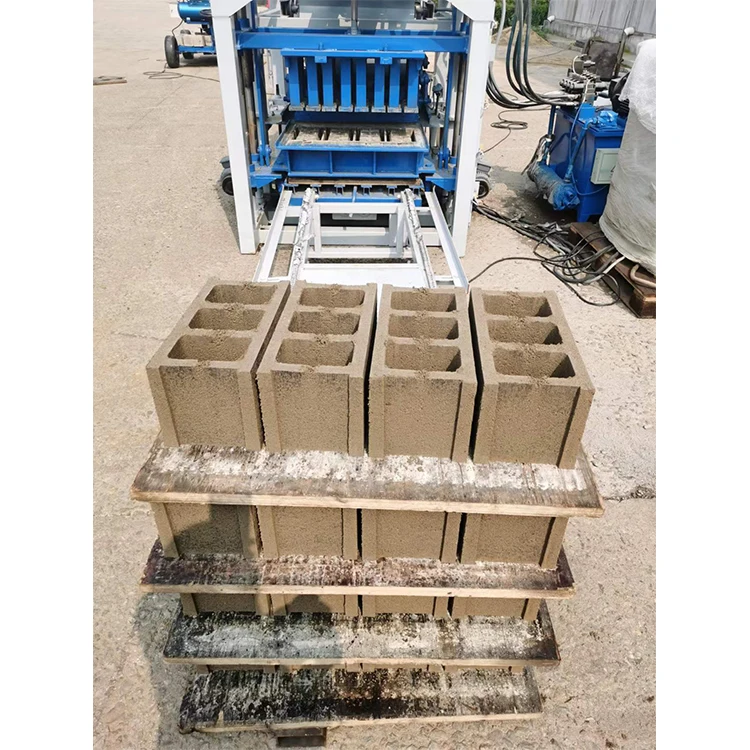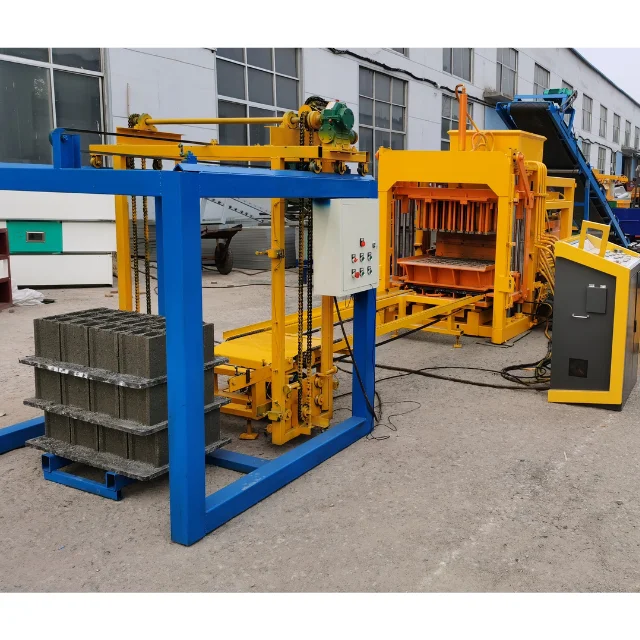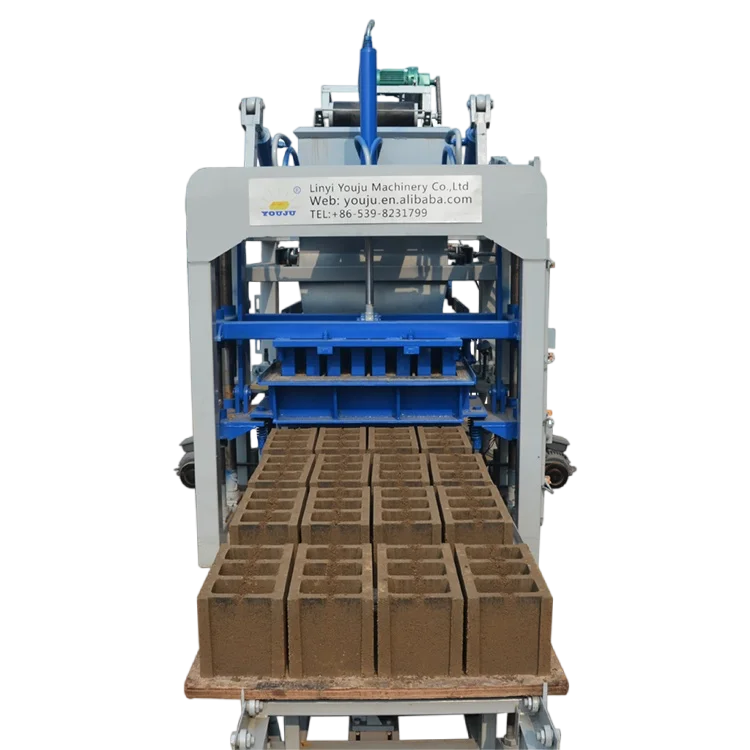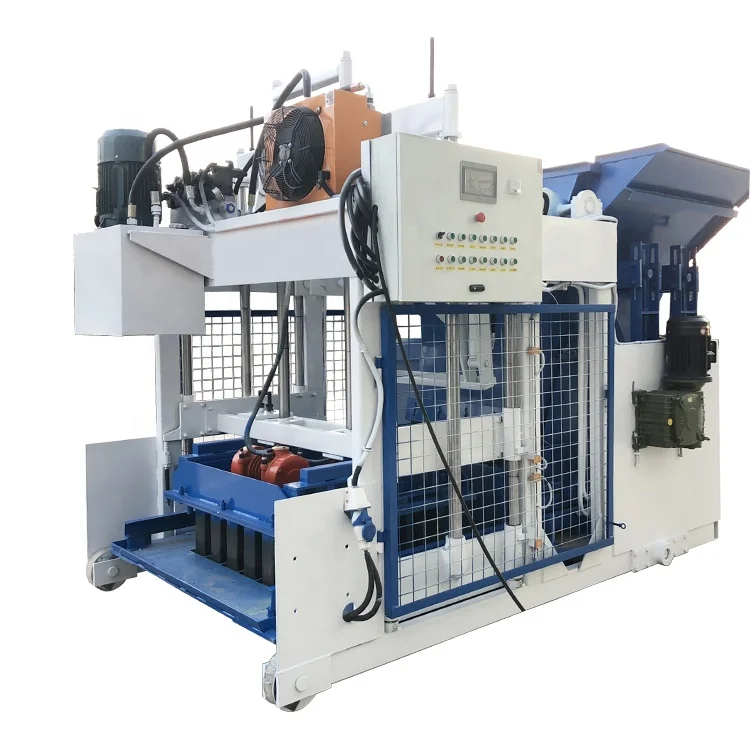
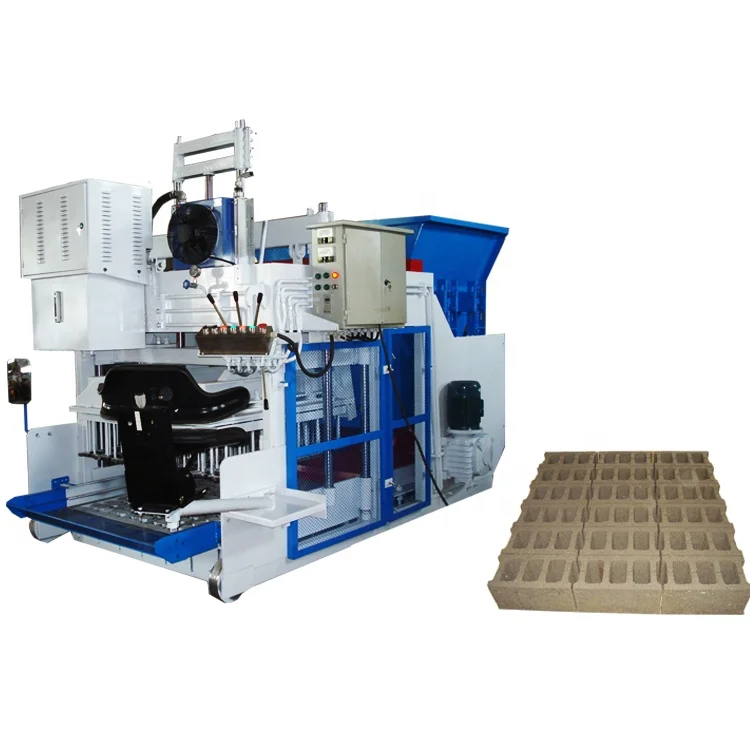
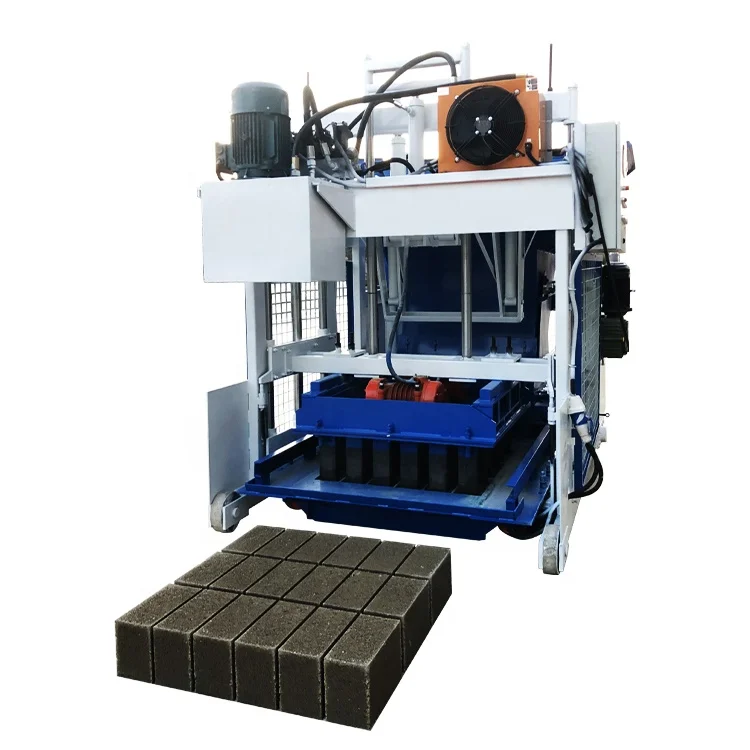
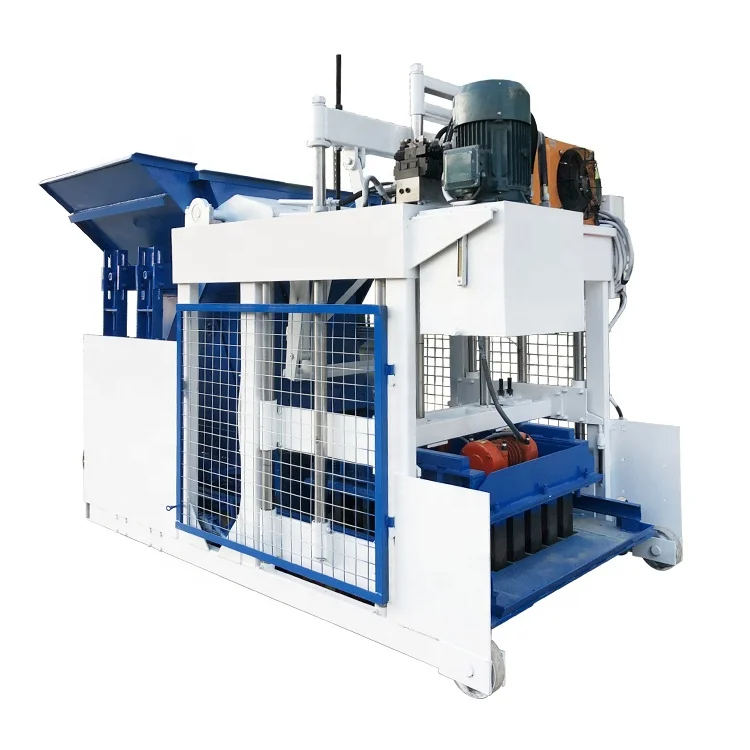
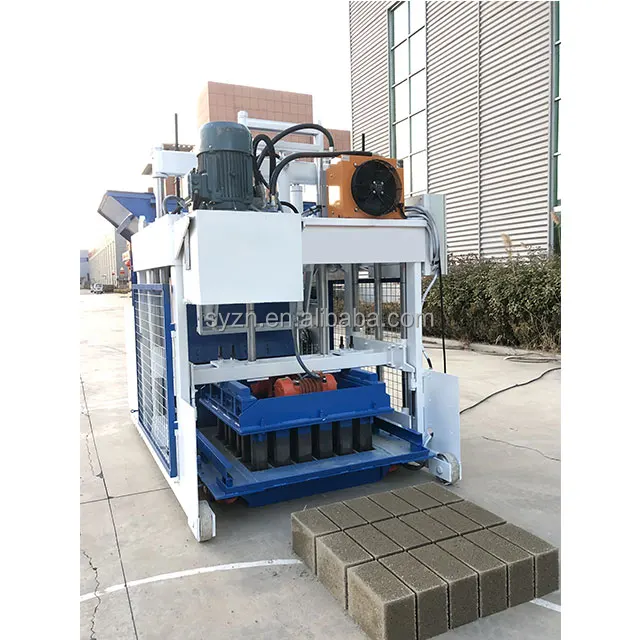
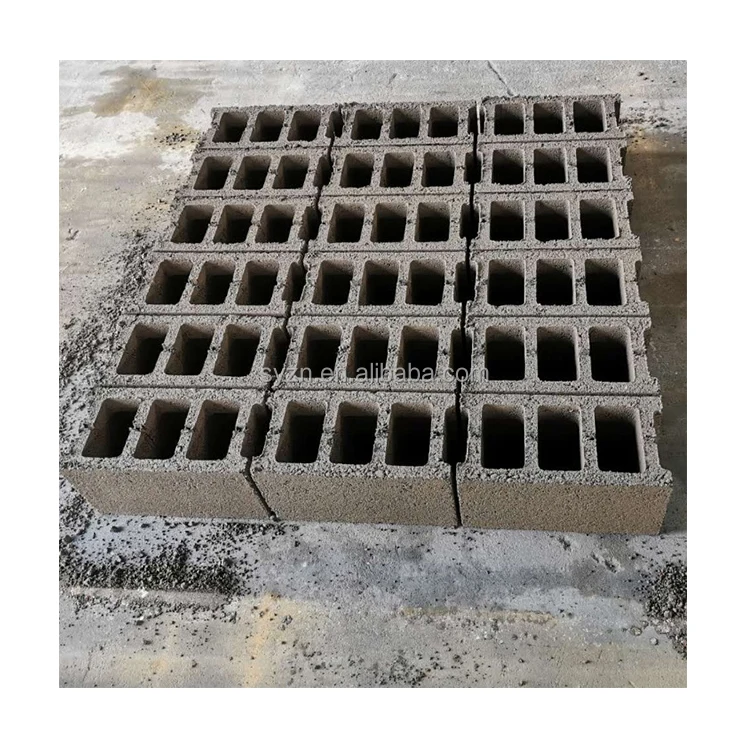
Description
Automation-First Configuration — every QMY18-15 is specified against your local voltage, control language, and mix design before production begins, so commissioning starts on day one, not day ten.
Technical Specifications
| Parameter | Value |
|---|---|
| Model | QMY18-15 |
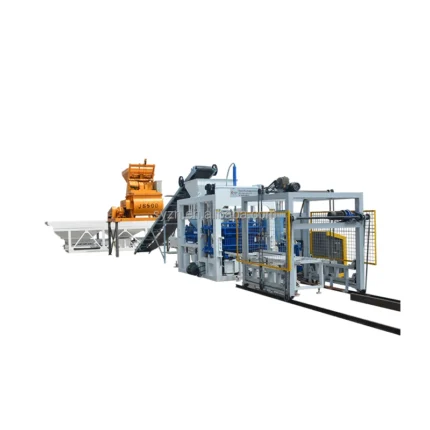
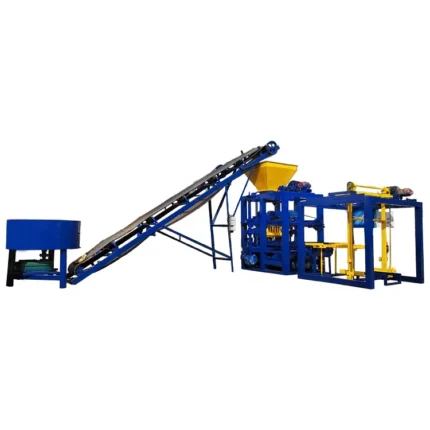
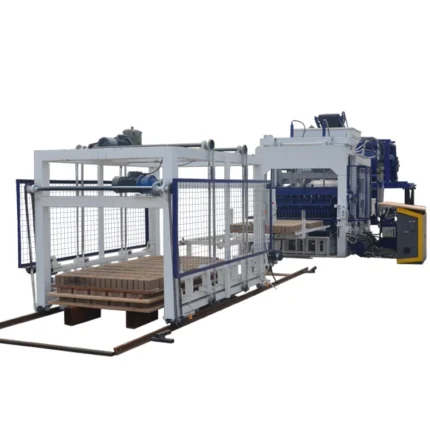
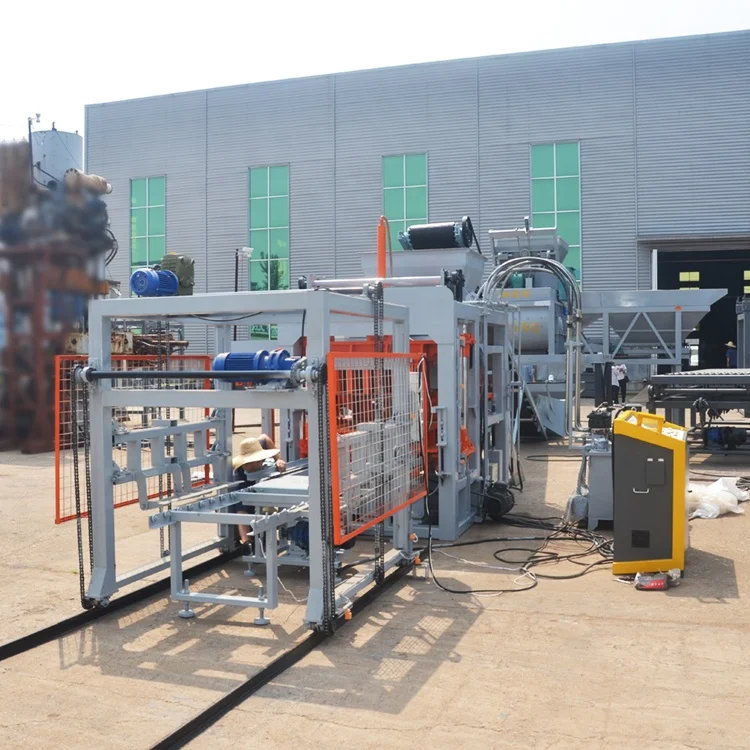
| Product Type | Automatic Mobile Egg Laying Cement Block Making Machine |
| Rated Power | 24 kW |
| Voltage & Frequency | Customized to local industrial supply (exact V/Hz confirmed with buyer before production) |
| Control System | PLC with configurable display language |
| Working Method | Hydraulic pressure combined with vibration |
| Output Capacity | Approx. 34,000 pcs per shift based on 400×200×200 mm hollow block format — smaller formats yield higher counts |
| Block Types | Hollow, solid, paving, and other formats customizable to buyer requirements |
| Pallet Requirement | None — lays blocks directly on the ground |
| Assembly State | Mobile unit, no fixed plant foundation required |
Application Suitability
| Application | Material or Output |
|---|---|
| On-site housing project block production | Hollow and solid blocks from locally sourced crushed stone, sand, and cement |
| First plant setup by entrepreneurs | Standard 400×200×200 mm hollow blocks and smaller solid formats on prepared ground |
| Remote or temporary job site supply | Pavers, kerbstones, and interlocking bricks laid directly on compacted earth |
| Capacity extension for existing producers | Additional mobile output alongside fixed-plant lines without pallet infrastructure |
What "34,000 Blocks Per Shift" Actually Means on Site
The number only holds true when the machine runs the exact block format, mix design, and cycle timing stated in the capacity sheet.
Many buyers discover after delivery that the quoted output assumed a format they do not even sell in their market. The automatic mobile egg laying block machine PLC controlled QMY18-15 is rated at approximately 34,000 pieces per shift on a 400×200×200 mm hollow block. Switch to a smaller solid block and the count rises; switch to a larger interlocking paver and it drops. Without a format-specific calculation, the daily target your project schedule depends on becomes guesswork. I have watched site managers in East Africa re-plan entire construction timelines because the real output was barely half what the catalogue promised [NEED_CITE: capacity calculation assumptions in block machinery quotations].
How PLC Control Removes Guesswork from Every Cycle
The PLC system on this automatic mobile egg laying block machine PLC controlled unit replaces manual timing of vibration, hydraulic pressure, and mould travel. The operator selects the programmed cycle, and the controller holds each stage to the exact duration and pressure set during commissioning. Batch-to-batch density variation shrinks because human reaction time no longer decides when the press lifts. When the local aggregate changes between deliveries, the PLC parameters can be adjusted on screen rather than requiring mechanical recalibration.
Matching Hydraulic Pressure to Your Local Aggregate
Hydraulic pressure and vibration force must work together to compact the specific mix available in your region. A crusher-dust mix with high fines content needs different pressure than a river-sand-and-gravel blend. If the machine arrives configured for a standard catalogue mix, blocks may crack during curing or fail a compression test. We map your aggregate sieve analysis to the pressure and vibration settings before the machine leaves the factory, so the first batch on your site already meets the strength your market demands [NEED_CITE: effect of aggregate grading on block compressive strength].
Reading the Specifications That Matter Most
The 24 kW rated power covers the hydraulic pump, vibration motor, and PLC panel simultaneously; ensure your site generator or transformer can sustain this continuous load plus starting surge. Voltage and frequency are not fixed — they must match your local industrial grid exactly, whether that is 380 V/50 Hz, 415 V/50 Hz, or 440 V/60 Hz. A mismatch will either trip breakers on start-up or run motors at the wrong speed, altering vibration frequency and block density. The pallet-free egg-laying design means you avoid purchasing, storing, and rotating thousands of wooden or steel pallets, but it also demands a level, compacted ground surface to maintain block dimensional accuracy. Finally, the mobile chassis lets you relocate the machine between sites, yet every move requires re-leveling and a fresh ground preparation cycle.
The Hidden Cost of Skipping Voltage and Language Confirmation
I once stood beside a mobile block machine in Kenya that sat idle for four days because the control panel was wired for 380 V while the site transformer delivered 415 V, and every menu on the PLC screen displayed in a language the operators could not read. The automatic mobile egg laying block machine PLC controlled QMY18-15 avoids this when voltage, frequency, and display language are locked into the confirmation sheet before production. Skip that step and you face transformer rental costs, re-wiring delays, and operator confusion that erases any productivity gain the machine was supposed to deliver [NEED_CITE: common commissioning delays caused by incorrect voltage and PLC language].
Why Buyers Specify With Us
Block machinery is our single focus, so the QMY18-15 is never assembled from mismatched components sourced across unrelated suppliers. We configure the machine, mould, and PLC parameters against your actual mix design and target block format rather than shipping a catalogue default. Mould design covers the formats your local market actually buys, and custom drawings are supported when standard moulds do not match. Automation level is selectable — you can start with the PLC-controlled mobile unit and later add batching and stacking modules. Installation support includes on-site commissioning and operator training so your crew runs the machine independently before our technician leaves.
Documentation & Verification
- Capacity calculation sheet stating the exact block format and cycle time assumed for the 34,000-piece figure
- PLC language confirmation and voltage/frequency sign-off record before production begins
- Hydraulic and electrical schematic matching the as-built configuration of your QMY18-15
- Factory test record showing block density and dimensional check on your specified format
- Operation and maintenance manual with wear parts list and recommended replacement intervals
Installation, Commissioning & Support
- Ground surface must be level and compacted to maintain block dimensional accuracy without pallet support
- Confirm dedicated circuit capacity for the 24 kW continuous load plus motor starting surge
- PLC display language and voltage verified before dispatch to eliminate first-day commissioning delays
- On-site parameter tuning matches hydraulic pressure and vibration to your local aggregate sieve analysis
- Operator training covers mould change procedure, PLC menu navigation, and daily inspection checklist
- Wear parts list and first replacement set identified before shipment to avoid unplanned downtime
Before You Request a Quote
Tell us the block formats your market actually sells, the daily output you need per format, and the raw materials available within hauling distance of your site. Share your local industrial voltage, frequency, and the language your operators read on a screen. With those details we return a capacity calculation and configuration proposal instead of a generic price list.
Frequently Asked Questions
Q: How is the 34,000 pieces per shift capacity calculated and which block format does it assume?
A: That figure is based on continuous production of 400×200×200 mm hollow blocks over a standard shift, including mould refill cycles and brief stops. Smaller solid block formats complete faster and yield a higher count, while larger paver or interlocking formats reduce it. We provide a format-specific capacity sheet so you can plan against the block you actually sell.
Q: What PLC language and voltage options are available for my target market?
A: The PLC display can be configured to English, French, Spanish, Arabic, or other languages confirmed before production. Voltage and frequency are built to your local industrial supply — 380 V, 415 V, or 440 V at 50 Hz or 60 Hz. Both are written into the confirmation sheet so the machine arrives ready to plug in.
Q: How do I match the hydraulic pressure and vibration to my local raw materials?
A: Share your aggregate sieve analysis and cement ratio with us before production. We map those values to hydraulic pressure and vibration duration settings, then verify density during the factory test. If your aggregate source changes later, the PLC parameters can be adjusted on site without mechanical modification.
Q: What does the PLC actually remove from the operator’s daily routine?
A: The PLC automates cycle timing, vibration duration, and hydraulic press travel so the operator no longer judges each stage by eye or stopwatch. This holds block density consistent across shifts and operators. Manual tasks that remain are raw material feeding into the hopper and guiding the machine along the production path.
Q: Is there an upgrade path if I later want fully automatic stacking and cubing?
A: The QMY18-15 is designed as a mobile egg-laying unit and does not integrate a fixed stacking line. If your volume grows to justify a stationary plant, we supply automatic stacking and cubing modules as part of a fixed-line configuration, and the PLC architecture is compatible with those additions.