Description
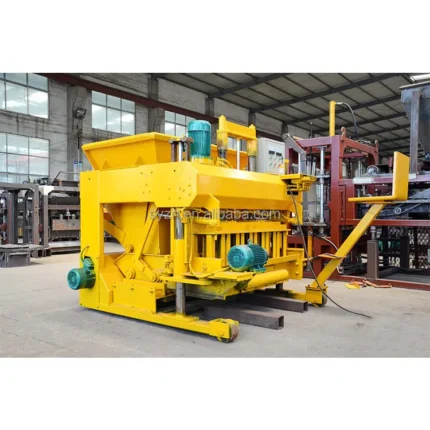
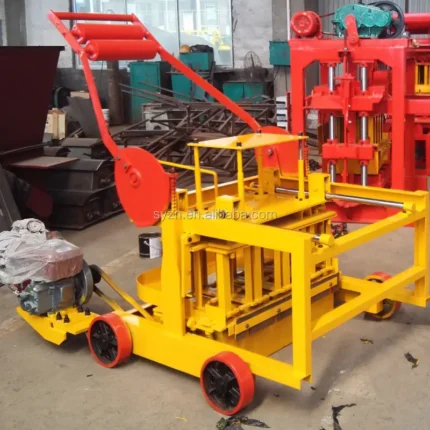
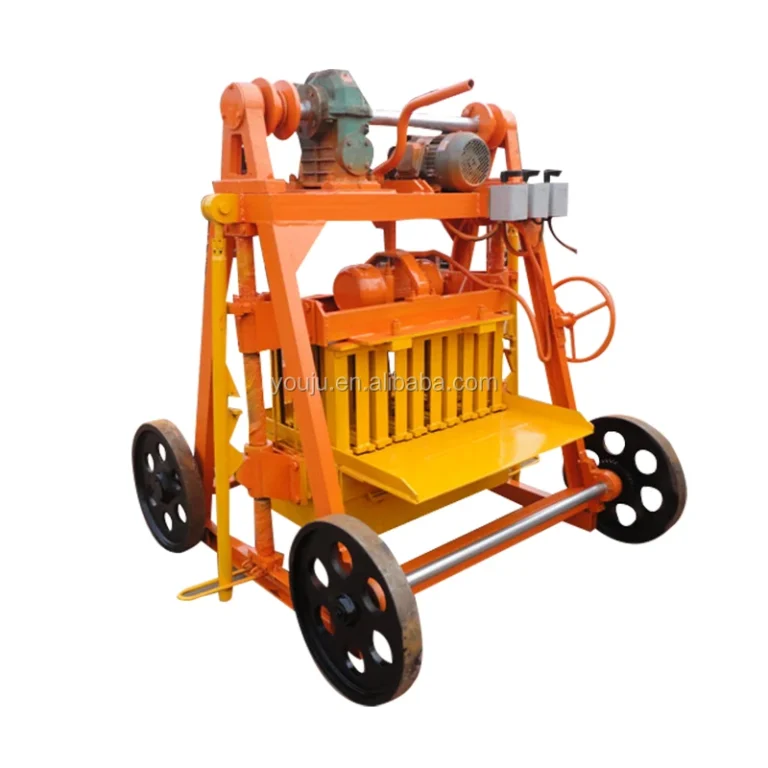
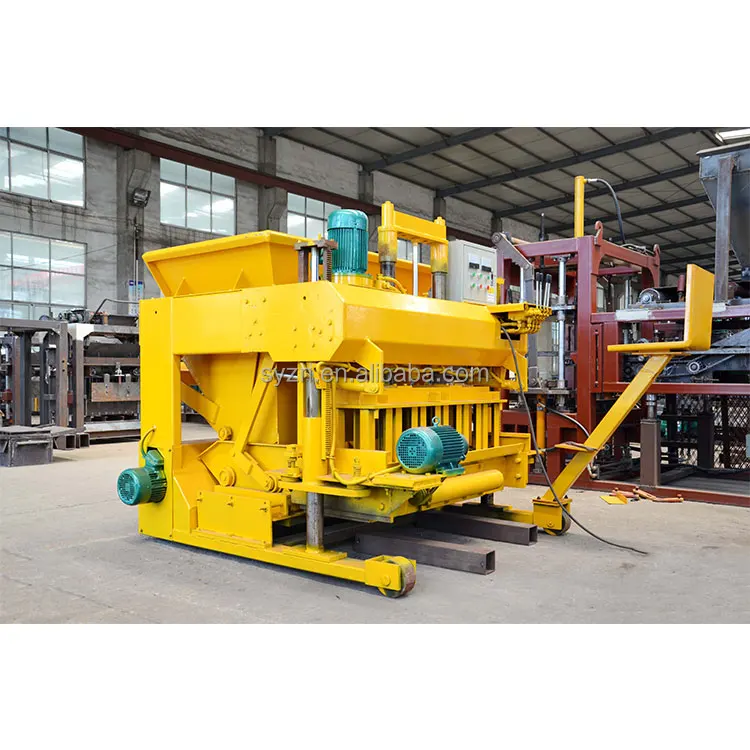
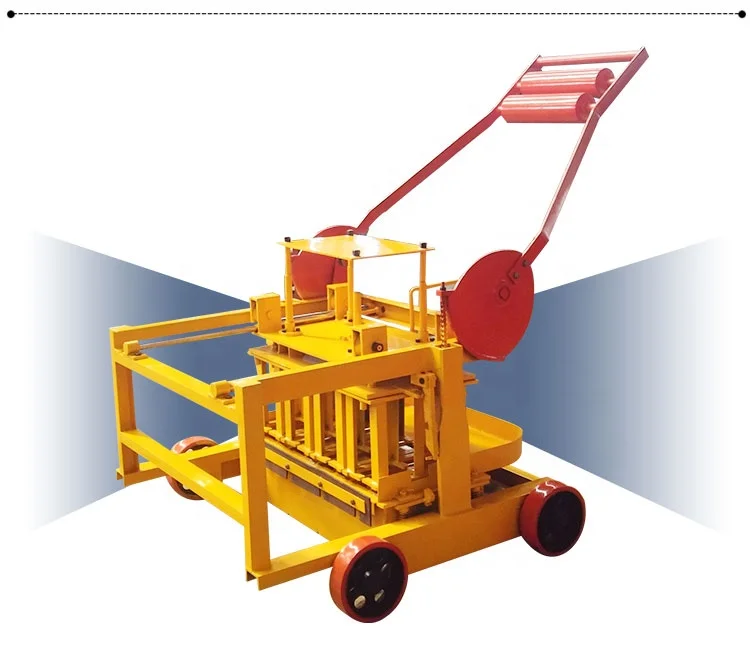
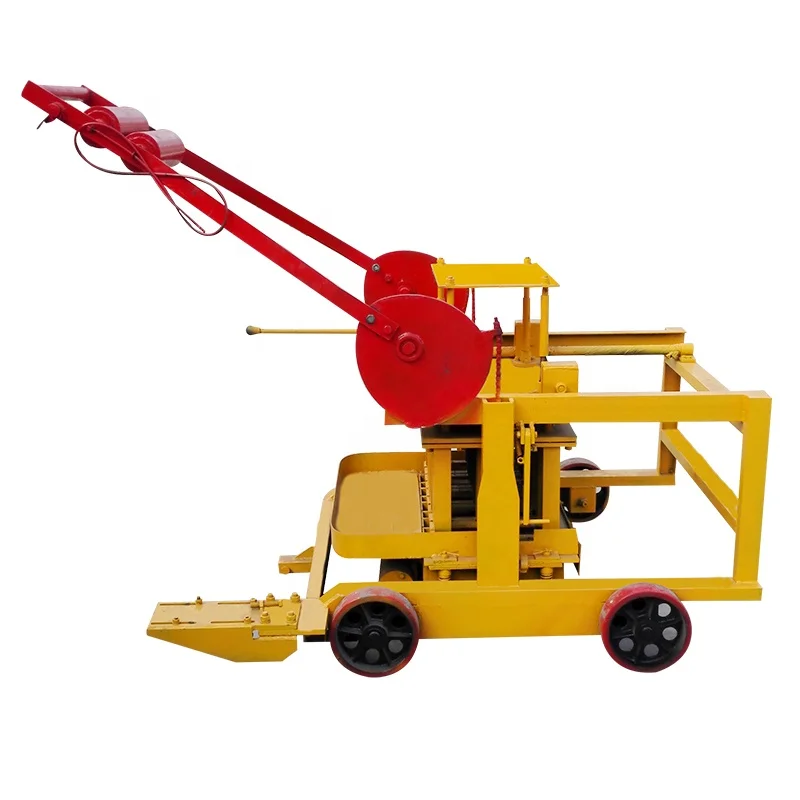
Automation-Ready Design — The QMR4-45 mobile egg-laying block machine starts as a simple mechanical press and accepts PLC control, batching, and stacking modules as your production volume justifies the investment.
Technical Specifications
| Parameter | Value |
|---|---|
| Model | QMR4-45 |
| Product Type | Mobile Egg-Laying Block Making Machine |
| Power Source | Diesel engine or Electric motor (dual option) |
| Pallet Requirement | No pallet required (egg-laying design) |
| Floor Requirement | Operates without a fixed concrete floor |
| Cycle Time | 30–45s (basis not stated in source — confirm block format, material, and thickness) |
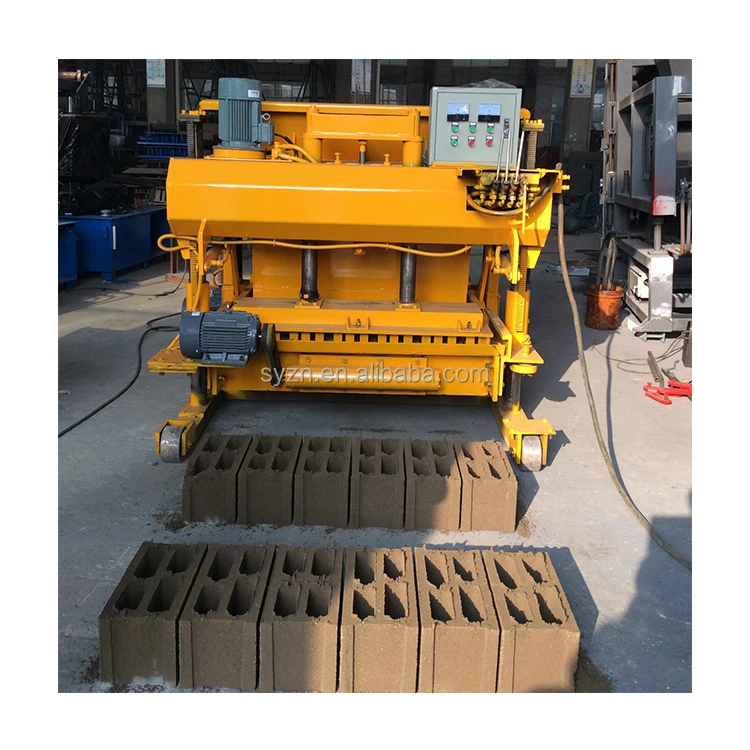
| Output — 400×200×200mm Hollow Brick | 4 pcs/mould, 320 pcs/hour, 2,600 pcs/8hr (basis: stated format) |
| Output — 400×150×200mm Hollow Brick | 5 pcs/mould, 400 pcs/hour, 3,200 pcs/8hr (basis: stated format) |
| Output — 400×100×200mm Hollow Brick | 7 pcs/mould, 560 pcs/hour, 4,480 pcs/8hr (basis: stated format) |
| Mould Change | Interchangeable moulds for multiple hollow brick formats |
| Control System | Manual or semi-automatic (PLC upgrade path available) |
| Voltage & Frequency | Configurable for electric motor option — confirm before shipment |
Application Suitability
| Application | Material or Output |
|---|---|
| On-site hollow block production at housing projects | Concrete mix with locally sourced crushed stone and sand |
| Remote construction sites with unreliable grid power | Diesel-powered operation using site-available fuel |
| Small-scale block plants with limited startup capital | Manual egg-laying production on compacted ground |
| Multi-format hollow brick supply to local distributors | Mould change across 400×200×200mm, 400×150×200mm, and 400×100×200mm formats |
What "320 Pieces per Hour" Actually Means for Your Project
The quoted output applies only to the 400×200×200mm hollow brick format; switching to a smaller block changes both the per-cycle count and the cycle time.
I once watched a contractor in Nairobi celebrate a headline capacity figure, only to discover that the hollow brick his market actually demanded was a different size entirely. The real daily output dropped because the smaller format required more mould changes and the machine’s cycle time had been stated for a block he was not even producing. This is the most common mismatch I see with mobile egg-laying machines — the capacity number looks attractive until you trace it back to the specific format and mix it assumes [NEED_CITE: block format and cycle time relationship in egg-laying machine specifications].
The automatic QMR4-45 mobile block machine lists different output rates for each of the three hollow brick formats, and those figures should be the starting point for your project scheduling, not a single headline number.
Mapping the Automation Layers Available on This Platform
A buyer selecting the QMR4-45 typically starts with manual or relay-controlled operation. The PLC controlled mobile block making machine configuration can be layered in later, replacing manual batching with weight-based dosing and giving operators a screen-based interface for cycle parameters. This staged approach keeps initial capital low while preserving the upgrade path.
The key is specifying the automation intent at the inquiry stage. Even if the PLC panel is not included in the first shipment, reserving the wiring harness space and sensor mounting points means the retrofit does not require rewiring the entire machine. Buyers who skip this step often face a full electrical teardown when they try to add control later.
Where Diesel and Electric Power Sources Diverge in Practice
The dual power option — diesel engine or electric motor — is more than a convenience feature. On sites where grid voltage fluctuates, an electric motor may stall mid-cycle, leaving a half-compacted block in the mould. Diesel operation removes that variable but introduces another: engine RPM must be governed tightly to keep vibration frequency consistent [NEED_CITE: diesel engine speed governing and vibration consistency in mobile block machines].
For contractors working in regions with frequent power interruptions, the diesel option keeps production moving. For those near a stable grid connection, the electric motor reduces fuel cost and noise, and it simplifies the automation upgrade because PLC systems interface more directly with electric motor drives than with diesel throttle linkages.
How Mould Change Time and Pallet-Free Design Shape Your Daily Output
The QMR4-45 lays blocks directly on the ground, eliminating the need for pallets, curing racks, and the forklift logistics that pallet-based systems demand. This keeps the operating footprint small and the labour count low. However, it also means the ground surface becomes the curing surface — uneven or soft ground leads to blocks that settle before the concrete gains initial set.
Mould change across the three listed hollow brick formats is mechanical, requiring bolt-off and bolt-on. The time this takes must be factored into your daily plan if your market demands more than one format in the same shift. A PLC controlled mobile block making machine configuration helps here by storing cycle parameters for each mould, so operators do not have to manually re-dial settings after every change [NEED_CITE: mould change procedures and downtime on mobile egg-laying block machines].
The Hidden Cost of Skipping the Voltage Conversation
I have seen machines sit uncommissioned for weeks because the buyer assumed standard voltage and the manufacturer shipped for a different grid standard. The QMR4-45 electric motor option must be wound for the exact voltage and frequency at your site. A 50 Hz motor running on 60 Hz supply spins faster, altering vibration frequency and potentially damaging the gearbox. This is a five-minute confirmation that prevents a multi-week delay [NEED_CITE: voltage and frequency standards by export market].
Equally, the control system language matters. If the PLC display defaults to a language your operators cannot read, the automation advantage disappears. Confirming the display language and the operator manual language before production begins is part of the specification step, not the commissioning step.
Why Buyers Source This Machine Through a Single-System Approach
Block machinery as a single focus means the QMR4-45 is specified alongside its moulds, power source, and any automation modules as one matched package. The mould is designed around the buyer’s target block format and local aggregate, not pulled from a catalogue default. Configuration is set against the actual mix design the buyer will use, reducing the risk of blocks that crumble or fail compression tests.
The automation level is selectable and upgradeable, so a buyer can commission the machine in manual mode and add PLC control, automatic batching, or stacking as demand grows. Installation and commissioning support includes operator training on the specific mould set and control configuration shipped with the machine [NEED_CITE: CE machinery directive requirements for industrial equipment].
Documentation & Verification
- Line layout showing egg-laying path and ground preparation requirements for the QMR4-45
- Capacity calculation sheet stating output per block format with cycle time assumptions
- Mould drawing and format list for each hollow brick size included in the order
- Voltage, frequency, and PLC display language confirmation sheet before production
- Factory test record showing the QMR4-45 running with the buyer’s specified mould
Installation, Commissioning & Support
- Ground must be compacted and level; the QMR4-45 requires no concrete floor but does need a firm, drained surface
- Electric motor option requires a dedicated circuit matching confirmed voltage and frequency
- Machine ships partially assembled; on-site assembly includes mould mounting and power connection
- First commissioning run verifies cycle time against the buyer’s block format and mix design
- Operator training covers mould change procedure, daily lubrication points, and PLC navigation if equipped
- Wear parts list identifies mould liners and vibration components with recommended replacement intervals
What to Include in Your Inquiry
Send your target block format, daily output requirement, and local aggregate type so the machine and mould can be configured to match. Confirm your site voltage, frequency, and preferred control language for the electric motor option. If you plan to add automation later, state which layers — PLC, batching, stacking — are in your roadmap so the base machine can be pre-wired accordingly.
Frequently Asked Questions
Q: How do I verify the real daily output of the QMR4-45 for the block format I actually sell?
A: Request a capacity calculation sheet that lists output for your specific block format, not a single headline number. The QMR4-45 output varies across the 400×200×200mm, 400×150×200mm, and 400×100×200mm formats, each with a different per-mould count and cycle time. The sheet should state the cycle time assumed and the mix design used during testing.
Q: What automation upgrades can be added to the QMR4-45 after initial installation?
A: PLC control, weight-based batching, and stacking modules can be layered onto the base machine. The upgrade path is most effective when wiring harness space and sensor mounts are reserved at initial build. Retrofitting these after the fact is possible but may require partial electrical disassembly.
Q: How does the diesel versus electric motor option affect cycle time consistency?
A: Diesel operation removes dependence on grid stability but requires tight engine RPM governing to maintain consistent vibration frequency. Electric motors deliver steadier RPM when grid voltage is stable, making them better suited for PLC integration. Choose based on your site’s power reliability.
Q: What voltage, frequency, and control language must I confirm before shipment?
A: Provide your site’s exact voltage and frequency so the electric motor is wound correctly. Confirm the PLC display language and operator manual language to ensure your team can operate the machine from day one. These details must be locked before production begins.