


Description
Configuration lock-in — every electrical and control parameter is confirmed against your site conditions before production starts, so the machine arrives ready to run instead of waiting for a transformer swap.
Technical Specifications
| Parameter | Value |
|---|---|
| Model | QT10-15 |
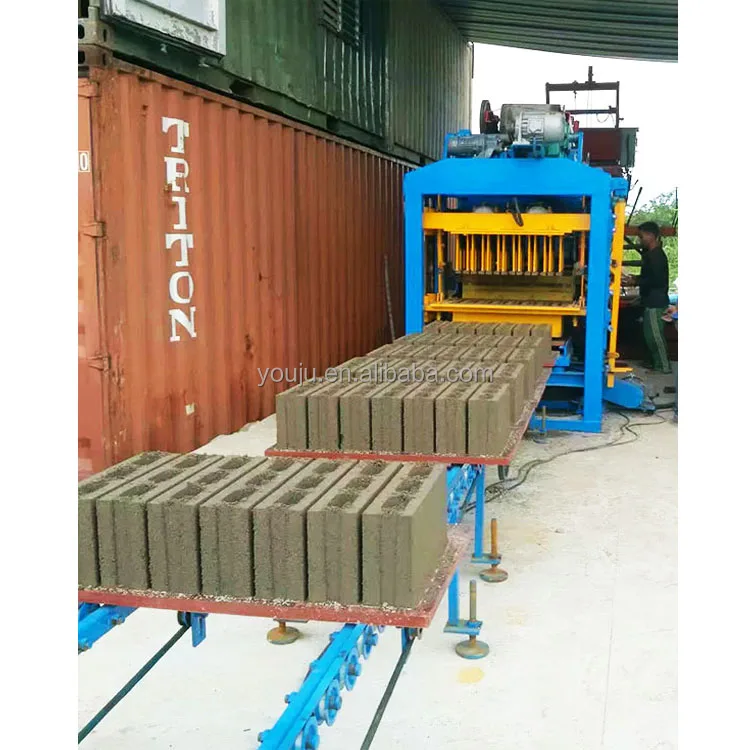
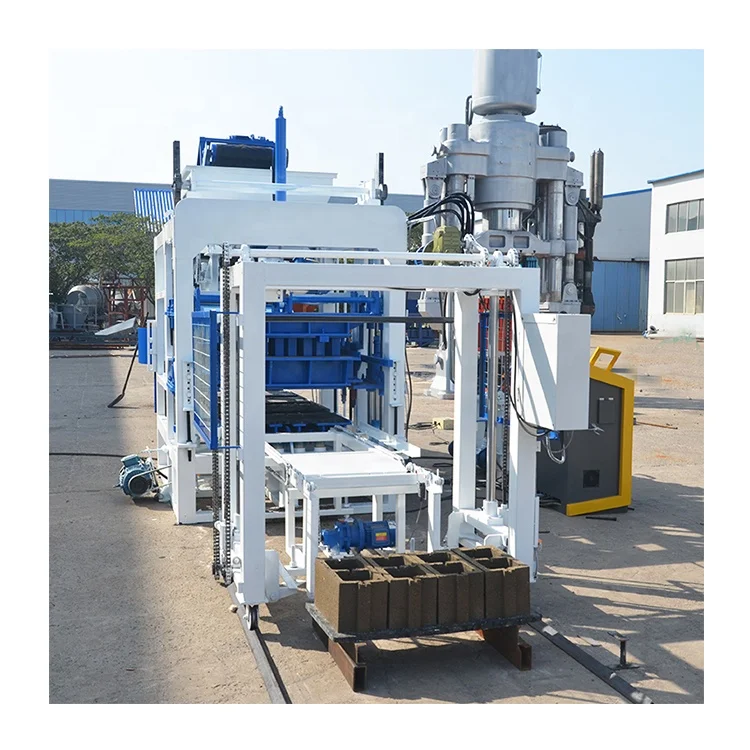
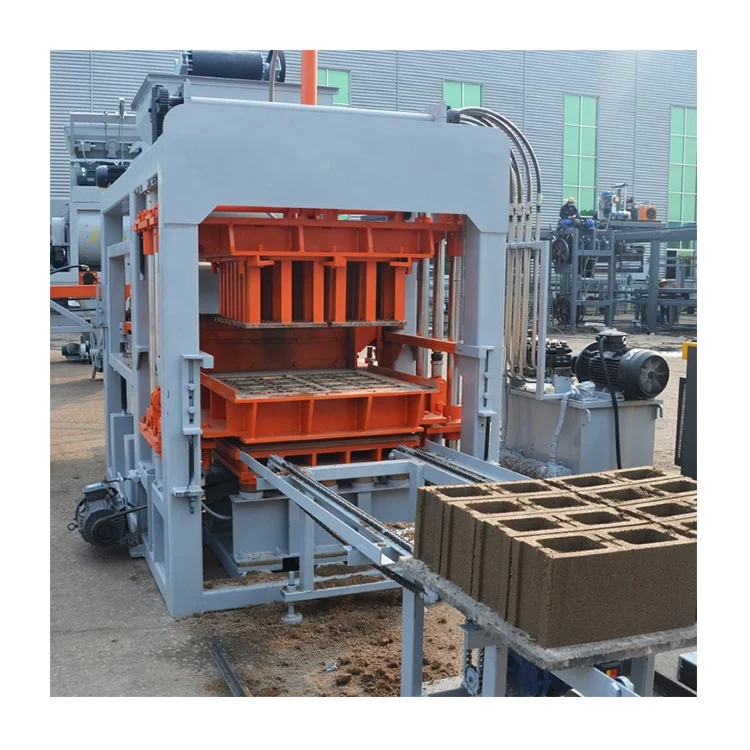
| Product Type | Fully Automatic Concrete Block Making Machine |
| Overall Dimensions (L×W×H) | 9350×2320×2950 mm |
| Rated Pressure | 21 MPa |
| Main Vibration Form | Platform vibration |
| Vibration Frequency | 4500–5100 r/min |
| Pallet Size | 1100×900 mm |
| Molding Area | 1025×810 mm |
| Forming Height | 40–250 mm |
| Molding Cycle | 15–25 s |
| Overall Power | 44 kW |
| Mixer Model | JS750 |
| General Water Consumption | 12 T/day |
| Voltage | Customized to local request (confirm exact voltage/frequency before order) |
| PLC Control Unit | Mitsubishi (Japan) |
| Hydraulic Unit | Jiugang (Taiwan) |
| Switch | Omron (Japan) |
| Electrical Elements | Schneider (France) |
| Host Machine & Mixer Motor | Siemens (Germany) |
| Mould Heat Treatment | High temperature carburizing |
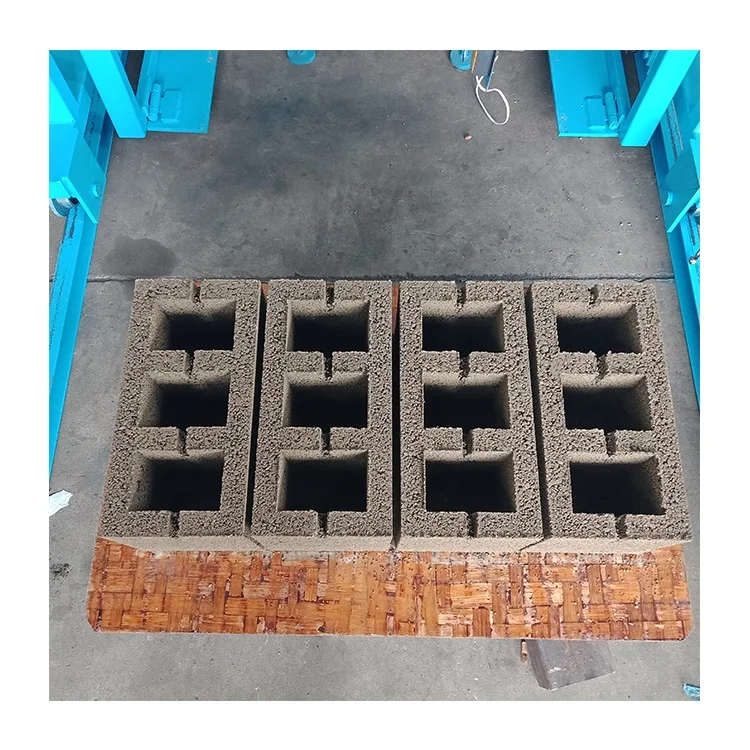
| Output Capacity (Hollow Block 400×200×200 mm) | 10 pcs/mould, 1800–2400 pcs/h, 14400–19200 pcs/8h |
| Output Capacity (Hollow Block 400×150×200 mm) | 12 pcs/mould, 2160–2880 pcs/h, 17280–23040 pcs/8h |
| Output Capacity (Solid Brick 240×115×90 mm) | 52 pcs/mould, 9360–12480 pcs/h, 74880–99840 pcs/8h |
| Motor Certification | European CE standard (motors only; full machine CE declaration to be confirmed) |
Application Suitability
| Application | Material or Output |
|---|---|
| Hollow block production | Crushed stone, cement, fly ash, sand aggregate mixes |
| Solid brick manufacturing | Cement, river sand, quarry dust blends |
| Paver and interlocking brick | Fine aggregate with pigment layers for surface colour |
| Kerbstone and curb units | Coarse aggregate with high cement content for structural strength |
| On-site contractor production | Local aggregate sourced near housing or infrastructure projects |
Why the Voltage Question Must Come Before the Quotation
A 44 kW press with a Mitsubishi PLC and Siemens motors will not start if the local supply does not match the control cabinet wiring.
I once watched a fully automatic block line sit idle for weeks because the buyer confirmed the main motor voltage but nobody checked the frequency rating on the PLC power supply. The automatic QT10-15 block making machine PLC controlled setup includes components from four different countries, each with its own tolerance band. When the transformer on site delivers a frequency outside that band, the control logic faults out before the hydraulic pump even engages. This is not a defect — it is a specification mismatch that could have been caught in the first email exchange [NEED_CITE: voltage and frequency standards by export market].
What the Control Cabinet Actually Does During a Cycle
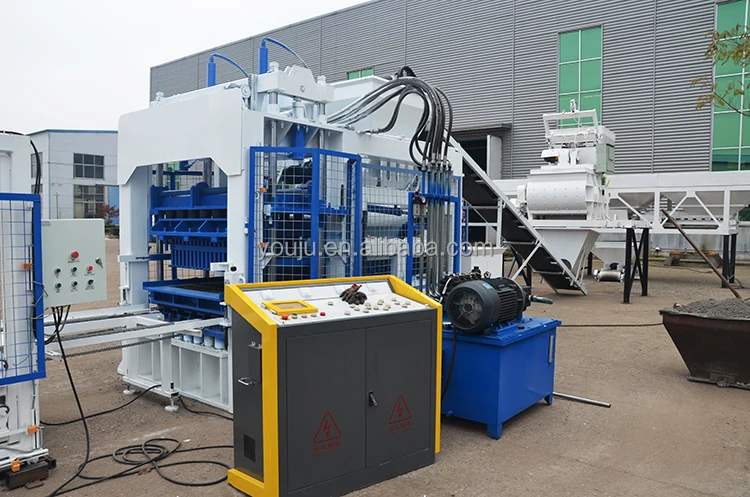
The Mitsubishi PLC coordinates raw material batching, pallet indexing, vibration timing, and hydraulic pressure in a single sequence. Every parameter — from the 15–25 s molding cycle to the vibration frequency ramp — is stored as a recipe that the operator selects on the display. When the automatic QT10-15 block making machine PLC controlled system runs the same recipe across shifts, block dimensions and density stay within tolerance regardless of who is on the floor.
Batch Consistency Across Hollow Blocks, Pavers, and Kerbstones
Switching from a 400×200×200 mm hollow block to a paving format means the PLC adjusts vibration duration, hydraulic dwell, and feed volume. The Omron switches monitor each limit position, and the Schneider contactors handle the motor starts. This level of coordination is what separates a press that produces consistent output from one that relies on the operator to compensate by feel. When the recipe is locked, the 21 MPa rated pressure delivers the same compaction force on every cycle [NEED_CITE: CE machinery directive requirements for industrial equipment].
Reading the Specs That Matter for Your Plant
The 1025×810 mm molding area sits on a 1100×900 mm pallet. That pallet size must match your existing curing racks and forklift capacity — if your racking was built for 950×850 mm pallets, the entire downstream handling flow breaks. The 4500–5100 r/min platform vibration paired with 21 MPa hydraulic pressure determines the green strength of the block leaving the press; low vibration on a stiff mix produces weak edges, while excessive pressure on a wet mix causes slumping. The JS750 mixer must deliver a consistent feed rate so the press never starves, and the 44 kW overall power rating tells your electrician what cable size and breaker rating the main feed requires.
What Happens When Automation Is Left Half-Finished
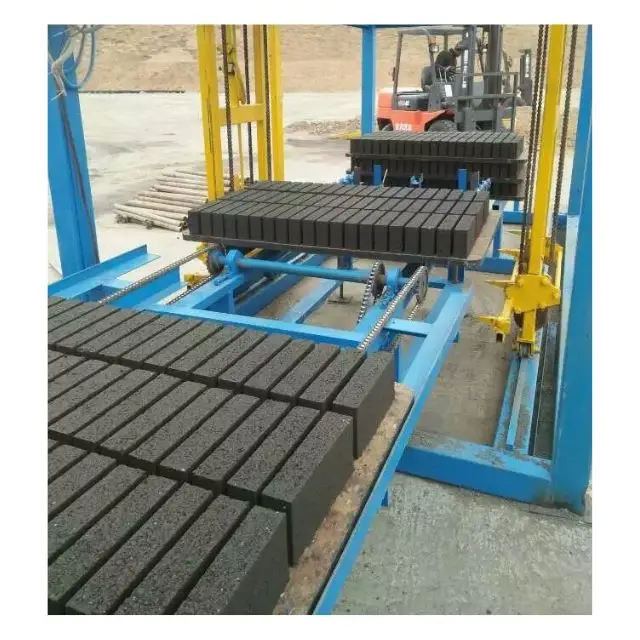
A buyer who receives a press without pallet feeding, stacking, and cubing in the quotation ends up paying for manual labour that the machine was supposed to eliminate. The blocks come off the press and pile up at the end of the conveyor because there is no automatic stacker to receive them. Shift output drops because workers spend half their time moving pallets by hand instead of monitoring the mix. The PLC can control the full line, but only if the full line was specified and wired at the factory [NEED_CITE: typical automation scope in block production lines].
Why Sourcing the Press and Line Together Changes the Outcome
Block machinery is the single focus here, so the QT10-15, its moulds, pallets, and handling equipment are specified as one system rather than assembled from separate suppliers. The configuration is set against your actual mix design and local aggregate, not pulled from a catalogue default. Mould design covers the formats your market sells, with custom drawings when needed. The automation level is selectable — you can start with semi-automatic stacking and add cubing later without replacing the press. Installation includes operator training so your crew understands the PLC recipes from day one.
Documentation & Verification
- Factory test record run on your specified block format before dispatch
- Capacity calculation sheet stating the block format behind each output figure
- Electrical schematic with confirmed voltage, frequency, and PLC language
- Mould drawing and format list matching your order configuration
- Hydraulic circuit diagram for on-site troubleshooting
- Packing photographs for container loading verification
Installation, Commissioning & Support
- Foundation plan sized to the 9350×2320 mm footprint and 44 kW load
- Electrical cabinet pre-wired for your confirmed voltage before shipment
- Siemens motors and Schneider elements matched to your local supply standard
- PLC display language set to your operator’s preferred language at factory
- Mould change procedure trained on site during commissioning week
- Wear parts list with reorder codes for hydraulic seals and vibration mounts
- Preventive maintenance schedule tied to the 4500–5100 r/min vibration assembly
What to Prepare Before Requesting a Quote
Send the target block formats you plan to produce, the daily volume you need for each, and the local aggregate available near your site. Include your existing supply voltage and frequency, the PLC display language your operators read, and whether you already have pallets and curing racks on site. This information lets the configuration match your actual plant conditions instead of defaulting to a standard build.
Frequently Asked Questions
Q: How is the output capacity of the QT10-15 verified, and which block format is each figure based on?
A: Every output figure is tied to a specific block format. The 1800–2400 pcs/h rate applies to 400×200×200 mm hollow blocks at 10 pcs per mould, while 9360–12480 pcs/h applies to 240×115×90 mm solid bricks at 52 pcs per mould. The capacity calculation sheet you receive states the format, cycle time, and mould count behind each number.
Q: Can the QT10-15 be upgraded from semi-automatic stacking to fully automatic cubing later?
A: Yes. The PLC architecture supports adding automatic stacking and cubing stations after initial installation. The control cabinet is pre-wired with spare I/O channels so the upgrade involves mechanical installation and recipe programming rather than replacing the entire control system.
Q: How does the PLC system ensure consistency, and can the display language be set for my operators?
A: The Mitsubishi PLC stores each block format as a named recipe with locked vibration, pressure, and feed parameters. Operators select the recipe rather than adjusting values manually. The display language is confirmed during the pre-production electrical review and burned into the HMI before the machine ships.
Q: How do I confirm voltage, frequency, and control wiring match my site before shipment?
A: The pre-production checklist requires written confirmation of your supply voltage, frequency, phase configuration, and the PLC display language. The electrical schematic is sent for your approval before the cabinet is wired, so any mismatch is caught at the drawing stage rather than at your site.
Q: What is the mould change procedure, and how long does it take on the QT10-15?
A: The mould change involves releasing the clamping bolts, lifting the old mould with the plant crane, and seating the replacement on the locating pins. The PLC recipe is then switched to match the new format. The actual changeover time depends on your crane availability and crew familiarity with the procedure.