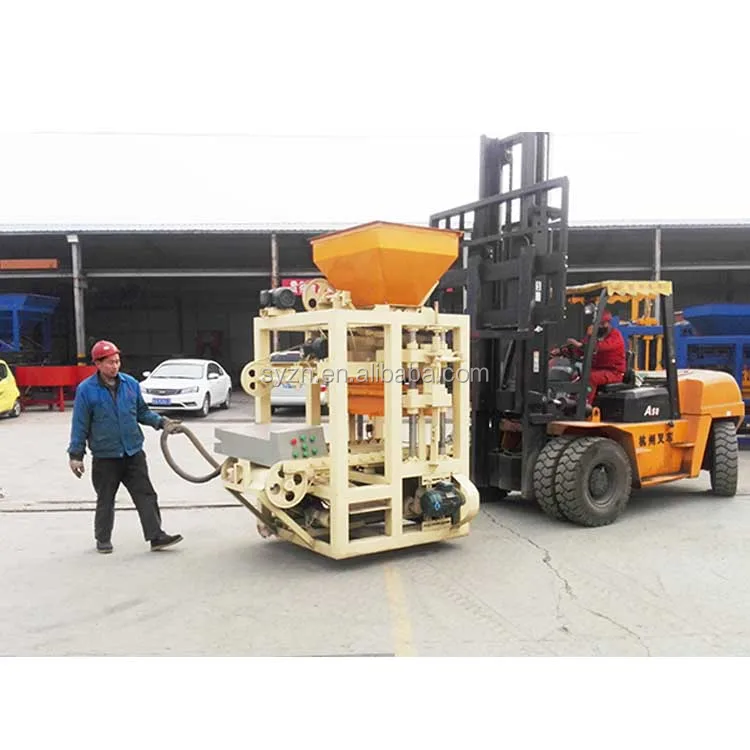


Description
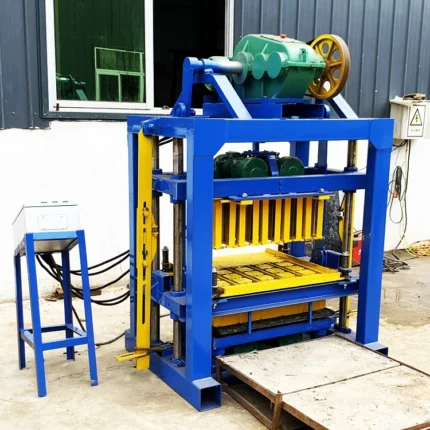
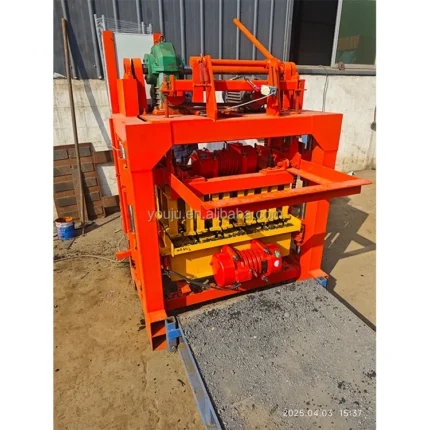
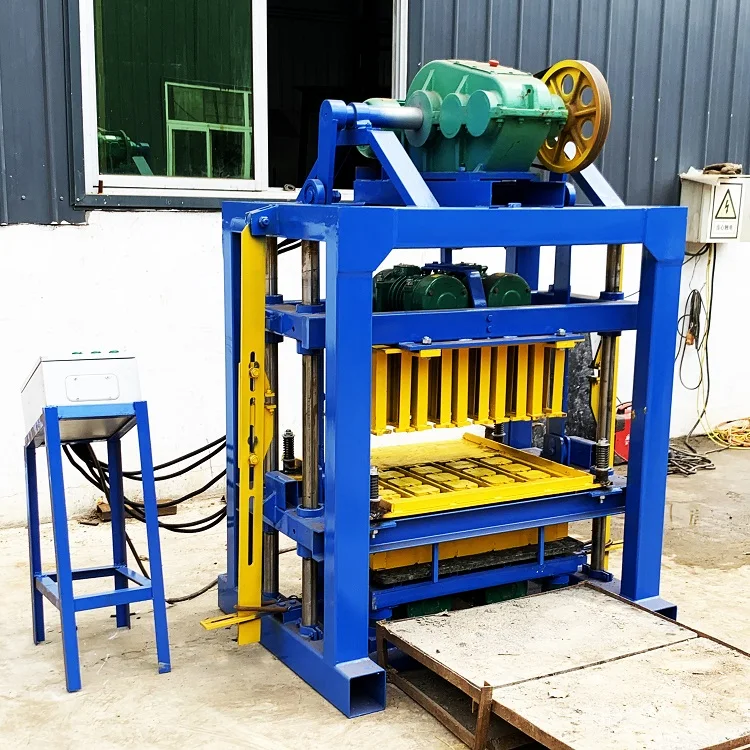
Mechanical vibration tuned per buyer mix — the QTJ4-24’s 45 kN dual-level vibration is matched to your local aggregate and block format before shipment, not left at a catalogue default.
Technical Specifications
| Parameter | Value |
|---|---|
| Model | QTJ4-24 |
| Product Type | Stationary Block Making Machine |
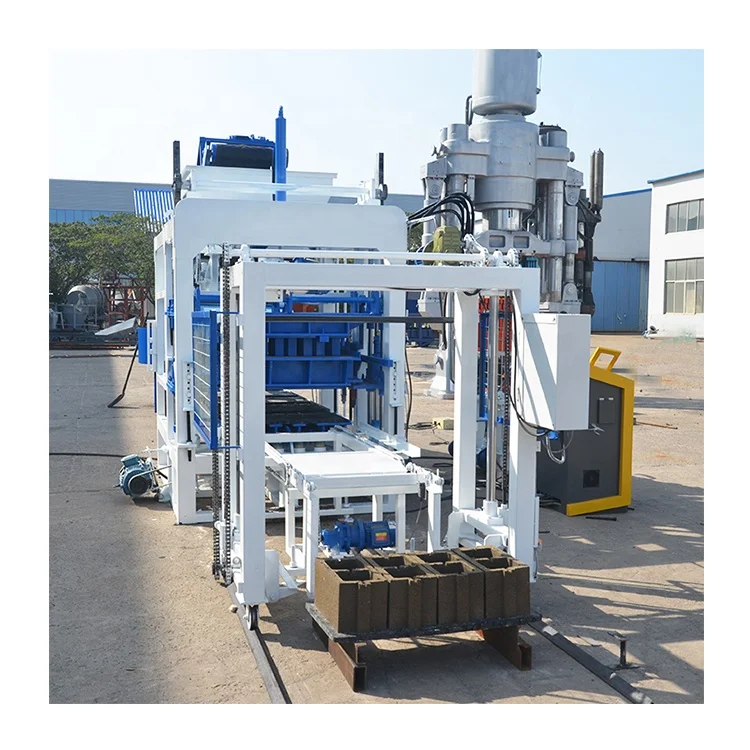
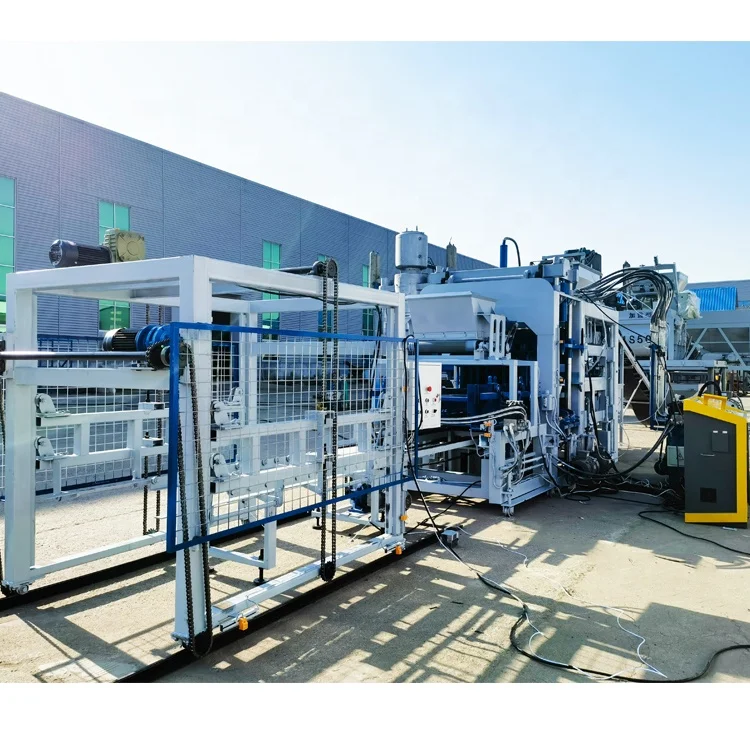
| Overall Dimensions (L×W×H) | 3600 × 1700 × 2560 mm |
| Total Mass | 2,000 kg |
| Pallet Size | 850 × 450 mm |
| Mould Format Compatibility | Hollow block, solid brick, interlocking brick, paving brick (basis to be confirmed per format) |
| Cycle Time | 24–26 s (basis not stated in source — confirm per block format and material) |
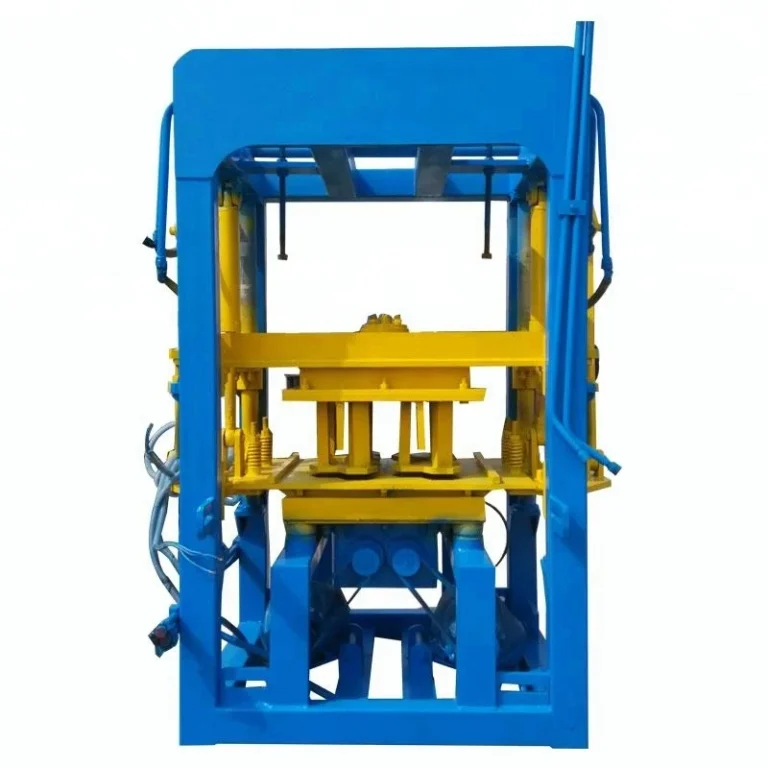
| Molding Method | Mechanical (pressure + super vibration) |
| Vibration Force | 45 kN |
| Vibration Configuration | 2 × 3 kW lower vibrators + 2 × 1.5 kW upper vibrators |
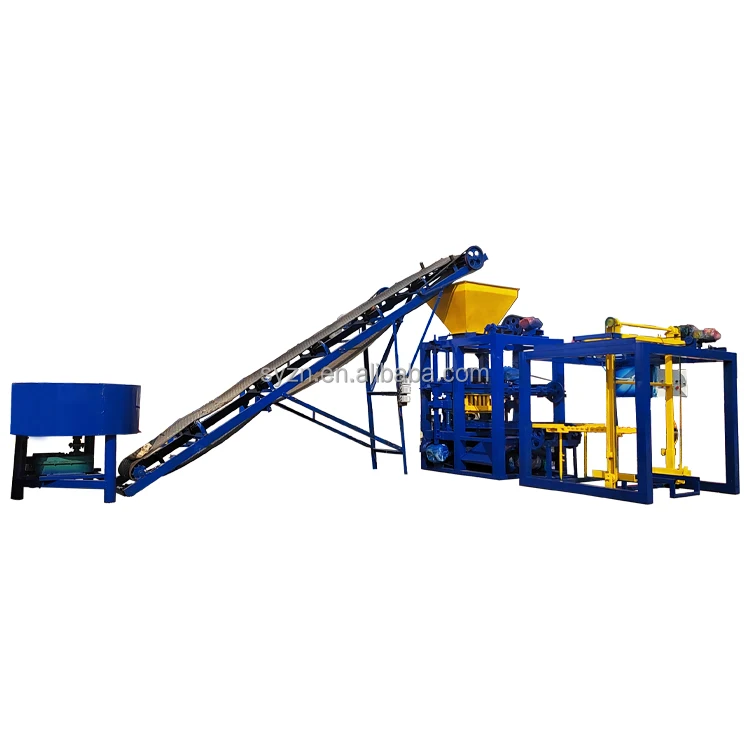
| Material Distribution | Full-automatic spiral |
| Reducer for Mold Lifting | 350-type |
| Overall Power | 11.95 kW |
| Automation Level | Semi-automatic (mechanical press, spiral feeding; stacking and curing method not stated) |
| Voltage & Frequency | Configurable to buyer site (to be confirmed before production) |
| Control System | PLC or relay (to be confirmed) |
| Warranty | 1 year for the whole machine (excluding spare parts) |
Application Suitability
| Application | Material or Output |
|---|---|
| Small-to-medium masonry block plants | Hollow and solid concrete blocks using cement, sand, and crushed stone |
| Paving and interlocking brick production | Interlocking and paving bricks with surface finish consistency |
| Plants upgrading from manual presses | Operators moving from hand-fed or relay-controlled machines to spiral-fed semi-automatic operation |
| On-site contractor block production | Building contractors producing masonry blocks locally at project sites |
What Your Control System Language and Voltage Confirmation Must Cover Before Shipment
Confirming PLC display language and site voltage before the QTJ4-24 enters production prevents a machine sitting idle on arrival while electricians and translators are sourced.
I have watched semi-automatic block lines arrive at sites with relay boards instead of the PLC the buyer requested, or with Chinese-only HMI screens that operators could not read. The downtime is not measured in hours — it stretches into commissioning weeks. An automatic QTJ4-24 block making machine with PLC control upgrade must have the target language, voltage, and frequency locked in the purchase contract, not assumed from a default configuration [NEED_CITE: voltage and frequency standards by export market].
The Upgrade Path from Mechanical to Intelligent Control
The QTJ4-24 ships as a semi-automatic mechanical press with full-automatic spiral feeding, which places it at the entry point for buyers who want consistent material distribution without the investment of a full hydraulic line. When configured with a PLC, the automatic QTJ4-24 block making machine with PLC control upgrade can manage cycle timing, spiral feed duration, and vibration sequence in repeatable batches. This removes the operator judgment that causes density variation between the morning shift and the evening shift.
Where Automation Removes the Operator and Where It Adds Consistency
A PLC-controlled QTJ4-24 does not just replace push buttons — it enforces timing that a human operator under production pressure will shorten. The 45 kN vibration force delivered by the dual-level system (2 × 3 kW lower, 2 × 1.5 kW upper) needs a consistent dwell time to compact the mix uniformly. An automatic QTJ4-24 block making machine with PLC control upgrade locks that dwell, so block-to-block density stays within tolerance across formats [NEED_CITE: PLC role in batch-to-batch consistency for concrete product manufacturing].
Reading the Specs That Actually Drive Block Quality
The vibration configuration matters more than the headline force figure. Four vibrators split between lower and upper positions means the mould cavity receives compaction energy from both directions, which is significant for hollow blocks where wall thickness is thin and uneven vibration produces weak corners. The 350-type reducer on mold lifting is sized to handle repeated mould changes without gear wear introducing positional drift. The 11.95 kW overall power is modest for a stationary block machine, which reduces the electrical infrastructure burden at smaller plants — but also means the machine relies on mechanical leverage and vibration rather than hydraulic pressure for densification. The 850 × 450 mm pallet size must align with the curing rack spacing and the forklift tine width already in use at the buyer’s site; a mismatch here creates a bottleneck that no amount of press speed can solve.
The Hidden Cost of Skipping the Line Layout Conversation
A semi-automatic press that cycles every 24–26 seconds will outpace any manual pallet handling operation. If pallet feeding, wet block stacking, and curing rack transport are not specified as part of the line, the press spends most of its shift waiting for an operator to clear the last pallet. I have seen plants where the bottleneck was never the machine — it was the two workers carrying pallets by hand to a curing area that was too far away, on a forklift that was the wrong size for the pallet. That bottleneck is invisible in a quotation that only prices the press [NEED_CITE: line balance and bottleneck analysis in block production plants].
Why Sourcing This Press Through a Single-Focus Block Machinery Supplier Matters
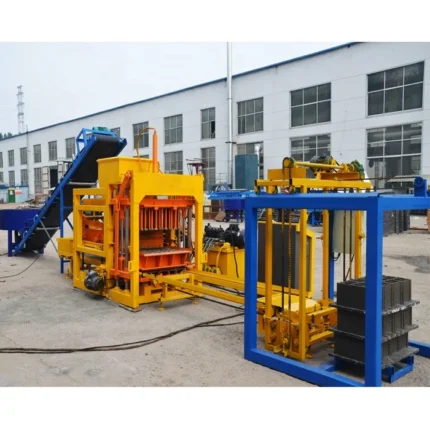
The QTJ4-24 is specified as part of a matched system — machine, mould, pallet, and handling — rather than assembled from separate vendors whose cycle times do not align. Mould design is developed against the block formats the buyer’s market actually sells, including custom drawings when standard formats do not apply. The automation level is selectable: a buyer can begin with semi-automatic mechanical control and add PLC management and automated stacking later, without replacing the press. Configuration is set against the buyer’s local aggregate and mix design, so vibration force and feed timing are not left at catalogue defaults. Factory testing records the actual cycle time and block density for the buyer’s target format before the machine is crated.
Documentation & Verification
- Factory test record stating cycle time and block density for your target format before dispatch
- Mould drawing and format list confirming compatible block dimensions for your market
- Hydraulic and electrical schematic matching your confirmed voltage and control configuration
- Voltage, frequency, and PLC display language confirmation signed before production begins
- Operation and maintenance manual in your specified control language
- Wear parts and mould list with part numbers for first-year replacement planning
Installation, Commissioning & Support
- Foundation must accommodate 3600 × 1700 mm footprint with vibration isolation for the 45 kN force output
- Electrical supply must match confirmed voltage and frequency with a dedicated circuit for the 11.95 kW load
- Mold lifting reducer and spiral feeder inspected on arrival after container transit and reassembly
- First-run commissioning sets spiral feed duration and vibration dwell to your specific mix design
- Operator training covers mould change procedure, pallet loading sequence, and daily vibration motor inspection
- Spare parts kit includes vibration motor seals, spiral flighting wear edges, and reducer lubrication supplies
Preparing Your Inquiry With the Information That Shapes the Configuration
Tell us which block format you sell most — hollow, solid, interlocking, or paving — along with your target daily output for that specific format. Share the voltage, frequency, and preferred PLC display language at your site so the automatic QTJ4-24 block making machine with PLC control upgrade arrives ready for commissioning. If you already have pallets, curing racks, or forklifts on site, provide the dimensions so the 850 × 450 mm pallet interface is verified against your existing infrastructure.
Frequently Asked Questions
Q: How is cycle time and daily output calculated for each block format on the QTJ4-24?
A: The 24–26 second cycle figure varies by format, material, and pallet loading speed. We calculate realistic daily output per block type — hollow, solid, interlocking, or paving — and state the assumed format in the capacity document so your production planning uses actual numbers, not a single generic estimate.
Q: Can the QTJ4-24 be upgraded from mechanical control to PLC, and what automation stations can be added later?
A: The press can ship with PLC control or start on relay-based mechanical operation and upgrade later. Automatic pallet feeding, stacking, and cubing stations can be integrated as your output grows, without replacing the core press or its vibration system.
Q: What voltage, frequency, and control language options are confirmed before shipment?
A: Voltage, frequency, and PLC display language are confirmed and documented before production begins. This prevents commissioning delays caused by mismatched electrical supply or unreadable control screens when the machine arrives at your site.
Q: How should pallet size 850 × 450 mm be matched to my existing curing area and forklift?
A: We verify the 850 × 450 mm pallet against your curing rack spacing and forklift tine width before finalizing the order. A mismatch between pallet size and existing handling equipment creates a bottleneck that press speed cannot overcome.
Q: Which spare parts and mould wear items are recommended for first-year stock?
A: The recommended first-year kit includes vibration motor seals, spiral flighting wear edges, 350-type reducer consumables, and mould liner inserts. We provide a full wear parts list with part numbers so replacements can be ordered before stock runs out.