Description
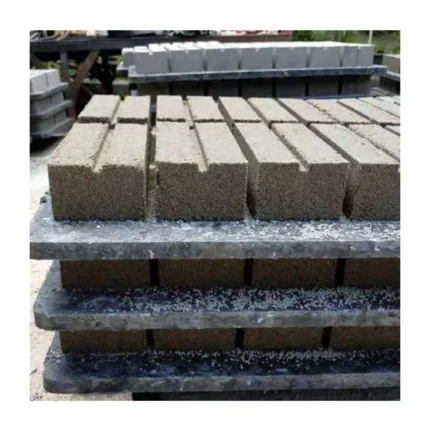
Vibration Matched to Mix — The QT8-15 parameters are dialed against the buyer’s actual aggregate and block format rather than a catalogue default, keeping density consistent across every pallet.
Technical Specifications
| Parameter | Value |
|---|---|
| Model | QT8-15 |
| Product Type | Hydraulic Concrete Block Making Machine |
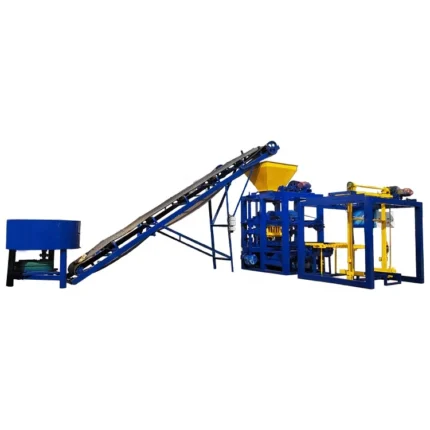
| Overall Dimensions | 8300 × 1860 × 3000 mm |
| Total Mass | 8 T |
| Rated Pressure | 21 MPa |
| Vibration Force | 45 KN |
| Vibration Frequency | 2800–4500 r/min |
| Main Vibration Form | Platform Vibration |
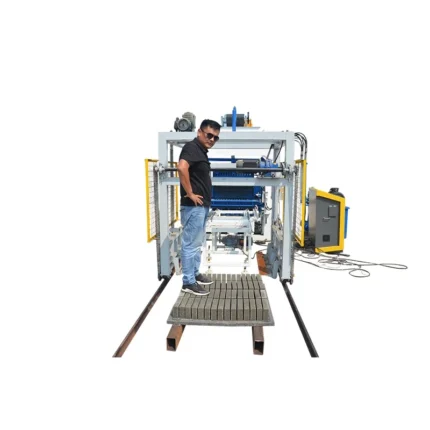
| Pallet Size | 950 × 900 mm |
| Molding Cycle | 15–20 s |
| Overall Power | 55.5 kW |
| Demolding Method | Hydraulic |
| Factory Area Required | 300 m² |
| Control System | PLC (language configurable) |
| Voltage & Frequency | Configurable per destination market |
| Automation Level | Semi-automatic to fully automatic stacking options |
| Output Capacity | basis not stated in source — confirm block format and mix |
| Warranty | 1 Year |
Application Suitability
| Application | Material or Output |
|---|---|
| Hollow block production | Crushed stone, sand, cement, fly ash |
| Solid block production | Gravel, sand, cement blends |
| Paving block and colored paver runs | Fine aggregates with pigment dosing |
| Interlocking brick manufacturing | Crushed stone and slag mixes |
| Kerbstone and curb units | Coarse aggregate with high cement content |
Why the PLC Language Question Beats the Price Question
A control screen the operator cannot read turns a fully automatic line back into a manual one.
On commissioning trips across East Africa and South Asia, I have watched crews stand in front of a PLC panel displaying a language they do not understand, waiting for a translator who is not coming. The automatic QT8-15 block machine PLC controlled interface is meant to remove guesswork from batching and cycle timing, yet that advantage disappears the moment the display defaults to a language the local team cannot parse [NEED_CITE: on-site operator comprehension and PLC language configuration]. Voltage mismatches cause similar stalls — a 50 Hz motor fed with 60 Hz power runs hot within the first shift, and rewinding it on a remote site takes days. These are not engineering flaws; they are pre-shipment paperwork gaps.
What the Control Layer Actually Removes
When the automatic QT8-15 block machine PLC controlled system is specified correctly, the operator stops deciding when to vibrate, when to release hydraulic pressure, and when to feed the next pallet. Those timing decisions move into the program, and the press follows the same sequence whether it is hour two or hour fourteen of a double shift.
The result is not just less fatigue for the crew. It is batch-to-batch consistency in block density, because the vibration duration and hydraulic hold pressure no longer drift as the operator gets tired. Remote diagnostics available on the PLC let a maintenance engineer check alarm logs without flying to the site.
Where Automation Meets the Rest of the Line
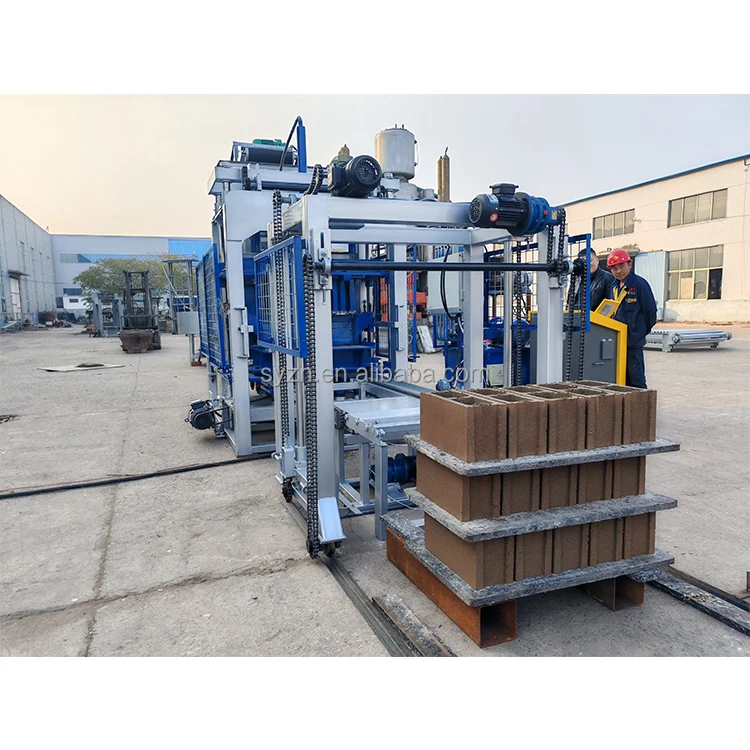
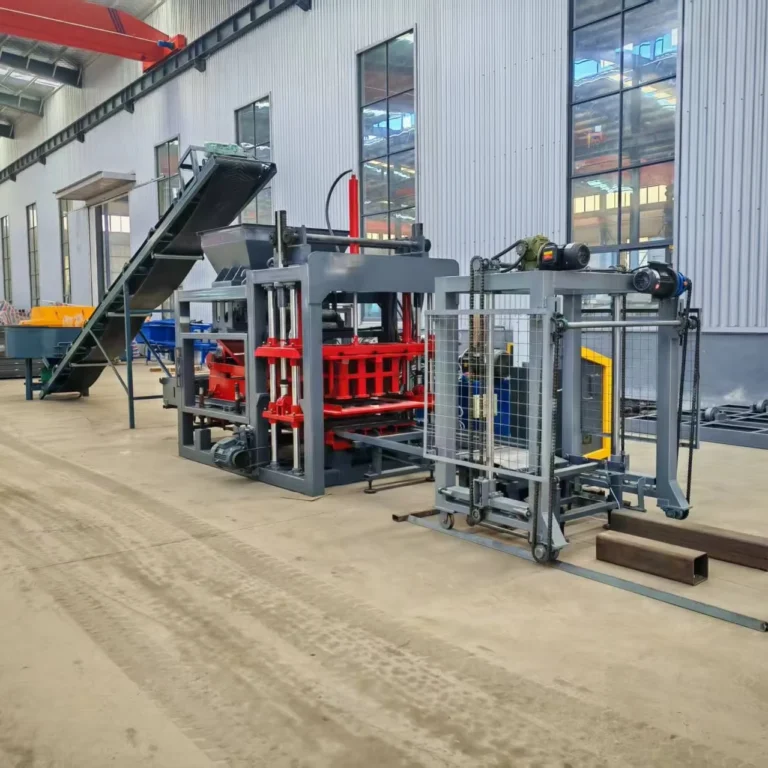
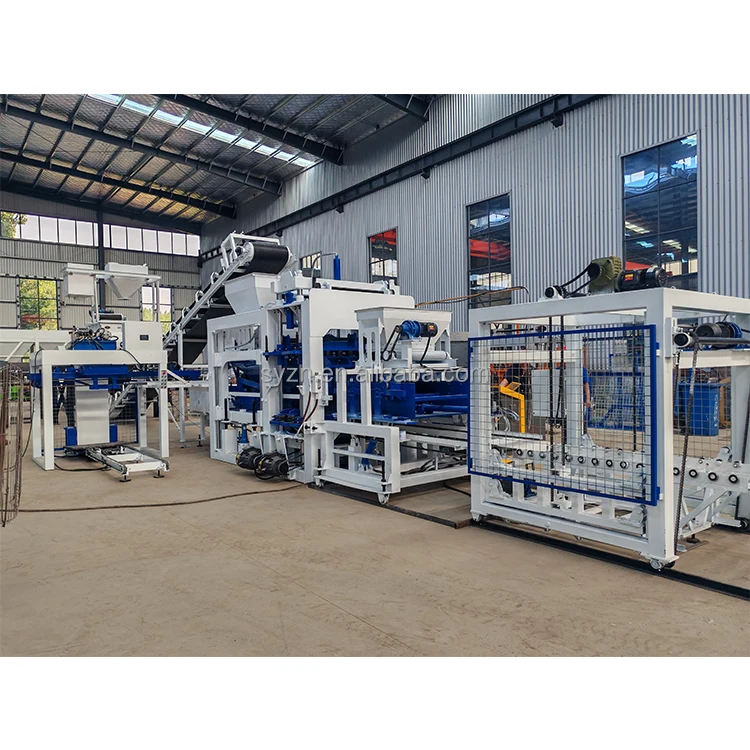
A press that cycles every 15–20 seconds is only as productive as the stations around it. If pallet feeding is still manual, the press waits. If stacking is done by hand, cured blocks pile up on the floor before the forklift can clear them. The automatic QT8-15 block machine PLC controlled configuration extends beyond the press itself: pallet feeders, stackers, and cubing units can be tied into the same PLC so the entire section runs on one coordinated timer [NEED_CITE: block line synchronization between press and handling equipment].
Choosing the automation level is a phased decision. A buyer can start with semi-automatic pallet handling and add an automatic stacker later, because the PLC architecture supports the upgrade without replacing the main controller.
Reading the Numbers That Matter
The 45 KN vibration force combined with platform vibration at 2800–4500 r/min is what compacts the mix into a dense, uniform block. Higher frequency works better for fine sand mixes used in pavers, while lower frequency suits coarser crushed stone in hollow blocks. Matching that range to the buyer’s aggregate is part of configuration, not an afterthought.
Hydraulic demolding at 21 MPa rated pressure pulls the mould away cleanly. If pressure is too low, block corners chip on release. If too high for a lean mix, the block cracks internally before it reaches the curing rack.
The 950 × 900 mm pallet size needs to match the curing racks and forklift tines already on site. A mismatch here means either buying new racks or hand-stacking blocks that should have been machine-handled, which erases the labor advantage the automation was meant to deliver.
The Cost of Skipping the Configuration Conversation
When vibration frequency is left at a catalogue default instead of tuned to local aggregate, block strength varies across the same pallet. Buyers then add cement to compensate, raising material cost without solving the inconsistency [NEED_CITE: aggregate gradation effect on concrete block compressive strength]. When pallet size is confirmed after shipment rather than before, the buyer discovers the curing racks on site are ten centimeters too narrow. These are not warranty claims — they are configuration oversights that no amount of on-site adjustment can fully fix.
Why Source the QT8-15 Through This Line
Block machinery is the single focus here, so the press, mould, pallet, and handling equipment are specified as one matched system rather than assembled from separate suppliers.
Configuration is set against the buyer’s actual mix design and target block format, not pulled from a generic table. Mould design covers the formats the buyer’s market actually sells, including custom drawings when a local standard calls for a non-standard dimension.
Automation level is selectable, letting a plant start semi-automatic and add stacking or cubing as demand grows. Installation support includes operator training on the exact PLC interface the crew will use daily.
Documentation & Verification
- Line layout showing capacity per block format, not just a single headline figure
- Machine specification sheet with hydraulic and electrical schematics for local maintenance
- Mould drawing and format list confirming every block type in the quoted configuration
- Voltage and PLC display language confirmation signed off before production begins
- Factory test record run on the buyer’s agreed block format and cycle parameters
Installation, Commissioning & Support
- Foundation pad sized to the 8300 × 1860 mm footprint with anchor bolt plan provided before shipment
- Dedicated circuit rated for the 55.5 kW overall power draw, separate from other plant loads
- PLC display language and voltage locked to destination specs before the machine leaves the factory
- Mould change procedure walked through with local crew during on-site commissioning visit
- Wear parts list with reorder codes so the first replacement arrives before the original is spent
What to Include in Your Inquiry
Share the specific block formats you plan to produce, the daily output target for each, and the raw materials available locally including aggregate gradation. Confirm your site voltage, frequency, and the preferred PLC display language. If you already have curing racks or forklifts on site, send their dimensions so the pallet size can be matched before the order goes into production.
Frequently Asked Questions
Q: How is QT8-15 output capacity calculated and which block format does it assume?
A: Capacity depends on the block format, mould cavity count, and the actual cycle time for that specific mix. A 15–20 second cycle applies under defined conditions, and daily output must be stated per format. We provide a line layout that shows calculated output for each block type in your quotation, so you see real figures rather than a single headline number.
Q: What PLC control options and display languages are available?
A: The PLC interface can be configured in multiple languages to match the operating crew. We confirm the display language along with voltage and frequency before production starts. This avoids the common situation where the machine arrives and the local team cannot navigate the control screen during commissioning.
Q: How does automation scale from semi-automatic to fully automatic?
A: The QT8-15 architecture supports adding automatic pallet feeding, stacking, and cubing as separate modules. A buyer can start with manual pallet handling and upgrade later without replacing the main PLC controller. Each upgrade removes a manual station and ties timing back into the central program.
Q: What is the mould change procedure for switching formats?
A: Mould change involves releasing the clamp bolts, lifting the current mould with the overhead crane, lowering the new mould, and recalibrating the vibration and pressure settings for the new block format. We include the change procedure in the operation manual and walk the crew through it during commissioning so format switching does not consume an entire shift.
Q: How are vibration force and hydraulic pressure matched to local materials?
A: We ask for the buyer’s aggregate type, gradation, and cement ratio before finalizing machine settings. The 45 KN vibration force and adjustable 2800–4500 r/min frequency range are then set to suit that specific mix, ensuring consistent compaction and block density across production runs.