


Description
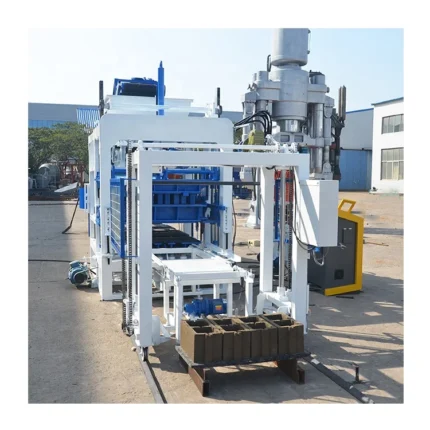
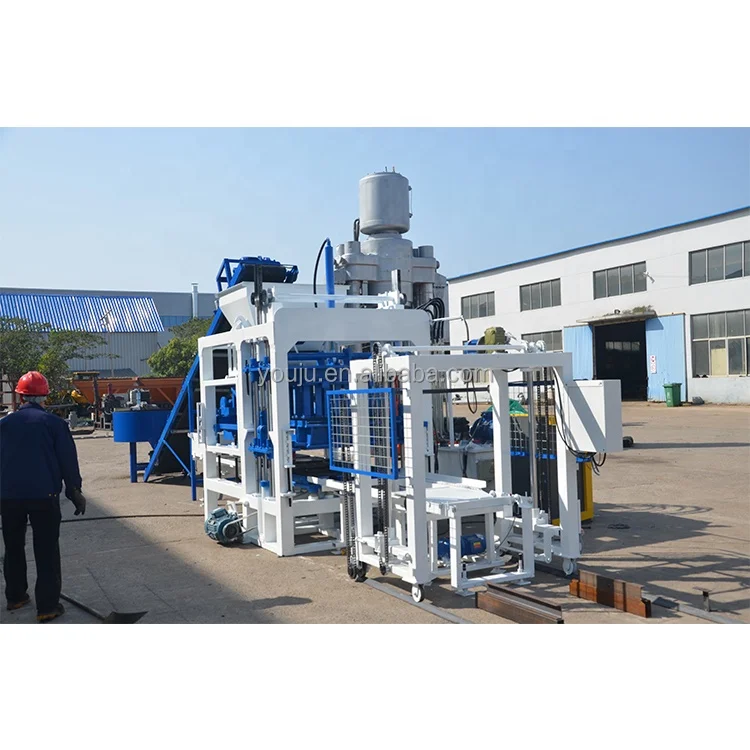
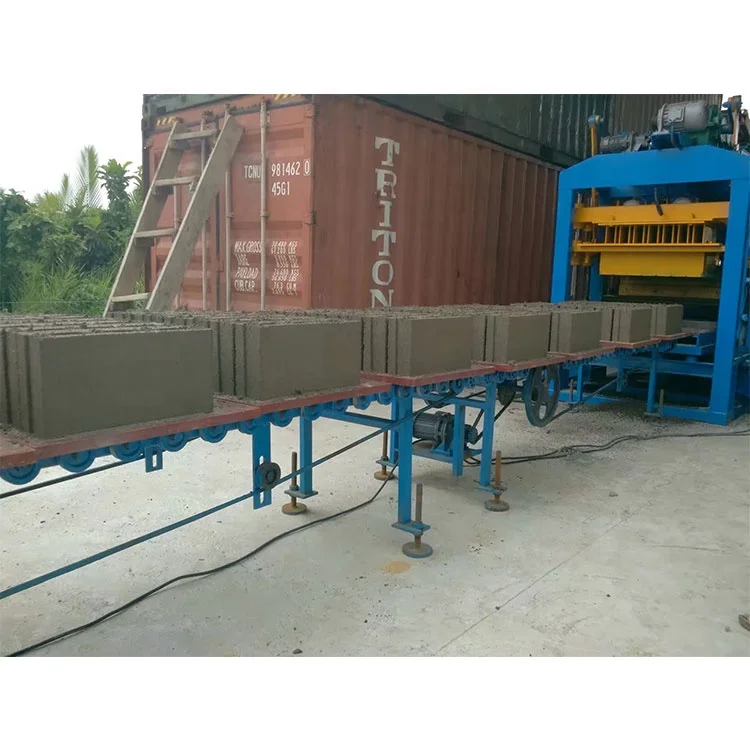
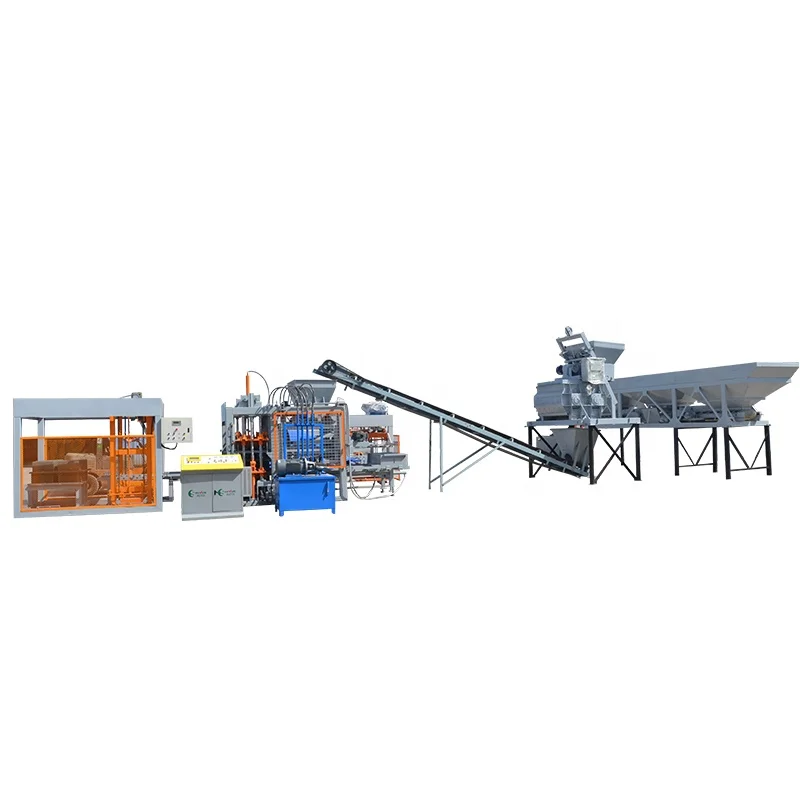
Synchronized Line Automation — every station from pallet feeding to stacking is timed against the press cycle so the QT5-15 never waits on upstream or downstream equipment.
Technical Specifications
| Parameter | Value |
|---|---|
| Model | QT5-15 |
| Product Type | Cement Interlocking Brick Making Machine |
| Overall Dimensions (L×W×H) | 7400×1950×2800 mm |
| Total Mass | 5000 kg |
| Overall Power | 32 kW |
| Control System | PLC (Programmable Logic Controller) |
| Automation Level | Fully automatic (PLC-controlled pallet feeding, material feeding, vibrating, demoulding) |
| Vibration Form | Platform Vibration |
| Vibration Frequency | 0–60 Hz |
| Vibration Force | 80 kN |
| Moulding Mode | Automatic loading with vibration moulding |
| Demolding Method | Hydraulic |
| Hydraulic System | Independent integrated hydraulic station |
| Pallet Size | 1100×550 mm |
| Molding Cycle | 15–20 s |
| Block Compressive Strength | ≥15 MPa |
| Factory Area (recommended) | 1000 m² |
| Raw Material Compatibility | Fly ash (up to 70%), slag, gangue, sand, crushed stone, cement, water |
| Output: Hollow block 400×200×200 mm | 900–1200 pcs/h, 5 pcs/mould |
| Output: Hollow block 400×150×200 mm | 1080–1440 pcs/h, 6 pcs/mould |
| Output: Solid brick 240×115×53 mm | 5760–7680 pcs/h, 32 pcs/mould |
| Output: Rectangular paver 200×100×60 mm | 3600–4500 pcs/h, 25 pcs/mould, cycle 20–25 s |
| Output: Zigzag paver 225×112.5×60 mm | 2304–2880 pcs/h, 16 pcs/mould, cycle 20–25 s |
| Standards | CE declaration where applicable |
Application Suitability
| Application | Material or Output |
|---|---|
| Hollow block production for load-bearing walls | Crushed stone, sand, and cement with fly ash or slag substitution |
| Solid brick manufacturing for masonry infill | Cement-bound aggregate mixes with gangue or sand |
| Interlocking brick runs for retaining structures | Stiff zero-slump concrete with controlled moisture content |
| Rectangular and zigzag paver production | High-density mixes requiring 20–25 s cycle for surface finish |
| Industrial residue utilization in block form | Fly ash at ratios up to 70 percent blended with cement and aggregate |
Why Language and Voltage Must Be Locked Before the Machine Leaves the Factory
A PLC-controlled automatic cement interlocking brick making machine is only intelligent if the operator can read what it says.
I once spent three days standing next to a fully commissioned press in Eastern Europe while the local crew stared at a Chinese-language HMI they could not navigate. The hardware was correct, the hydraulic station was balanced, and the mould was producing clean blocks — but nobody could reset a fault code because the menu tree was in a language they did not read. Commissioning stalled until a language pack arrived by email, and the project lost an entire week of ramp-up time. That delay was entirely preventable if the display language had been confirmed alongside the voltage and frequency during the order stage. [NEED_CITE: PLC interface language requirements in international machinery commissioning]
Closing the Loop Between the PLC and the Production Floor
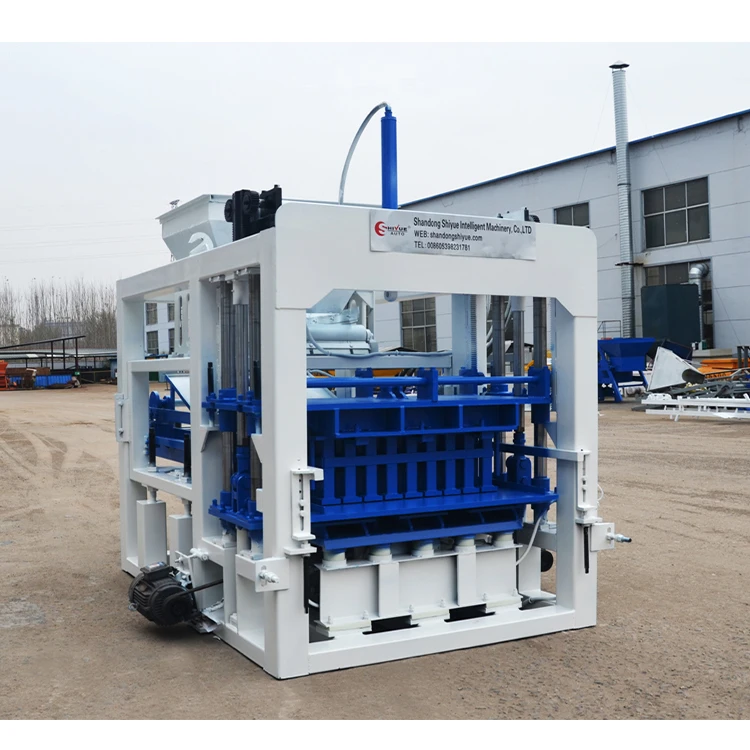
The QT5-15 runs a PLC control system that governs material feeding, vibration timing, hydraulic demoulding, and pallet indexing as a single sequenced workflow. The operator sets the process parameters once through the touch-screen interface, and the controller holds those settings across shifts and batches. Remote fault diagnosis capability lets a service engineer review alarm codes and I/O states without being physically present, which matters during the first weeks of production when questions arise faster than site visits can be scheduled. An automatic cement interlocking brick making machine PLC controlled at this level removes the variability that manual operation introduces between one operator and the next.
What Full Automation Actually Removes From the Shift
Semi-automatic lines leave pallet handling, material distribution, and stacking as manual tasks that the operator must pace against the press cycle. Every time the operator falls behind on pallet feeding or the stacking crew slows down, the press sits idle between cycles and the quoted capacity becomes theoretical. The QT5-15 automates pallet feeding, material loading, vibration, and demoulding as a continuous sequence, so the machine sets its own rhythm independent of crew speed. For a plant owner moving away from manual stations, this is the point where daily output stops depending on how many people are willing to stand at the line end in summer heat. [NEED_CITE: labour dependency reduction in automated block production]
How Vibration Force and Hydraulic Pressure Shape Block Density
The 80 kN vibration force operating at 0–60 Hz through platform vibration compacts the mix inside the mould cavity before the hydraulic system applies demoulding pressure. These two forces must be matched to the specific aggregate gradation and cement ratio the buyer is running — a stiffer mix with higher crushed stone content needs more vibration energy to fill the mould corners, while a wetter fly-ash blend requires less vibration to avoid segregation. The independent integrated hydraulic station sits away from the vibration source and dust, which protects valve seals and pump components from the wear that shortens service intervals on machines where hydraulics share the press frame. The pallet size of 1100×550 mm defines the mould cavity area and must align with the curing racks and forklifts already on site.
The Hidden Cost of Specifying Automation Without Confirming the Periphery
Buyers sometimes focus on the press automation level and assume that stacking, curing rack handling, and cubing are included in the scope. When those downstream stations arrive as manual tasks, the fully automatic press ends up feeding a manual line, and blocks pile up at the discharge end faster than the crew can move them. Pallet return becomes the bottleneck, the press pauses waiting for empty pallets, and the cycle time the buyer was quoted becomes unreachable. Confirming the full automation boundary — from pallet magazine to stacking station — before the quotation is finalized prevents this mismatch from appearing on installation day. [NEED_CITE: block plant line balancing between press and downstream handling]
Why the QT5-15 Fits a Plant Planning Its Next Phase
The block machinery focus means the press, mould, pallet, and handling equipment are specified as one matched system rather than sourced from separate vendors and bolted together on site. Configuration starts from the buyer’s actual mix design and target block format, not a default catalogue setting, so the vibration and hydraulic parameters are set for the materials that will actually run. Mould design covers the formats the local market demands, including custom drawings when a non-standard interlocking profile is required. The automation level is selectable, allowing a buyer to begin with the QT5-15 core press and add automatic stacking and cubing as the plant scales. Installation and commissioning include operator training so the crew can manage mould changes and PLC parameter adjustments independently. [NEED_CITE: block machinery single-supplier system integration]
Documentation & Verification
- Line layout drawing showing pallet flow from magazine through press to stacking station
- Capacity calculation table stating the block format and cycle time assumed for each output figure
- PLC program parameter list with display language and voltage confirmation sheet
- Mould drawing and format list for every block profile included in the order
- Factory test record documenting block dimensions and compressive strength from trial runs
- Hydraulic and electrical schematic with component part numbers for local sourcing
Installation, Commissioning & Support
- 7400×1950 mm footprint requires a level concrete pad within the recommended 1000 m² factory area
- 32 kW total power draw needs a dedicated circuit with confirmed voltage and frequency before energizing
- Machine ships in dismantled modules for container loading and reassembly on the prepared foundation
- First-run commissioning includes PLC parameter tuning for the buyer’s specific mix and block format
- Operator training covers mould changeover procedure, fault code navigation, and daily lubrication points
- Wear parts list with mould and hydraulic seal part numbers for first replacement planning
What to Prepare Before Requesting a Quotation
Send the block formats your market currently sells along with target daily output per format, and specify whether the line will run hollow blocks, solid bricks, pavers, or a combination. Confirm the local voltage, frequency, and the PLC display language your operators need. Provide details on the raw materials available locally — aggregate type, fly ash or slag availability, and cement grade — so the mix design can be validated against the machine configuration. Include the curing area dimensions and existing forklift specifications so the pallet size and stacking automation level are matched to your site.
Frequently Asked Questions
Q: How do I verify the daily output figure for my specific block format?
A: The capacity table states output per hour for each block format with the corresponding mould cavity count and cycle time. Request the calculation that shows how many cycles per hour are achievable for your target format, including pallet indexing and demoulding time, so the daily total reflects your actual product rather than a single headline number from a different block size.
Q: What PLC language options are available before the machine ships?
A: The touch-screen interface can be configured to your operator’s language before dispatch. Confirm the required language during the order stage alongside voltage and frequency. Remote fault diagnosis allows a service engineer to access alarm codes and process data in real time, which reduces the time between a fault appearing and a resolution being identified.
Q: Where does this machine sit between semi-automatic and fully automatic stacking?
A: The QT5-15 automates pallet feeding, material loading, vibration, and demoulding as standard. Automatic stacking and cubing are available as additional stations. A buyer can start with the core automated press and add downstream handling later, which spreads investment while keeping the upgrade path within the same control architecture.
Q: How is voltage and frequency confirmed to prevent commissioning delays?
A: Voltage, frequency, and PLC language are confirmed as a checklist item during the order process before production begins. The electrical schematic and control panel labels reflect the buyer’s site specification. This step is completed before the factory test so that the machine runs under the same electrical conditions it will encounter after installation.
Q: How does the mould change process work on a multi-format line?
A: The QT5-15 supports mould replacement across multiple block formats. The time required for a changeover depends on the mould clamping system and the operator’s familiarity with the procedure. Request the documented mould change time for your specific format combination so you can plan production scheduling around the actual changeover penalty rather than an estimate.