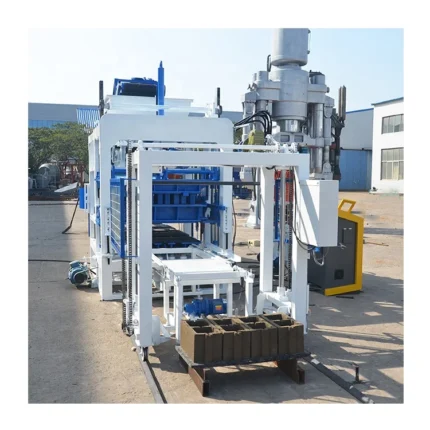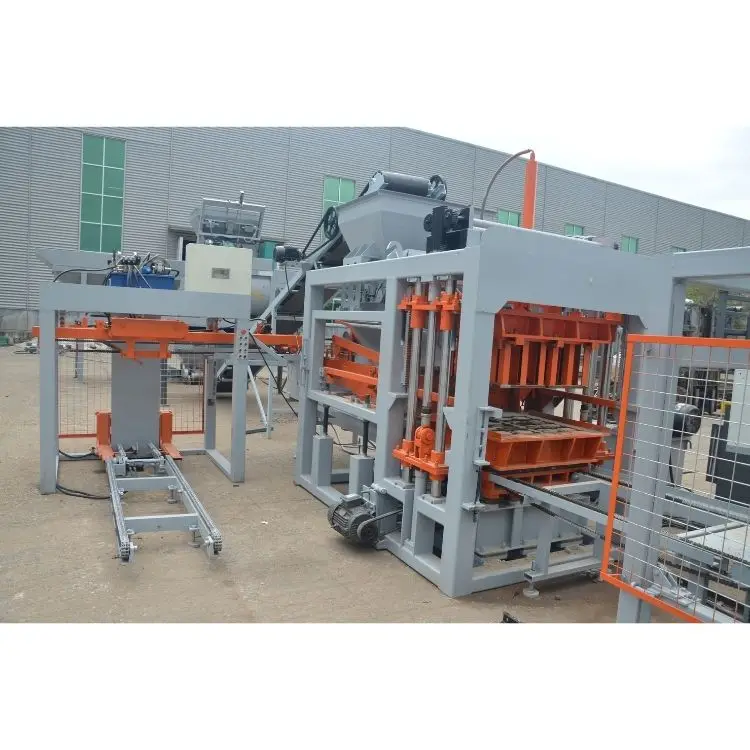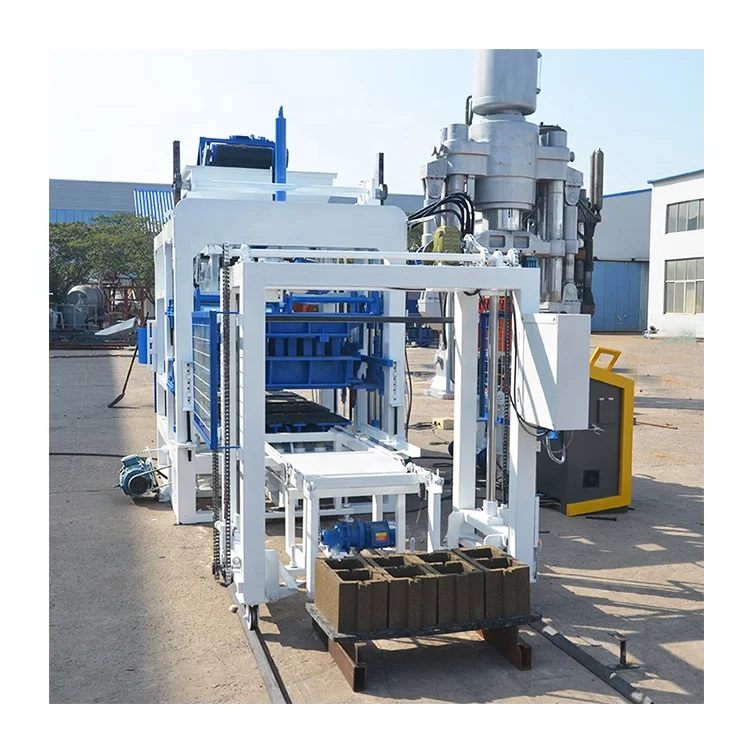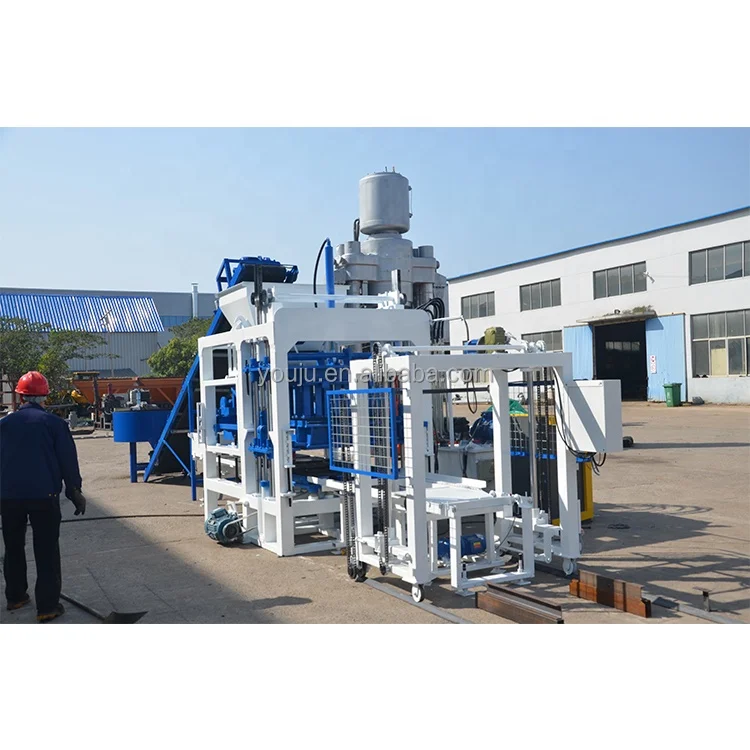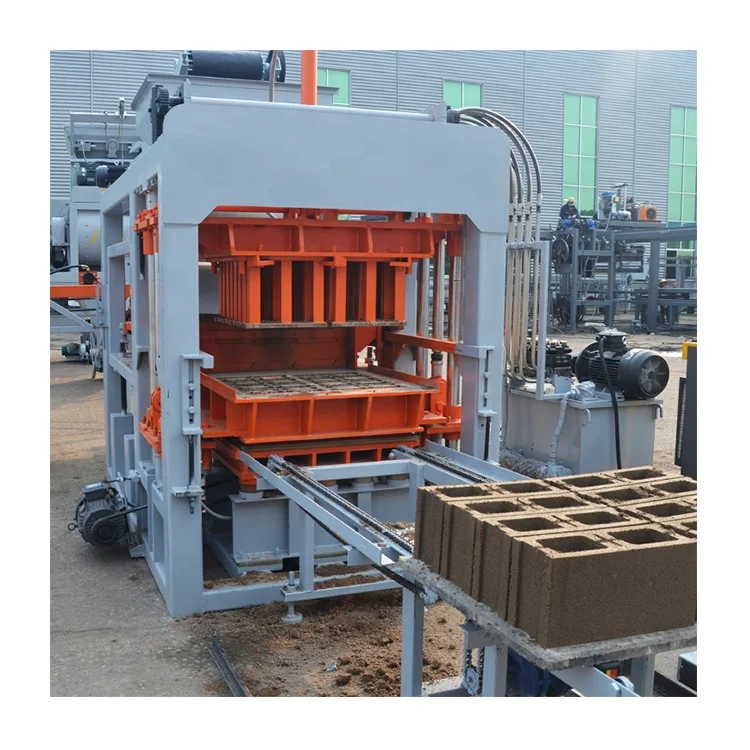
Description
PLC-Controlled Intelligence — Automation level selectable from semi-automatic through to fully automatic stacking and cubing, so a buyer can scale the line as production volume grows.
Technical Specifications
| Parameter | Value |
|---|---|
| Model | QT6-15 |
| Product Type | Automatic Concrete Block Making Machine |
| Molding Way | Vibration and hydraulic pressing |
| Rated Pressure | 21 MPa |
| Molding Cycle | 15s–20s (basis not stated in source — confirm block format / material / thickness) |
| Pallet Size | 900×700 mm |
| Main Machine Weight | 6000 kg |
| Output Capacity | 1440 pcs/h hollow blocks (based on 400×200×200 mm, 6 pcs per pallet) |
| Output Capacity | 5040 pcs/h paving bricks (based on 200×100×60 mm, 21 pcs per pallet) |
| Output Capacity | 7680 pcs/h solid bricks (based on 240×115×53 mm, 32 pcs per pallet) |
| Raw Materials | Cement, sand, fly ash, stone powder, slag |
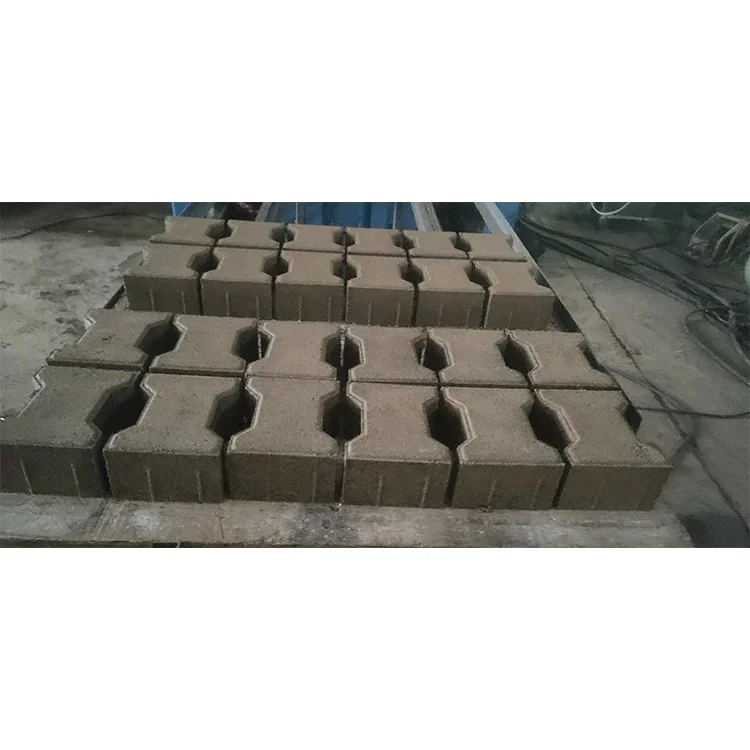
| Block Formats | Hollow block, paving brick, solid brick (via mould change) |
| Simple Line Components | JS500 mixer, 8 m conveyor belt, automatic stacker |
| Optional Full Line Components | Cement silo, screw conveyor, cement scale, batching machine, pallet loader, block and pallet separator |
| Motor Voltage | Customizable to local voltage (basis not stated in source — confirm voltage / frequency) |
| Control System | PLC (inferred from automatic line description — confirm) |
| Assembly State | Top cylinder removed for container loading |
| Warranty | 1 year (excluding wearing parts) |
| Included Mould | One hollow block mould (supplied with simple line) |
| Included Handling | Two hydraulic trolleys (supplied with simple line) |
Application Suitability
| Application | Material or Output |
|---|---|
| Hollow block production for building construction | Cement, sand, fly ash, stone powder, slag |
| Paving brick manufacturing for sidewalks and pavements | Cement, sand, crushed stone aggregates |
| Solid brick production for structural walls | Cement, sand, stone powder, slag blends |
| Interlocking and porous brick formats via mould change | Custom mix designs per buyer market |
Why the Cycle Time Figure Never Tells the Whole Story
The automatic QT6-15 block making machine PLC controlled delivers a headline moulding cycle of 15 to 20 seconds, but that number only holds if upstream batching feeds the press on time and downstream stacking clears pallets before the next cycle drops.
A buyer I worked with in the Philippines installed a press rated for a fast cycle, yet his manual pallet handling crew could not keep up. The press sat idle between cycles while workers repositioned pallets by hand, and real daily throughput fell well below the brochure promise. [NEED_CITE: mismatch between press cycle and line handling speed in block production]. The same trap applies when batching output cannot feed the mixer fast enough — the press waits for material, not the other way around.
Matching Press Speed to Line Throughput
The QT6-15 press cycles every 15 to 20 seconds per pallet, but that interval is only one station in a chain. The JS500 mixer must deliver a homogeneous batch before the press calls for it, the pallet feeder must present a clean pallet in position, and the automatic stacker must clear finished blocks so the next pallet can enter. When any station lags, the PLC records idle time and throughput drops. Configuring the automatic QT6-15 block making machine PLC controlled means sizing every station to the press rhythm, not the other way around.
Automation Stations That Remove Operator Bottlenecks
Moving from semi-automatic to automatic means the operator no longer handles pallets, stacks output, or times the feed manually. The pallet loader positions boards with repeatable accuracy, the stacker builds cubes to a preset layer count, and the separator breaks cured blocks from pallets without manual prying. Each station is governed by the same PLC, so timing offsets between press and handling are adjusted in software rather than by shouting across the workshop floor. [NEED_CITE: PLC synchronization of block press and handling stations].
Reading the Spec Sheet Against Your Actual Mix
The 21 MPa rated hydraulic pressure works in combination with vibration force to compact the mix into the mould cavity. Higher pressure alone does not guarantee block strength — the local aggregate shape, moisture content, and cement ratio determine how that pressure translates into density. I have seen a buyer in Vietnam run the same pressure setting with river sand and crushed limestone; the river sand blocks crumbled at the edges because the rounded grains did not lock under vibration. The automatic QT6-15 block making machine PLC controlled stores moulding parameters per format, but those parameters must be validated against the buyer’s own material before production starts.
What Happens When Pallet Handling Is Left Out of the Quote
A common complaint arrives after the container lands: the buyer opens the crate expecting a running line, only to discover that pallets must be fed by hand and stacked blocks must be broken apart manually. The press itself works fine, but the missing handling stations turn an automatic line into a semi-automatic one with extra steps. [NEED_CITE: incomplete block line quotations missing handling equipment]. Pallet size also matters — if the 900×700 mm pallet does not match the buyer’s existing curing racks or forklift forks, the whole curing workflow must be redesigned around a board dimension that was never discussed before the order.
Why Sourcing the Press and Handling from One Source Matters
The QT6-15 is specified as the core of a matched system rather than a standalone press bolted to third-party conveyors. The mould, pallet, and handling equipment are dimensioned together so cycle times align across stations. Machine configuration is set against the buyer’s actual mix design and local aggregate, not a catalogue default. Automation level is selectable, meaning a buyer can commission the line semi-automatic and add pallet loading or automatic stacking later without replacing the press. Installation support includes operator training on the PLC interface, and mould and wear parts lists are supplied so the first replacement order can be placed before stock runs out.
Documentation & Verification
- Line layout showing station spacing and pallet flow path for the 900×700 mm board size
- Capacity calculation sheet stating the block format assumed for each output figure
- Hydraulic and electrical schematic for local maintenance and troubleshooting
- Voltage, frequency, and PLC display language confirmation signed before production
- Factory test record run on the buyer’s specified block format before dispatch
Installation, Commissioning & Support
- Top cylinder removed for container loading and reassembled on-site before first power-up
- Motor voltage verified against local supply before the control cabinet is energized
- PLC display language set to operator preference during commissioning week
- One hollow block mould calibrated and test-run with local aggregate on arrival
- Two hydraulic trolleys assembled and tested alongside the main press cycle
- Wear parts and mould replacement list handed over at operator training close-out
What We Need to Size Your Line Correctly
Send us the block formats your market sells, the daily volume you need per format, and a sample or lab report of your local sand and aggregate. Include your site voltage and frequency, the PLC language your operators read, and the dimensions of any existing curing racks or forklifts so we can confirm pallet compatibility.
Frequently Asked Questions
Q: How is output capacity verified and what block format is each figure based on?
A: Each capacity number is tied to a specific block size and pallet layout. The QT6-15 is rated at 1440 pcs/h for 400×200×200 mm hollow blocks at 6 per pallet, 5040 pcs/h for 200×100×60 mm pavers at 21 per pallet, and 7680 pcs/h for 240×115×53 mm solid bricks at 32 per pallet. Any format outside these dimensions requires a separate cycle time calculation.
Q: What automation level is included and what upgrade path is available from semi-automatic?
A: The simple line ships with a JS500 mixer, an 8 m conveyor, and an automatic stacker. Buyers can add a cement silo, batching machine, pallet loader, and block-pallet separator to move toward full automation. The PLC architecture supports adding stations later without replacing the press or rewriting the control program.
Q: How is PLC control language and voltage confirmed before shipment?
A: Voltage, frequency, and PLC display language are confirmed in writing before the control cabinet is wired. A confirmation document lists the exact motor voltage and the operator interface language. The factory test is then run at that voltage setting, and the test record is included in the shipping documentation.
Q: How does the press cycle time match with upstream batching and downstream stacking?
A: The 15 to 20 second moulding cycle sets the pace, but the mixer output rate, conveyor speed, and stacker indexing must all align to that rhythm. The line layout document shows the timing relationship between each station so the buyer can verify that no upstream or downstream bottleneck will leave the press idle between cycles.