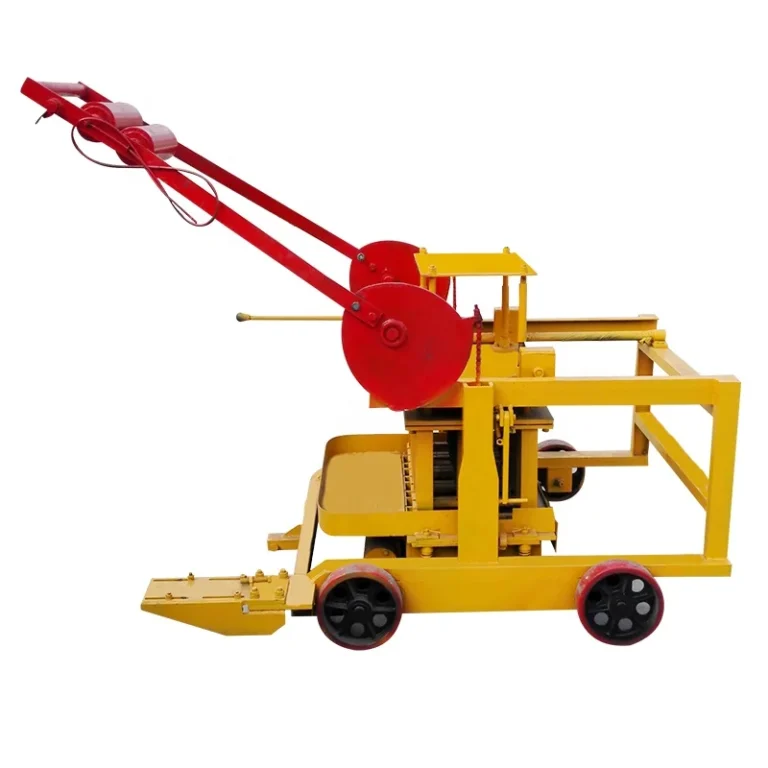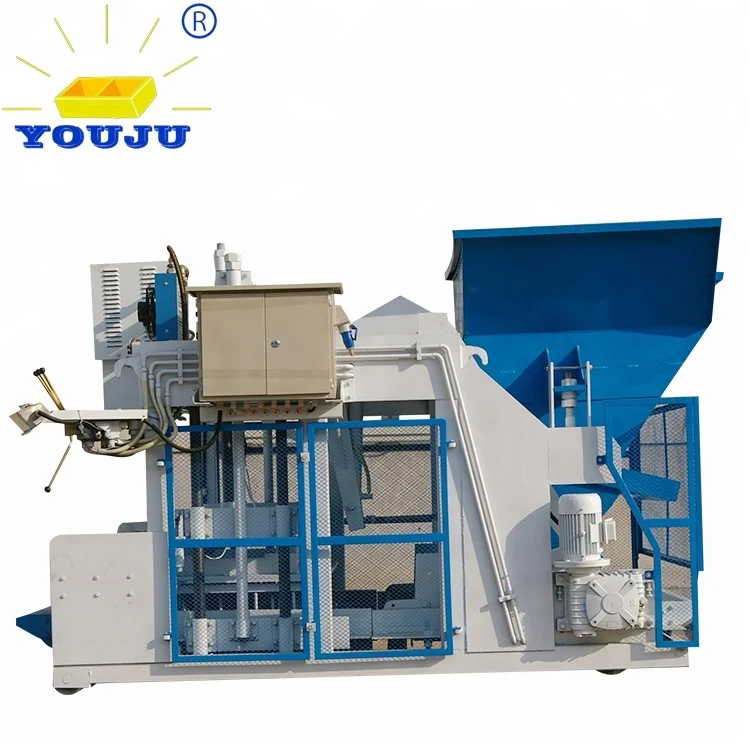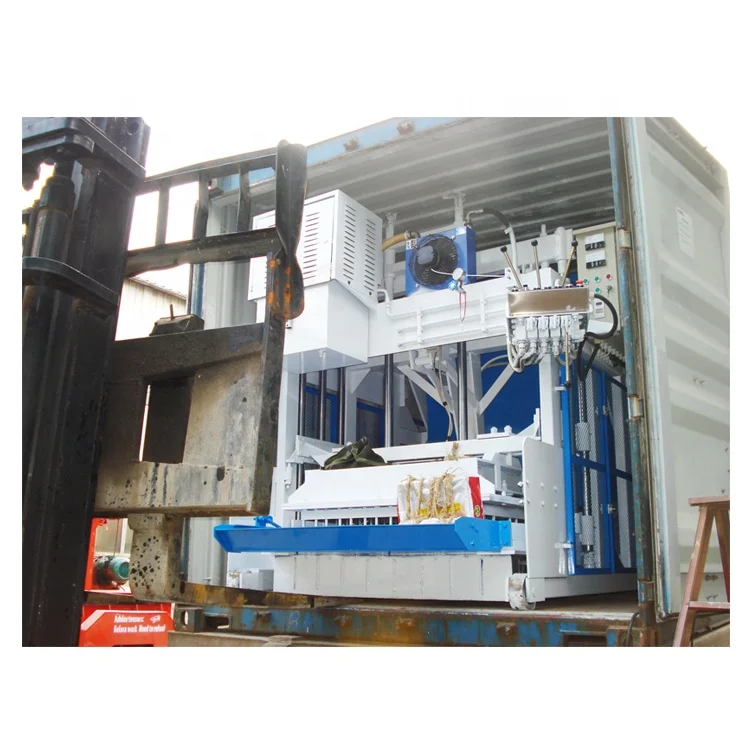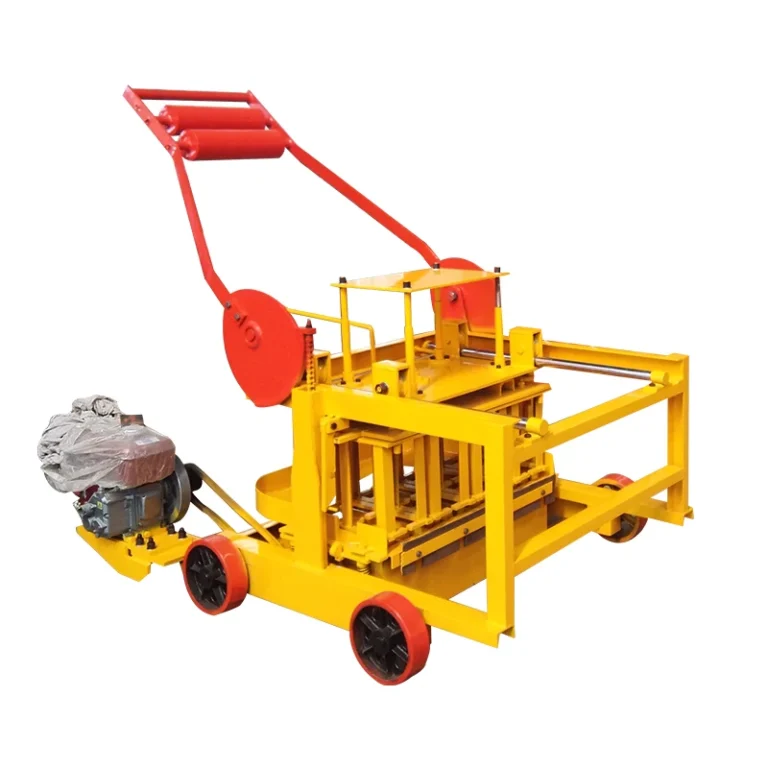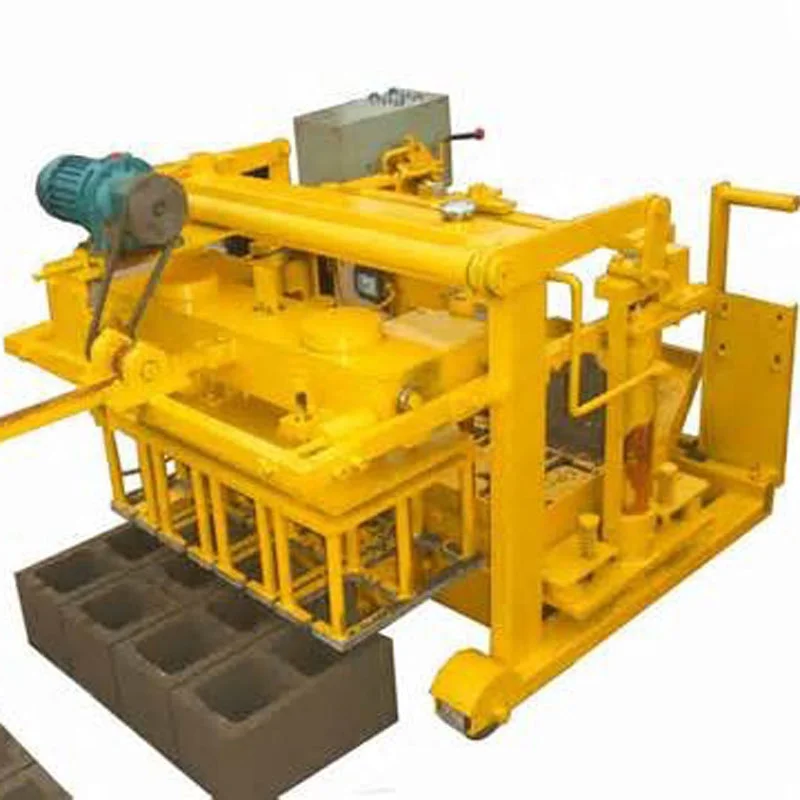
Description
Single Focus Engineering — every QMY4-30 component from hydraulic pump to manual handle is specified as a matched system, eliminating integration gaps when you add PLC control and automatic batching later.
Technical Specifications
| Parameter | Value |
|---|---|
| Model | QMY4-30 |
| Product Type | Mobile Hydraulic Block Making Machine |
| Overall Dimensions (L×W×H) | 1300 × 1500 × 1000 mm |
| Net Weight | 950 – 1000 kg |
| Total Power | 5.95 kW |
| Vibration Force | 28.6 kN |
| Excitation Frequency | 4500 r/min |
| Molding Cycle | 30 s (basis not stated in source — confirm block format) |
| Output Capacity | 3000 pcs/day (8 hours) (basis not stated in source — confirm block format / material / thickness) |
| Hydraulic Method | Mold Vibration |
| Automation Level | Manual operation with hydraulic transmission |
| Control System | Manual handle operation (no PLC indicated in source) |
| Assembly State | Mobile / egg-laying type |
| Pallet Size | Not applicable (egg-laying type, blocks deposited on ground) |
| Voltage & Frequency | Configurable — confirm before order |
Application Suitability
| Application | Material or Output |
|---|---|
| On-site hollow block production for housing projects | Concrete, cement, sand, crushed stone |
| Paving block manufacturing in remote or suburban sites | Fly ash, stone dust, river sand, slag |
| Small-scale solid block production for local sale | Construction waste, coal gangue, mine tailings |
| Contractor block supply for infrastructure works | Lime, gypsum, porcelain granule, sandrock |
Why the Voltage Question Must Come Before the Quotation
Confirming site voltage and frequency before production avoids a machine that cannot start on arrival.
I once watched a crew stand around a diesel-hydraulic block press for three weeks because the local grid frequency did not match the factory setting. The control board locked out, and nobody on site had the manual in a language they could read. The QMY4-30 is compact and quick to deploy, but that speed disappears if electrical parameters and PLC display language are treated as afterthoughts. [NEED_CITE: voltage and frequency standards by export market]
Control Language and Electrical Alignment
An automatic mobile block machine is only as intelligent as its operator interface. When the QMY4-30 is configured with PLC-controlled batching or upgraded stacking peripherals, the display language must match the crew reading it. Shipping a machine with an unverified control language turns a one-day commissioning into a multi-week delay while new HMI screens are sourced and reprogrammed on site.
Cycle Time as the Bottleneck Reference
The 30-second molding cycle sets the pace every downstream station must meet. If an automatic pallet feeder or stacker operates slower than this cycle, the PLC controlled egg-laying block machine sits idle between strokes. Conversely, peripheral equipment that cycles faster simply waits. Matching upstream batching accuracy and downstream handling speed to the 30-second press cycle is the core task of line automation. [NEED_CITE: typical automation integration tolerances in block production]
Hydraulic Vibration and Block Density Baseline
The 28.6 kN excitation force at 4500 r/min defines the mechanical baseline for block density. Automation cannot compensate for weak vibration; it can only make that vibration repeatable. A PLC-controlled batching system ensures every mix arrives at the mold with consistent moisture and aggregate ratio, so the hydraulic mold vibration produces uniform blocks from the first cycle to the last.
Reading the Specifications That Matter Most
Vibration force and excitation frequency work together: the 28.6 kN force compresses the mix while 4500 r/min shakes fine particles into voids, increasing density. Total power at 5.95 kW keeps the machine within the reach of portable generators, a practical advantage for remote sites where grid connections are unreliable. The 950–1000 kg weight provides ground stability during egg-laying operation without requiring a concrete foundation, but it also means the frame must resist fatigue from constant vibration — weld quality and plate thickness determine service life. Raw material compatibility spans fly ash, slag, construction waste, and river sand; each material has a different bulk density, so automatic batching calibration must account for the specific aggregate on site. Molding cycle time of 30 seconds is the mechanical stroke only; actual throughput depends on mold change speed, material feed time, and operator handling between cycles.
The Cost of Ignoring Electrical and Automation Details
A machine specified without confirming local voltage may require an external transformer that adds cable loss and a separate point of failure. Unverified PLC language forces operators to guess alarm codes, increasing the chance of running the press with a blocked mold or dry mix. Mismatched pallet dimensions — even though the QMY4-30 is egg-laying and deposits blocks on the ground — become relevant the moment a buyer adds automatic stacking, because the stacker gripper must match the cured block footprint exactly. [NEED_CITE: CE machinery directive requirements for industrial equipment]
Why Source This Machine Through a Single-System Supplier
Block machinery is the sole focus of this supply chain, so the QMY4-30 arrives with hydraulic and electrical schematics that account for future automation add-ons. Configuration is set against the buyer’s actual mix design and target block format, not a catalogue default. Moulds are designed or sourced for the formats the local market demands, including custom drawings when standard sizes do not apply. Automation level is selectable, allowing a buyer to start with manual handle operation and add PLC-controlled batching and stacking as volume grows. Installation support includes operator training on the specific control interface shipped with the machine.
Documentation & Verification
- Line layout showing QMY4-30 footprint with upgrade zones for automatic stacker and batcher
- Machine specification sheet with voltage, frequency, and control language confirmed per order
- Mould drawing listing format dimensions and changeover procedure
- Hydraulic and electrical schematic marking PLC upgrade connection points
- Factory test record run on buyer’s specified block format before dispatch
- Operation and maintenance manual in confirmed display language
Installation, Commissioning & Support
- Level ground area of at least 2 × 3 m required; no fixed foundation needed for QMY4-30 egg-laying operation
- Dedicated circuit matching confirmed voltage and 5.95 kW total power draw with surge allowance
- Machine arrives fully assembled; only hydraulic oil fill and electrical connection required on site
- First-cycle commissioning includes vibration force calibration to buyer’s specific mix and aggregate
- Operator training covers manual handle sequence and PLC interface if automatic batching is fitted
- Wear parts list with mould liner and hydraulic seal reorder intervals provided at delivery
What to Include in Your Inquiry
Send the target block format, daily output requirement, and the raw materials available locally so the configuration proposal can state capacity per specific mould. Include site voltage, frequency, and preferred control language to prevent commissioning delays. If you plan to add automatic stacking or batching within the first year, mention the intended timeline so the QMY4-30 electrical schematic reserves the correct PLC I/O points.
Frequently Asked Questions
Q: How is the stated daily output verified, and which block format does it assume?
A: The 3000 pcs/day figure has no stated format basis in source documentation. Real output depends on the mould selected, mix design, and operator handling speed. Request a capacity calculation that names the exact block dimensions and assumes your local aggregate so the number is meaningful for your project.
Q: Can the QMY4-30 move from manual handle to PLC-controlled automatic batching?
A: Yes, the hydraulic vibration platform provides the mechanical baseline, and PLC-controlled batching can be added to regulate material feed. The electrical schematic should reserve I/O points for the upgrade. Confirm the automation timeline at order so wiring is pre-routed during assembly.
Q: What voltage and control language options are available for my market?
A: Voltage and frequency are configurable before production, and the control display language is set to match the operator crew. Provide your site electrical specifications and preferred language during inquiry so the machine ships ready to run without external transformers or reprogramming.
Q: How does the 30-second cycle interact with downstream stacking automation?
A: The 30-second molding cycle is the press stroke only. Any automatic stacker must complete its pick-and-place sequence within that window to avoid press idle time. Specify stacking equipment with a cycle faster than the press so the bottleneck remains the mold, not the handler.