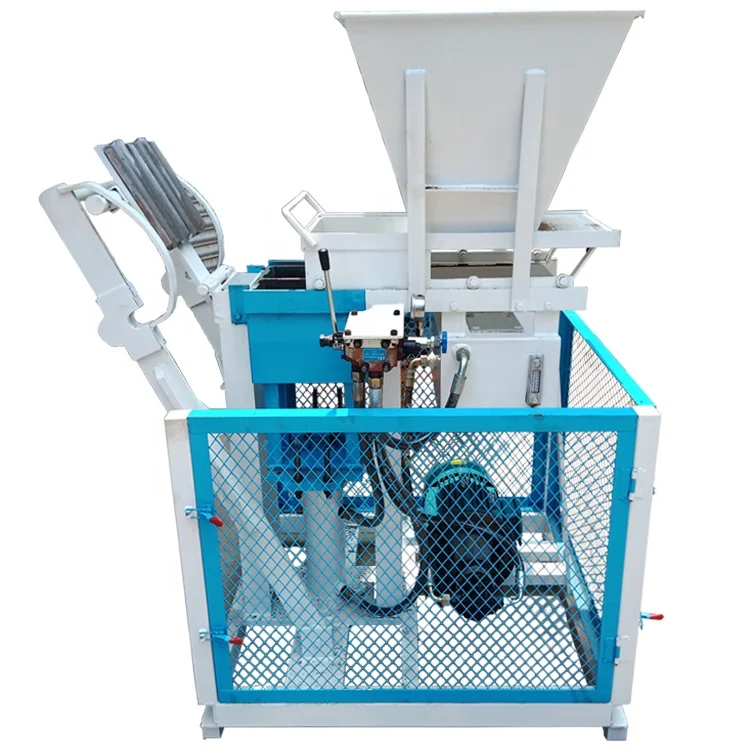
Description
Configurable control logic — PLC parameters and hydraulic pressure are tuned to your actual clay or cement mix, not left at factory defaults, ensuring the ECO BRB compressed earth block machine performs reliably in your specific production environment.
Technical Specifications
| Parameter | Value |
|---|---|
| Model | ECO BRB |
| Product Type | Compressed Earth Block Machine |
| Overall Dimensions (L×W×H) | 1490×980×1970 mm |
| Pressure Type | Hydraulic |
| Pallet Requirement | No pallets required |
| Molding Cycle | 15–20 s (basis not stated in source — confirm block format / material / thickness) |
| Overall Power | 4.5 kW |
| Total Mass | 850 kg |
| Daily Capacity | Approx. 3,800 pcs/shift (basis not stated in source — confirm block format / material / thickness) |
| Raw Material | Cement or clay |
| Mould Format | Interlocking brick |
| Control System | Available with PLC or manual control options |
| Voltage & Frequency | Configurable to buyer specification |
Application Suitability
| Application | Material or Output |
|---|---|
| On-site interlocking brick production for building contractors | Local clay with cement stabiliser |
| Small-scale block plant for first-time entrepreneurs | Clay or cement-based mixes |
| Interlocking format addition for existing concrete product manufacturers | Cement-rich mixes with local aggregate |
What the Cycle Time Figure Actually Means for Your Shift Output
A 15–20 second molding cycle only translates to real daily volume when the block format, material density, and operator rhythm are factored in.
Quoting cycle time without naming the exact interlocking brick dimensions and wall thickness behind that number leads to painful surprises on the shop floor. I have walked through plants where the expected shift output was nearly halved because the quoted cycle assumed a thin paver, not the deep interlocking profile the market demanded. The automatic compressed earth block machine must be evaluated against the specific format you sell, and every capacity figure should carry that format as a stated premise [NEED_CITE: block format assumptions in capacity calculations]. This is the difference between a line that meets its targets and one that quietly underperforms every single shift.
Control System Options and Operator Interface
The ECO BRB is available with PLC-controlled operation or a simpler manual configuration, letting you match the control level to your workforce skill and automation budget. A PLC panel can be supplied with the display language set to your operator’s preference before the machine leaves the factory, removing a common commissioning delay. This matters because a control screen in an unfamiliar language forces experienced operators into guesswork during the critical first production weeks.
From Semi-Automatic Start to Stacking Integration
Starting with semi-automatic operation on the automatic compressed earth block machine keeps initial investment manageable while leaving a clear upgrade path. As volume grows, you can add PLC-controlled batching for consistent mix ratios and eventually integrate automatic stacking and cubing stations downstream. The hydraulic pressure and vibration settings remain adjustable across each stage of that upgrade, so the core forming process does not need to be re-engineered when peripheral automation is added [NEED_CITE: automation upgrade paths in small block plants].
Reading the Specs That Shape Block Density
Hydraulic pressure is the primary force compacting clay or cement into a structurally sound interlocking brick, and it must be matched to the compressibility of your specific raw material. A high-clay mix with significant moisture demands different pressure profiles than a lean cement-stabilised blend, and running the wrong setting produces either under-compacted blocks or excessive mould wear. The 4.5 kW power rating drives the hydraulic pump and any auxiliary systems, which is adequate for a machine of this footprint but means power supply must be stable — voltage drop at peak draw will reduce effective pressure. The 15–20 second molding cycle window reflects the time needed for hydraulic ram extension, dwell under pressure, and retraction, and it will shift depending on block thickness and material flow characteristics. No-pallet operation eliminates the pallet return loop entirely, cutting handling labour and removing one source of block edge damage that pallet-based systems introduce.
When the Wrong Hydraulic Setting Costs More Than the Machine
Setting hydraulic pressure for a generic red-clay mix when your site has high-plasticity laterite can crack moulds within months, shutting the entire line while you wait for replacement parts. I have seen this exact scenario play out on compressed earth block projects where the soil sample was never properly tested before the machine was configured. The downtime cost — lost production, idle labour, emergency freight for spares — far exceeds the time it takes to run a material analysis upfront [NEED_CITE: hydraulic pressure mismatch and mould failure in earth block production]. This is why confirming your local aggregate and clay properties should happen before the hydraulic system is finalised, not after the first mould failure.
Why This Machine Is Specified as a System, Not a Catalogue Line
Every ECO BRB is configured against the buyer’s actual mix design, target interlocking format, and local aggregate rather than shipped at a default catalogue setting. The mould is designed or selected to produce the brick profile your market buys, with custom drawings available when standard formats do not match. Automation level is chosen to fit your current labour structure, with documented upgrade paths so you are not locked into a fixed configuration. Installation support includes on-site commissioning with parameter adjustment and operator training specific to your material, not a generic handover [NEED_CITE: block machine commissioning and operator training standards].
Documentation & Verification
- Line layout drawing with capacity calculation tied to your chosen interlocking brick format
- Hydraulic and electrical schematics matching the voltage and frequency you confirmed
- Mould drawing showing exact interlocking profile dimensions and locking geometry
- Factory test record run on material parameters matching your mix design
- Voltage, frequency, and PLC language confirmation sheet signed before dispatch
- Operation and maintenance manual covering hydraulic pressure adjustment procedures
Installation, Commissioning & Support
- Foundation pad sized to the 1490×980 mm footprint with anchor bolt template provided
- Dedicated electrical circuit rated for 4.5 kW at your confirmed voltage and frequency
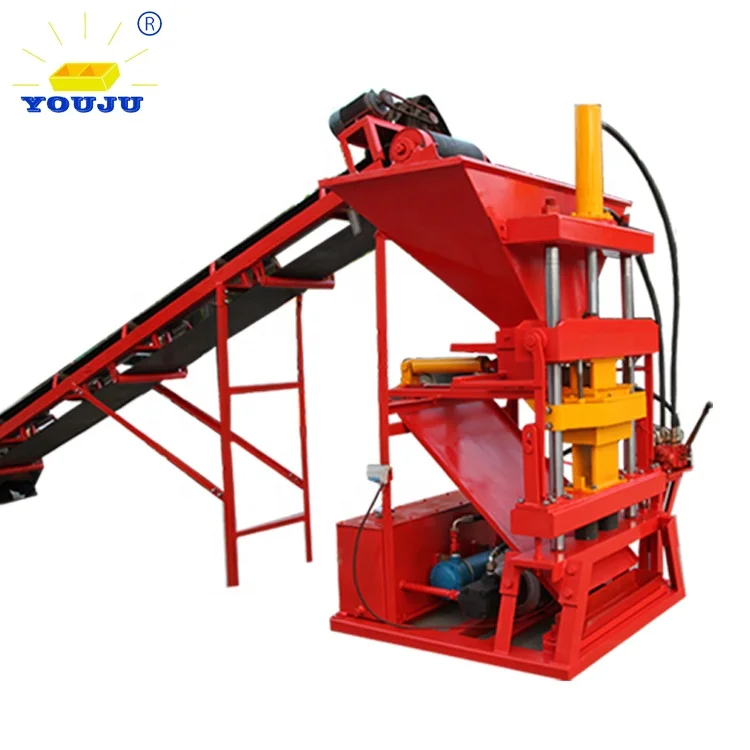
- Machine arrives as a single compact unit, positioned with standard workshop lifting equipment
- On-site hydraulic pressure calibration against your actual clay or cement sample
- Operator training covering mould change procedure, cycle timing, and daily maintenance checks
- Wear parts list and mould replacement schedule included in delivery documentation
What We Need to Move Your Inquiry Forward
To configure the ECO BRB for your project, share the exact interlocking brick dimensions your market requires and a representative soil or cement mix sample if available. Confirm your site voltage, frequency, and preferred PLC display language so these are locked in before production begins. If you are integrating this machine into an existing line, let us know the upstream mixer type and downstream handling setup so the interface points are addressed in the layout.
Frequently Asked Questions
Q: What automation options are available and how does the upgrade path work?
A: The ECO BRB can be supplied with manual controls or a PLC system with your chosen display language. As your production volume grows, you can add PLC-controlled batching and integrate automatic stacking and cubing stations. The hydraulic core remains the same across each automation stage, so the upgrade does not require replacing the press.
Q: How is the daily capacity figure calculated and for which brick format?
A: The approximate 3,800 pieces per shift figure is provided as a reference and must be confirmed against your specific interlocking brick dimensions, material mix, and wall thickness. We supply a formal capacity calculation that states the exact format assumed, so you can compare it directly to your daily production targets before placing an order.
Q: What PLC display language options can be configured before shipment?
A: The PLC interface language is confirmed during the order process and set before the machine leaves the factory. This removes the need for operator retraining on an unfamiliar interface and prevents commissioning delays that occur when control screens arrive in a language your team cannot read.
Q: How does the hydraulic system adapt to different clay and cement mixes?
A: Hydraulic pressure settings are adjusted to match the compressibility of your specific raw material, whether that is high-plasticity clay or a lean cement-stabilised mix. We request soil data or a physical sample before finalising the hydraulic configuration to prevent mould damage and ensure consistent block density across every production run.
Q: Can the ECO BRB connect to automatic stacking and cubing systems?
A: Yes, the machine can integrate with downstream stacking and cubing equipment as part of an automation upgrade. The no-pallet design simplifies this integration because blocks are ejected directly from the mould, reducing the number of handling transitions between the press and the stacking station.