


Description
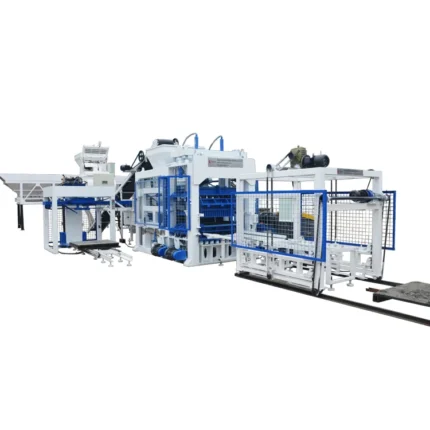
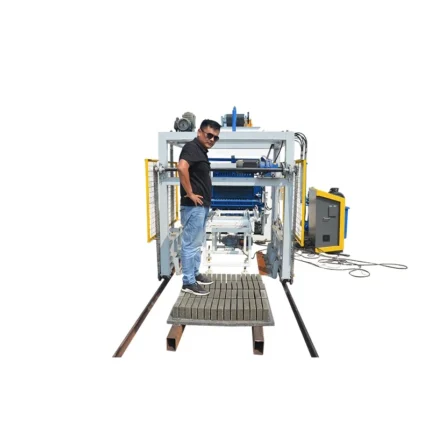
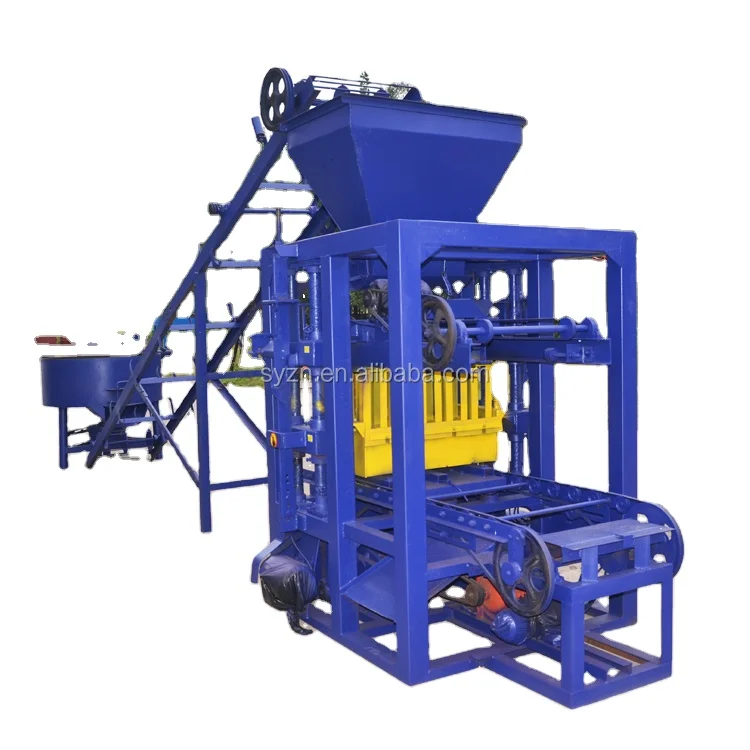
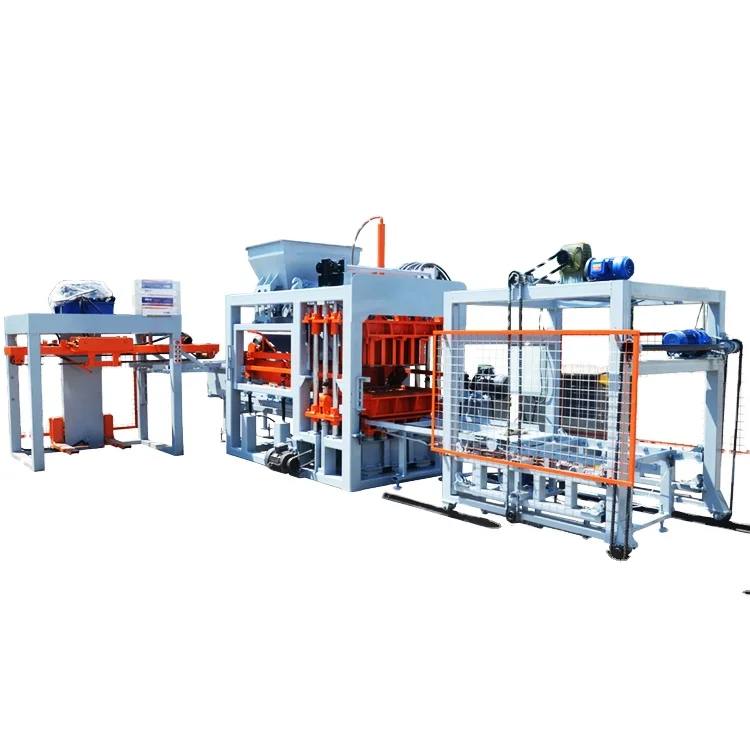
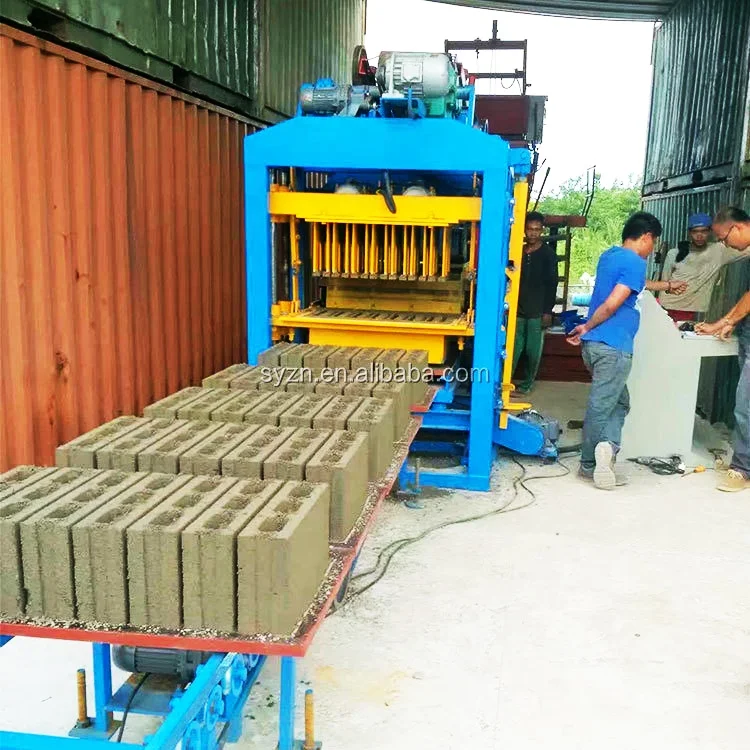
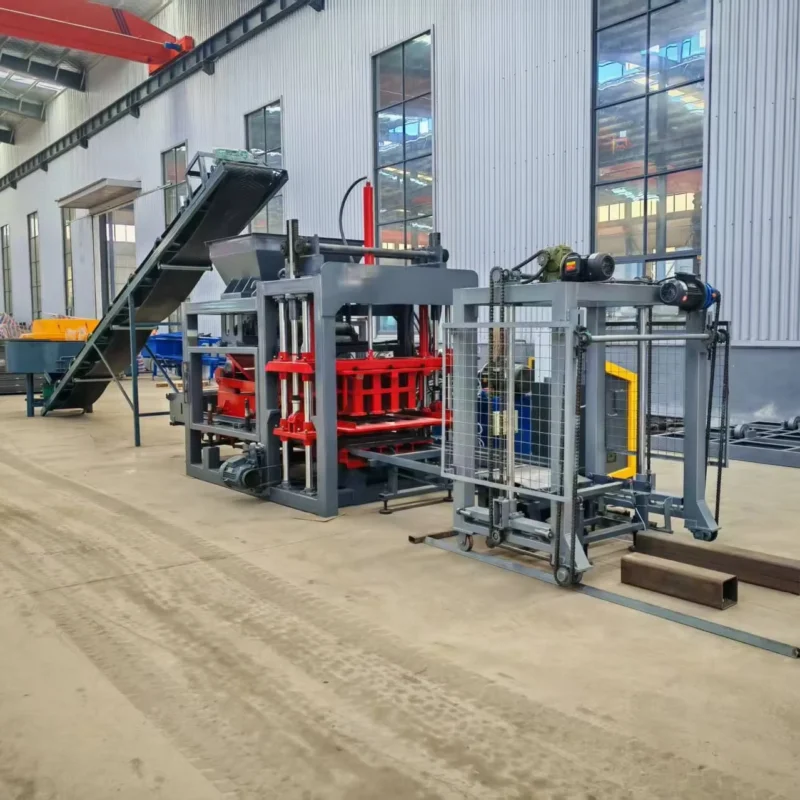
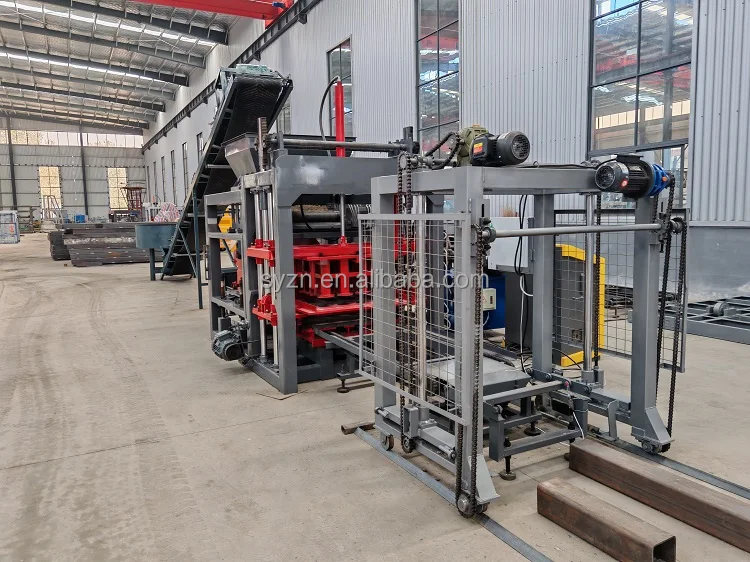
Matched System Integration — The QT4-18 block making machine is specified as a complete press, mould, pallet, and stacking unit against the buyer’s actual mix design and target block format, rather than assembled from default catalogue components.
Technical Specifications
| Parameter | Value |
|---|---|
| Product Type | Hydraulic Concrete Block Making Machine |
| Model | QT4-18 |
| Overall Dimensions (L×W×H) | 3900 × 1600 × 2300 mm |
| Molding Cycle | 15–25 s |
| Vibration Force | 40–50 kN |
| Rated Power | 24 kW |
| Mixer Model | JQ350 |
| Pallet Size | 850 × 550 × 25 mm |
| Net Weight | 3 T |
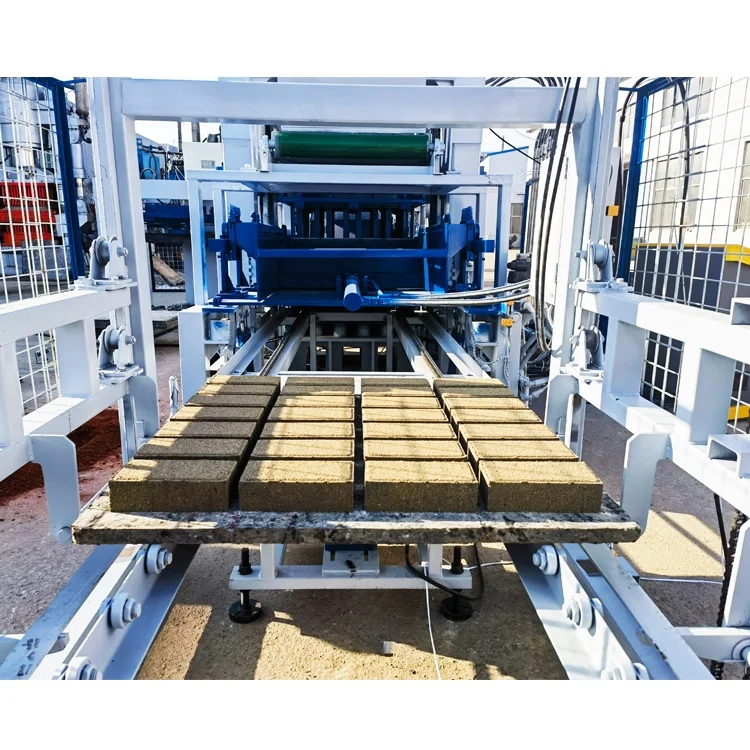
| Applied Products | Paver, solid block, hollow block, curbstone |
| Raw Materials | Crushed stones, sand, cement, dust, fly ash |
| Output Capacity (Hollow Block 400×200×200 mm) | 1200–1680 pcs/hr; 9600–13440 pcs/8hr |
| Output Capacity (Hollow Block 400×150×200 mm) | 1800–2400 pcs/hr; 14400–19200 pcs/8hr |
| Output Capacity (Solid Brick 240×115×53 mm) | 3240 pcs/hr; 16200–19440 pcs/8hr |
| Automation Level | Semi-automatic (upgradeable to automatic stacking and cubing) |
| Vibration System | Bed mould vertical vibration + upper mould compression vibration |
| Hydraulic Station | Equipped (high pressure, stable operation) |
| Stacking Method | Automatic stacker included |
| Control System | PLC (brand and language configurable — confirm before production) |
| Voltage & Frequency | Configurable to target market — confirm before production |
| Packaging / Loading | Nude packing in 20GP container; approx. 500 pallets loadable |
Application Suitability
| Application | Material or Output |
|---|---|
| Hollow block production for masonry walls | Crushed stone, sand, and cement blends; 400×200×200 mm and 400×150×200 mm formats |
| Solid brick manufacturing for structural and infill work | Cement, fly ash, and fine aggregate; 240×115×53 mm standard brick format |
| Paver and interlocking block production for landscaping | Colored concrete mixes with fine aggregate and pigment additives |
| Kerbstone and curb production for road and pathway edging | High-strength concrete mixes with coarse aggregate fractions |
| On-site block production for housing and development projects | Locally sourced sand, crushed stone, and cement with variable aggregate quality |
What "1200 Pieces per Hour" Leaves Out About Block Machine Capacity
Every capacity figure must name the exact block format it assumes, or it means nothing at the plant gate.
Capacity claims are the most common source of disappointment in block machine procurement. A supplier quotes an impressive hourly output, the buyer signs off, and the machine arrives — only to produce far fewer blocks per shift than the quotation suggested. The gap is almost never a mechanical failure. It is a specification gap: the quoted figure was based on a small solid brick format, while the buyer intended to run large hollow blocks that require longer cycle times and heavier fills [NEED_CITE: block format and cycle time relationship in concrete block production]. The automatic QT4-18 block making machine addresses this by documenting output per format. On a 400×200×200 mm hollow block, capacity is rated at 1200–1680 pieces per hour. Switch the mould to a 240×115×53 mm solid brick, and the same press delivers a rated 3240 pieces per hour. The machine does not change — the format does, and the numbers change with it. Buyers who compare quotations across suppliers without confirming which block format each capacity figure assumes are not comparing like with like.
PLC Control and the Path from Semi-Automatic to Full Line Automation
The QT4-18 starts as a semi-automatic press. That means the core forming cycle — material feed, vibration, hydraulic compression, and demoulding — runs under PLC control, while pallet handling and product movement between stations may still involve manual or semi-manual steps. This configuration suits a first-time block plant owner or a contractor producing blocks on a project site where volume does not yet justify full automation.
What matters is that the control architecture supports an upgrade path. A plant can begin with manual pallet feeding and add an automatic pallet feeder later. The stacker included with this model places finished blocks on pallets and moves them to the drying area by trolley. When volume grows, the same automatic QT4-18 block making machine can be integrated with automatic cubing and curing rack handling systems without replacing the host press. The PLC brand and HMI display language should be confirmed in writing before production begins — a detail that delays commissioning more often than buyers expect [NEED_CITE: PLC language and voltage confirmation delays in exported machinery].
Vibration and Hydraulic Pressure: Why Both Must Match Your Mix
Block strength and surface finish depend on two forces working together: vibration compacts the aggregate into the mould cavity, and hydraulic pressure locks it in place. If vibration force is too low for a coarse, angular aggregate, voids remain inside the block. If hydraulic pressure is too high for a lean mix with low cement content, the block cracks during demoulding. The QT4-18 delivers 40–50 kN of vibration force through a combined system — bed mould vertical vibration paired with upper mould compression vibration. This dual-action approach helps compact material from both directions, reducing density variation between the top and bottom faces of the block.
The hydraulic station provides high-pressure forming that stabilizes the press structure and protects mechanical components from shock loading during the vibration cycle. But these parameters must be set against the buyer’s actual raw materials. When I supported a fully automatic hollow block line in Africa, the sample testing used standard graded sand. On site, the local aggregate had a high clay content that absorbed water differently and changed the mix behaviour entirely. Vibration parameters had to be recalibrated from scratch, and the customer lost half a month of production. Since then, every configuration I work on starts with the buyer’s actual aggregate sample and mix design — not a catalogue default.
Pallet Size, Mould Change, and the Details That Define Daily Output
The QT4-18 uses an 850 × 550 × 25 mm pallet. This dimension determines how many blocks fit per cycle, how pallets stack in the curing area, and which forklift can handle them. A buyer who already operates a curing yard with specific racking dimensions needs to confirm that the pallet size matches before ordering — retrofitting a curing area is far more expensive than adjusting a pallet specification at the quotation stage.
Mould change capability is where the QT4-18 earns its flexibility. The same host press runs hollow blocks, solid bricks, pavers, and kerbstones by swapping the mould. The mould change system should be specified with the formats the buyer’s market actually sells, including custom mould design if the buyer requires non-standard dimensions. Mould change time is a critical but often unquoted parameter [NEED_CITE: mould change time impact on format flexibility in block production]. If changing a mould takes most of a shift, the format flexibility the buyer paid for is effectively cancelled out. Confirm the procedure and expected time per format before the machine ships.
The Hidden Cost of Configuring a Block Machine to the Wrong Specification
A block machine configured for a mix the buyer cannot source locally forces a costly material substitution — or worse, the buyer runs the wrong mix and produces blocks that fail compressive strength tests. Voltage, frequency, and control language left unconfirmed at the order stage can delay commissioning by weeks after the machine arrives at site. Pallet handling, stacking, and curing equipment omitted from the quotation means output piles up on the floor waiting for manual labour, negating the press cycle time the buyer selected the machine for. These are not rare edge cases. They are the standard pain points that surface on every block plant project where the specification was treated as a catalogue exercise rather than a system integration exercise [NEED_CITE: common specification gaps in exported block machine projects]. The cost of correcting them on site is always higher than resolving them at the quotation table.
Why Buyers Source the QT4-18 Through This Configuration Process
Block machinery is our single focus, which means the press, mould, pallet, and handling equipment are specified as one matched system rather than sourced from separate suppliers and bolted together. Every configuration is set against the buyer’s actual mix design, local aggregate, and target block format — the PLC controlled concrete block machine parameters are adjusted to what you will actually produce, not a generic test standard. Mould design covers the formats your market sells, with custom drawings available when standard formats do not match local building codes or contractor preferences. The automation level is selectable at purchase, so a buyer can start with a semi-automatic QT4-18 and scale to full automatic stacking and cubing as production volume justifies the investment. Installation support includes on-site commissioning and operator training, and the mould and wear parts list is provided with the quotation so replacements are available from day one.
Documentation & Verification
- Line layout and capacity calculation stating the block format assumed for each output figure
- Machine specification sheet with hydraulic pressure and vibration force matched to your mix design
- Mould drawing and format list confirming every block type the QT4-18 will produce
- Pallet specification matched to your curing area dimensions and forklift capacity
- Voltage, frequency, and PLC display language confirmed in writing before production starts
- Factory test record on your specified block format before container loading
Installation, Commissioning & Support
- Foundation pad sized to the QT4-18 footprint of 3900 × 1600 mm with vibration isolation provisions
- Dedicated electrical circuit rated for the 24 kW total draw with correct voltage and frequency for your site
- Machine shipped in nude packing inside a 20GP container; reassembly and levelling required on arrival
- First-run commissioning includes vibration and hydraulic parameter tuning against your local aggregate sample
- Operator training covers PLC interface navigation, mould change procedure, and daily maintenance checkpoints
- Wear parts list and mould replacement schedule provided so spares procurement begins before first replacement is due
Start Your QT4-18 Configuration With the Right Data
To configure the automatic QT4-18 block making machine for your plant, we need your target block formats and the daily output you intend to achieve for each. Share your local raw material sources — specifically the aggregate type, grading, and any known clay or fines content — along with your site voltage, frequency, and preferred PLC display language. If you already operate a curing yard or have an existing forklift fleet, provide the pallet dimensions and racking specifications so the line layout aligns with your current infrastructure from day one.
Frequently Asked Questions
Q: How is the QT4-18 output capacity verified, and which block format does each figure assume?
A: Every capacity figure is tied to a specific block format and mould configuration. For example, the rated 1200–1680 pieces per hour applies to a 400×200×200 mm hollow block. Switching to a 240×115×53 mm solid brick changes the rated output to 3240 pieces per hour. The capacity calculation document provided with your quotation states the format assumption for every output line.
Q: What PLC control system and HMI language options are available, and can remote diagnostics be added?
A: The PLC brand and HMI display language are configurable to match your operator team and local electrical standards. These must be confirmed in writing before production begins. Remote diagnostics capability depends on the PLC platform selected — specify this requirement during the quotation stage so the control architecture supports it.
Q: How does the automation level upgrade path work — from semi-automatic to full stacking and cubing?
A: The QT4-18 ships as a semi-automatic press with PLC-controlled forming. Pallet feeding, stacking, and cubing can be added as separate modules later without replacing the host machine. The included stacker handles block placement and trolley movement. Full automatic pallet feeding and cubing systems are integrated into the same PLC architecture when your production volume justifies the upgrade.
Q: How is vibration force and hydraulic pressure matched to the buyer’s local aggregate and mix design?
A: Configuration begins with the buyer’s actual aggregate sample and proposed mix proportions. The 40–50 kN vibration force and hydraulic pressure are then calibrated to compact that specific mix without causing demoulding damage. This testing step prevents the costly on-site recalibration that occurs when machines are configured to a generic catalogue standard.