Description
Configuration Matched to Your Actual Operation — we set the vibration frequency, hydraulic pressure, and automation sequence around the block format and mix you will run, not a default catalogue profile.
Technical Specifications
| Parameter | Value |
|---|---|
| Model | QT10-15 |
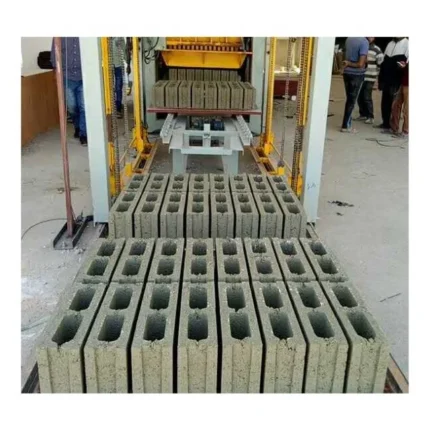
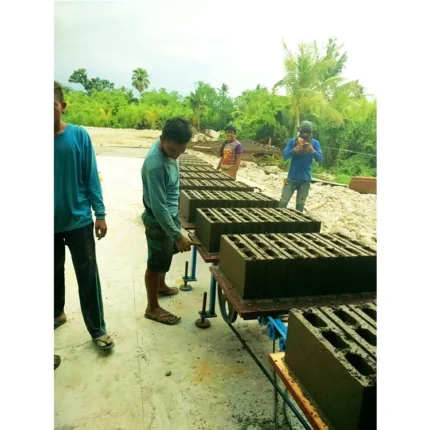
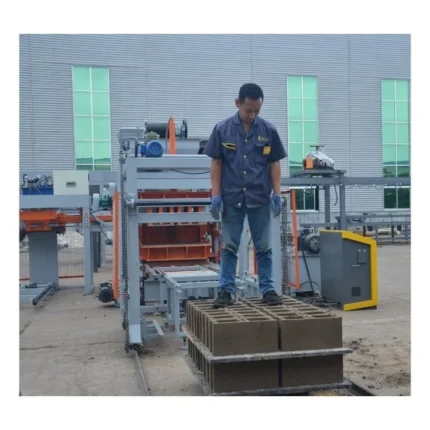
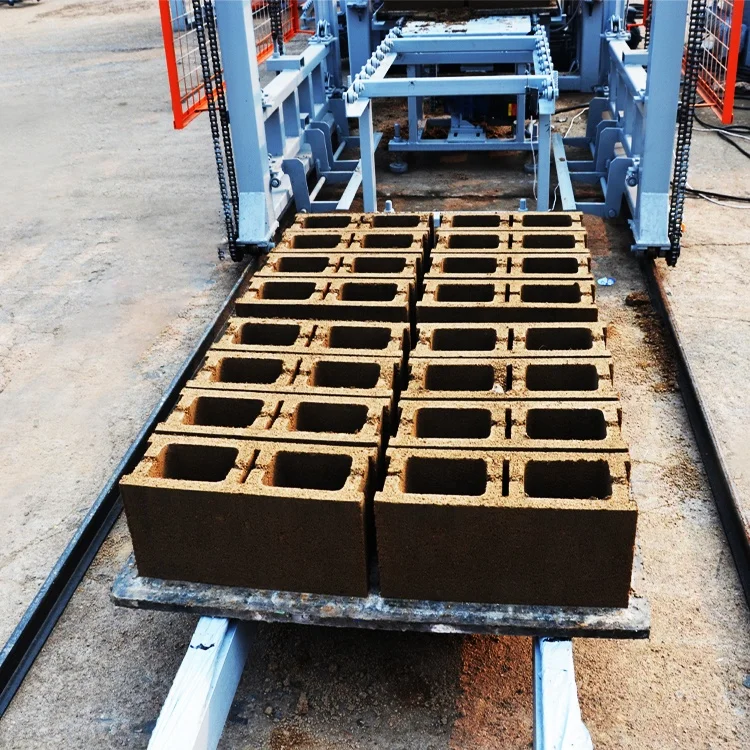
| Product Type | Automatic Concrete Block Making Machine |
| Control System | PLC control cabinet |
| Hydraulic System | Independent integrated hydraulic station |
| Vibration Mode | Vertical station mode resonance, automatic FM-AM |
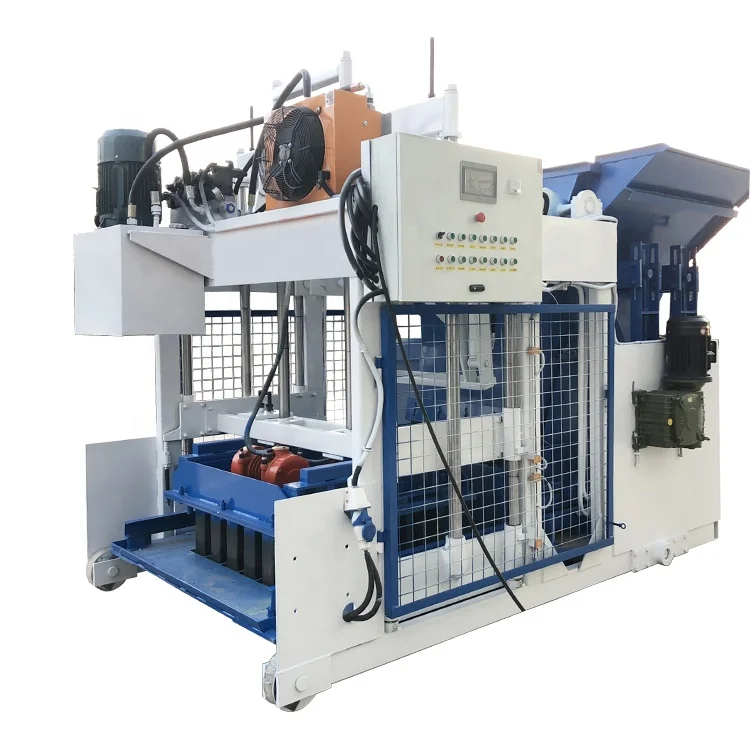
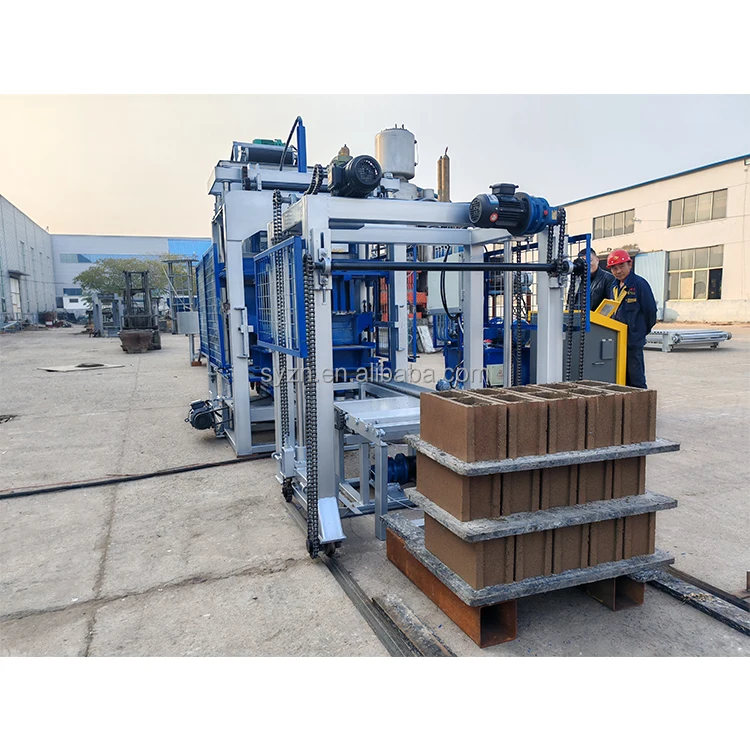
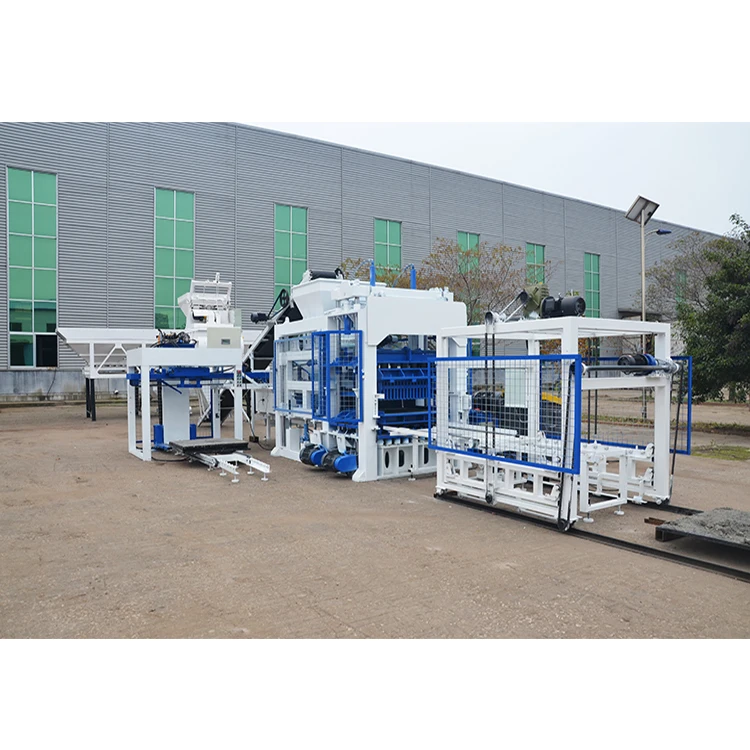
| Component List | Pallet feed machine, block making machine, storage hopper, conveyor, hydraulic unit, PLC control cabinet |
| Mould Change | Simple replacement of mould for multi-function production |
| Output Capacity (400×200×200mm hollow block) | 1,800–2,400 pcs/hour (15–20s cycle, 10 pcs/mould) |
| Output Capacity (400×150×200mm hollow block) | 2,160–2,880 pcs/hour (15–20s cycle, 12 pcs/mould) |
| Output Capacity (240×115×53mm standard brick) | 8,928–11,160 pcs/hour (15–20s cycle, 62 pcs/mould) |
| Output Capacity (200×100×60mm paving block) | 5,184–6,480 pcs/hour (20–25s cycle, 27 pcs/mould) |
| Output Capacity (225×112.5×60mm paving block) | 4,032–5,040 pcs/hour (20–25s cycle, 24 pcs/mould) |
| Daily Output (400×200×200mm, 8hr shift) | 14,400–19,200 pcs |
| Daily Output (240×115×53mm, 8hr shift) | 71,424–89,280 pcs |
| Automation Level | Automatic |
| Assembly State | Complete line with supporting equipment |
| Warranty | 1 year (excluding spare parts) |
| Rated Power | (basis to be confirmed) |
| Voltage & Frequency | (basis to be confirmed) |
| Pallet Size | (basis to be confirmed) |
| Overall Dimensions | (basis to be confirmed) |
| Net Weight | (basis to be confirmed) |
Application Suitability
| Application | Material or Output |
|---|---|
| Hollow block production | Crushed stone, cement, sand aggregate mixes for load-bearing and partition walls |
| Standard brick production | Fine aggregate and cement for masonry and infill |
| Paving block production | Dense aggregate blends for driveways, walkways, and municipal paving |
| Multicellular brick production | Lightweight aggregate and cement for thermal and acoustic insulation blocks |
| On-site contractor production | Local quarry materials adapted through mix and mould adjustment |
Why "Pieces per Hour" Means Nothing Without the Block Format
Every capacity figure on this page is tied to a specific mould, cavity count, and cycle time — because that is the only way a number is useful to you.
Catalogue sheets often quote a single output number without revealing which block size it assumes. A buyer sees 2,400 pieces per hour and plans a shift around it, only to find the actual figure drops when production switches to a smaller format with a longer cycle. The automatic QT10-15 block machine PLC controlled system handles multiple formats, but the cycle time and mould cavity count differ for each one. A hollow block at 10 cavities and a 15–20 second cycle produces a very different daily total than a paving block at 27 cavities running 20–25 seconds [NEED_CITE: block cycle time variables by format and aggregate density].
Centralised Control That Governs the Full Cycle
The PLC control cabinet is not a display add-on — it governs pallet feeding, material dosing, vibration sequence, hydraulic pressing, and block ejection as one continuous routine. For a plant owner moving from semi-automatic operation, this is where the real shift happens. The operator monitors rather than times each stage, and the automatic QT10-15 block machine PLC controlled sequence repeats identically across shifts. Batch-to-batch consistency in block density and dimension depends more on this repeatability than on any single mechanical component.
Vibration Tuning That Adjusts to the Format
Vertical station mode resonance with automatic FM-AM means the vibration profile is tuned per cycle rather than held constant. Different block formats and aggregate blends respond differently to vibration frequency and amplitude — a lightweight hollow block needs a different resonance pattern than a dense paving block. The system adjusts automatically, which removes one of the variables an operator would otherwise have to manage manually. This matters most when a plant switches formats mid-shift and cannot afford a run of off-spec product while settings are dialled in [NEED_CITE: vibration frequency impact on concrete block density].
Reading the Numbers That Actually Matter
The independent integrated hydraulic station sits apart from the main press frame. This is deliberate: vibration from the press transfers through the structure and degrades hydraulic seals and valve response over time. By isolating the hydraulic unit, the QT10-15 maintains consistent pressure delivery across long production shifts without the seal wear that plagues integrated designs. The vertical station resonance system works in concert with hydraulic pressure — vibration settles the aggregate while hydraulic force compresses it. If either is mismatched to the mix design, block strength suffers regardless of how long the cycle runs. Mould changeover uses simple replacement rather than a cassette system, which keeps the mechanism straightforward but means the physical swap still requires planned downtime. Automation level covers the full sequence from pallet feed to ejection; stacking and cubing downstream are configurable depending on how much manual handling you want to eliminate.
The Cost of Underspecifying the Front End
A buyer I worked with in West Africa ordered a semi-automatic line to control initial spend. Within weeks, manual pallet feeding could not keep pace with the press cycle, creating a bottleneck that dragged actual output well below the quoted figure. He flew me out to retrofit the front end with automatic pallet feeding — effectively paying for the automation twice. The lesson was not about spending more upfront. It was about mapping every station in the line to the press cycle time so no single point holds the rest back [NEED_CITE: production line bottleneck analysis in concrete block plants]. When the pallet feed, material hopper, and conveyor are not timed to the press, the automation level of the press itself becomes irrelevant.
Why Buyers Place Repeat Orders Here
Block machinery is our single focus, which means the press, mould, pallet, and handling equipment are specified as one matched system rather than sourced separately and forced to work together. Configuration is set against your actual mix design, local aggregate, and target block format — not a catalogue default that assumes materials you cannot obtain. Mould design covers the formats your market sells, with custom drawings available when standard options do not match. The automation level is selectable, so a buyer can begin with the automatic QT10-15 block machine PLC controlled setup and add stacking or cubing modules later as production volume justifies the investment. Installation includes on-site commissioning and operator training so the line runs to its verified cycle times from the first week, not after months of trial and error.
Documentation & Verification
- Line layout showing station spacing and pallet flow matched to your selected automation level
- Capacity calculation stating the block format, cycle time, and cavity count for each output tier
- Hydraulic and electrical schematic confirming independent station design and component sourcing
- Factory test record documenting actual cycle times per mould format before dispatch
- PLC display language and voltage confirmation sheet signed off before production begins
- Mould drawing and format list covering every block type included in your order
Installation, Commissioning & Support
- Foundation plan accounts for the independent hydraulic station placement separate from the press frame
- Power supply must match confirmed voltage and frequency before the PLC cabinet is energised
- Pallet feed machine and conveyor aligned to press cycle time during on-site commissioning
- PLC control parameters set to your confirmed block format sequence during first-week production
- Operator training covers mould changeover procedure and daily vibration system checks
- Wear parts list identifies hydraulic seals and vibration components with recommended replacement intervals
What to Have Ready Before Requesting a Quote
To size this line correctly, share the block formats you will produce most often and the daily volume each format requires. Confirm your local voltage and frequency, the PLC display language your operators need, and whether your existing curing area and forklifts constrain pallet size. If you are replacing a manual or semi-automatic setup, describe where the current bottleneck sits — pallet handling, material feed, or stacking — so the automation configuration addresses the actual constraint rather than adding capacity at a point that is not the problem.
Frequently Asked Questions
Q: How is the stated output capacity verified per block format?
A: Each capacity figure is calculated from a specific mould cavity count and cycle time range. For example, the 400×200×200mm hollow block output of 1,800–2,400 pieces per hour assumes 10 cavities and a 15–20 second cycle. The factory test record documents actual cycle times per format before shipment so the numbers you plan against reflect measured performance, not theoretical maximums.
Q: What PLC language options are available before shipment?
A: The PLC display language is confirmed during the specification stage and set before the control cabinet leaves the factory. This avoids a situation where operators cannot read fault codes or adjust parameters on arrival. The language confirmation is documented in writing and included in the pre-shipment verification package alongside the voltage and frequency confirmation.
Q: How does the mould change system work in practice?
A: Mould changeover uses simple physical replacement — the existing mould is unbolted and the new one fitted in its place. This is straightforward but still requires planned downtime within the shift. The realistic changeover time depends on the operator’s familiarity and the specific mould size, which is why training covers the procedure and the factory test record includes timed changeover data per format.
Q: Is there an upgrade path for pallet stacking and cubing?
A: The QT10-15 ships as a complete line with automatic pallet feeding and block ejection. Stacking and cubing modules can be added as separate stations when production volume justifies the investment. The PLC control system accommodates these additions, so the upgrade involves adding hardware and updating the control sequence rather than replacing the existing cabinet.
Q: How does the independent hydraulic station handle continuous operation?
A: The hydraulic station is physically separated from the press frame so that vibration energy from the resonance system does not transfer into hydraulic seals and valves. This isolation reduces seal degradation and maintains consistent pressure delivery across extended shifts, which directly affects block density uniformity — especially important when running formats that require higher compaction force.