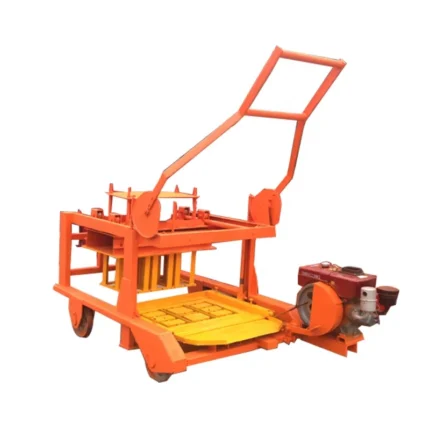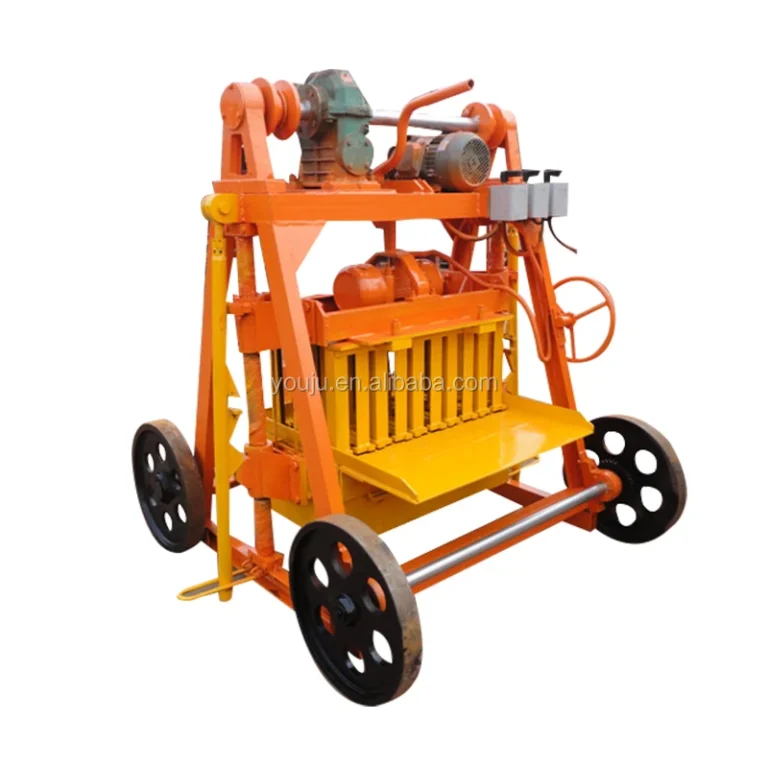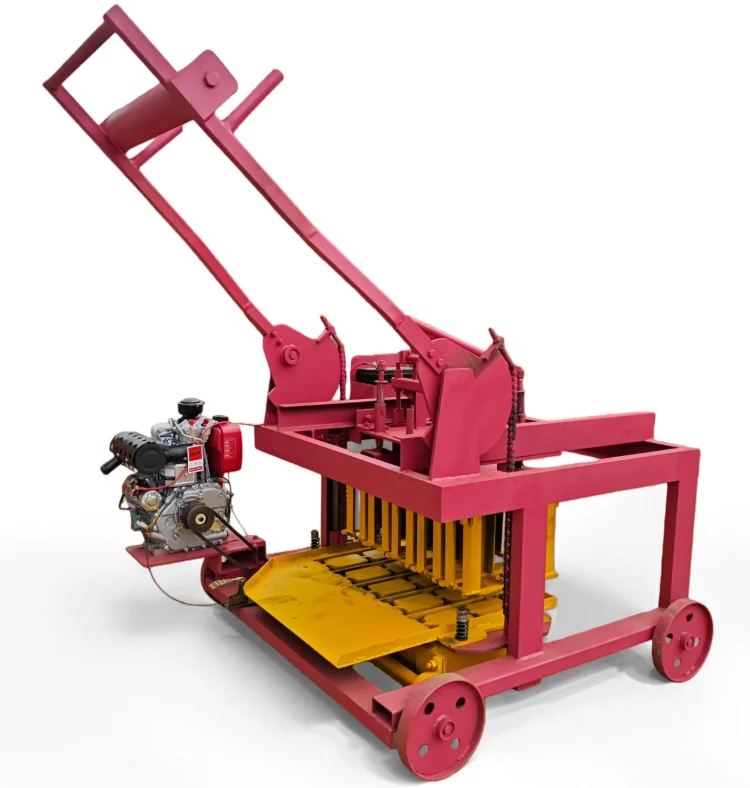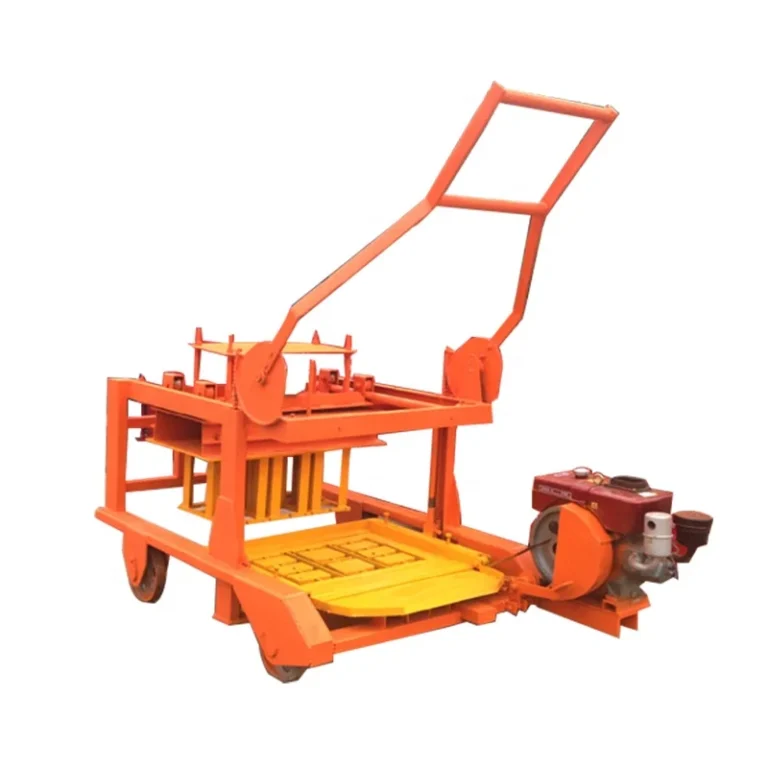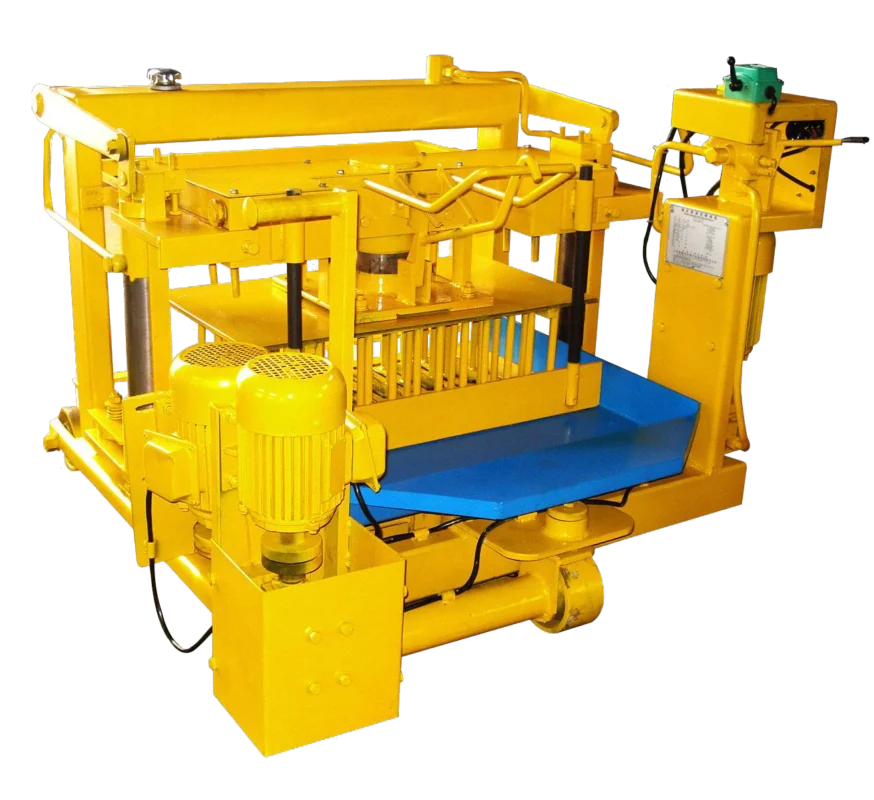
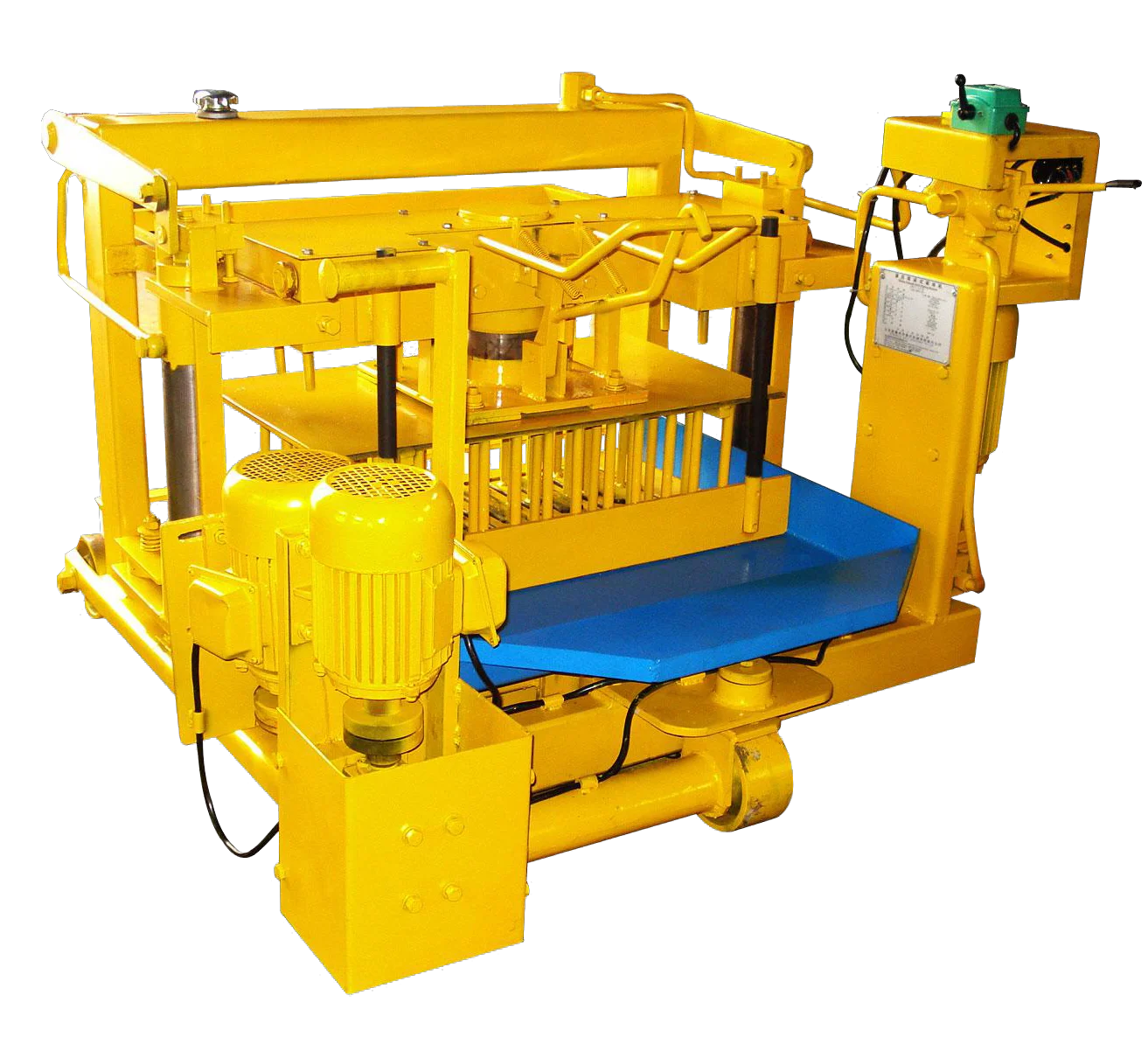
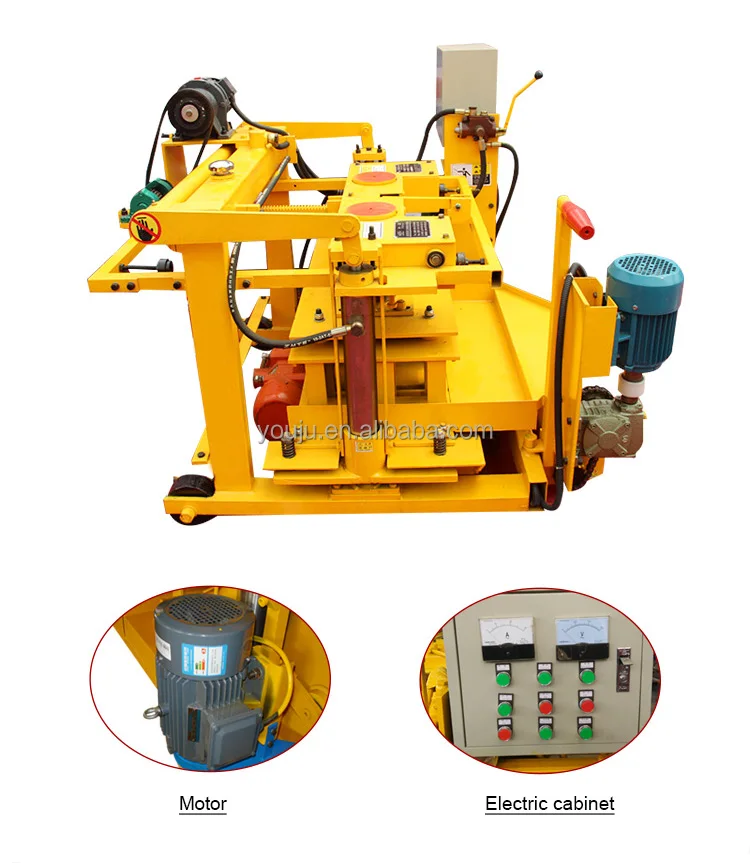
Description
Matched system design — the QMY4-30 mobile egg-laying machine is configured against your actual block format and local aggregate, so cycle time and output stay consistent across batches instead of drifting after the first shift.
Technical Specifications
| Parameter | Value |
|---|---|
| Model | QMY4-30 |
| Product Type | Mobile Egg-Laying Concrete Block Making Machine |
| Rated Power | 5 kW |
| Molding Time | 30 seconds per cycle |
| Overall Dimensions | 1200 × 1200 × 1100 mm |
| Net Weight | 950 kg |
| Raw Materials | Cement, sand, crushed stones, slag |
| Output (400×200×200 mm hollow) | 480 pcs/hour · 4 pcs/mold · 3840 pcs/8-hour shift |
| Output (400×150×200 mm hollow) | 600 pcs/hour · 5 pcs/mold · 4800 pcs/8-hour shift |
| Output (400×100×200 mm hollow) | 840 pcs/hour · 7 pcs/mold · 6720 pcs/8-hour shift |
| Automation Level | Manual operation, upgradeable toward semi-automatic |
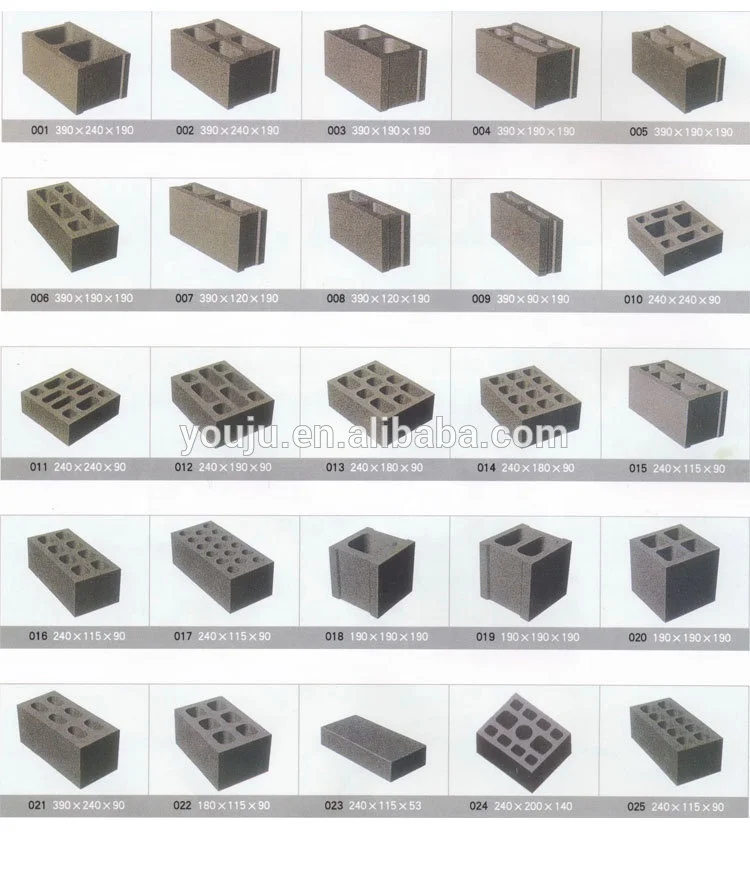
| Mould Change | Changeable molds for hollow block and solid brick |
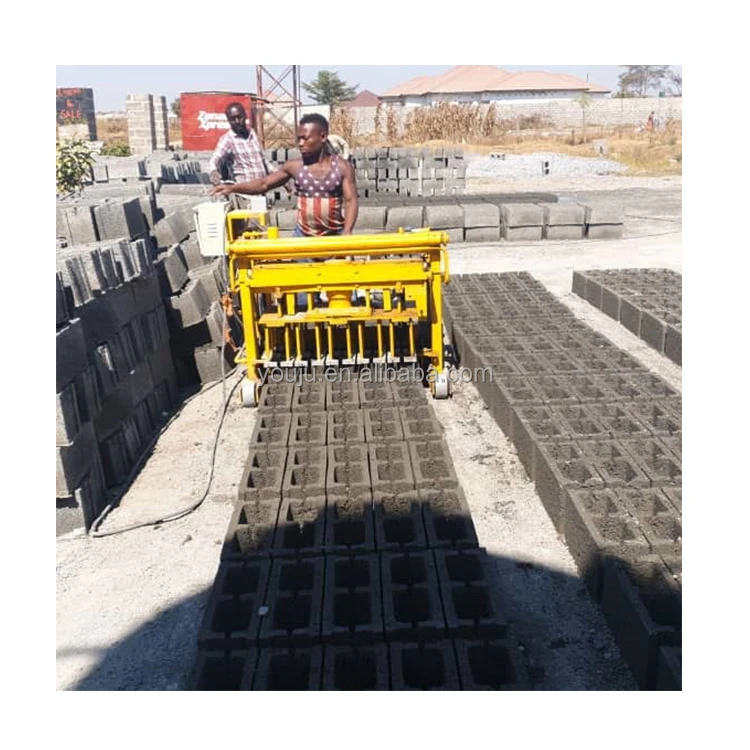
| Machine Type | Mobile egg-laying, no fixed plant required |
| Pallet Requirement | Not applicable — egg-laying deposits on ground |
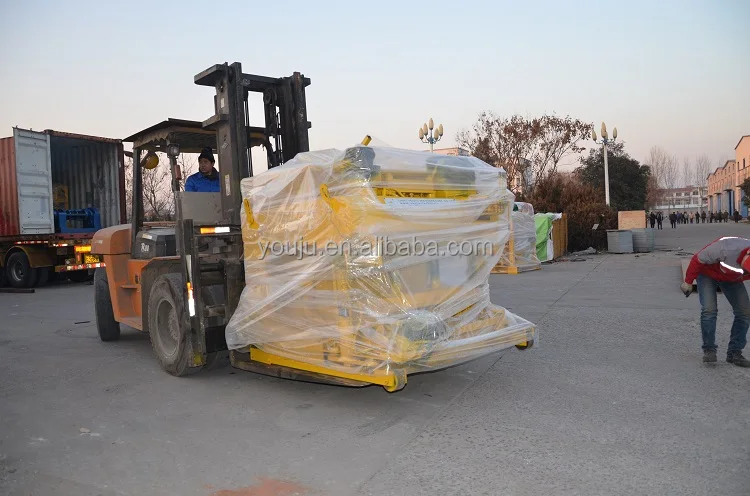
| Assembly State | Fully assembled mobile unit |
Application Suitability
| Application | Material or Output |
|---|---|
| On-site hollow block production at construction projects | Cement + sand + crushed stone, 400×200×200 mm format |
| Small-scale solid brick manufacturing for local supply | Cement + slag + sand, standard solid brick format |
| Contractor block production across multiple job sites | Mobile deployment, no fixed curing racks required |
| Entrepreneur start-up block plant with low initial investment | Manual operation entry point, semi-automatic upgrade path |
What "480 Blocks per Hour" Actually Means When You Run It
Capacity figures only hold when the machine, mix design, and block format are specified together.
I once watched an operator in West Africa run a QMY4-30 mobile block machine with river sand cut straight from the bank, no cement ratio check, and the vibration frequency left at a default that did not match that aggregate. The blocks looked fine coming off the mold but crumbled on the truck. A 30-second cycle time only delivers rated output when the mix flows correctly and the operator maintains a steady feed rhythm. Stating "480 pieces per hour" without naming the 400×200×200 mm hollow block format and the 4-piece mold gives a number that disappears the moment you switch to a different block size [NEED_CITE: mix design influence on mobile block machine output consistency]. This automatic mobile block machine produces at rated capacity only when vibration force, material grading, and cycle discipline all align on the format you actually intend to sell.
Where Manual Operation Costs You More Than Labor
The QMY4-30 ships as a manual egg-laying unit. That means the operator feeds the mold, triggers the cycle, and walks the machine forward after each drop. On a short run or a remote site with cheap labor, this works. But manual feeding introduces variation in fill depth and compaction timing that no PLC-controlled egg-laying block machine would allow. When a buyer plans to scale beyond a few thousand blocks per shift, the upgrade path toward semi-automatic feeding and batching removes the operator as the bottleneck and the main source of inconsistency.
Building the Upgrade Path Before You Need It
Automation on a mobile platform is different from a static line. You cannot bolt on a pallet stacker because there are no pallets — the machine lays directly on the ground. What you can add is controlled material batching upstream, so the mix arriving at the QMY4-30 stays consistent cycle after cycle. You can introduce a mechanized mold vibration trigger tied to a timer, removing the operator’s judgment from cycle initiation. These incremental steps preserve the mobility advantage while addressing the two biggest consistency failures I have seen on egg-laying machines: uneven fill and irregular cycle pacing [NEED_CITE: automation upgrade paths for mobile concrete block machines].
Reading the Spec Sheet Against Your Actual Block
The 30-second molding cycle applies across hollow block formats, but the hourly output shifts with the mold cavity count: 4 cavities for the 200 mm wide block, 7 cavities for the 100 mm wide. A buyer comparing machines on cycle time alone will miss that a competitor running 45 seconds with a 10-cavity mold may outproduce the QMY4-30 on narrow formats. The 5 kW rated power is low, which is correct for a mobile unit that must be towed and set up without a dedicated transformer — but it also means vibration force is limited compared to static hydraulic presses. For hollow blocks in standard concrete mixes, the vibration is sufficient. For dense interlocking pavers, the power envelope becomes the constraint, and a buyer should confirm suitability before ordering [NEED_CITE: vibration force requirements by concrete block format].
The Hidden Cost of Skipping Voltage and Frequency Confirmation
I have seen mobile block machines sit on a job site for weeks because the motor was wound for 380V/50Hz and the local supply was 440V/60Hz. The QMY4-30 is a small unit, so rewinding or replacing the motor is a modest cost, but the delay is not modest when you have a project deadline and a crew standing idle. Voltage and frequency confirmation should be locked before production starts, not discovered at commissioning. Control language matters less on a manual machine, but if you add semi-automatic batching or timer controls later, the display language and interface become part of the operator’s daily workflow. Getting this wrong means the person running the machine cannot read the fault codes.
Why Procurement Here Works for Mobile Block Buyers
Block machinery is the single focus, so the QMY4-30 is not a catalog item pulled from a general machinery range — the mold, vibration settings, and material guidance are specified for concrete block production specifically. Configuration is set against the buyer’s target block format and local aggregate, not a default spec sheet. Molds are available for the hollow block and solid brick formats that match local market demand, including custom drawings. The automation level is selectable, so a buyer can start with manual operation and add semi-automatic components as production volume justifies the investment. Installation guidance covers ground preparation and operator training for the egg-laying workflow, which is different from fixed-line operation.
Documentation & Verification
- Capacity calculation sheet stating output per block format and mold cavity count
- Machine specification with confirmed voltage, frequency, and motor rating for destination market
- Mold drawing and format list covering hollow block and solid brick options
- Operation manual with mold change procedure and cycle timing by format
- Factory test record on buyer’s specified block format before dispatch
- Packing photographs and customs documentation support for shipment
Installation, Commissioning & Support
- Level compacted ground surface required; no concrete foundation needed for the 950 kg mobile unit
- Confirm local voltage and frequency match the 5 kW motor winding before first start
- Machine arrives fully assembled; operator training covers mold change and cycle pacing
- First production run supervised to set vibration timing against buyer’s mix design
- Wear parts list and mold maintenance schedule provided at handover
- Upgrade component availability for semi-automatic batching and timer-triggered cycling
What to Share When Requesting a Quote
Provide the exact block dimensions and daily output target for your market so the correct mold and cycle calculation can be matched. State your local voltage, frequency, and whether single-phase or three-phase supply is available at the job site. Describe the raw materials you plan to use — sand source, aggregate type, and cement grade — so the vibration and mix guidance can be set before the machine ships.
Frequently Asked Questions
Q: How is the output capacity calculated and what block format does each figure assume?
A: Each capacity figure is tied to a specific block size and mold cavity count. The 480 pieces per hour rate assumes 400×200×200 mm hollow blocks with a 4-cavity mold at a 30-second cycle. Switching to the 100 mm wide block with a 7-cavity mold yields 840 pieces per hour. Always confirm which format the quoted capacity references.
Q: What automation components can be added to move beyond manual operation?
A: The upgrade path includes mechanized material batching upstream for consistent mix delivery, timer-controlled vibration triggering to remove operator pacing variation, and semi-automatic feed systems. Each addition is staged so the machine remains mobile while reducing manual dependency incrementally.
Q: How does mold change time affect format flexibility on this machine?
A: The QMY4-30 accepts changeable molds for hollow block and solid brick formats. Changeover involves removing the current mold and securing the replacement, which takes operator time that reduces effective production hours if format switches are frequent. Plan production runs by format to minimize mid-shift changes.
Q: What voltage and frequency options are available for my market?
A: Voltage and frequency must be confirmed before production to match your site supply. The 5 kW motor can be wound for common industrial standards, but this is specified at order stage, not adjustable on arrival. Confirm your local supply and available phase configuration during inquiry.
Q: How does the 30-second cycle time hold up with different local aggregates?
A: The 30-second cycle is achievable when the mix design flows and compacts correctly under the machine’s vibration force. Aggregates with high clay content or poor grading extend cycle time because the material does not fill or release cleanly. A trial run with your actual raw materials confirms whether the standard cycle holds.