Description
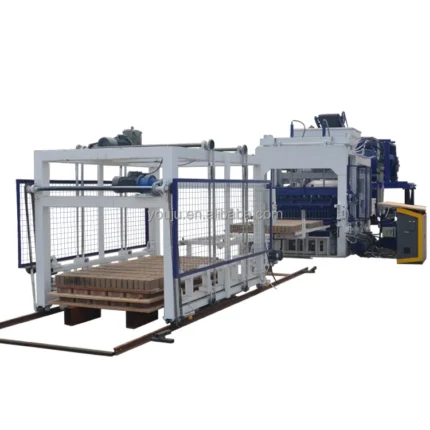
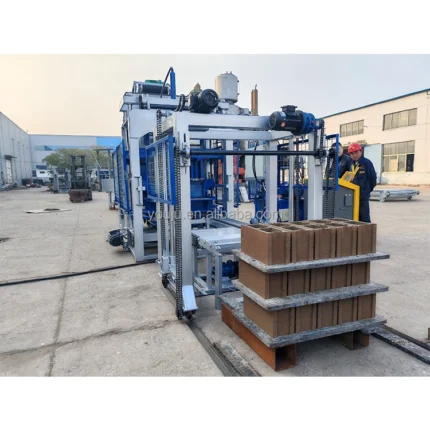
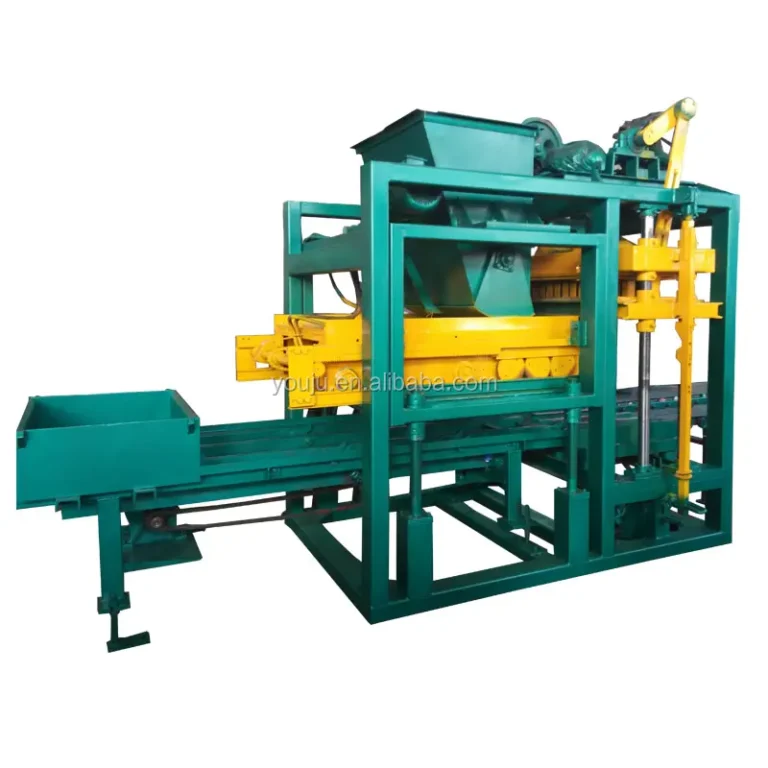
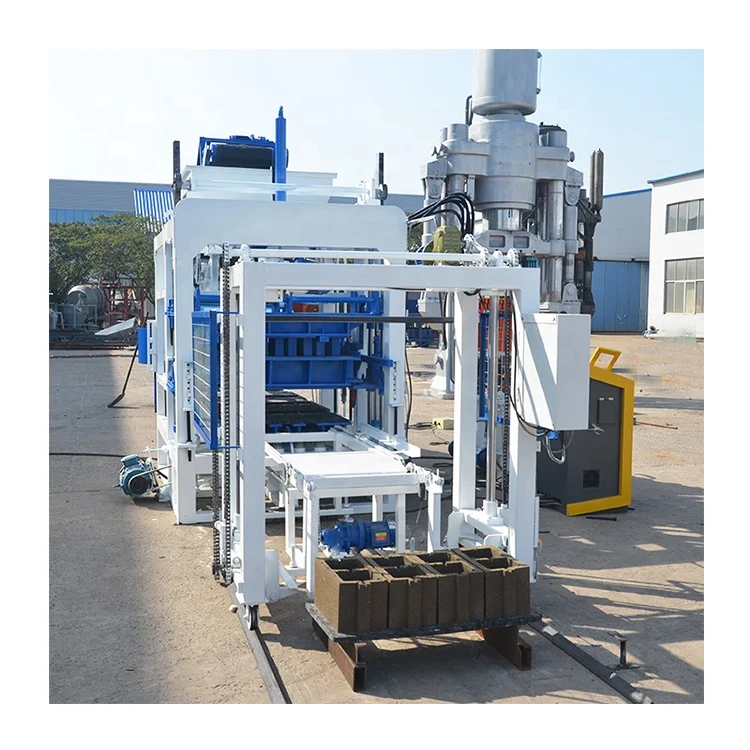
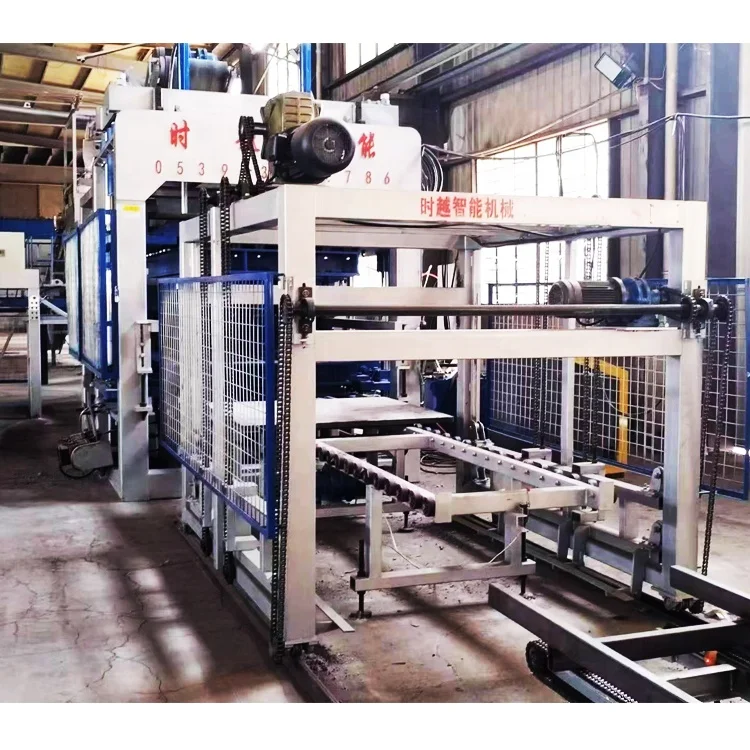
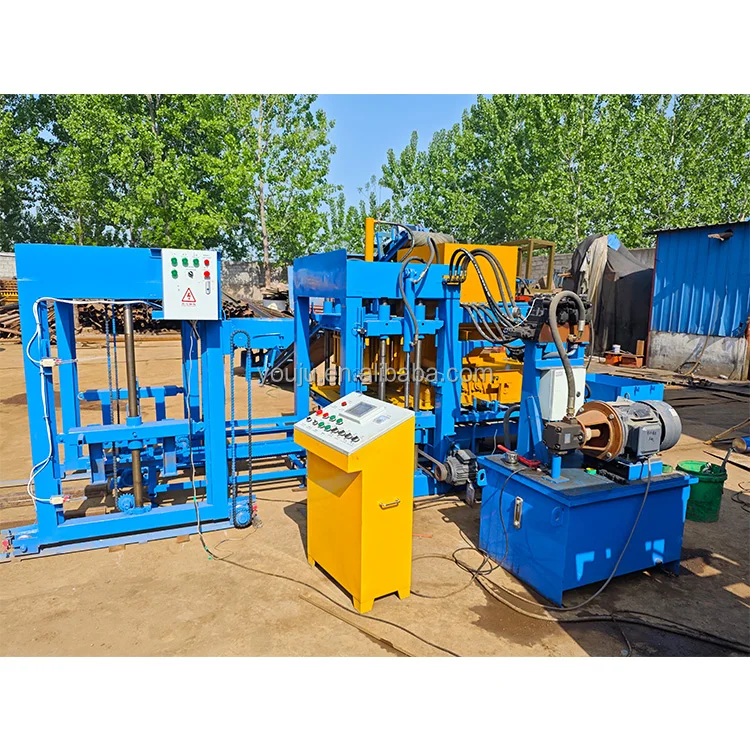
Automation That Grows With Your Plant — The QTJ4-25 PLC controlled semi-automatic block machine pairs a hydraulic station with matched vibration, and its control logic is structured so a semi-automatic setup today can integrate automatic pallet feeding and stacking later without replacing the press.
Technical Specifications
| Parameter | Value |
|---|---|
| Model | QTJ4-25 |
| Product Type | Semi-Automatic Concrete Block Making Machine |
| Rated Power | 17.9 kW |
| Control System | Motor-driven with hydraulic station; PLC controlled semi-automatic block machine configuration available |
| Overall Dimensions (L×W×H) | 6400 × 1500 × 2700 mm |
| Net Weight | 2500 kg |
| Vibration Force | 60 kN |
| Vibration Frequency | 2800 r/min |
| Cycle Time | 25 s per mould |
| Output Capacity | 960 pcs/h based on 400×200×200mm hollow block, 4 pcs/mould (basis to be confirmed for other formats) |
| Daily Output | 7680 pcs/day based on 400×200×200mm hollow block, 8-hour shift |
| Pallet Size | 850 × 550 × 20 mm |
| Pallet Material | Fiberglass (wooden pallets also compatible) |
| Recommended Pallet Quantity | 300–500 pieces |
| Mould Formats | Hollow, solid, paver, curbstone (multiple sizes: 8 inch, 6 inch, 5 inch, 4 inch) |
| Stacking Method | Manual with trolley |
| Included Equipment | Host machine, 1 block mould, JQ350 mixer |
| Automation Level | Semi-automatic, upgrade path available |
| Voltage & Frequency | Configurable to buyer’s local supply (basis to be confirmed before shipment) |
Application Suitability
| Application | Material or Output |
|---|---|
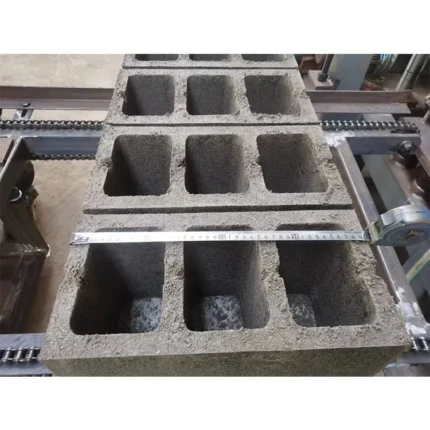
| Hollow block production | 400×200×200mm and other sizes using crushed stone, sand, cement, and fly ash mixes |
| Solid block production | Standard and custom dimensions from local aggregate and cement |
| Paving block production | Interlocking and rectangular pavers from fine aggregate and cement |
| Curbstone production | Kerbstone formats from coarse aggregate and high-cement mixes |
| Small to medium block plants | Daily volume matched to 8-hour shift on hollow block format |
| On-site contractor production | Portable setup for construction projects producing blocks locally |
| First block plant startups | Semi-automatic operation balancing labour against capital investment |
Why "Cycles Per Hour" Tells You Nothing Without the Block Format
A cycle time only matters when you know which block that cycle produces.
I once watched a plant owner in West Africa stare at a quotation promising over a thousand blocks per hour. The number assumed a solid paver the buyer never intended to sell. When we recalculated for the 8-inch hollow block that actually moved in his market, the realistic throughput was a different conversation entirely. The QTJ4-25 PLC controlled semi-automatic block machine states its 25-second cycle against the 400×200×200mm hollow block at 4 pieces per mould — and that same cycle produces a different count when you swap to a solid block or paver mould. [NEED_CITE: capacity calculation methods for concrete block machines by format]
Any quotation that lists a single output figure without naming the block format behind it is leaving out the information you need to plan a shift schedule, size a curing yard, and project revenue. The automation level of the press only adds value when the capacity math matches what your market actually buys.
Control Logic That Lets You Start Semi-Automatic and Add Automation Later
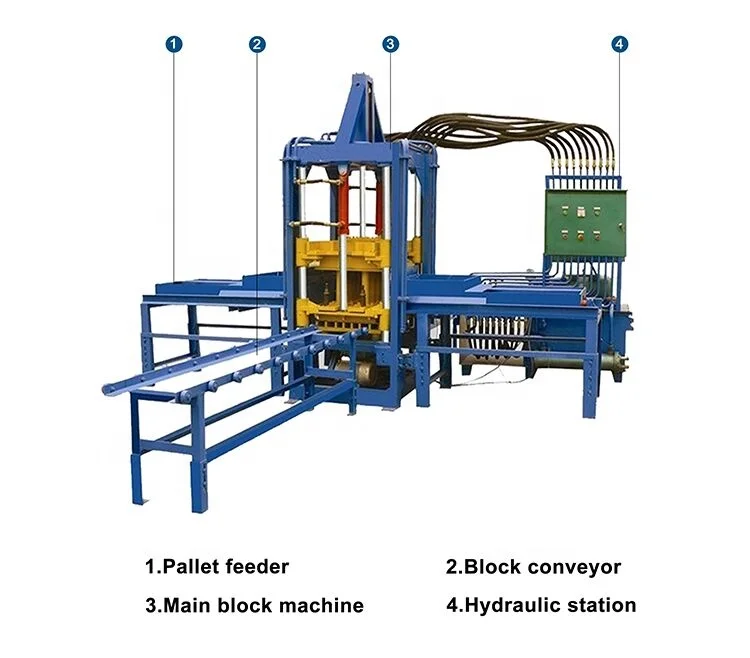
The hydraulic station on this PLC controlled semi-automatic block machine delivers stable pressure through each mould cycle, and the control architecture is structured around modular station additions. The base configuration handles mould compression, vibration sequencing, and cycle timing through the PLC, while pallet feeding and output stacking remain manual with a trolley system. When daily volume grows past what manual pallet handling can sustain, an automatic pallet feeder and stacker can be wired into the existing PLC logic without replacing the core controller.
This upgrade path matters because most first-time plant owners do not need a fully automatic line on day one. The labour cost of manual pallet handling is manageable at lower volumes, and the capital saved by starting semi-automatic can fund a second mould set or additional pallet inventory. The PLC controlled semi-automatic block machine keeps that door open by treating automation as a layered addition rather than an all-or-nothing choice.
Vibration and Hydraulic Pressure Must Match Your Actual Mix
Block density and compressive strength come from the interaction between vibration force, hydraulic pressure, and the specific aggregate in your mix. The QTJ4-25 delivers 60 kN of vibration force at 2800 r/min through the bed mould, combined with upper mould compression vibration under hydraulic pressure. This dual-direction approach compacts the concrete from both the bottom and top of the mould cavity, producing more uniform density across the block cross-section. [NEED_CITE: relationship between vibration frequency and aggregate size in block compaction]
When I was commissioning a hydraulic press in a region where the local aggregate was volcanic rock rather than standard river sand, the default vibration settings produced blocks that cracked on demoulding. The mix was lighter and more porous than the factory test parameters assumed. We spent several days adjusting the vibration-to-pressure ratio until the compaction matched the actual material. The same principle applies here: the PLC controlled semi-automatic block machine must be tuned against the buyer’s specific raw materials before the capacity figures become reliable.
Reading the Specifications That Actually Determine Your Output
The 17.9 kW rated power covers the host machine and vibration system, which means the JQ350 mixer draws from a separate circuit — plan your electrical layout accordingly before the machine arrives. The 60 kN vibration force at 2800 r/min sits in a range suitable for medium-coarse aggregate mixes; finer sand blends may require frequency adjustment to avoid surface tearing on the block face. The 850 × 550 × 20 mm pallet size determines how many blocks you cure per pallet, which directly shapes your curing rack layout and forklift requirements.
The 25-second cycle time is the mechanical floor — actual cycle duration includes pallet indexing, material feed, and demoulding, all of which add seconds depending on operator speed in semi-automatic mode. The 2500 kg net weight and 6400 × 1500 × 2700 mm footprint require a level concrete pad with sufficient clearance for pallet trolley movement on both sides. Fiberglass pallets offer longer service life than wooden alternatives, but the 300–500 piece recommendation assumes continuous production; intermittent schedules may need fewer pallets in rotation. [NEED_CITE: pallet material selection criteria for concrete block curing environments]
What Happens When Voltage and Language Are Left to Chance
I have arrived at job sites where the machine was already bolted down, pallets were staged, and the operator was ready — and then we opened the control panel to find a PLC display in a language nobody on the floor could read, running on a voltage frequency that did not match the local grid. The commissioning delay from that single oversight cost more time than the ocean freight. A PLC controlled semi-automatic block machine with unconfirmed voltage, frequency, or display language turns a planned startup into an electrical rework project. [NEED_CITE: voltage and frequency standards by export market]
The same principle applies to pallet specification. If the buyer’s existing forklift and curing racks were sized for a different pallet dimension, every pallet movement becomes a workaround. These are not engineering failures — they are communication failures that happen when the quotation stage skips the questions that matter most to commissioning day.
Why This Configuration Approach Fits Your Project
Block machinery is the single focus here, which means the QTJ4-25 press, its mould, pallet, and handling accessories are specified as one matched system rather than sourced from separate vendors and assembled on site. Configuration starts from the buyer’s actual mix design and target block format, not a catalogue default — the vibration force and hydraulic pressure are set against local aggregate samples before the machine leaves the factory.
Mould design covers the hollow, solid, paver, and curbstone formats that sell in the buyer’s market, with custom mould drawings available when standard sizes do not match local building codes. The automation level is selectable, so a buyer can start with semi-automatic operation and add pallet feeding or stacking automation as volume grows. Installation support includes on-site commissioning and operator training, and mould and wear parts availability is confirmed at the point of order rather than discovered when the first replacement is due.
Documentation & Verification
- Capacity calculation document stating which block format each output figure assumes
- Machine specification sheet with vibration force and hydraulic pressure ratings for your mix
- Mould drawing and format list confirming included and available block sizes
- Voltage, frequency, and PLC display language confirmation record before shipment
- Factory test record run on the buyer’s specified block format
- Hydraulic and electrical schematic for local maintenance reference
Installation, Commissioning & Support
- Level concrete pad required to support 2500 kg net weight and 6400 × 1500 × 2700 mm footprint with pallet trolley clearance
- Separate electrical circuit for the 17.9 kW host machine and the JQ350 mixer, with voltage and frequency confirmed before wiring
- Machine arrives assembled with bolt-on components; hydraulic station and vibration system require on-site fluid fill and bleed
- PLC parameters calibrated during commissioning against the buyer’s actual mix design and target block format
- Operator training covers mould change procedure, cycle timing adjustment, and daily vibration system inspection
- Wear parts list provided at order with recommended first replacement intervals for hydraulic seals and vibration motor bearings
What to Include in Your Inquiry
Send us the block formats your market actually sells, along with the daily volume you need to sustain on your primary format. Include a sample or description of your local aggregate — particle size, type, and source — so the vibration force and hydraulic pressure can be matched before the machine ships. Confirm your site’s voltage, frequency, and preferred PLC display language to prevent commissioning delays. If you have existing pallets, forklifts, or curing racks, share those dimensions so the pallet size and handling configuration align with what is already on your floor.
Frequently Asked Questions
Q: How is the output capacity of the QTJ4-25 verified, and which block format does each figure assume?
A: The stated 960 pieces per hour is based on the 400×200×200mm hollow block at 4 pieces per mould with a 25-second cycle. When a different block format is selected — solid, paver, or curbstone — the pieces per mould changes and the hourly output must be recalculated. Every capacity figure in our proposal names the block format behind it.
Q: What voltage, frequency, and control language options are confirmed before shipment?
A: The PLC controlled semi-automatic block machine is configured to the buyer’s local grid specifications and preferred display language before dispatch. Voltage, frequency, and language are confirmed in writing during the quotation stage, and a verification record is included in the shipping documentation to prevent commissioning delays.
Q: How does the automation level upgrade path work from semi-automatic to higher automation?
A: The base PLC architecture supports modular additions including automatic pallet feeding, stacking, and cubing stations. When daily volume outgrows manual pallet handling with the trolley system, these stations can be integrated into the existing controller without replacing the press. The upgrade timing is based on your production growth, not a fixed schedule.
Q: What mix design and local aggregate information is needed to configure vibration and pressure correctly?
A: We need the aggregate type, particle size range, and cement ratio you plan to use. Vibration force and hydraulic pressure are then adjusted to match that specific mix, ensuring consistent block density and strength. If your aggregate differs from standard test materials, a sample or lab report helps us set accurate parameters.
Q: What is the mould change procedure, and how does it affect daily production scheduling?
A: The QTJ4-25 supports multiple mould formats including hollow, solid, paver, and curbstone sizes. Mould change involves releasing the clamping mechanism, lifting the current mould, and seating the replacement — a process that takes a defined portion of a shift. Production schedules should allocate specific days or half-shifts per format to minimize changeover frequency.