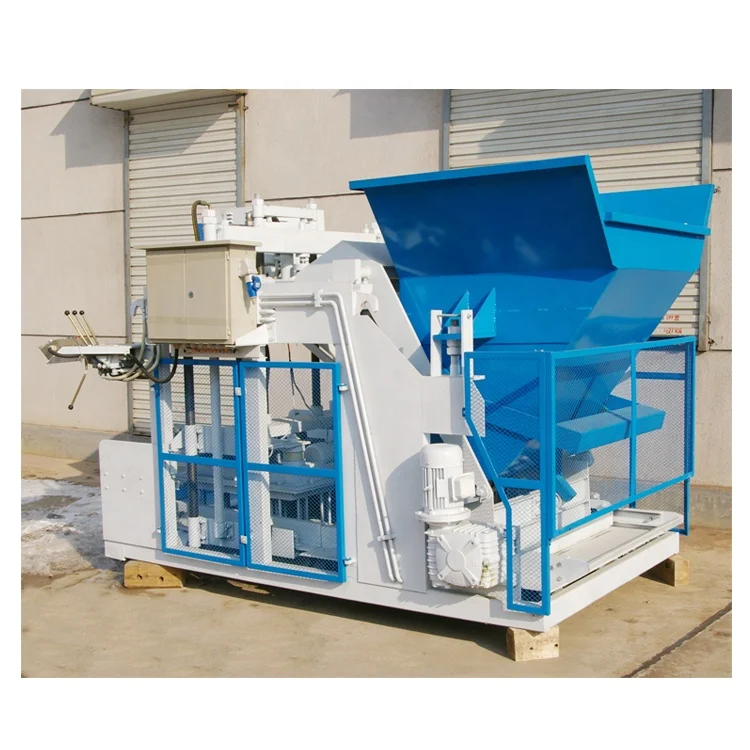


Description
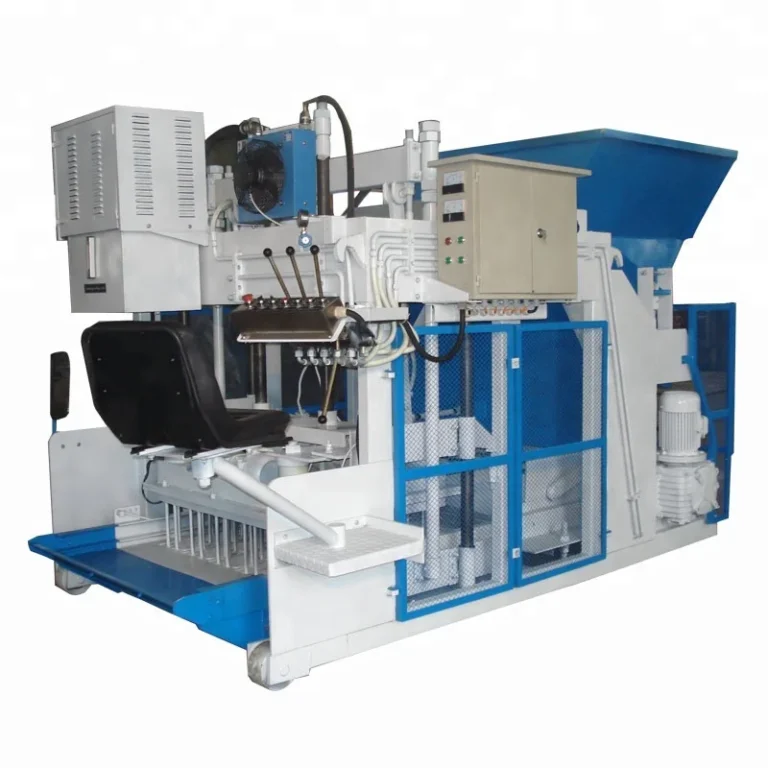
Matched Hydraulic and Vibration Systems — The QMY10-15 is configured around the buyer’s actual mix design and local aggregate, not a catalogue default, ensuring block density and cycle time stay consistent from first mold to last.
Technical Specifications
| Parameter | Value |
|---|---|
| Model | QMY10-15 |
| Product Type | Mobile Concrete Block Making Machine |
| Molding Capacity | 10 pcs/mold |
| Molding Cycle | 10s–15s |
| Total Power | 16 kW |
| Output Capacity | 11,000 pcs/day (8 hours) (basis not stated in source — confirm block format and material) |
| Vibration System | Dual vibration motors |
| Hydraulic System | Upper and lower demoulding control with heat dissipator |
| Mobility | Electric walking, hydraulic steering |
| Pallet Requirement | None (egg-laying type) |
| Basic Equipment Included | QMY10-15 host machine, JS7500 concrete mixer, dump truck |
| Optional Equipment | PL1200 batching machine, cement silo, screw conveyor, loader |
| Control System | Available with PLC or MCC control (to be confirmed with buyer) |
| Voltage & Frequency | Configurable per target market (to be confirmed before production) |
| Mould Format | Multiple formats via mould change (format list available on request) |
| Automation Level | Semi-automatic, operator-driven movement |
| Stacking Method | Manual, blocks laid directly on ground |
Application Suitability
| Application | Material or Output |
|---|---|
| On-site hollow block production | Crushed stone, sand, cement, water |
| Solid block manufacturing at project sites | Local aggregate blends with cement binder |
| Interlocking block production for paving | Fine aggregate and cement mixtures |
| First-stage block plant for entrepreneurs | Low-capital mobile setup without fixed foundation |
| Housing project block supply | On-ground egg-laying production without pallets |
Why the Control Language Question Matters Before Shipment
An automatic mobile block machine PLC controlled setup only reduces operator workload when the display language, voltage, and frequency are confirmed before the machine leaves the factory.
In Southeast Asian project sites, I have watched crews stand around a newly arrived block press because the PLC menu defaulted to a language no one on the floor could read, and the local electrician had to rewire the panel before first startup. Commissioning delays like this are entirely avoidable. The QMY10-15 ships with configurable control options, but the specification must be locked during the order stage — not discovered at the port of entry [NEED_CITE: voltage and frequency standards by export market]. When the operator understands every prompt on screen, cycle times stay tight and mould changes happen without guesswork.
What Automation Actually Removes from the Operator
The QMY10-15 handles upper and lower demoulding through hydraulic control rather than manual lever operation, which is where most operator inconsistency enters the cycle. In a fully manual egg-laying machine, the operator decides when to lift the mould and how fast to release pressure — two variables that directly affect block density. With hydraulic demoulding on this automatic mobile block machine PLC controlled platform, the release sequence runs at the same speed and pressure every cycle, producing blocks with uniform wall thickness and fewer corner fractures during curing.
Where the Upgrade Path Leads
Starting with the QMY10-15 does not lock a buyer into a fixed automation ceiling. The optional PL1200 batching machine and cement silo can be added later to replace manual material proportioning, removing batch-to-batch variation that comes from shovel-based mixing. A plant owner who begins with semi-automatic mobile production can introduce automatic batching and more precise raw material feeding as daily volume grows, without replacing the press itself [NEED_CITE: typical automation upgrade stages in mobile block production]. The electric walking and hydraulic steering system already removes the need for external towing equipment, keeping the site layout flexible as the operation expands.
How Vibration and Hydraulic Pressure Shape Block Density
The dual vibration motor system on the QMY10-15 delivers compaction force from two points rather than one, which matters when the mix contains coarse local aggregate that resists settling. In a single-motor setup, vibration tends to concentrate near the source, leaving the far side of the mould less compacted. Dual motors distribute energy more evenly across the mould cavity, so a 10-piece mould produces ten blocks with comparable density rather than a gradient from strong to weak. Combined with hydraulic-controlled demoulding, the block exits the mould at consistent green strength — firm enough to hold shape on the ground, yet not so compressed that internal stresses cause cracking during the first 48 hours of curing. The heat dissipator on the hydraulic circuit keeps oil temperature stable during continuous production in hot climates, preventing the pressure drop that would otherwise soften the demould action as the shift progresses.
The Hidden Cost of Skipping Mix-Design Verification
Buyers who select a mobile block machine based on cycle time alone often discover that the quoted 10s–15s moulding cycle was measured with a finely graded aggregate that their local quarry does not supply. When the actual mix contains oversized or poorly graded stone, the vibration system cannot compact the material within the expected cycle, and the operator extends the time to compensate — quietly cutting daily output well below the quoted figure. In Indonesia, I have seen this mismatch double the effective cycle time and produce blocks that cracked during open-air curing because the water-to-cement ratio was never adjusted for the local sand’s absorption rate [NEED_CITE: aggregate grading impact on block compaction cycle]. Requesting a capacity calculation that names the exact block format and mix assumption prevents this gap between quotation and reality.
Why Source the QMY10-15 Through This Channel
Block machinery is the single focus of Shandong Shiyue Intelligent Machinery, so the QMY10-15 is specified as a matched system — host machine, mixer, and material handling — rather than assembled from unrelated suppliers. Configuration is set against the buyer’s local aggregate and target block format, not a default catalogue page. Mould design covers the formats that actually sell in the buyer’s market, with custom drawings available when standard options do not match. The automation level is selectable, meaning a buyer can begin with the basic hydraulic demoulding package and add batching or feeding modules as the plant matures. Every shipment is backed by installation guidance, operator training, and ongoing mould and wear parts support.
Documentation & Verification
- Machine specification sheet listing confirmed voltage, frequency, and control language
- Capacity calculation sheet stating the block format and mix design assumed
- Hydraulic and electrical schematic for local maintenance and troubleshooting
- Mould drawing and format list matched to buyer’s market requirements
- Factory test record on buyer’s specified block format before dispatch
- Operation and maintenance manual with wear parts identification list
Installation, Commissioning & Support
- Confirm 16 kW power supply with dedicated circuit matching the specified voltage and frequency
- Level ground area required for egg-laying operation, no fixed foundation needed
- Machine arrives assembled; electric walking system allows immediate positioning on site
- First-run commissioning includes mould cycle adjustment and hydraulic pressure calibration
- Operator training covers hydraulic demould sequence, mould change procedure, and daily maintenance
- Wear parts list and mould replacement schedule provided at handover
What to Include in Your Inquiry
Send the specific block format and dimensions your market demands, along with a sample or description of the local aggregate you plan to use. Include your site’s available voltage and frequency, and the control display language your operators require. If you are working toward a project deadline, state the target start date so lead time and dispatch can be aligned accordingly.
Frequently Asked Questions
Q: How is the 11,000 pcs/day capacity calculated, and which block format does it assume?
A: The 11,000 pieces per day figure is based on an 8-hour shift, but the source does not state which block format, wall thickness, or mix design was used for that calculation. Actual daily output varies with the specific mould installed and the compaction time required by your local aggregate. Request a format-specific capacity sheet before confirming your order.
Q: What PLC control options and display languages are available for the QMY10-15?
A: The QMY10-15 can be supplied with PLC or MCC control depending on buyer preference. Display language is configurable and must be confirmed before production begins. Specify your required language during the quotation stage to avoid commissioning delays caused by an interface your operators cannot read on arrival.
Q: Can I add automatic batching or stacking to the QMY10-15 later?
A: The QMY10-15 supports optional integration with the PL1200 batching machine and cement silo, which can be added after initial deployment to replace manual material proportioning. Stacking remains manual since blocks are egg-laid on the ground, but the press itself does not need replacement when you introduce upstream automation modules.
Q: How does the hydraulic demoulding system affect mould change time?
A: Hydraulic upper and lower demoulding removes the manual lever operation that typically slows format swaps on mobile machines. The controlled release sequence keeps the mould aligned during removal, reducing the risk of damaging block edges and shortening the time between the last block of one format and the first block of the next.
Q: What voltage and frequency configurations are supported?
A: Voltage and frequency are configured to match the buyer’s local power supply and must be confirmed before the machine enters production. Providing your site’s electrical specification during the inquiry stage ensures the motor, hydraulic pump, and control panel are all built to the correct standard, eliminating rewiring work after delivery.