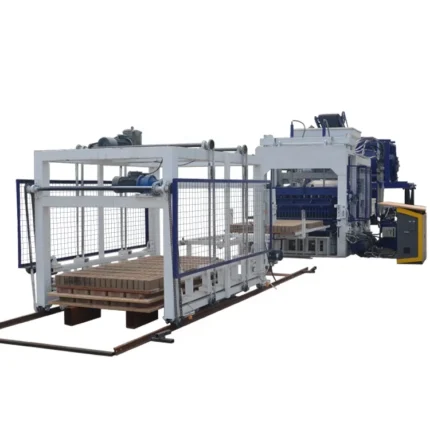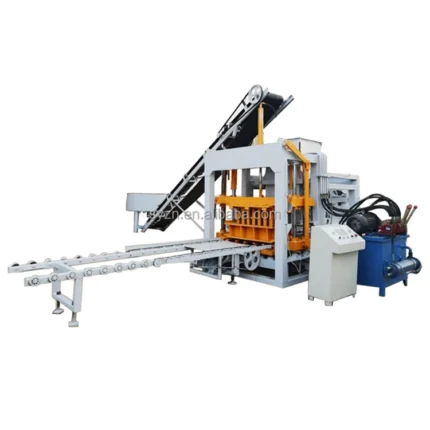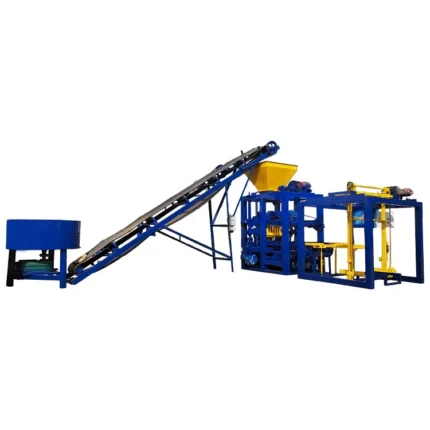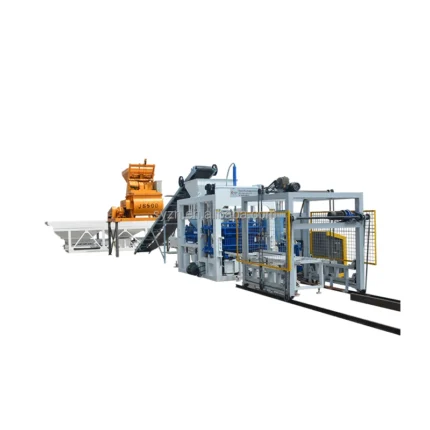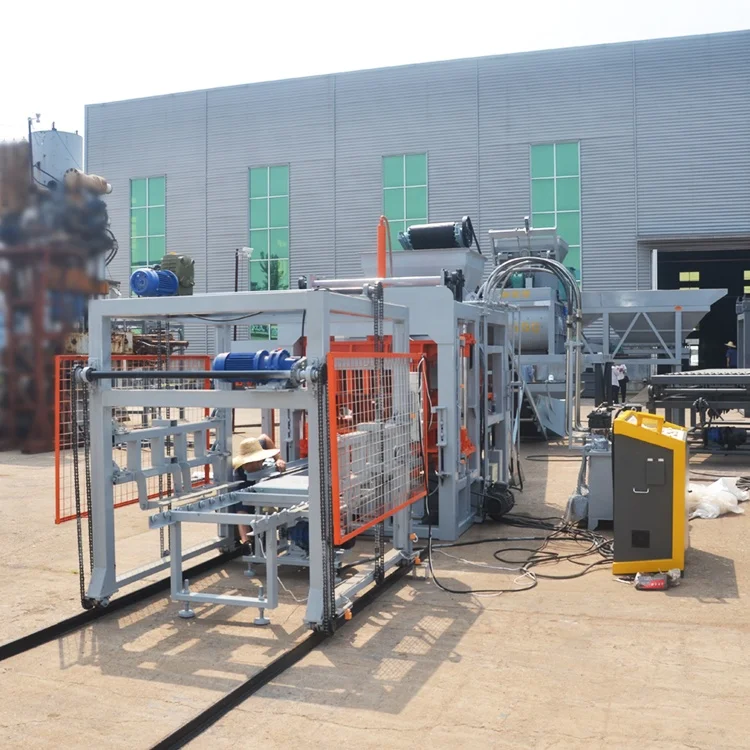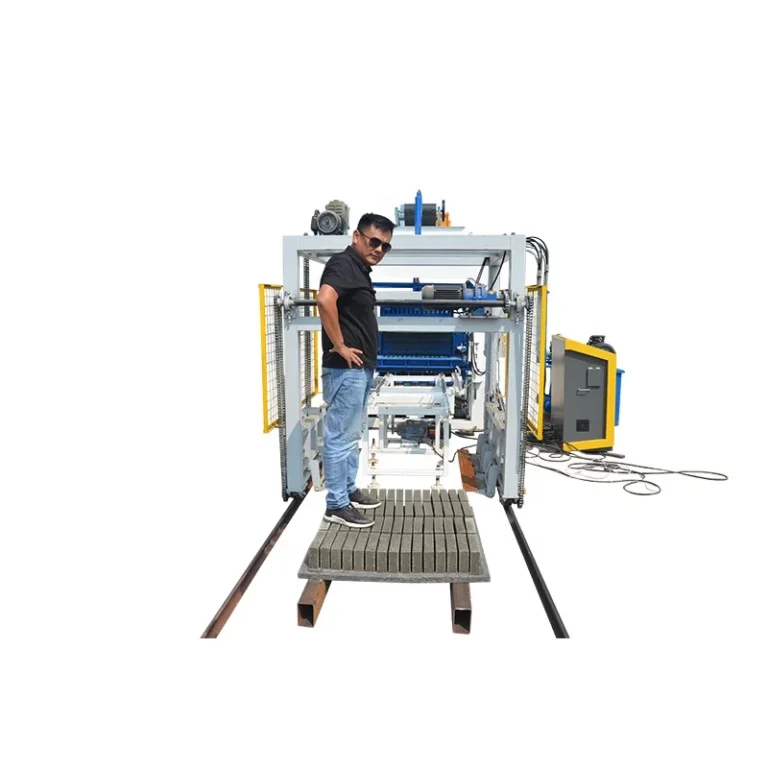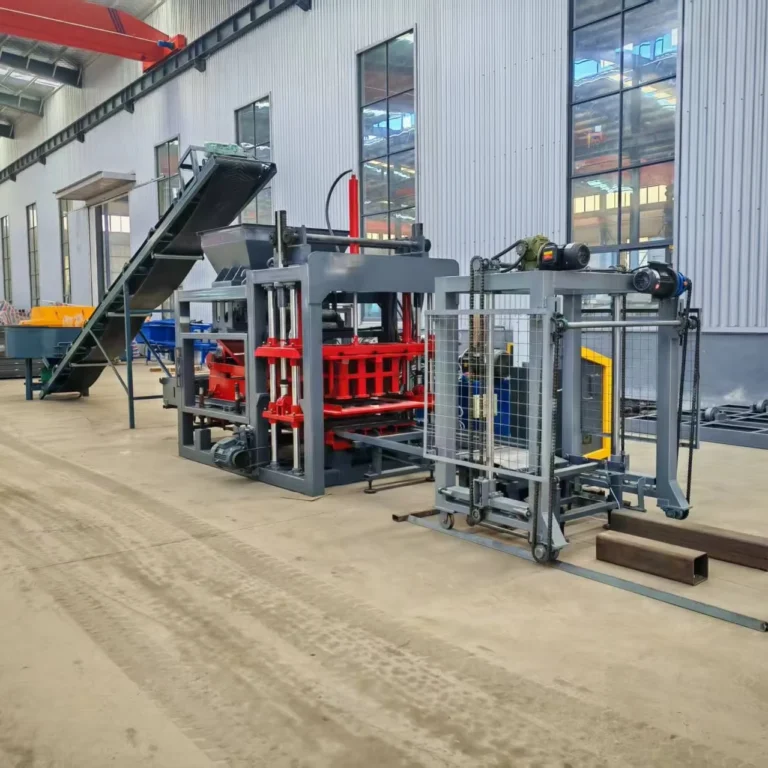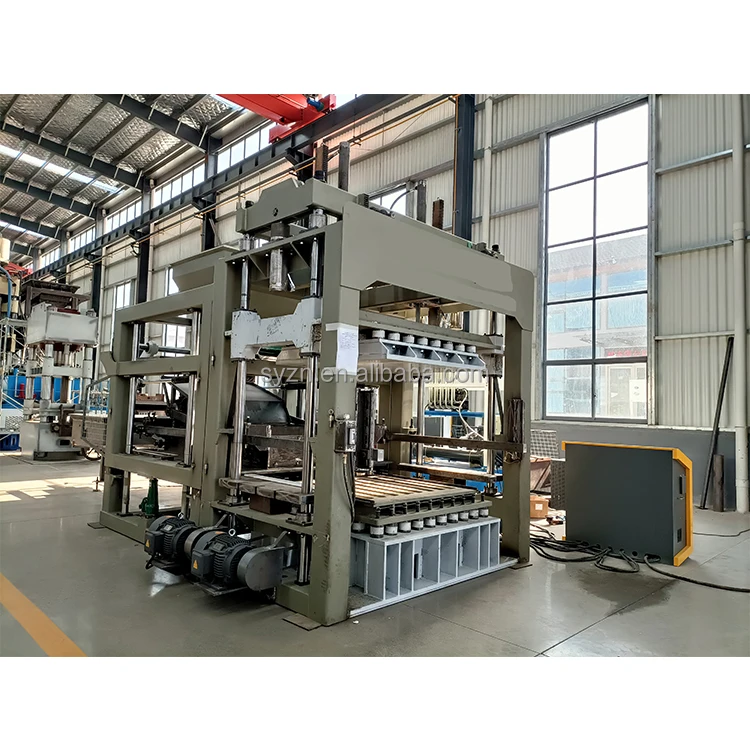



Description
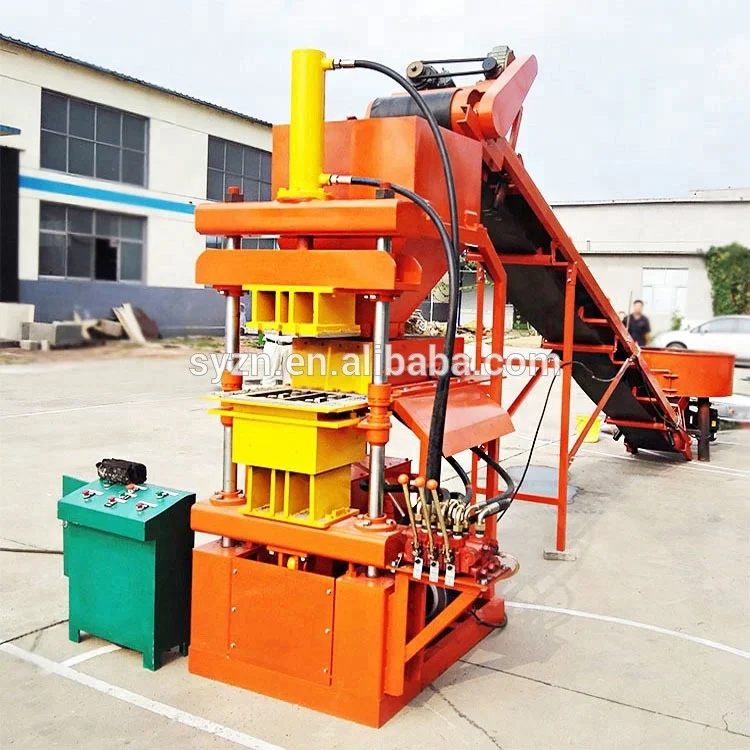
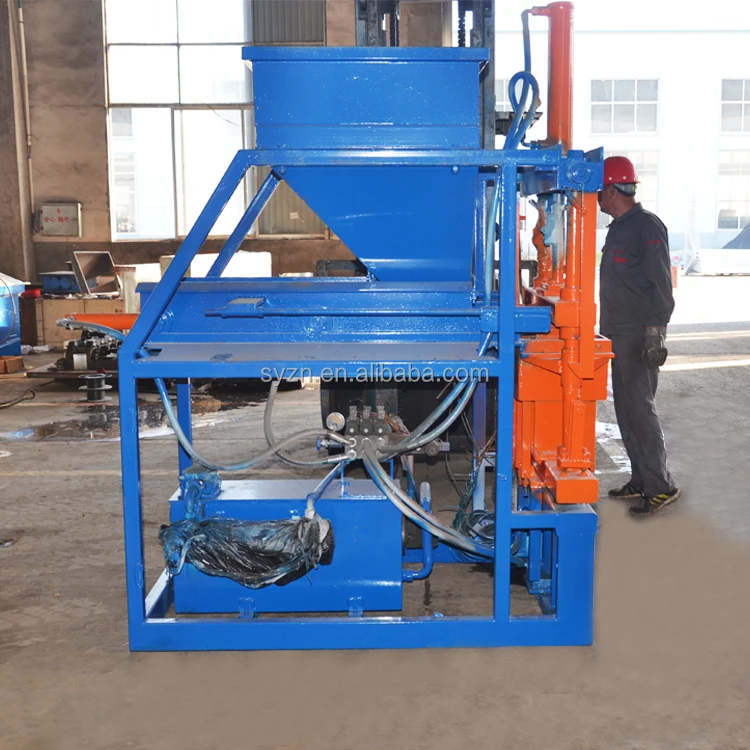
Fixed cycle logic — the LY2-10 holds its 10 s molding cycle through PLC timing so operators cannot unintentionally drift the press rhythm between batches.
Technical Specifications
| Parameter | Value |
|---|---|
| Model | LY2-10 |
| Product Type | Clay Interlocking Brick Making Machine |
| Machine Type | Semi-automatic clay and cement interlocking brick making machine |
| Rated Power | 7.5 kW |
| Molding Cycle | 10 s |
| Output Capacity | 6000 pcs/8hours (basis not stated in source — confirm block format / material / thickness) |
| Raw Materials | Clay, soil, earth, mud, concrete, cement, fly ash |
| Overall Dimensions (L×W×H) | 1300 × 1800 × 2400 mm |
| Mould Formats Listed | 300×150×100 mm / 250×125×75 mm / 230×220×115 mm |
| Bricks per Mould | 1 pc (per listed format) |
| Automation Level | Semi-automatic |
Application Suitability
| Application | Material or Output |
|---|---|
| Small to medium interlocking brick plant | Clay, soil, earth mixed with cement binder |
| On-site block production for building contractors | Mud and fly ash blends available at project location |
| First plant for entrepreneurs entering brick market | Concrete and cement interlocking formats |
| Expansion of existing concrete product catalogue | Interlocking clay and cement paver formats |
Why "6,000 Bricks per Shift" Means Nothing Without the Format
Output figures must always name the block size and material they assume.
I once reviewed a quotation that promised 6,000 pieces per eight-hour shift on a press in this class. When we asked which of the three listed mould formats the number applied to, the supplier could not answer. On the LY2-10, a 300×150×100 mm interlocking brick and a 230×220×115 mm block have very different volumes, so filling, pressing and demoulding behaviour differ even when the cycle stays at 10 s. Without the format stated, the buyer has no way to plan curing racks, pallet inventory or truck loading. [NEED_CITE: importance of per-format capacity calculation in block machinery quotations]
This is why our quotation process starts by asking which interlocking format you actually sell in your market, then recalculating daily output for that specific size.
Locking the 10 s Cycle Through PLC Timing
On a semi-automatic clay interlocking brick making machine, the single biggest source of shift-to-shift variation is the operator shortening or stretching the press cycle. The LY2-10 addresses this by fixing the molding cycle at 10 s inside the PLC controlled clay block machine logic. Once the cycle is set during commissioning, the press will not release pressure or open the mould until the timer completes, regardless of how fast the operator feeds material. This removes the temptation to rush cycles during peak demand and protects block density.
Selectable Automation Without Replacing the Press
A common mistake among first-time plant owners is buying a fully automatic line before the market justifies the volume, then struggling with maintenance they are not ready for. The LY2-10 ships as a semi-automatic unit, leaving room to add pallet feeding, stacking or cubing stations later. Because the PLC architecture is already in place, adding an automatic stacker is a wiring and programming task rather than a press swap. [NEED_CITE: modular automation upgrade paths in semi-automatic block machinery]
Reading the Specs That Actually Matter
The 7.5 kW rated power places the LY2-10 in the compact end of clay brick presses, which matters when you are matching it to a generator set on a remote construction site. The three listed mould formats — 300×150×100 mm, 250×125×75 mm and 230×220×115 mm — cover most interlocking brick sizes sold across African and Southeast Asian markets. Mould change on a machine of this footprint is a manual procedure involving bolt release and guide alignment; expect it to take the better part of a shift the first time, then settle to a shorter routine once the crew has done it several times. Hydraulic pressure and vibration force are not published in the source data, so request the hydraulic schematic before committing to a mix design. The overall dimensions of 1300 × 1800 × 2400 mm mean the press fits inside a standard workshop bay, but headroom must accommodate the 2400 mm machine height plus lifting clearance for mould changes.
The Hidden Cost of Skipping Voltage and Language Confirmation
Arriving at a site with a 380 V / 50 Hz motor when the local supply is 220 V / 60 Hz is a commissioning nightmare I have witnessed more than once. The PLC controlled clay block machine cannot simply run on a transformer — the motor, solenoid valves and PLC power supply all need to match the destination grid. Likewise, a control display in a language the operator cannot read leads to manual overrides that defeat the cycle logic. Confirming voltage, frequency and PLC display language in writing before production avoids weeks of idle time and expensive on-site rewiring. [NEED_CITE: voltage and frequency standards by export market]
Why Source the LY2-10 Through This Channel
Block machinery is our single focus, which means the LY2-10 is specified as part of a matched system — press, mould, pallet and handling — rather than assembled from unrelated suppliers. Configuration starts from your actual mix design and local clay or soil sample, not a catalogue default. Mould design covers the interlocking formats your market actually sells, with custom drawings available when standard sizes do not fit. The automation level is selectable, so you can open a plant semi-automatic and add stations as demand grows. Installation includes on-site commissioning and operator training so the crew understands the PLC cycle logic from day one.
Documentation & Verification
- Factory test record running your chosen interlocking format before dispatch
- Capacity calculation sheet stating block format, cycle time and daily output assumption
- Hydraulic and electrical schematic matched to confirmed voltage and frequency
- Mould drawing pack covering all three listed formats plus changeover procedure
- PLC display language and control confirmation document signed before build
- Wear parts and mould list with part numbers for first replacement order
Installation, Commissioning & Support
- Foundation pad sized to 1300 × 1800 mm footprint with anchor bolt template supplied
- Dedicated 7.5 kW circuit with correct breaker rating for confirmed voltage and frequency
- Press shipped partly assembled; mould and hopper bolted on at site
- First production run supervised, cycle timer verified against 10 s target
- Operator training covers PLC display, emergency stop and mould change routine
- Spare hydraulic seals and mould wear inserts listed for first-year planning
What We Need From You to Size This Line Correctly
Send us the interlocking brick format your customers buy most, along with a sample of the clay, soil or fly ash you intend to use. Tell us your local voltage and frequency, the language your operators prefer on the PLC display, and whether your existing curing area uses a specific pallet size. With those details we can calculate a realistic daily output for your chosen format and propose the right automation starting point.
Frequently Asked Questions
Q: How is the 6,000 pcs/8h capacity verified, and which block format does it assume?
A: The 6,000-piece figure appears in the source data without a stated block format. We verify capacity by running your chosen interlocking size through the 10 s cycle and documenting actual output in the factory test record. Always ask for a per-format calculation before comparing quotations.
Q: Which automation stations can be added later without changing the press?
A: The LY2-10 PLC architecture supports adding automatic pallet feeding, stacking and cubing as separate modules. Because the control logic is already present, integration is a wiring and programming task rather than a mechanical rebuild of the press.
Q: How are PLC language, voltage and frequency confirmed before shipment?
A: We issue a written control confirmation document listing your required PLC display language, motor voltage and grid frequency. Production begins only after you sign this document, preventing mismatches that would delay commissioning on arrival.
Q: What is the mould change procedure on the LY2-10, and how long does a swap take?
A: Mould change involves releasing guide bolts, lifting the current mould out and lowering the new one onto alignment pins. First-time crews should budget a significant portion of a shift; experienced teams complete it faster once the routine is established.
Q: How does the control system maintain consistency when raw material moisture varies?
A: The PLC locks the 10 s cycle regardless of operator pace, so press time stays constant. When moisture shifts, the operator adjusts the mix at the batching stage rather than speeding or slowing the press, keeping block density uniform across the run.