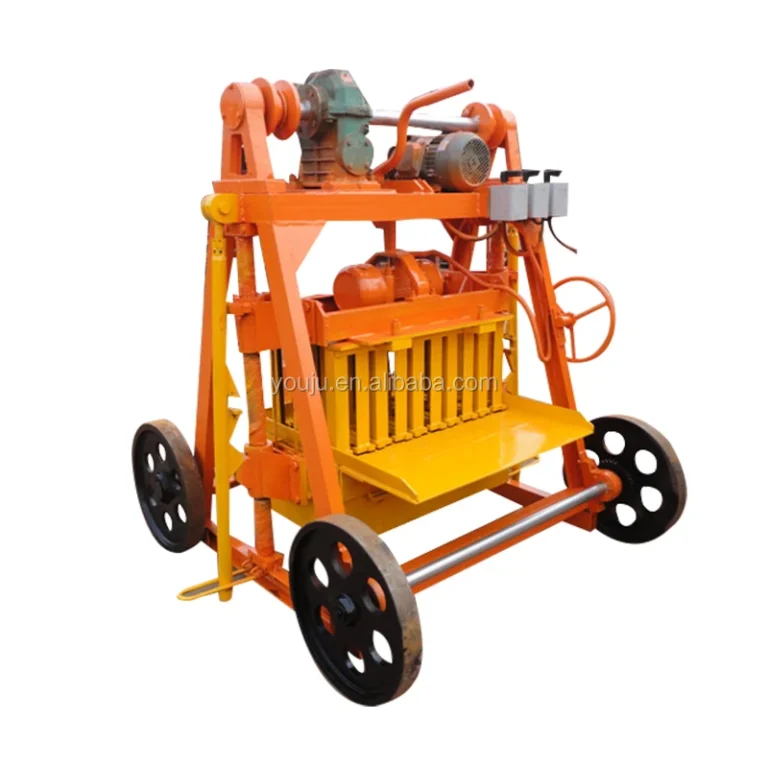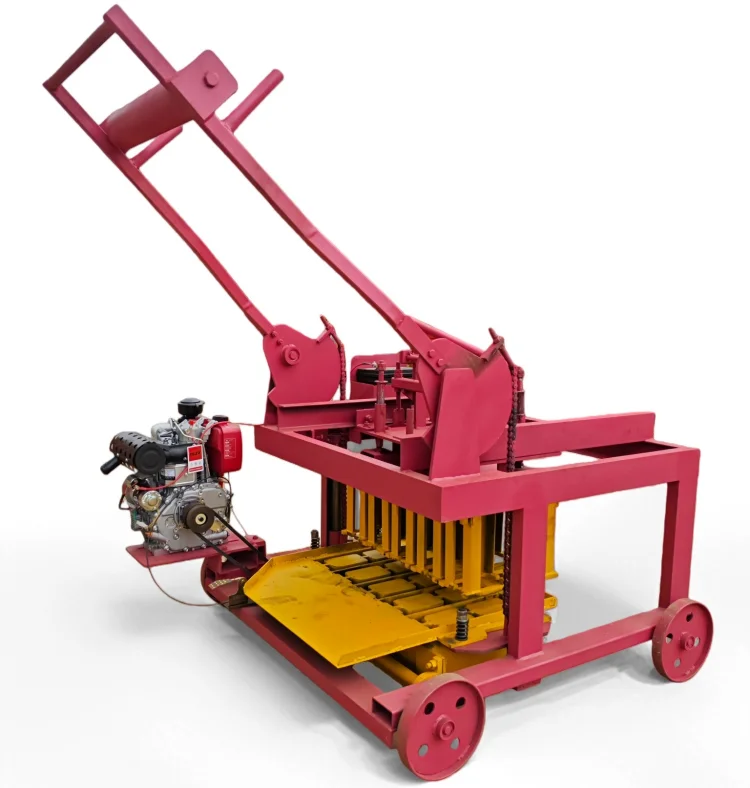
Description
Technical Specifications
| Parameter | Value |
|---|---|
| Model | QMR4-45 |
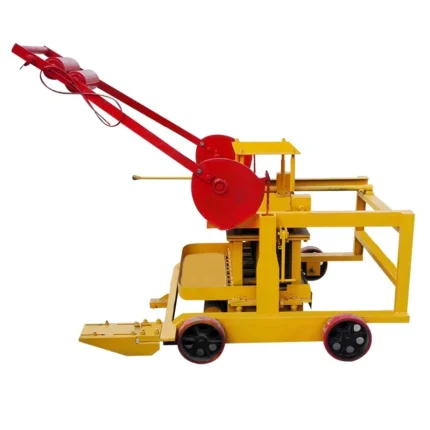
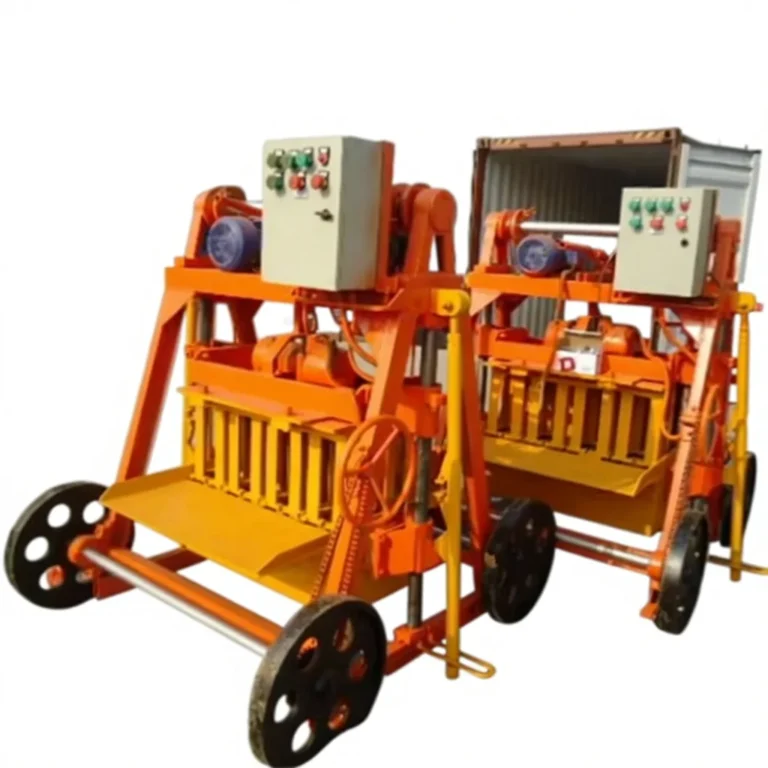
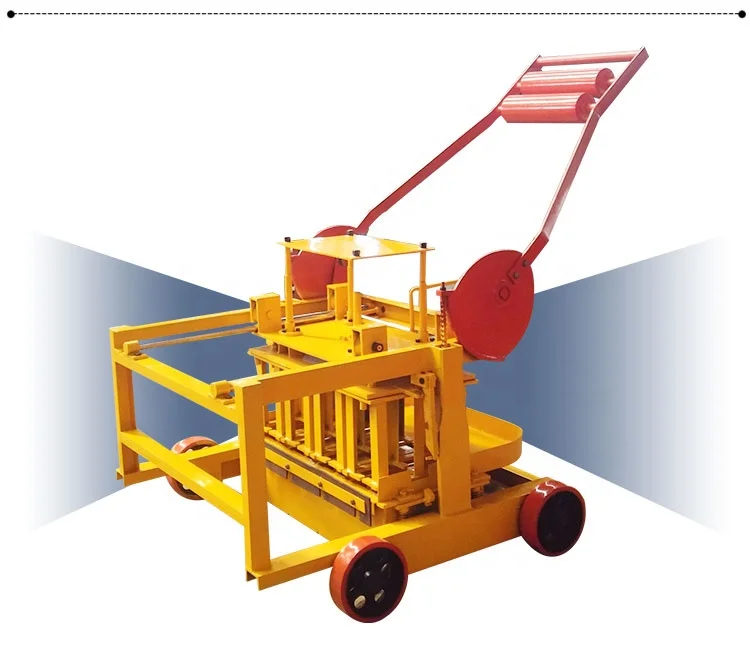
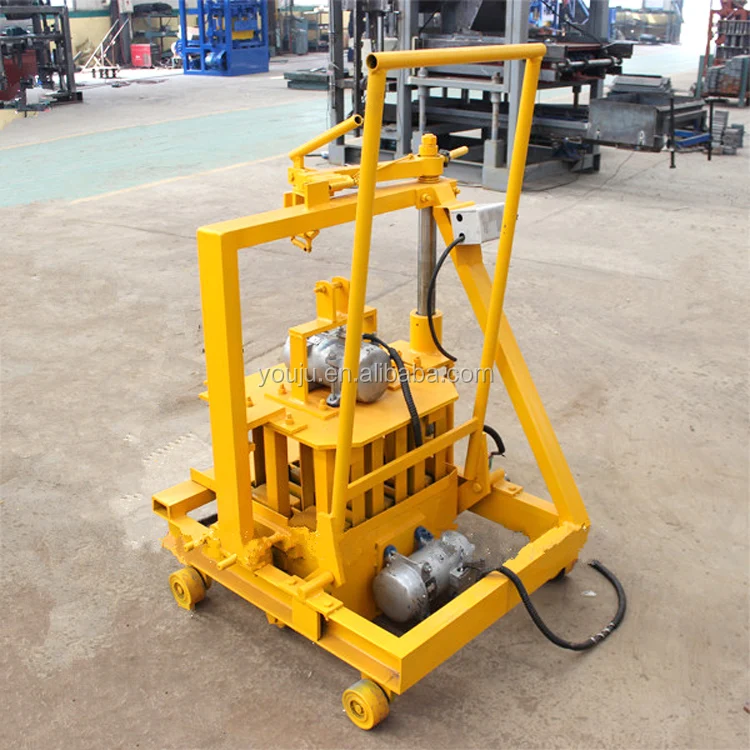
| Product Type | Mobile Block Making Machine |
| Power Source Options | Diesel Engine or Electric Generating Unit |
| Rated Power | 8hp |
| Molding Cycle Duration | 45 seconds (basis to be confirmed by specific block format) |
| Molding Methodology | Vibration combined with Mechanical Pressure |
| Vibration Force Rating | 60KN |
| Total Equipment Weight | 800kg |
| Overall Dimensions | 2420×1320×1650mm |
| Pallet Requirement | None (Egg-laying mobile design) |
| Basic Equipment Included | JZC350 Diesel Mixer or JQ350 Electric Mixer, Transport Trolley |
| Control System Options | Manual operation or Semi-automatic relay logic; upgradeable to PLC interface |
| Production Mobility | Continuous on-site movement, no fixed foundation required |
Application Suitability
| Application Scenario | Material or Output Focus |
|---|---|
| Remote housing development sites | Production of load-bearing concrete blocks using local river sand and gravel |
| Off-grid infrastructure projects | Fly ash brick manufacturing where grid electricity is unavailable |
| Entrepreneurial starter plants | Low-volume interlocking paver production for local municipal contracts |
| Contractor-led job site fabrication | Hollow block molding for immediate use in perimeter wall construction |
What "45-Second Cycles" Leaves Out for Mobile Operators
A cycle time means nothing if the operator cannot read the control screen.
When discussing a PLC controlled mobile block making machine, buyers often focus on the molding speed while ignoring the interface language and voltage compatibility. I have seen machines sit idle on remote sites simply because the menu was in a language the local crew did not understand. An automatic mobile block machine must be configured for the specific frequency and language of the region before it leaves the factory, otherwise the automation features become inaccessible to the people who need them most. [NEED_CITE: industrial control interface language requirements for exported machinery]
Intelligence in Off-Grid Environments
The primary advantage of an automatic mobile block machine is the ability to maintain consistency without a fixed laboratory or complex batching plant. For the QMR4-45, the focus is on how the control logic manages the vibration duration relative to the mix moisture. In remote areas, aggregate moisture fluctuates wildly between morning and afternoon; an intelligent system adjusts the cycle parameters to ensure the block density remains uniform despite these environmental shifts.
Reducing Manual Dependency through Logic
Moving from a manual egg-laying process to a PLC controlled mobile block making machine removes the guesswork from the compaction phase. Instead of an operator deciding when the block "looks" finished, the system monitors the vibration force and terminates the cycle based on resistance feedback. This consistency is critical for contractors who must meet structural integrity tests for government housing projects, where batch-to-batch variation can lead to costly rejections. [NEED_CITE: ASTM standards for concrete masonry unit compressive strength]
Understanding the 60KN Vibration Force
In mobile block production, vibration force is the primary determinant of wall thickness consistency and surface finish. The 60KN rating on the QMR4-45 is achieved through a mechanical linkage that must be matched to the mold weight. If the vibration is too weak for a heavy paver mold, the aggregate will not settle, resulting in porous, weak bricks. Conversely, excessive vibration in a lightweight hollow block mold can cause the material to liquefy and collapse. The control system’s role is to provide a stable frequency that matches the specific resonance of the mold currently installed.
The Cost of Ignoring Electrical Harmonics
Failing to confirm the local voltage and frequency before ordering a PLC controlled mobile block making machine often results in burned-out sensors and unstable logic gates. In regions with unstable grids or diesel-generator power, harmonic distortion can confuse the machine’s automated batching sensors, causing it to over-feed or under-feed material. This leads to wasted cement and blocks that fail to meet the required weight standards. [NEED_CITE: electrical power quality standards for industrial control systems]
Why This Configuration Works for Remote Sites
We treat the machine, the mixer, and the control logic as a single integrated system rather than separate components. The QMR4-45 is configured against the buyer’s specific local aggregate and target block format, ensuring the vibration force is appropriate for the material at hand. We confirm the control display language and voltage requirements before production begins, preventing commissioning delays. Furthermore, the design allows for a gradual transition from manual operation to full automation as the buyer’s volume requirements increase.
Documentation & Verification
- Line layout showing the footprint required for the mixer and mobile machine travel path.
- Specification sheet detailing the vibration force and motor ratings for your local voltage.
- Factory test record confirming the 60KN vibration output on your chosen block format.
- Electrical schematic identifying the specific PLC inputs for your regional safety standards.
- Operation manual translated into the language of your on-site technical crew.
Installation, Commissioning & Support
- Site leveling requirements to ensure the 800kg machine maintains stability during high-vibration cycles.
- Diesel generator sizing to support the 8hp motor and auxiliary mixer without voltage drop.
- On-site calibration of the vibration timer to match the setting time of your specific cement mix.
- Operator training on the PLC menu structure and basic fault code diagnosis.
- Wear part schedule for the vibration springs and mold liner based on your aggregate abrasiveness.
Sizing Your Mobile Production Setup
To provide an accurate configuration, we need to know the specific block formats you intend to produce and the daily volume required for your current contracts. Please share details about your local aggregate type (such as river sand, crushed stone, or fly ash) and the available power source at your job sites. This information allows us to match the vibration parameters and control logic to your actual production environment.
Frequently Asked Questions
Q: Can the QMR4-45 be upgraded to PLC control after initial manual operation?
A: Yes, the machine is designed with a modular electrical architecture. You can start with a manual or semi-automatic relay system to keep initial investment low and later install the PLC cabinet and sensors. This upgrade path allows you to introduce automatic batching and consistent cycle timing as your production volume grows and labor consistency becomes a priority.
Q: How do you confirm the control language and voltage before shipment?
A: We require a signed confirmation document that specifies the exact voltage, frequency, and preferred menu language for the PLC interface. This step is integrated into our sales process to ensure that when the machine arrives at a remote site, the operator can immediately navigate the menus for setup and troubleshooting without waiting for external translation or software patches.
Q: How is the vibration force matched to my local aggregate?
A: We review your local material source—whether it is fine river sand, coarse crushed stone, or industrial fly ash. Based on the particle size and abrasiveness, we adjust the vibration motor configuration and the spring stiffness. This ensures the 60KN force is delivered effectively to the mold, compacting the material without causing excessive wear or segregation of the mix.
Q: What is the realistic daily output for a mobile machine of this class?
A: The output depends entirely on the block size, the speed of your material loading team, and the curing time required. While the machine has a 45-second cycle capability, the actual daily volume is determined by the logistics of moving the machine across the site and the speed of the concrete mixer. We provide a capacity calculation based on the specific block format you intend to produce.