Description
Configured Control Systems — every QMJ2-45 automation upgrade is tested against the buyer’s actual block format and PLC language preference before the machine leaves the factory floor.
Technical Specifications
| Parameter | Value |
|---|---|
| Model | QMJ2-45 |
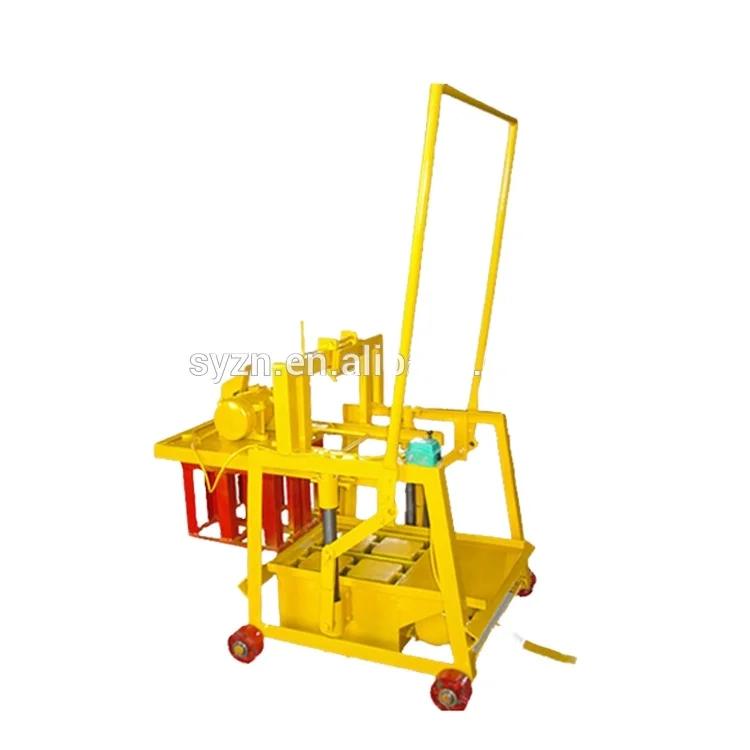
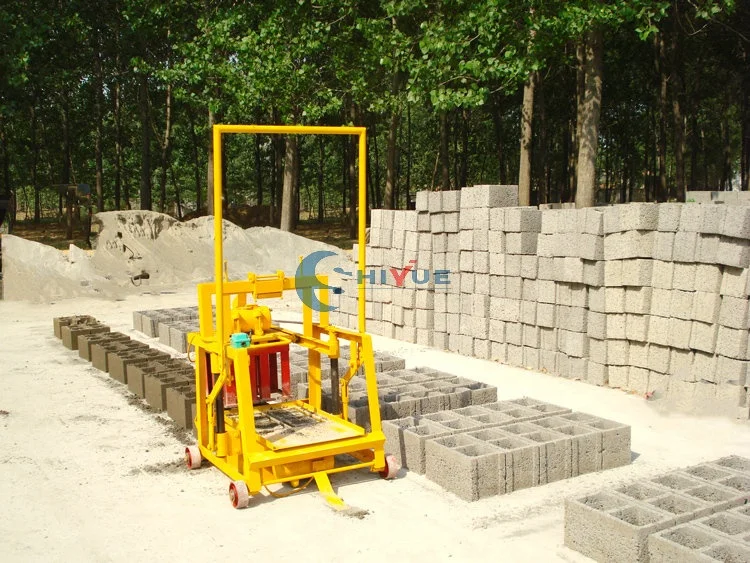
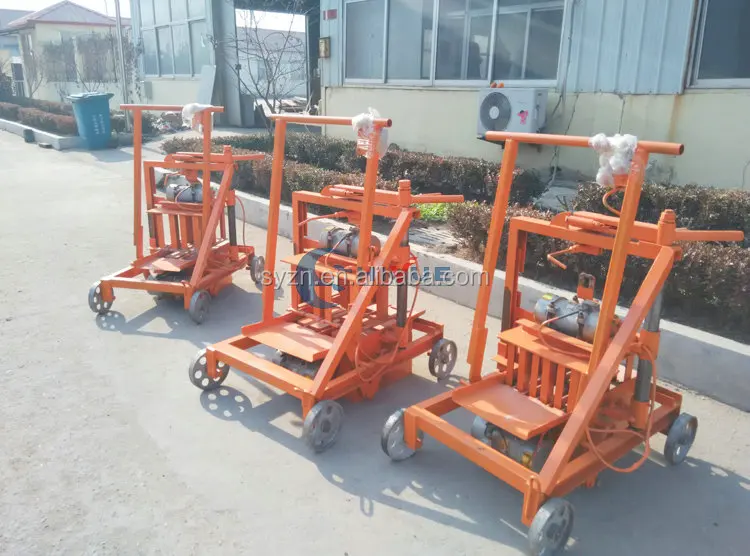
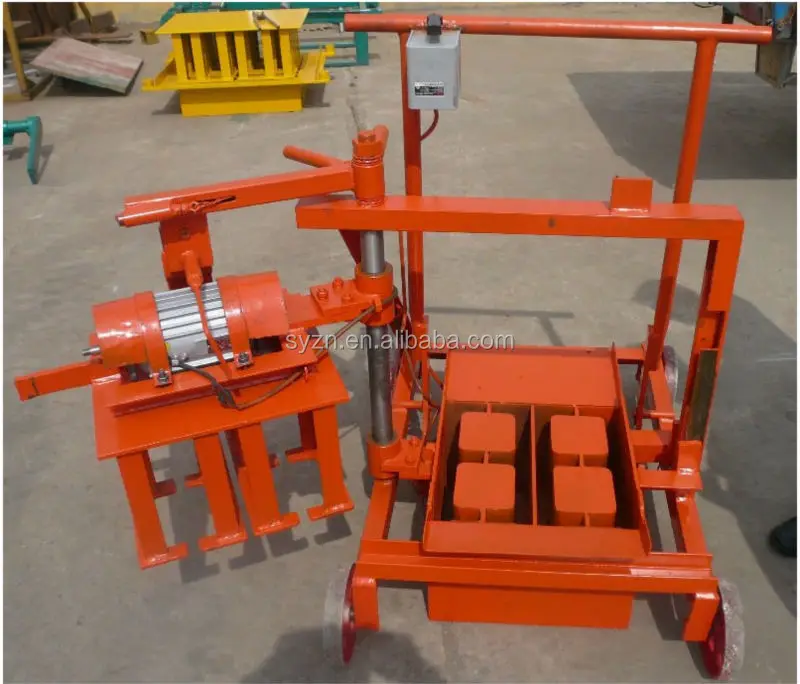
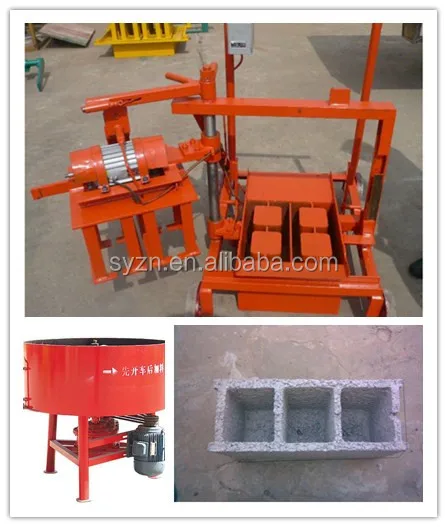
| Product Type | Mobile Egg-Laying Block Making Machine |
| Rated Power | 1.5 kW |
| Molding Cycle | 45 seconds |
| Theoretical Productivity (400×200×200 mm) | 2 pcs/mould, 150 pcs/hour, 1200 pcs/day (basis stated) |
| Theoretical Productivity (400×150×200 mm) | 3 pcs/mould, 220 pcs/hour, 1760 pcs/day (basis stated) |
| Overall Dimensions | 1300 × 1300 × 1150 mm |
| Net Weight | 400 kg |
| Vibration System | Bed mould vertical vibration + upper mould compression vibration |
| Mould Operation | Top die push-and-pull with automatic scraper |
| Voltage | Configurable according to buyer’s local voltage and frequency |
| Automation Level | Semi-automatic baseline with selectable PLC-controlled upgrade path |
Application Suitability
| Application | Material or Output |
|---|---|
| Startup block production | Hollow blocks using locally sourced sand, cement, and aggregate |
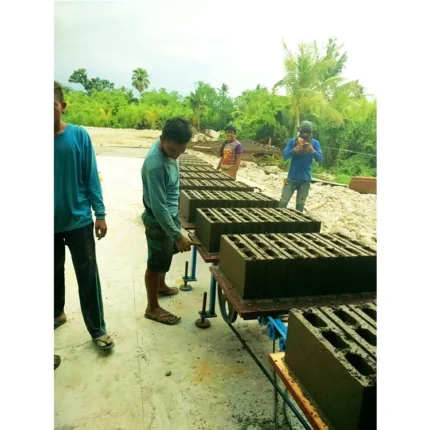
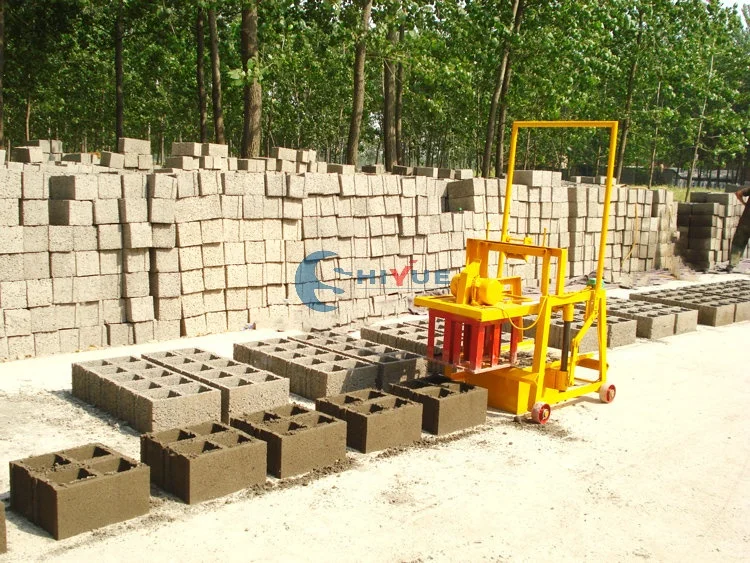
| On-site project manufacturing | 400×200×200 mm and 400×150×200 mm hollow blocks without fixed infrastructure |
| Small-scale plant operation | Concrete blocks using fly ash, lime, or gypsum blends |
| Contractor self-production | Site-made masonry to avoid transport costs on remote projects |
Why the Language Setting on the PLC Panel Must Be Confirmed Before Production
A control system the operator cannot read is a control system that gets bypassed.
I have watched skilled crews reduce semi-automatic machines back to manual mode simply because the display defaulted to a language nobody on site could parse. When an operator switches the automatic QMJ2-45 mobile block making machine PLC controlled upgrade to manual override, batch-to-batch consistency disappears and the machine becomes little more than a powered mould. The commissioning delay alone — waiting for a firmware change or a technician to arrive — has cost project timelines more than once [NEED_CITE: control panel language requirements across export markets]. That is why the display language confirmation is not an afterthought in the documentation checklist; it is one of the first items locked in after an order is placed.
How PLC Control Changes What the Operator Manages
On a semi-automatic baseline, the QMJ2-45 operator handles pallet placement, triggers the moulding cycle, and monitors block quality by eye. Adding PLC control to this platform does not remove the operator; it removes the variables that depend on operator judgement. Cycle timing, vibration duration, and upper mould compression stroke become programmed constants rather than manual habits. For a small block plant, that shift means the difference between blocks produced at the start of a shift and blocks produced at the end of a shift carrying the same density profile.
What Batch Consistency Actually Means on a Mobile Platform
Mobile egg-laying machines operate on ground surfaces that vary in flatness and compaction. The automatic QMJ2-45 mobile block making machine PLC controlled upgrade addresses one source of variation — the machine cycle — so that the remaining variables (ground condition, mix moisture, aggregate gradation) can be isolated and managed separately. When the vibration time and compression force are identical across every cycle, density testing across a production run shows a narrower spread, which is what building inspectors and block buyers actually evaluate [NEED_CITE: block density testing standards for masonry products].
Reading the Specifications Beyond the Brochure Numbers
The 1.5 kW rated power on this machine drives both the vibration system and the top die push-and-pull mechanism. On a mobile platform with no hydraulic press, vibration is the primary densification force. The dual vibration system — bed mould vertical vibration combined with upper mould compression vibration — delivers compaction from two directions simultaneously, which produces more uniform block density compared to single-source vibration. The 45-second moulding cycle is consistent across both listed block formats, though the theoretical output differs because the 400×200×200 mm hollow block mould produces 2 pieces per cycle while the 400×150×200 mm mould produces 3 pieces per cycle. The net weight of 400 kg and overall dimensions of 1300 × 1300 × 1150 mm keep the machine within the range that can be relocated on-site without heavy lifting equipment.
The Hidden Cost of Skipping Voltage and Frequency Confirmation
Machines shipped with the wrong voltage configuration do not fail dramatically — they run, but at reduced vibration force and inconsistent cycle timing, producing blocks that pass visual inspection but fail compressive strength tests weeks later. On a mobile egg-laying platform where there is no hydraulic system to compensate, vibration amplitude is directly tied to motor performance at the supplied voltage and frequency. Rectifying this after arrival means sourcing a transformer or rewinding the motor on site, neither of which is a quick fix in a remote project location [NEED_CITE: electrical compatibility issues in industrial equipment exports]. Confirming voltage in writing before production is a five-minute step that prevents a multi-week commissioning failure.
Why This Is Where the Control Conversation Happens
Block machinery is the single focus here, which means the PLC upgrade path on the QMJ2-45 is specified as part of a matched system rather than an aftermarket add-on from a separate control supplier. Automation levels are selectable — a buyer can start with the semi-automatic baseline and add PLC control as production volume justifies the investment. The configuration is set against the buyer’s actual block format and local aggregate, not a catalogue default. Mould design covers the formats the buyer’s market actually sells, including custom drawings. Installation and commissioning support includes operator training so that the automation features are understood and used rather than bypassed.
Documentation & Verification
- Machine specification sheet stating the block format assumed in the capacity calculation
- Voltage, frequency, and PLC display language confirmation signed before production begins
- Factory test record including vibration force measurement and block density results
- Mould drawing and format list for every mould supplied with the machine
- Operation and maintenance manual with the control system language matching the buyer’s requirement
Installation, Commissioning & Support
- Power supply must match the confirmed voltage and frequency specification before the 1.5 kW motor is energised
- Machine footprint of 1300 × 1300 mm requires a level, compacted ground surface for stable egg-laying operation
- Dual vibration system calibrated during commissioning to match the buyer’s submitted mix design and aggregate
- PLC display language verified on first power-up before operator training begins
- Mould and wear parts list with part numbers supplied at delivery to prevent first-replacement downtime
What to Include in an Enquiry
Provide the target block format and the daily output you need based on that format. Specify the local voltage and frequency at the site, along with the preferred PLC display language. If you have an existing mix design or a specific aggregate source, include those details so the vibration settings can be configured accordingly.
Frequently Asked Questions
Q: How is the output capacity of the QMJ2-45 verified, and which block format does the quoted figure assume?
A: Output capacity is stated per block format. The 1200 pieces per day figure is based on 400×200×200 mm hollow blocks at 2 pieces per mould, while 1760 pieces per day is based on 400×150×200 mm blocks at 3 pieces per mould. Any capacity figure without a stated block format should be questioned.
Q: What does a PLC-controlled upgrade add in terms of batch consistency and labour reduction?
A: PLC control locks cycle timing, vibration duration, and compression stroke as programmed constants, removing operator-dependent variation. It does not eliminate the operator but reduces the manual judgement calls that cause density variation between blocks produced at different points in a shift.
Q: How do I confirm voltage, frequency, and control language before shipment?
A: These are confirmed in writing during the quotation stage, before production begins. The specification sheet and factory test record will reflect the confirmed values. Request written confirmation that the PLC display language matches the operator’s language.
Q: How does the dual vibration system compare to single-vibration mobile machines?
A: The bed mould vertical vibration combined with upper mould compression vibration delivers compaction from two directions. This produces more uniform density through the full height of the block compared to machines that vibrate only from the base.
Q: What should I verify on the day of commissioning before production starts?
A: Confirm that the voltage at the supply matches the machine specification, that the PLC display shows the correct language, and that the vibration settings correspond to your mix design. Run a test batch and check block dimensions before starting full production.