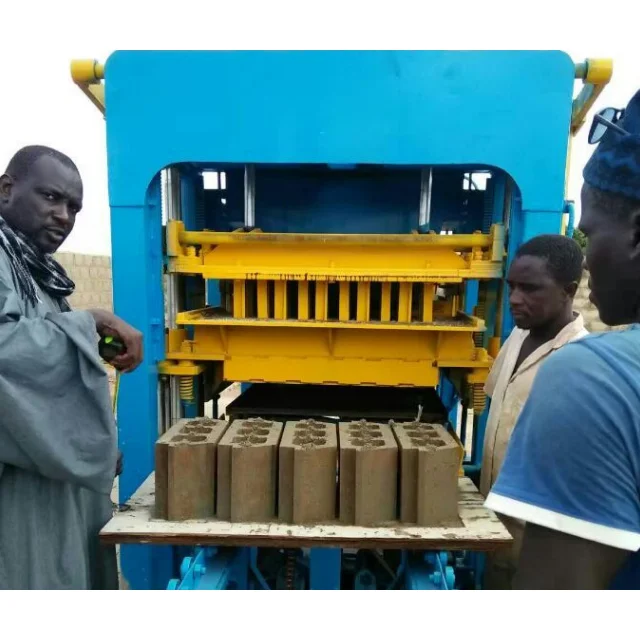
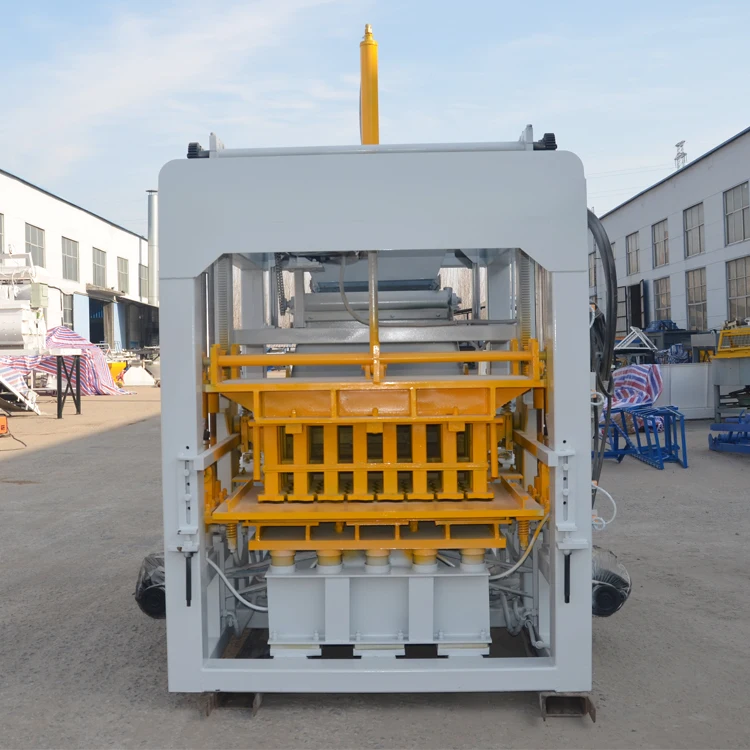


Description
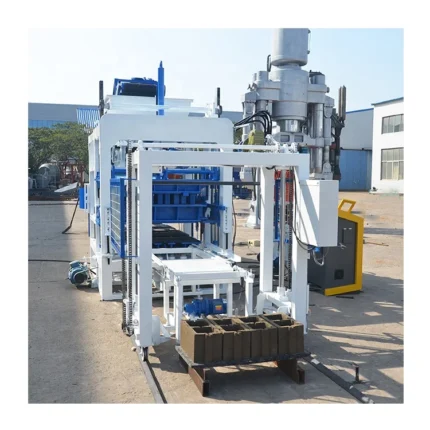
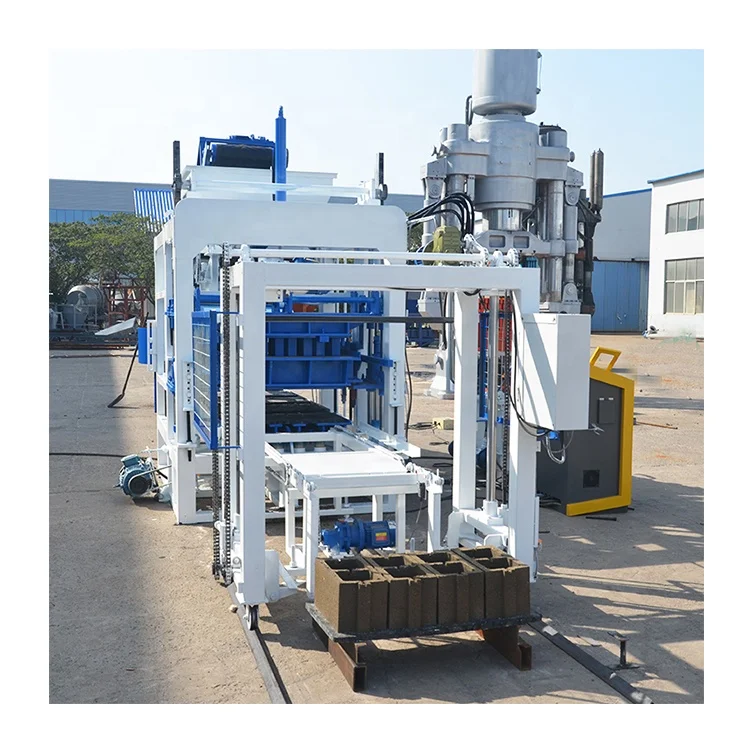
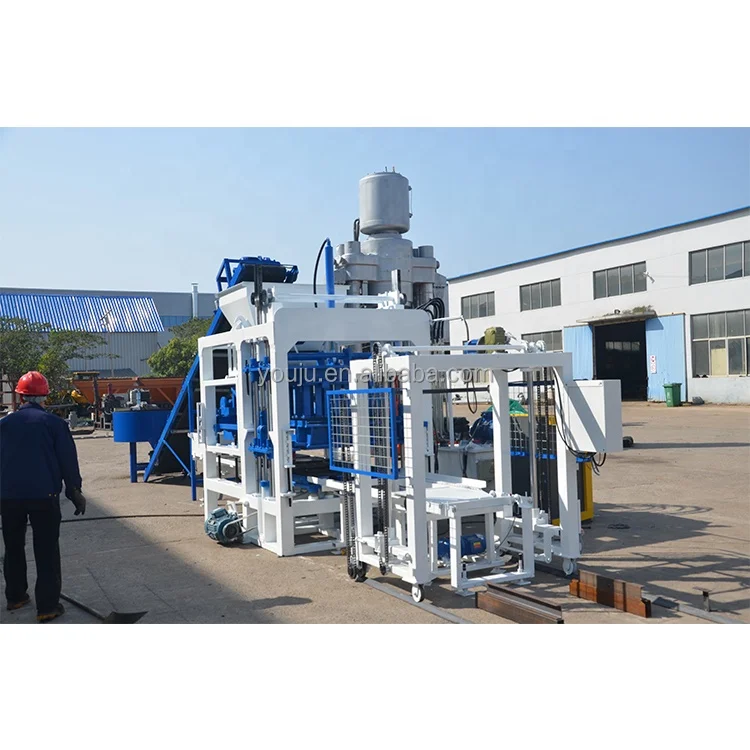
Integrated Control Architecture — The QT5-15 ties batching, forming, and stacking under one Siemens PLC so the operator monitors the entire line from a single interface instead of chasing each station.
Technical Specifications
| Parameter | Value |
|---|---|
| Model | QT5-15 |
| Product Type | Automatic Concrete Block Making Machine |
| Host Machine Dimensions (L×W×H) | 5870×2220×2850 mm |
| Host Machine Weight | 5.5 Tons |
| Molding Area | 1050×500 mm |
| Workshop Area | 200 m² (basis to be confirmed) |
| Host Machine Power | 31.5 kW |
| Vibration Force | 55 kN |
| Vibration Method | Hydraulic + Platform Vibration |
| Vibration Frequency | 2800–4500 Times/Minute |
| Pallet Size | 1100×550×25 mm |
| Voltage | 220/380/415/440V (Customized) |
| Molding Period (Cycle Time) | 15 Seconds |
| Control System | Siemens PLC with independently developed control program |
| Travel Switch | France Schneider / Japan Omron |
| Motor | Germany Siemens or CE standard brand |
| Mould Hardness | 54–58 HRC (heat treatment + carburizing) |
| Welding Method | Carbon dioxide protection welding |
| Batching Machine Model | PLD1200 |
| Batching Hopper Capacity | 1200 L |
| Storage Hopper Capacity | 4×2.5 m³ |
| Batching Theoretical Productivity | 56 m³/h |
| Batching Ingredient Precision | ±2% |
| Batching Species | 3 |
| Mixer Model | JS500 |
| Mixer Charging Volume | 800 L |
| Mixer Discharging Volume | 500 L |
| Mixer Production Capacity | 25 m³/h |
| Mixer Motor Power (Mixing) | 18.5 kW |
| Mixer Maximum Aggregate Grain Size | 60 mm |
| Stacker Model | SY-4 |
| Stacker Power | 3 kW |
| Stacker Function | Mobile pallet stack, suitable for hollow block and pavers |
| Automation Level | Full automatic (PLC controlled, automatic batching, mixing, stacking) |
| Key Features | CE standard components, automatic pallet circulation, remote diagnostics ready |
Application Suitability
| Application | Material or Output |
|---|---|
| Hollow block production | Crushed stone, cement, sand, fly ash aggregate blends |
| Paving block manufacturing | High-density concrete mixes with fine aggregate |
| Solid brick forming | Standard cement-aggregate ratios for load-bearing units |
| Interlocking brick production | Interlocking profile moulds with coloured face mix |
Why PLC Language Confirmation Must Happen Before the Machine Ships
An automatic QT5-15 block machine PLC controlled in the wrong language is a manual machine with an expensive screen.
I was on a commissioning call for a West African block plant when the operator stared at a fully Chinese HMI. The machine itself ran fine — batching accuracy was within tolerance, the vibration cycle held steady — but nobody on site could read the fault codes. Three days of lost production before we flew an engineer out with a language patch. Since then I treat the PLC display language and the voltage confirmation as a single checkpoint, not an afterthought. [NEED_CITE: industrial PLC interface language requirements by market]
What the Control System Actually Removes from the Operator
The automatic QT5-15 block machine PLC controlled through Siemens hardware runs an independently developed program that sequences the PLD1200 batching station, the JS500 mixer discharge, the hydraulic press cycle, and the SY-4 stacker in one continuous loop. Each station reports back to the same processor, so a pallet jam at the stacker pauses the press before a half-formed block is ruined. The operator watches one screen instead of walking the line.
Where Consistency Comes From in Every Cycle
Batch-to-batch repeatability starts at the PLD1200 batching machine, which holds ingredient precision to ±2% across three aggregate species. The JS500 mixer then blends the charge within its 800-litre drum before discharging into the press hopper. Because the PLC times each station against the same internal clock, the 15-second moulding period is not a standalone figure — it sits inside a line rhythm that the control system protects from upstream delays. [NEED_CITE: PLC synchronization principles in automated block lines]
Reading the Specs That Shape Daily Output
The 55 kN vibration force paired with hydraulic pressure determines how densely the concrete is compacted inside the 1050×500 mm moulding area. Higher density means stronger blocks, but also longer wear on the mould surface — which is why the 54–58 HRC hardness rating from carburizing treatment matters for lifespan. The 1100×550×25 mm pallet must match the curing racks and forklift tines already on site; a mismatch here blocks the stacker from placing loaded pallets into the curing area. Cycle time of 15 seconds applies to a specific block format and mix, so realistic daily output needs to be calculated against the format you actually sell, not a catalogue default. [NEED_CITE: vibration force and hydraulic pressure relationship in concrete block forming]
The Cost of Skipping the Automation Audit
When a plant owner specifies a full automatic line but the curing area was designed for manual pallet handling, the SY-4 stacker ends up placing pallets faster than workers can move them to the yard. The bottleneck shifts rather than disappears. Similarly, ordering a 380V/50Hz control cabinet for a site wired at 415V/60Hz means the PLC boots but the motors overheat within the first shift. [NEED_CITE: electrical frequency mismatch effects on industrial motors] These are not component failures — they are configuration failures that surface only after the container is opened.
Why Source This Line Here
Block machinery is the single production focus, which means the press, moulds, pallets, and stacker are specified as one matched system rather than assembled from separate suppliers. The configuration is set against your actual mix design and local aggregate, not a catalogue default. Mould design covers the formats your market sells, with custom drawings available when standard profiles do not fit. The automation level is selectable — a buyer can start with the full automatic package or plan a future upgrade from semi-automatic stations. Factory testing replicates your block format before the machine is crated, so the test record reflects your product, not a generic sample.
Documentation & Verification
- Line layout drawing showing station spacing for the 200 m² workshop footprint
- Capacity calculation sheet stating which block format the 15-second cycle assumes
- Voltage and PLC display language confirmation sheet signed before production
- Factory test record on your specified block format and mix design
- Hydraulic and electrical schematic matching the shipped configuration
- Operation and maintenance manual in the confirmed PLC language
Installation, Commissioning & Support
- Foundation plan sized to the 5870×2220 mm host machine footprint and vibration load
- Dedicated power circuit rated for the 31.5 kW host plus batching and mixer loads
- PLC language and voltage verified against site conditions before energizing
- Batching calibration run on local aggregate to confirm ±2% precision on your mix
- Operator training covering PLC fault reading, mould change procedure, and stacker reset
- Wear parts list with mould hardness rating and replacement intervals documented
What to Include in Your Inquiry
Send the block format you sell most, the daily volume you need to hit, and your local aggregate source so the batching station can be configured around material you can actually buy. Confirm the site voltage and frequency, the PLC display language your operators read, and whether your existing curing area can accept the 1100×550 mm pallet. If you are replacing a manual line, note which stations you want to automate first.
Frequently Asked Questions
Q: How is the 15-second cycle time translated into realistic daily output?
A: The 15-second moulding period applies to a specific block format and mix consistency. Realistic daily output depends on which hollow block, paver, or solid brick profile fills the 1050×500 mm moulding area, plus the pallet circulation speed and stacking rate. Request a capacity calculation sheet that names your target format rather than relying on a generic hourly figure.
Q: What voltage and PLC display language options are available?
A: The control cabinet can be built for 220V, 380V, 415V, or 440V at either 50 or 60 Hz. The Siemens PLC display language is set during the confirmation stage before production starts. Both values are documented on a signed sheet so the machine arrives ready for your electrical supply and your operators’ language.
Q: How does the automation level affect labour requirements?
A: In the full automatic configuration, the PLD1200 batching, JS500 mixing, pallet feeding, and SY-4 stacking all run under PLC control. The operator monitors the HMI and intervenes only on fault codes. Manual pallet carrying and hand stacking are removed from the production flow, leaving labour concentrated on quality checks and curing area management.
Q: Can the system be upgraded from the current configuration?
A: Yes. A buyer can start with semi-automatic pallet handling and add the SY-4 stacker or automatic pallet feeder later. The Siemens PLC program supports station additions because each new device is assigned a sequence step within the existing control architecture. The upgrade path is documented in the initial proposal.
Q: How is batch-to-batch consistency maintained?
A: The PLD1200 batching machine holds ingredient precision to ±2% across three species, and the PLC times every station against one internal clock. The JS500 mixer blends each charge for a fixed duration before the press cycle begins. This synchronized sequence means the vibration force and hydraulic pressure see the same material density every cycle.