

Description
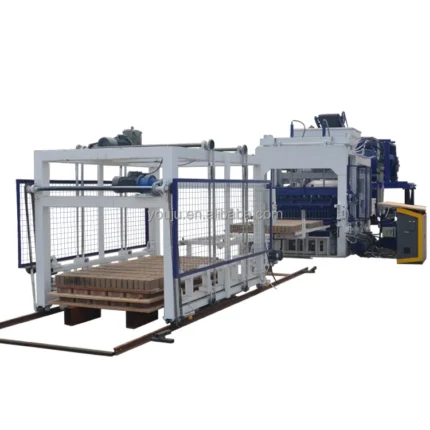
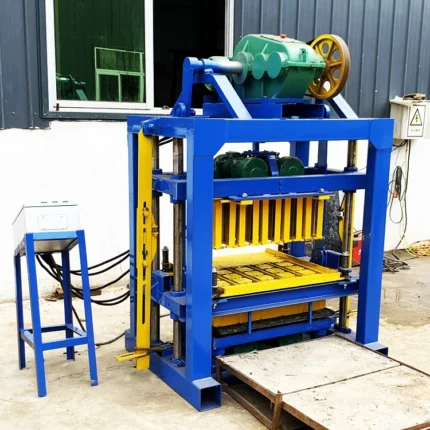
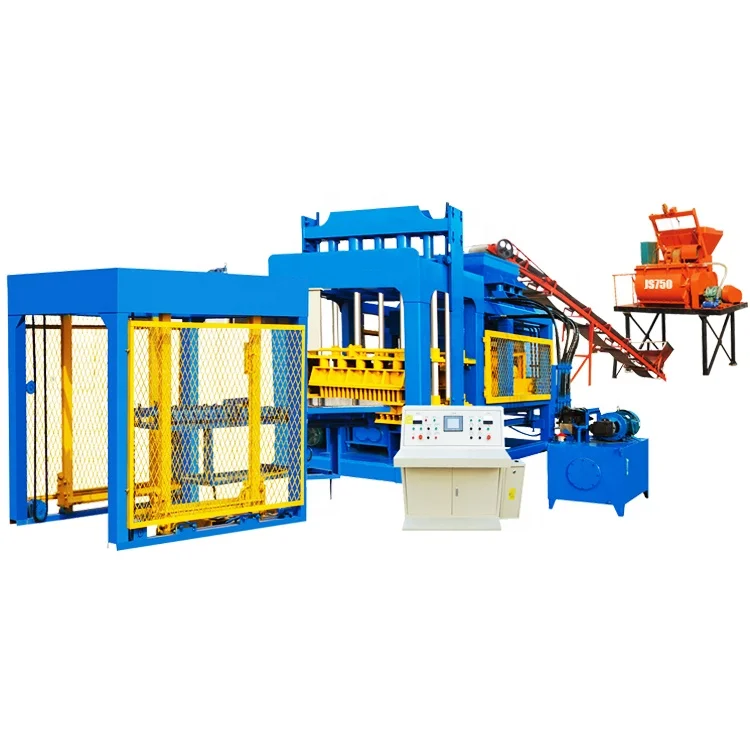
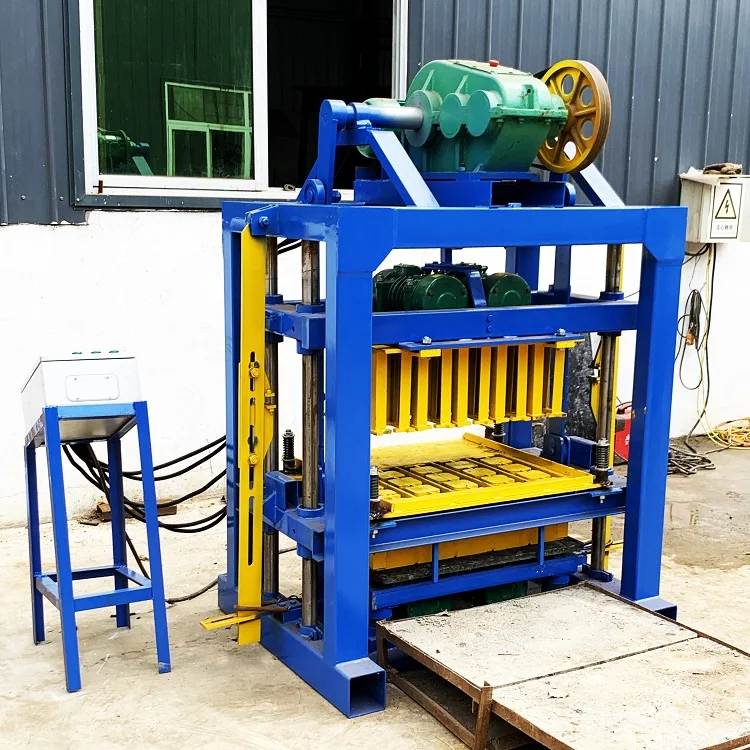
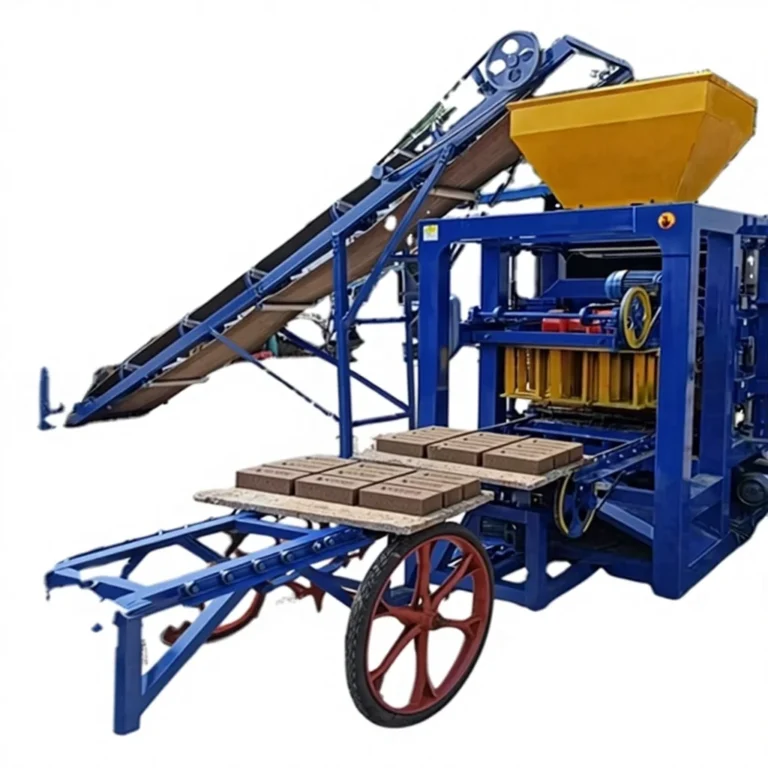
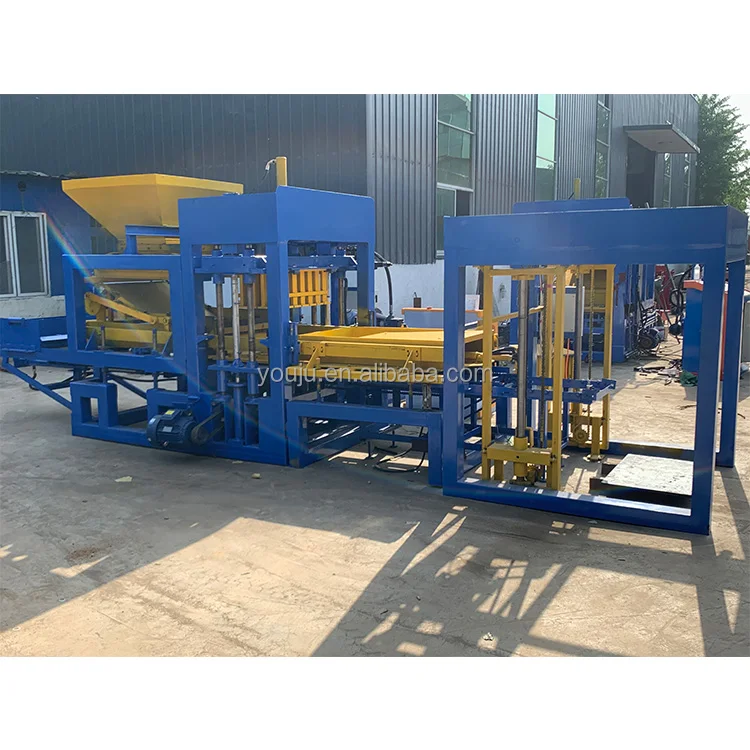
Integrated System Configuration — the QT4-15 automatic PLC controlled QT4-15 block making machine coordinates pallet feeding, material dosing, vibration, and hydraulic demoulding as one matched sequence rather than assembled from separate suppliers.
Technical Specifications
| Parameter | Value |
|---|---|
| Model | QT4-15 |
| Product Type | Hydraulic Interlocking Brick Making Machine |
| Control System | PLC controlled |
| Molding Cycle | 15-30s (basis stated per block format below) |
| Pallet Size | 900x500mm |
| Vibration Type | Platform vibration |
| Vibration Frequency | 50-70Hz |
| Product Height Range | 50-220mm |
| Overall Power | 24.5kW |
| Demolding Method | Hydraulic |
| Hydraulic System | Powered hydraulic system with approach switch monitoring |
| Compressive Strength | More than 15 MPa |
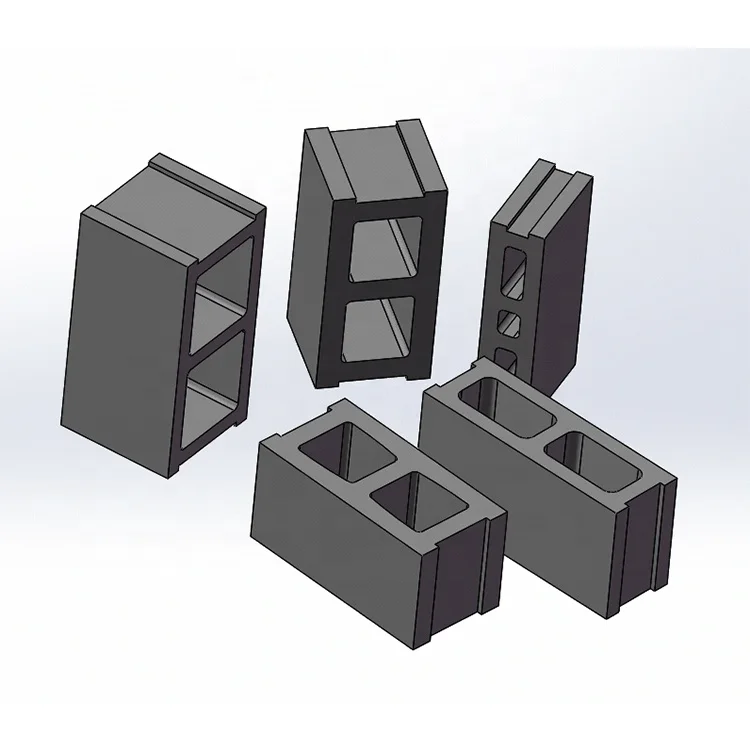
| Block Formats | Hollow block, paver brick, solid brick (mould change required) |
| Output (400x200x200mm hollow) | 900-1200 pcs/hour, 7200-9600 pcs/8hr |
| Output (400x150x200mm hollow) | 1080-1440 pcs/hour, 8640-11520 pcs/8hr |
| Output (400x100x200mm hollow) | 1440-1920 pcs/hour, 11520-15360 pcs/8hr |
| Output (200x100x60mm paver) | 2880-3840 pcs/hour, 23040-30720 pcs/8hr |
| Output (240x115x53mm solid) | 5930-6720 pcs/hour, 47400-53700 pcs/8hr |
| Raw Materials | Flyash, slag, gangue, sand, water, crushed stone, cement |
| Automation Level | Automatic (pallet feeding, material feeding, vibrating, demoulding) |
| Voltage & Frequency | To be confirmed before ordering |
| PLC Display Language | To be confirmed before ordering |
Application Suitability
| Application | Material or Output |
|---|---|
| Hollow block production for building walls | Flyash, slag, crushed stone, cement mixtures |
| Interlocking brick and paver manufacturing | Sand, gangue, cement with platform vibration compaction |
| Solid brick production for load-bearing structures | Cement and aggregate blends exceeding 15 MPa |
| Mid-to-small scale block plants transitioning from manual operation | Automated PLC-controlled cycle replacing manual timing |
What the Cycle Time Actually Means for Your Daily Output
Capacity is meaningless unless tied to the specific block format and cycle time your plant will run.
Many buyers receive quotations stating a single hourly figure without disclosing which block size that number assumes. I have watched site operators run a 15-second cycle on one mould and a 28-second cycle on another, wondering why their daily tally never matched the brochure [NEED_CITE: block machine capacity calculation methods by format]. The automatic PLC controlled QT4-15 block making machine publishes its cycle range of 15-30 seconds alongside the exact mould producing that rate, so your shift target aligns with reality.
PLC Coordination Removes Operator Timing Variance
In semi-automatic setups, the operator decides when to trigger vibration, when to stop feeding, and when to initiate demoulding. That human element introduces batch-to-batch inconsistency. The automatic PLC controlled QT4-15 block making machine places these steps under approach switch monitoring, meaning the hydraulic system and platform vibration execute in a locked sequence. Each pallet receives identical treatment regardless of operator fatigue or shift changes.
Automation Scope and What It Replaces
The PLC governs pallet feeding, material dosing, vibration duration, and hydraulic demoulding as one continuous loop. For a plant currently running manual pallet handling, this configuration removes the need for operators to physically position each board before the press descends. The 900x500mm pallet size remains constant across formats, so pallet inventory and curing rack dimensions do not change when switching between hollow blocks and pavers [NEED_CITE: pallet standardization in block production lines].
Platform Vibration, Hydraulic Pressure, and Compressive Strength
Block density depends on how thoroughly the vibration consolidates the mix before hydraulic pressure completes the compaction. The QT4-15 uses platform vibration at 50-70Hz, transferring energy through the pallet into the mould cavity. Combined with hydraulic demoulding that releases the block without lateral scraping, the result is compressive strength exceeding 15 MPa across formats. The 50-220mm product height range covers standard wall blocks and thicker paver sections without requiring a separate press.
The Hidden Cost of Skipping Voltage and Language Confirmation
Voltage, frequency, and PLC display language are not stated in the standard specification sheet and must be confirmed before production begins. I once configured a machine for an African client where the control panel defaulted to English-only display; the operators could not read the fault codes, and commissioning stalled for weeks [NEED_CITE: PLC language configuration for export machinery]. A mismatched voltage frequency will prevent the vibration motor from reaching its rated 50-70Hz range, producing under-compacted blocks that fail strength tests at the curing yard.
Why Buyers Source This Machine Through a Matched System Approach
Block machinery is our single focus, so the machine, mould, pallet, and handling equipment are specified as one integrated system. Configuration is set against the buyer’s actual mix design and local aggregate rather than a catalogue default. Mould design covers the formats the buyer’s market sells, including custom drawings. Automation level is selectable, allowing a semi-automatic start with a defined upgrade path. Installation support includes operator training on the PLC interface, and wear parts lists are provided before shipment.
Documentation & Verification
- Line layout with capacity calculation stating block format assumed for each output figure
- Machine specification sheet covering hydraulic and electrical schematic for the QT4-15
- Mould drawing and format list confirming included block types and changeover procedure
- Voltage, frequency, and PLC display language confirmation document before production
- Factory test record on buyer’s target block format prior to dispatch
- Operation and maintenance manual with wear parts list for local servicing
Installation, Commissioning & Support
- Foundation plan matched to 24.5kW overall power and vibration load distribution
- Dedicated electrical circuit sized for hydraulic pump startup current and PLC control
- Machine arrives partially assembled; pallet feeder and hydraulic unit bolt on site
- First-run commissioning includes PLC parameter tuning to buyer’s mix and mould
- Operator training covers fault code reading on confirmed display language
- Wear parts list provided covering hydraulic seals, vibration springs, and mould liners
Starting the Conversation
Share your target block formats, the daily output you need for each, and the local aggregate you plan to use. Let us know your site voltage, frequency, and preferred PLC display language so the automatic PLC controlled QT4-15 block making machine arrives ready for commissioning. If you have existing pallets or curing racks, send their dimensions so the 900x500mm pallet platform aligns with your layout.
Frequently Asked Questions
Q: How is the output capacity verified for each block format, and what cycle time does each figure assume?
A: Every capacity figure is tied to a specific block dimension and its corresponding cycle within the 15-30 second range. For example, 400x200x200mm hollow blocks run at 900-1200 pieces per hour based on that mould’s cycle characteristics. The capacity document provided with the quotation states the format assumed, so your daily production target reflects the block you will actually sell.
Q: What PLC brand and display language options are available for the control interface?
A: The PLC brand and display language are not locked to a single default and must be confirmed during the ordering stage. We configure the interface to the operator’s working language before the control panel is wired, ensuring fault codes and parameter screens are readable from day one of commissioning.
Q: What voltage and frequency configurations are supported for different export markets?
A: Voltage and frequency are configured to match the buyer’s local grid standard and must be stated before production. A 60Hz market requires different motor winding than a 50Hz market to achieve the rated vibration frequency, so this confirmation directly affects block compaction quality.
Q: How does automation on this machine compare to semi-automatic operation, and is there an upgrade path?
A: The QT4-15 automates pallet feeding, material dosing, vibration, and hydraulic demoulding under PLC control, replacing manual timing decisions. Plants starting at a lower automation tier can add automatic pallet feeding and stacking stations later, provided the base machine was specified with the upgrade interface during initial configuration.
Q: What is involved in changing moulds to switch between hollow block, paver, and solid brick formats?
A: Mould changeover requires releasing the hydraulic clamps, lifting the current mould, and seating the replacement on the same 900x500mm pallet platform. The procedure and time required are documented in the format list provided with the machine, along with the PLC parameter adjustments needed for each mould’s cycle characteristics.