Description
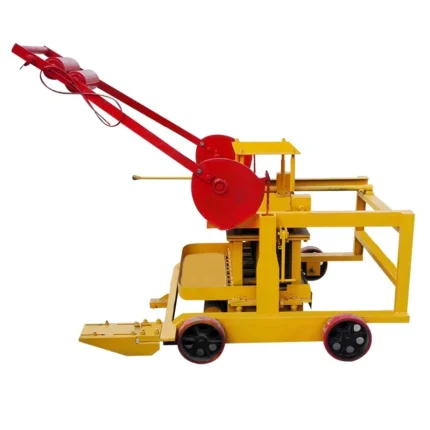
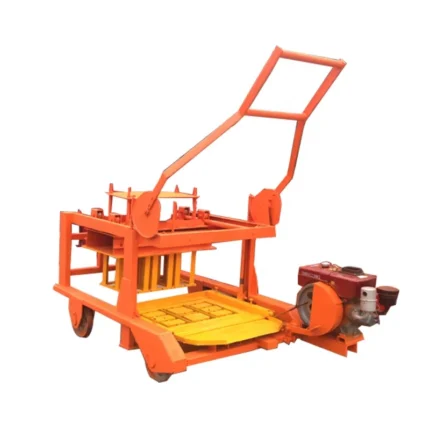
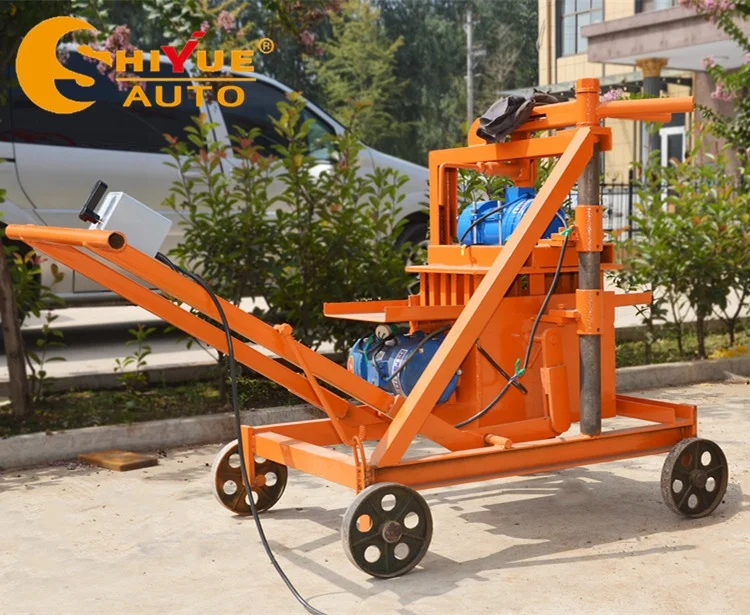
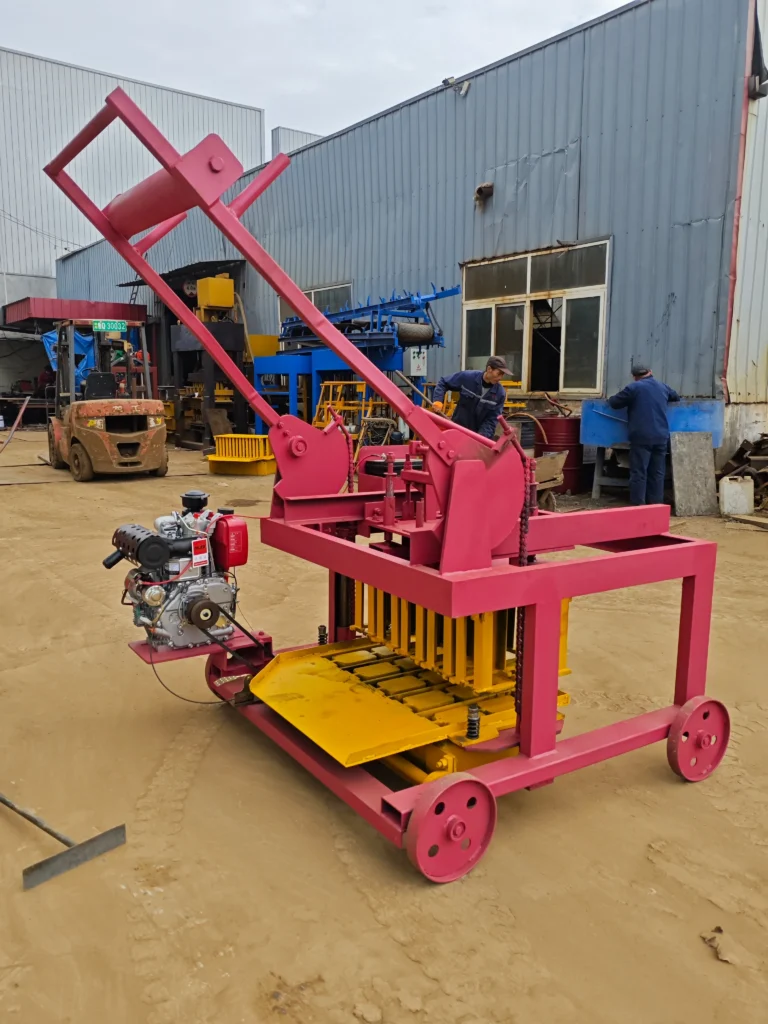
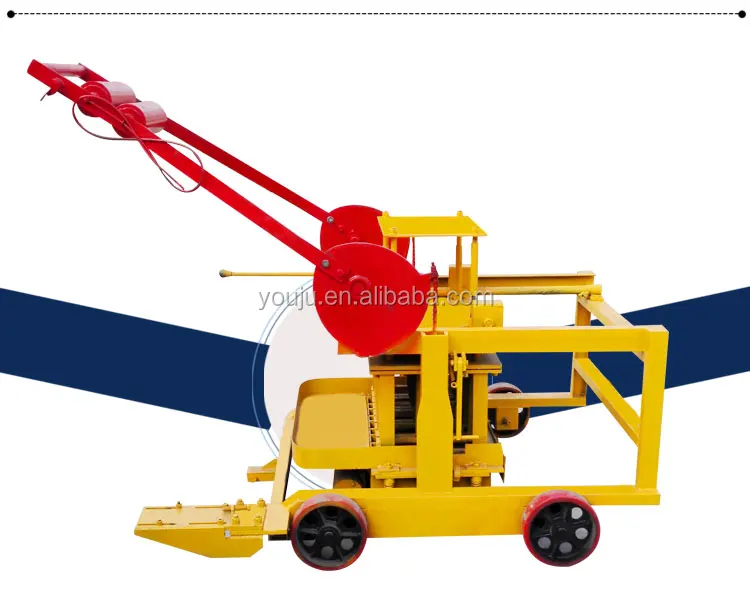
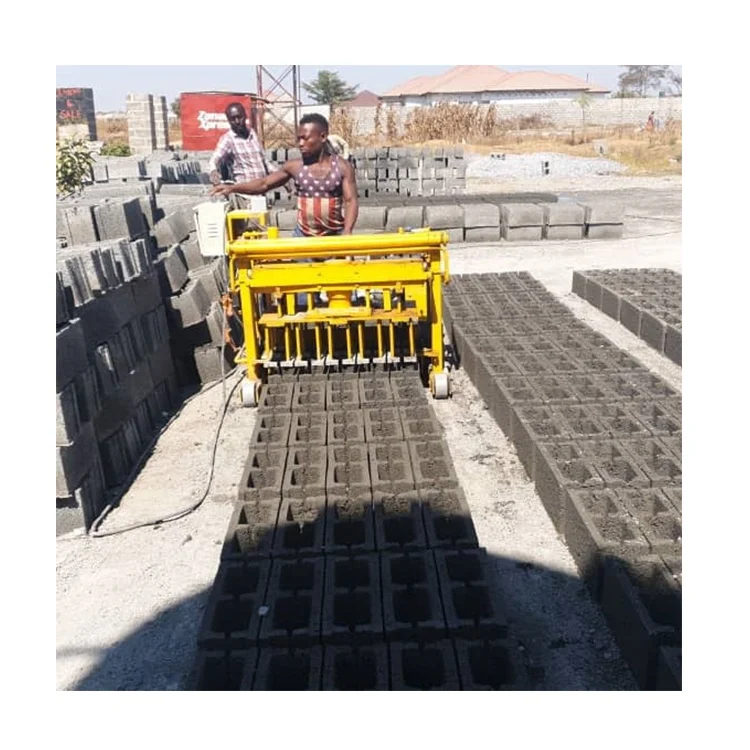
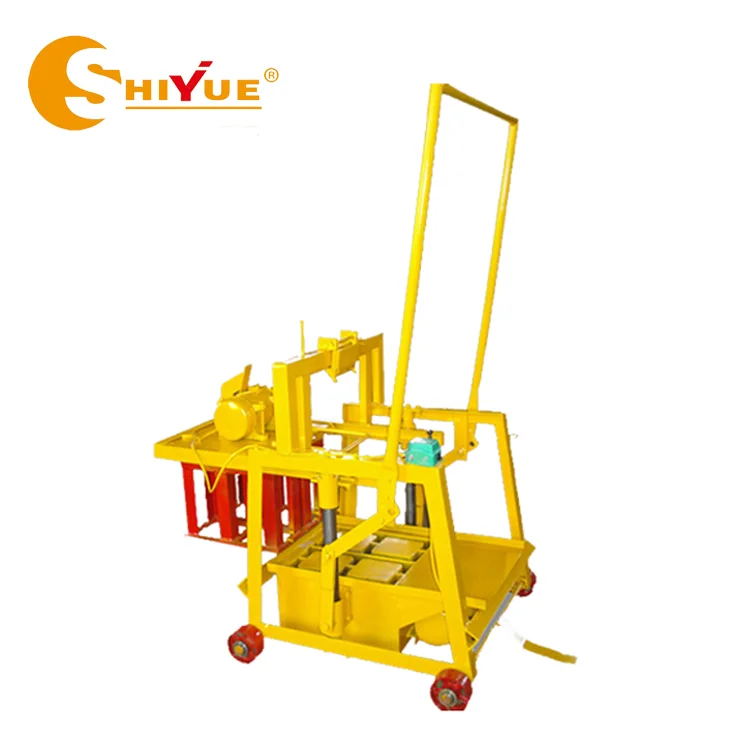
No-Pallet Egg-Laying Design — the QMJ2-45 lays hollow blocks directly on the ground, eliminating pallet cost and handling while keeping the automation entry point low enough for a first plant or remote site crew.
Technical Specifications
| Parameter | Value |
|---|---|
| Model | QMJ2-45 |
| Product Type | Mobile Block Making Machine |
| Machine Type | Manual mobile (egg-laying) block making machine |
| Automation Level | Manual operation |
| Pallet Requirement | No pallets required |
| Labour Requirement | 1 to 3 workers |
| Mould Change | Interchangeable moulds for different hollow brick formats |
| Cycle Time (400×200×200mm hollow brick) | 25–30s |
| Output Capacity (400×200×200mm hollow brick) | 160 pcs/h, 1280 pcs/8hr (basis: 2 pcs/mould) |
| Cycle Time (400×150×200mm hollow brick) | 25–30s |
| Output Capacity (400×150×200mm hollow brick) | 240 pcs/h, 4800 pcs/8hr (source value — verify against manufacturer catalog) |
| Cycle Time (400×100×200mm hollow brick) | 25–30s |
| Output Capacity (400×100×200mm hollow brick) | 320 pcs/h, 2560 pcs/8hr (basis: 4 pcs/mould) |
| Control System | Manual (no PLC) |
| Power Source | Not stated in source |
| Voltage & Frequency | Not stated in source |
| Rated Power | Not stated in source |
| Overall Dimensions | Not stated in source |
| Net Weight | Not stated in source |
| Vibration Force | Not stated in source |
| Hydraulic Pressure | Not stated in source |
| Certification | Not stated in source |
Application Suitability
| Application | Material or Output |
|---|---|
| On-site hollow block production | Crushed stone, river sand, cement, and water mix laid directly on compacted ground |
| Small-scale or startup block plant | Low-volume hollow brick runs with 1 to 3 workers and no fixed installation |
| Remote or off-grid construction sites | Hollow block formats produced without reliance on a pallet circulation system |
| Housing and development project contractors | 400×200×200mm, 400×150×200mm, and 400×100×200mm hollow bricks produced at the building site |
What "1280 Blocks per Shift" Actually Means on a Manual Egg-Layer
The output figure only holds when the cycle time, mould cavity count, and operator pace all align to the stated format.
I once watched an Indonesian crew unbox a mobile block machine, fire it up, and expect the brochure number to appear on the ground by lunch. The sand they sourced locally had a clay content far above what the original mix design assumed. The blocks cracked before curing, and the effective daily yield dropped sharply. That automatic mobile block making machine promise on paper means nothing until the raw material, operator rhythm, and ambient conditions are confirmed on-site [NEED_CITE: mix design and local aggregate effect on block strength consistency]. With the QMJ2-45, the 1280 pieces per 8-hour shift is rated at 160 pcs/h based on a 400×200×200mm hollow block at 2 pcs per mould. Switch to the 400×100×200mm format and the stated figure changes to 320 pcs/h based on 4 pcs per mould. The cycle time assumption of 25–30 seconds per mould must be verified against your crew’s actual working pace and the curing conditions at your site.
Manual Operation and What It Removes from the Line
The QMJ2-45 operates without a pallet feeding system, pallet return conveyor, or stacking station. The machine moves forward after each press cycle, leaving the freshly formed hollow block on the ground to cure in place. This PLC controlled egg-laying block machine category entry point means the buyer avoids the capital and maintenance cost of pallets, pallet racks, and forklift circulation. What the operator controls directly is the pace of mould filling, the timing of each cycle, and the travel path across the production floor. Consistency rests on the crew rather than on programmable logic.
Where the Upgrade Path Leads
Starting with manual operation does not close the door on automation later. A buyer who proves the local market with the QMJ2-45 can move to a semi-automatic line that adds pallet feeding and a simple stacking station, then further to a fully PLC-controlled system with automatic batching and cubing. The intelligent side of block production — batching accuracy, remote diagnostics, mould change speed — becomes relevant once volume justifies the investment [NEED_CITE: automation upgrade path from manual to PLC-controlled block lines]. The PLC controlled egg-laying block machine is therefore a starting position, not a ceiling.
Reading the Cycle Time and Mould Cavity Numbers
The 25–30 second cycle time stated across all three hollow brick formats assumes a consistent mix, an even mould fill, and an operator ready to advance the machine immediately after vibration stops. The mould cavity count changes with each format: 2 cavities for the 400×200×200mm block, 4 cavities for the 400×100×200mm block. This difference explains why the per-hour output shifts between formats even though the cycle time remains in the same range. The vibration force and hydraulic pressure values are not stated in the source, which means the compaction density and resulting block strength must be confirmed through a trial run with your actual aggregate and cement ratio. Mould interchangeability across formats gives the machine flexibility, but each change requires manual alignment and a short downtime window that the crew should plan for.
The Cost of Skipping the Mix Trial Before Shipment
When the raw material arrives at site and the first test blocks crumble under their own weight, the remedy is never quick. The crew adjusts water content, tries a different sand source, experiments with cement ratios — all while the project deadline moves closer. A manual egg-laying machine amplifies this risk because there is no PLC to hold a repeatable batching sequence; the operator’s judgement is the only variable between a strong block and a weak one [NEED_CITE: manual block machine consistency challenges in variable aggregate conditions]. Confirming the mix design before the machine leaves the factory shortens the on-site commissioning window and prevents the disappointment of a first production run that fails to meet the local block strength standard.
Why Buyers Source This Machine Through Shiyue
The QMJ2-45 is specified as one matched unit — machine, mould set, and ground-curing method — rather than assembled from separate catalogue pages. The configuration is set against the buyer’s actual mix design and local aggregate, not a default that assumes ideal sand. Mould design covers the hollow brick formats the buyer’s market sells, with custom drawings available for non-standard formats. The automation level is selectable, so a buyer can begin with this manual machine and move to a semi-automatic or PLC-controlled line when volume warrants it. Installation and commissioning support includes operator training that addresses the manual pacing and mould change routine specific to this egg-laying model.
Documentation & Verification
- Capacity calculation sheet stating the block format and mould cavity count assumed for each output figure
- Mould drawing and format list confirming the hollow brick dimensions match your local market
- Voltage and power source confirmation document to be signed before dispatch
- Operation and maintenance manual covering manual mould change and daily greasing points
- Factory test record showing cycle time and block appearance on a standard mix before shipment
- Wear parts list identifying the manual mechanism components most likely to need replacement
Installation, Commissioning & Support
- Compacted and level ground preparation required, with no fixed foundation or anchor bolts needed for the QMJ2-45
- Power source and voltage specification to be confirmed before dispatch, as the rated power is not stated in the source
- Machine arrives assembled; mould sets ship separately and are fitted on-site during commissioning
- First production run includes mix adjustment and cycle time verification with the buyer’s local aggregate
- Operator training covers manual mould filling technique, travel pacing, and ground surface preparation for consistent curing
- Wear parts for the manual vibration and travel mechanism identified in the spare parts list at handover
Before You Send the Inquiry
Share the hollow block formats your market actually sells, the daily output you need to justify the crew, and the type of sand and aggregate available near your site. Confirm the voltage and frequency at your location, even for a manual machine that may still require a vibration motor. If you already operate a batching mixer or plan to add one, let us know so the feeding rhythm matches the QMJ2-45 cycle time.
Frequently Asked Questions
Q: How is daily output verified per block format, and what cycle time assumptions apply?
A: The stated output for each hollow brick format is calculated from a 25–30 second cycle time and the mould cavity count — 2 cavities for the 400×200×200mm block, 4 cavities for the 400×100×200mm block. Actual daily yield depends on operator pace, mix consistency, and ground conditions. A site trial with your aggregate confirms the realistic number before you commit to a production schedule.
Q: What automation upgrade path exists from this manual mobile machine?
A: The next step is a semi-automatic line that introduces pallet feeding and a basic stacking station, reducing manual handling. From there, a PLC-controlled system adds automatic batching, consistent cycle timing, and remote diagnostics. The progression is staged so you invest in automation only when volume justifies each addition.
Q: How does egg-laying affect block strength versus pallet-based pressing?
A: Egg-laying leaves the block on the ground immediately after forming, so the compaction density must be sufficient to hold shape without pallet support. Vibration force and mix design become critical. Pallet-based systems allow higher vibration and hydraulic pressure because the pallet absorbs the force, typically producing denser blocks with more consistent strength across a batch.
Q: What voltage and power source options are available, and how is this confirmed?
A: The electrical specification is not stated in the source, so voltage and frequency must be confirmed between buyer and factory before dispatch. This prevents commissioning delays on arrival. If the site lacks reliable grid power, a generator specification is agreed in advance so the vibration motor receives stable voltage.
Q: Can custom moulds be designed for local market requirements?
A: Mould design covers the standard hollow brick formats listed in the specification, and custom moulds can be produced to buyer drawings. The drawing is reviewed against the QMJ2-45 mould mounting dimensions and vibration characteristics to confirm compatibility before fabrication begins.