
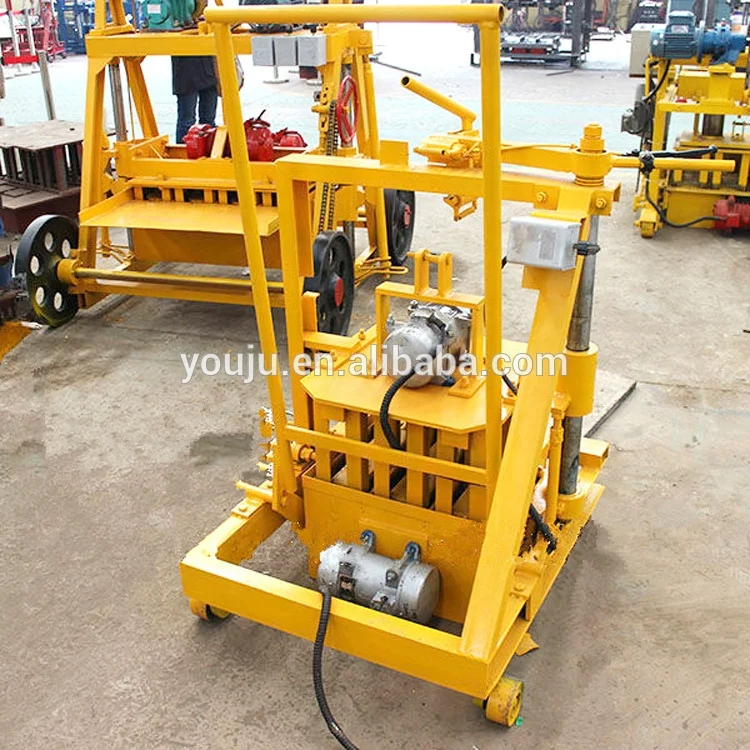

Description
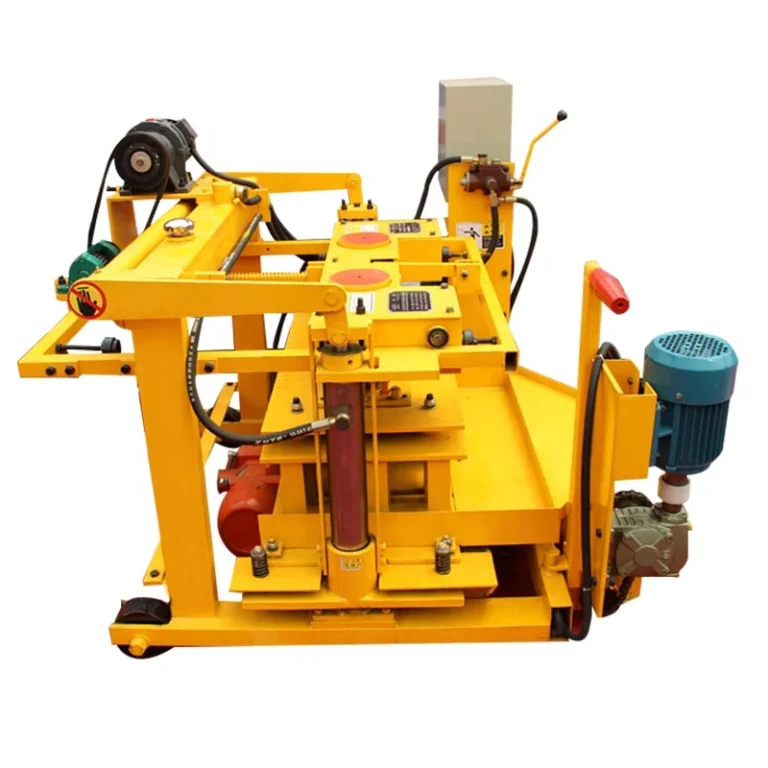
Mould changeover speed defined — the QMJ2-45 frame accepts three hollow brick formats with manual mould swaps, while a PLC-controlled upgrade path eliminates the guesswork operators face during format transitions on site.
Technical Specifications
| Parameter | Value |
|---|---|
| Model | QMJ2-45 |
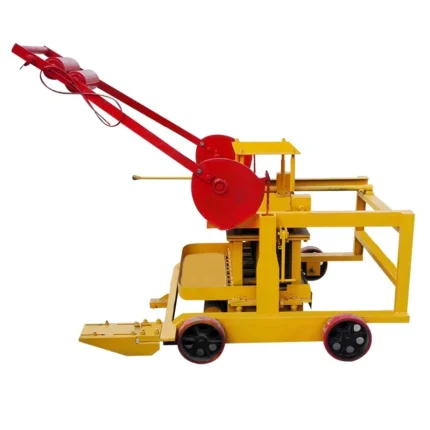
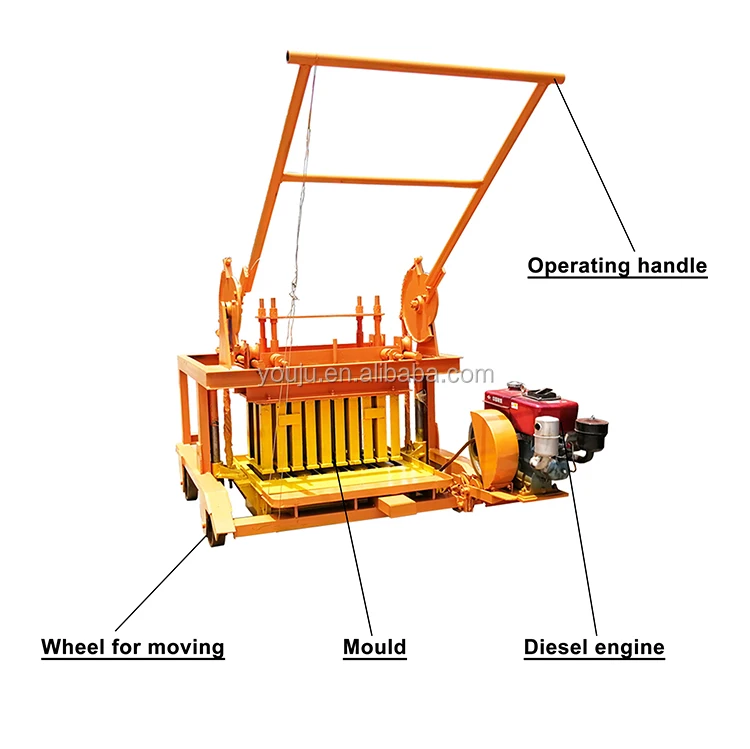
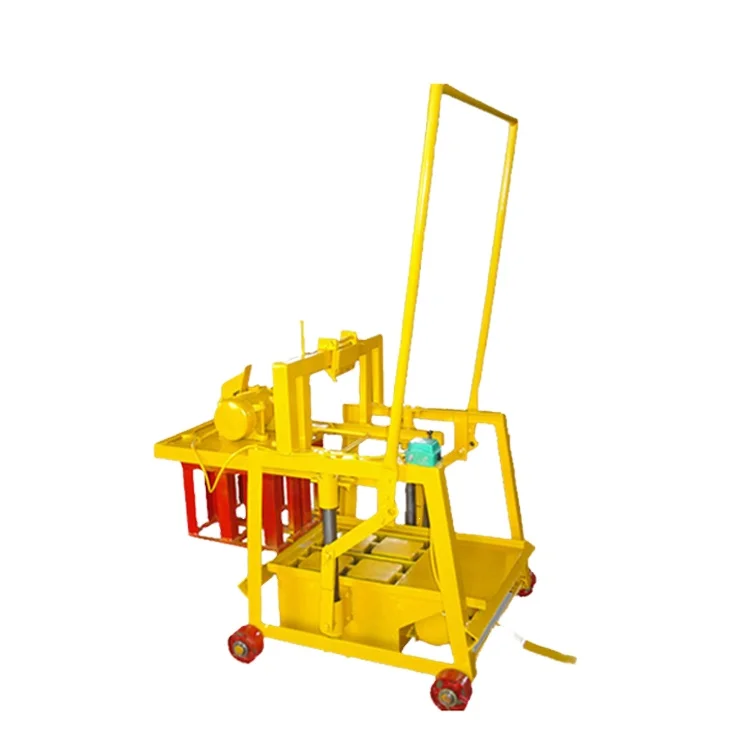
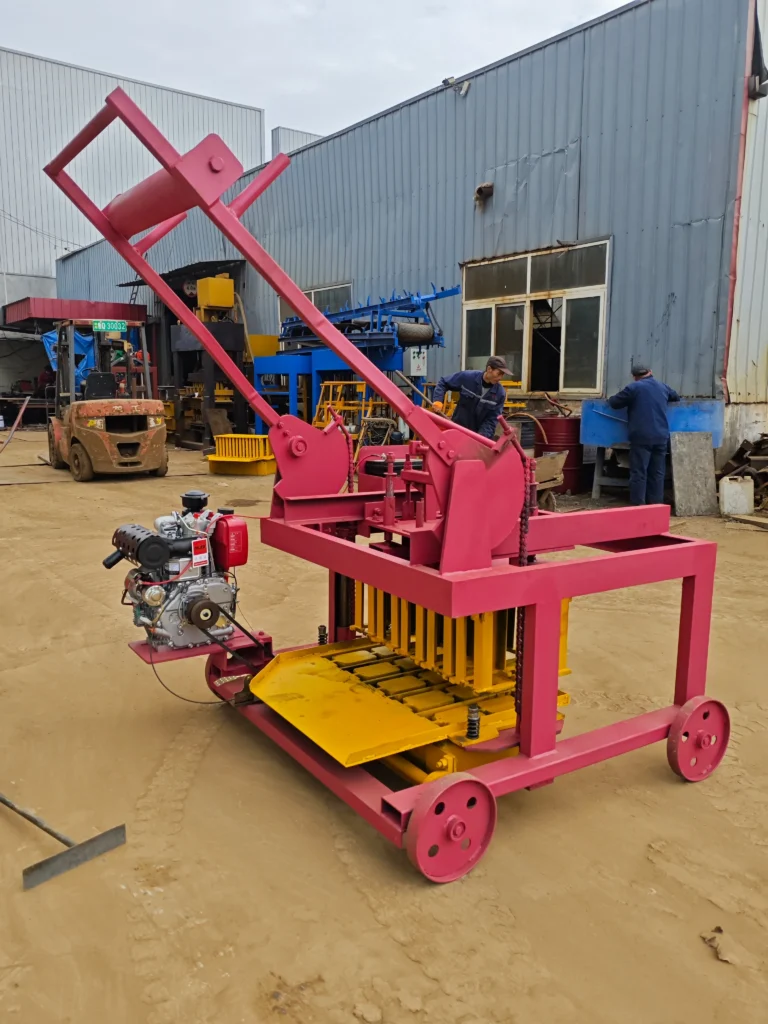
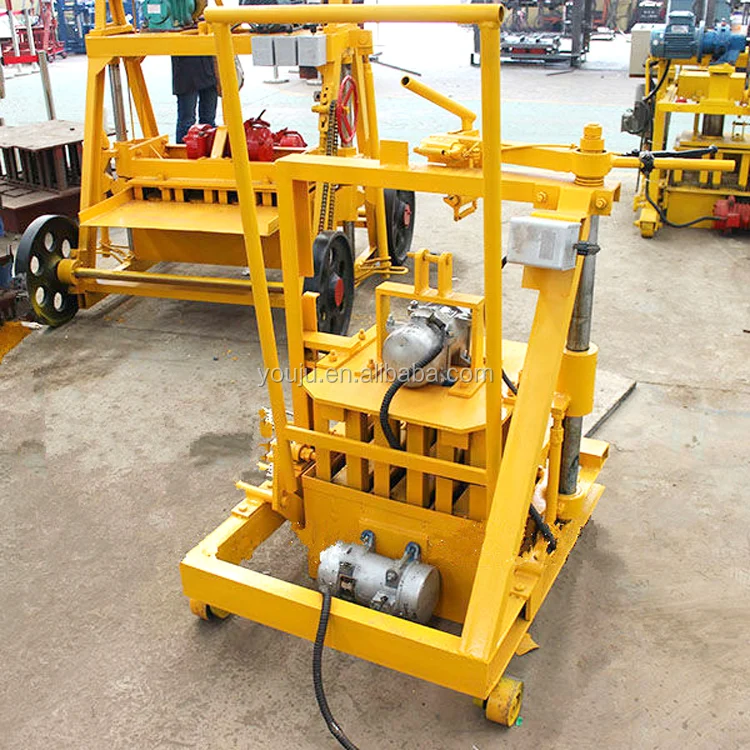
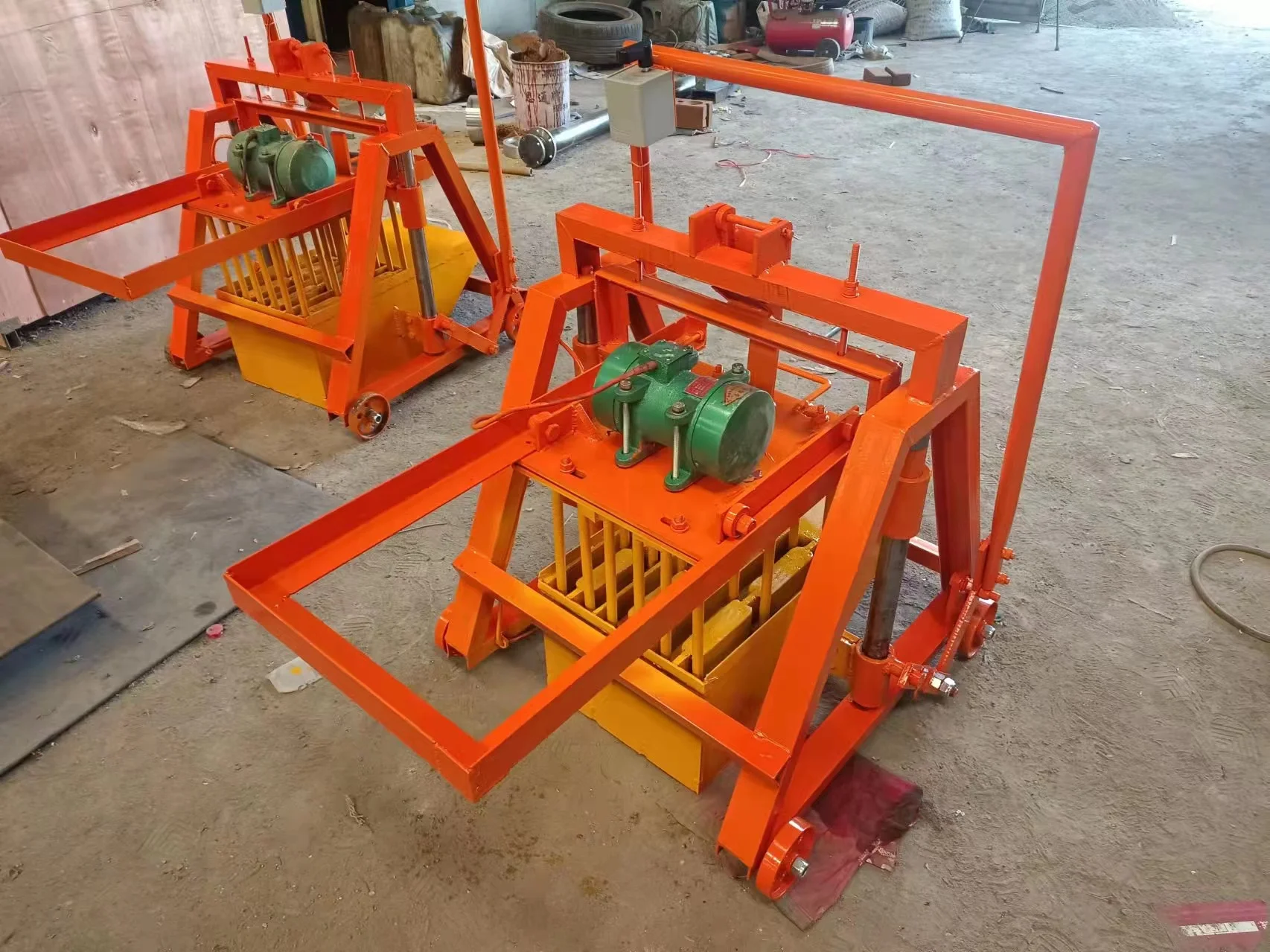
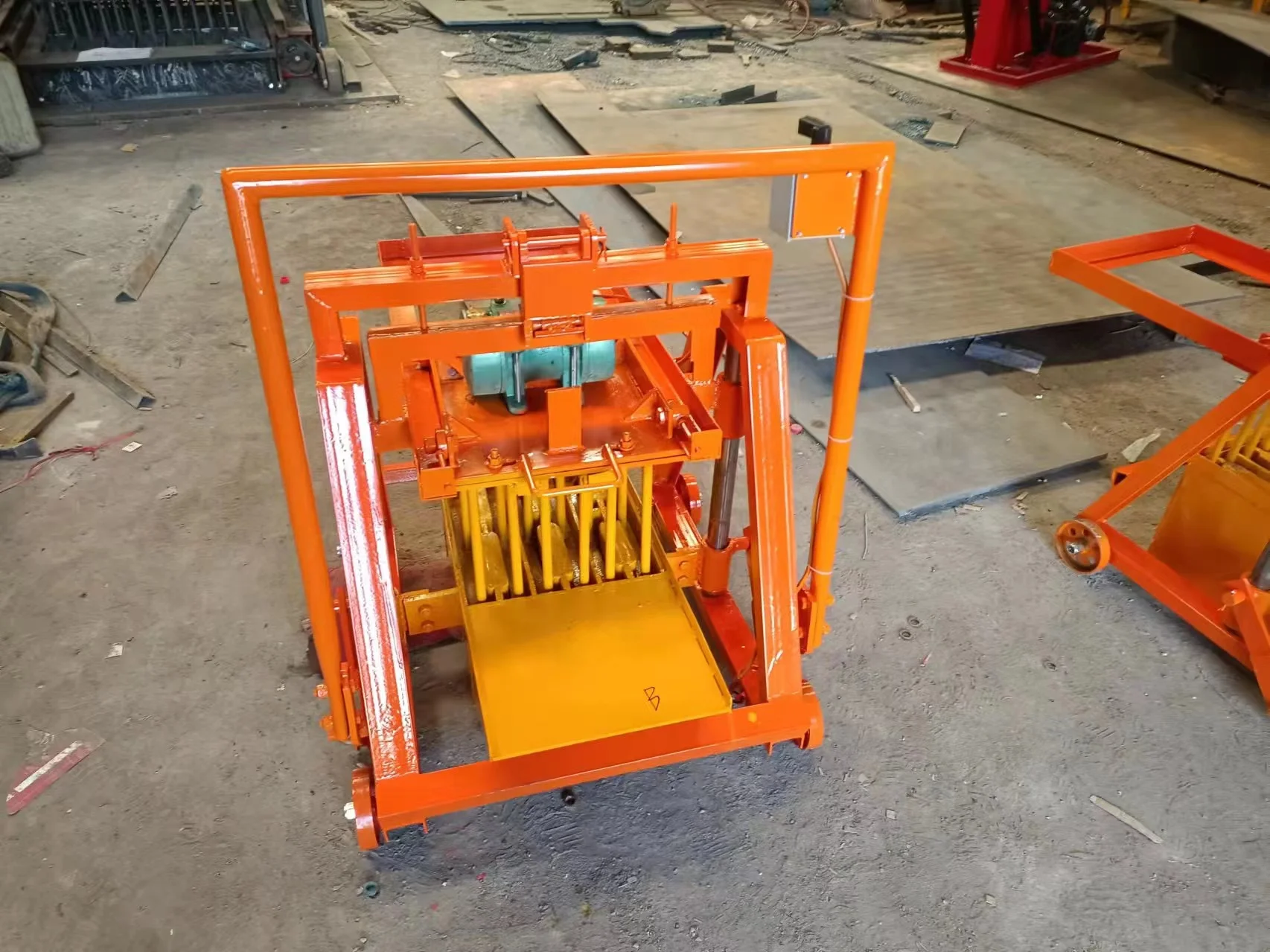
| Product Type | Mobile Cement Block Making Machine |
| Machine Type | Manual mobile (egg-laying) |
| Pallet Requirement | No pallets required |
| Power Source | Electric |
| Mobility | Hand-pushed, free-moving |
| Labor Requirement | 1 to 3 workers |
| Cycle Time | 25–30s per mould |
| Output (400×200×200mm hollow brick) | 160 pcs/h, 1280 pcs/8hr (basis: 2 pcs/mould, 25–30s cycle) |
| Output (400×150×200mm hollow brick) | 240 pcs/h, 4800 pcs/8hr (basis: 3 pcs/mould, 25–30s cycle) |
| Output (400×100×200mm hollow brick) | 320 pcs/h, 2560 pcs/8hr (basis: 4 pcs/mould, 25–30s cycle) |
| Mould Formats | 400×200×200mm / 400×150×200mm / 400×100×200mm hollow brick |
| Automation Level | Manual / hand-pushed mobile |
| Control System | Manual operation (no PLC) |
| Key Features | No-pallet egg-laying design, interchangeable moulds, upgrade-ready frame |
| Certification | ISO9001:2000, CE (per supplier claim) |
| Mould Technology | Heat treatment & carburization (per supplier claim) |
Application Suitability
| Application | Material or Output |
|---|---|
| Small-scale on-site hollow brick production | Crushed stone, sand, cement mix |
| Remote or space-limited construction sites | On-ground curing without pallets |
| Entrepreneurs starting a first block plant | Low-investment entry with automation growth path |
| Contractors producing blocks for housing projects | Multiple hollow brick formats on one machine |
Why the Control Language Question Beats the Price Question
Confirming PLC display language and voltage before shipment prevents first-day commissioning failure.
When a mobile block machine arrives at a site in a region where operators cannot read the alarm codes on the control screen, the machine sits idle while someone searches for a translator. I once saw an egg-laying unit locked out on its first morning because a worker pressed an unfamiliar parameter sequence on a display written in a language the crew did not understand. For buyers evaluating a PLC controlled mobile block machine as an upgrade from manual operation, the conversation must start with the local power grid, the operator’s primary language, and the exact control interface — not the quote. [NEED_CITE: voltage and frequency standards by export market]
The Upgrade Path from Hand-Pushed to Programmable
The QMJ2-45 begins as a no-pallet, hand-pushed unit where one to three workers move the machine across a curing yard. When production volume outgrows manual batching and floor-level stacking, the frame can be paired with a PLC-controlled feeding station and an automatic stacker. This upgrade removes the operator from the repetitive pallet handling loop and introduces batch-to-batch consistency that manual mixing cannot sustain. An automatic mobile block machine configuration at this tier focuses on what the control system removes from the worker and what it adds in repeatability.
Consistency Across Shift Changes and Operator Skill Levels
Manual mobile machines depend heavily on the experience of the person controlling the feed rate and mould timing. A PLC-controlled configuration stores the cycle parameters for each hollow brick format, so the 25–30s cycle holds whether the operator is on hour one or hour eight. This matters for contractors who rotate crews across sites or for plants in regions where skilled block-machine operators are scarce. Remote diagnostics, available on higher automation tiers, let a technical manager review production logs and alarm histories without being physically present. [NEED_CITE: PLC remote diagnostics capabilities in industrial machinery]
Reading the Specs That Matter for Block Density
The QMJ2-45 specs do not publish a hydraulic pressure or vibration force rating, which means buyers must request these values during inquiry to confirm the machine matches their mix design. On any block machine, vibration force and hydraulic pressure together determine whether the block reaches the compressive strength the local market requires. Mould interchangeability across three hollow brick formats means the machine’s vibration profile must suit a range of cavity volumes — a 400×200×200mm block has different compaction needs than a 400×100×200mm unit. The heat-treated and carburized moulds stated in the documentation help maintain dimensional tolerance over repeated cycles, but the buyer’s local aggregate gradation still decides the final density outcome.
What Happens When Voltage and Language Are Left to Chance
A machine wired for a voltage standard that does not match the site supply will either underperform or trip protection circuits repeatedly, and no amount of operator skill compensates for that mismatch. Control screens displaying in a language the crew cannot read turn minor alarms into shutdowns, because workers reset parameters they do not understand. These are not theoretical risks — they are the most common reasons a new block machine fails to produce saleable output in its first week. [NEED_CITE: CE machinery directive requirements for industrial equipment]
Why Buyers Choose This Source for Automation Configuration
Block machinery as a single focus means the QMJ2-45, its moulds, and any future PLC station are specified as one matched system rather than assembled from separate vendors. Configuration is set against the buyer’s actual mix design and local aggregate, not a catalogue default. Mould design covers the formats the buyer’s market actually sells, with custom drawings available. The automation level is selectable — a buyer can start with manual mobile operation and add PLC-controlled batching, stacking, and cubing later without replacing the press. Installation support includes operator training that covers the control interface in the local language.
Documentation & Verification
- Line layout stating the block format assumed in capacity calculations
- Mould drawing and format list for all three hollow brick sizes
- Voltage and control language confirmation signed before production
- Factory test record on your specified mix and target format
- Hydraulic and electrical schematic for on-site troubleshooting
Installation, Commissioning & Support
- Electric power supply confirmed to your site voltage and frequency before dispatch
- Hand-pushed mobility requires a level, compacted curing surface — no fixed foundation needed
- Mould changeover demonstrated on site using your three specified formats
- Operator training covers cycle timing, feed rate, and alarm response
- Wear parts list supplied with heat-treated mould component identification
What to Include in Your Inquiry
Tell us the exact hollow brick formats your market demands, the daily volume you need to sustain, and the local aggregate you will use in the mix. Confirm your site voltage, frequency, and the control screen language your operators can read. If you are evaluating an upgrade from a manual mobile unit to a PLC-controlled configuration, describe your current curing area layout and any existing pallet handling equipment.
Frequently Asked Questions
Q: How is output capacity calculated for each block format?
A: Output is stated per format with a stated premise: 2, 3, or 4 blocks per mould at a 25–30s cycle. The 400×200×200mm hollow brick yields 160 pcs/h based on that cycle. No single generic cycles-per-hour figure is used across formats.
Q: What automation upgrades are available for this machine?
A: Upgrades include PLC-controlled batching, automatic stacking, and cubing. The control interface can be specified in the operator’s language. The upgrade path is designed so the original QMJ2-45 frame and moulds carry forward.
Q: Which voltage and control options are confirmed before dispatch?
A: Voltage, frequency, and PLC display language are confirmed and signed off before production begins. This prevents commissioning delays caused by electrical mismatch or unreadable alarm codes at the site.
Q: How long does a mould change take on this machine?
A: The QMJ2-45 supports manual mould swaps across three listed hollow brick formats. Buyers can request a quick-change mould system as part of a PLC upgrade to shorten changeover time and reduce format-switching downtime.
Q: What is the path from manual operation to a fully automatic line?
A: The machine starts as a hand-pushed, no-pallet unit. As volume grows, PLC-controlled feeding, automatic stacking, and cubing can be added. The press, moulds, and frame carry over, so the investment in the base machine is preserved.