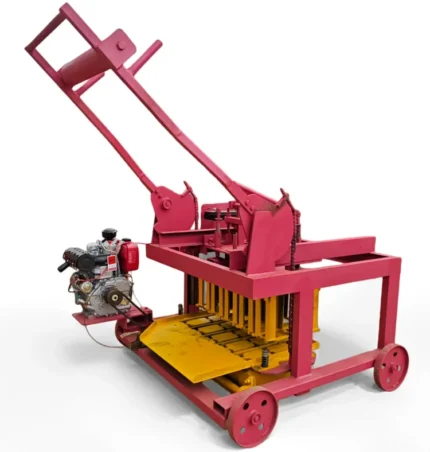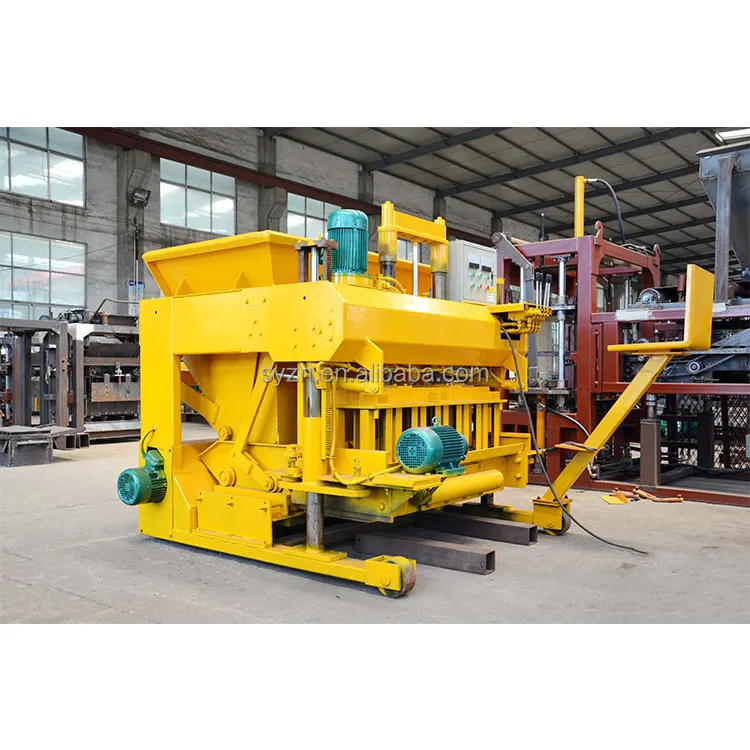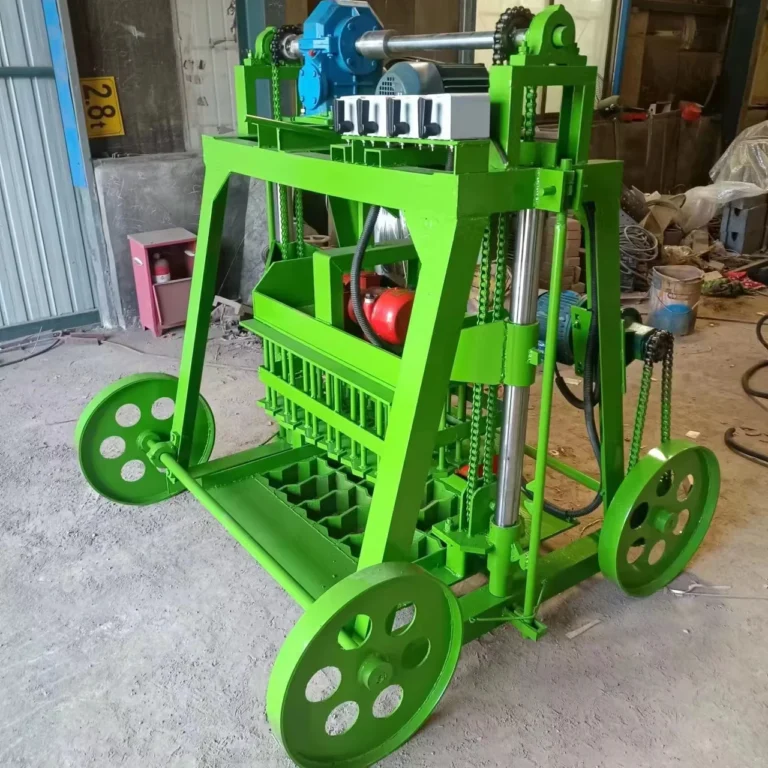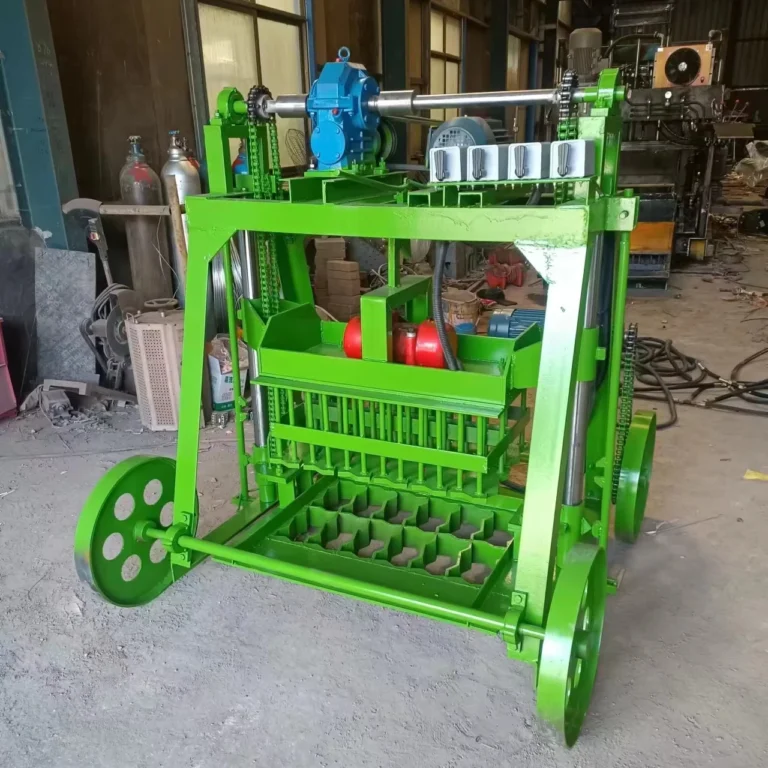

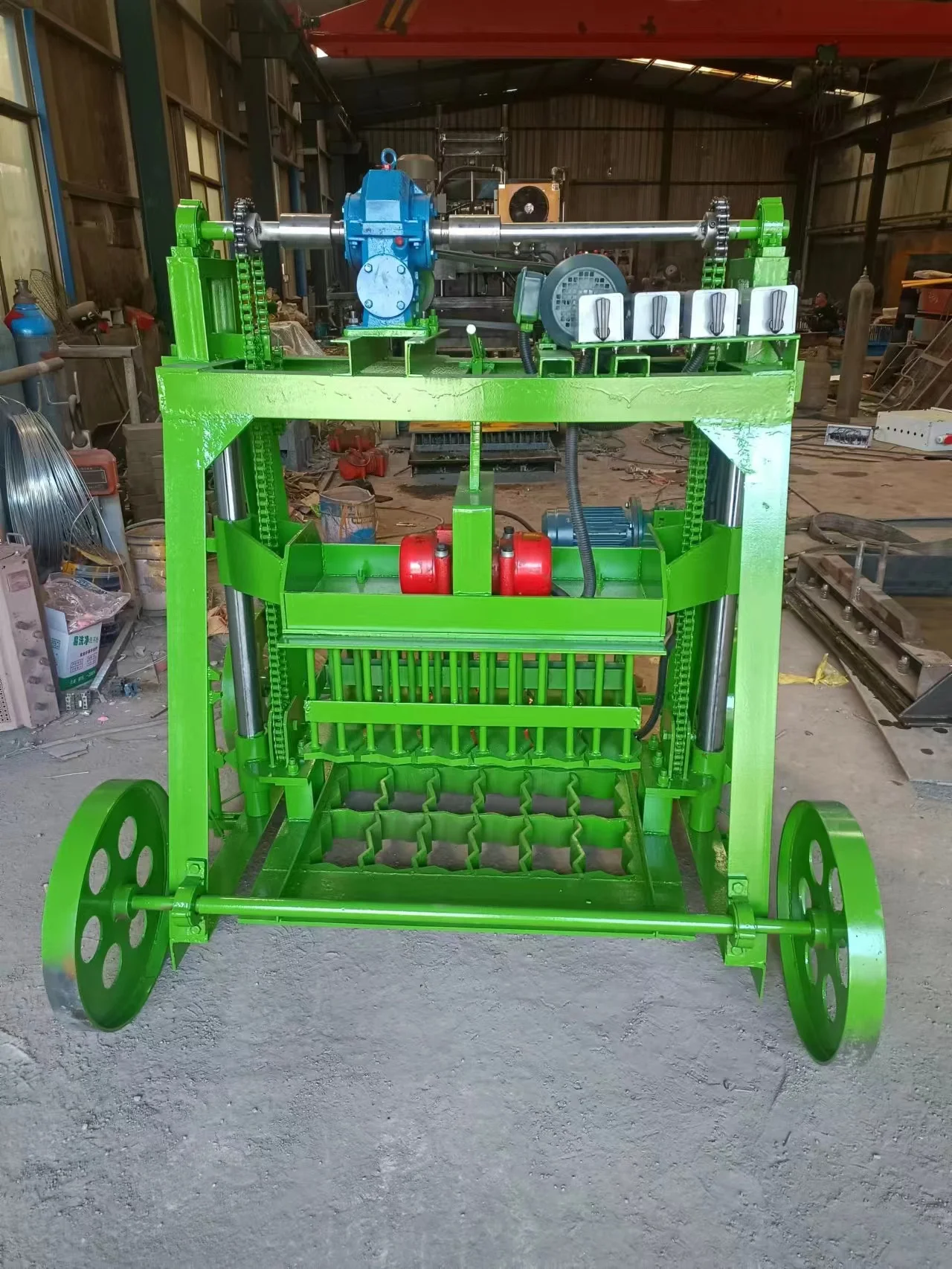


Description
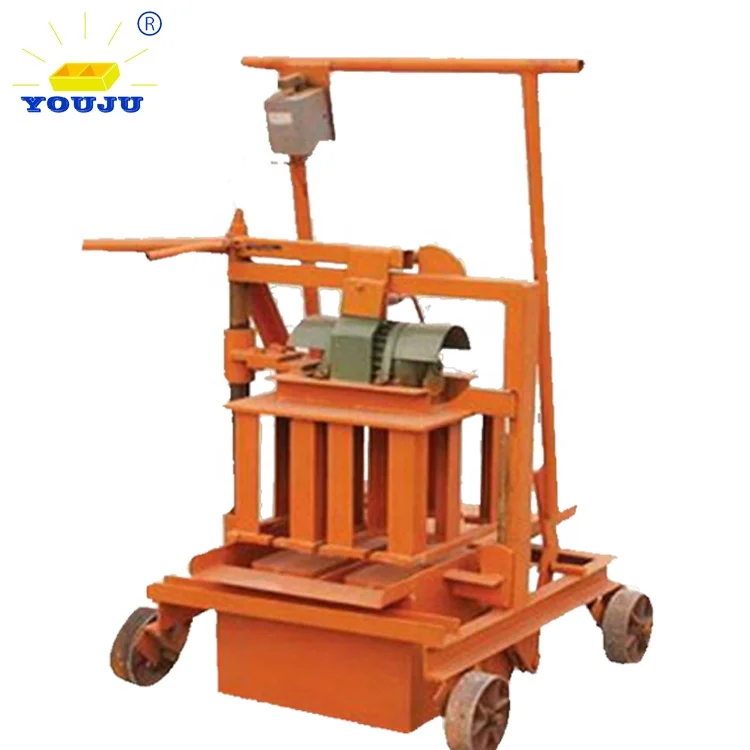
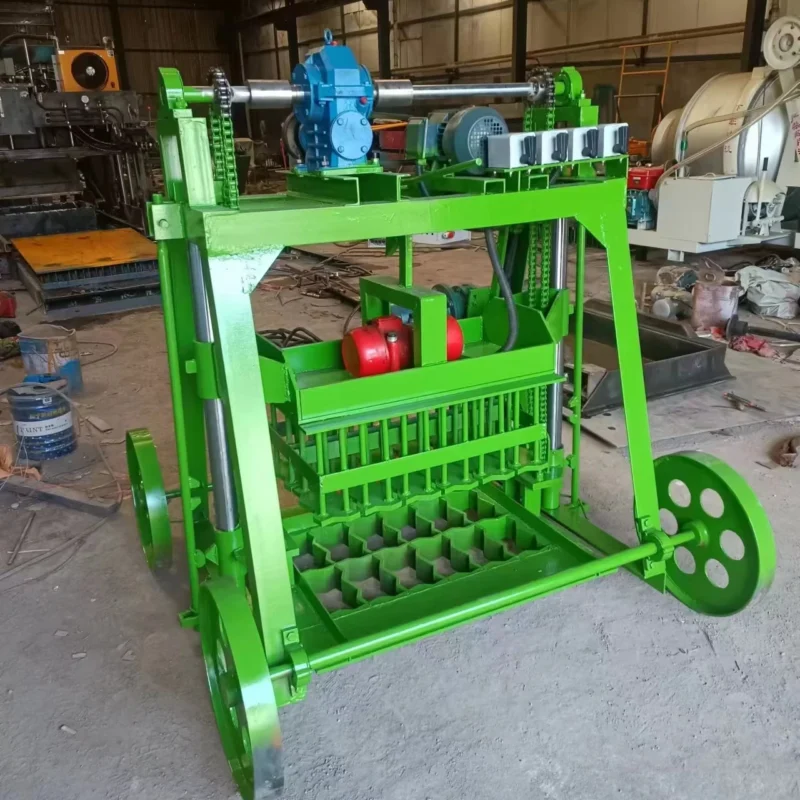
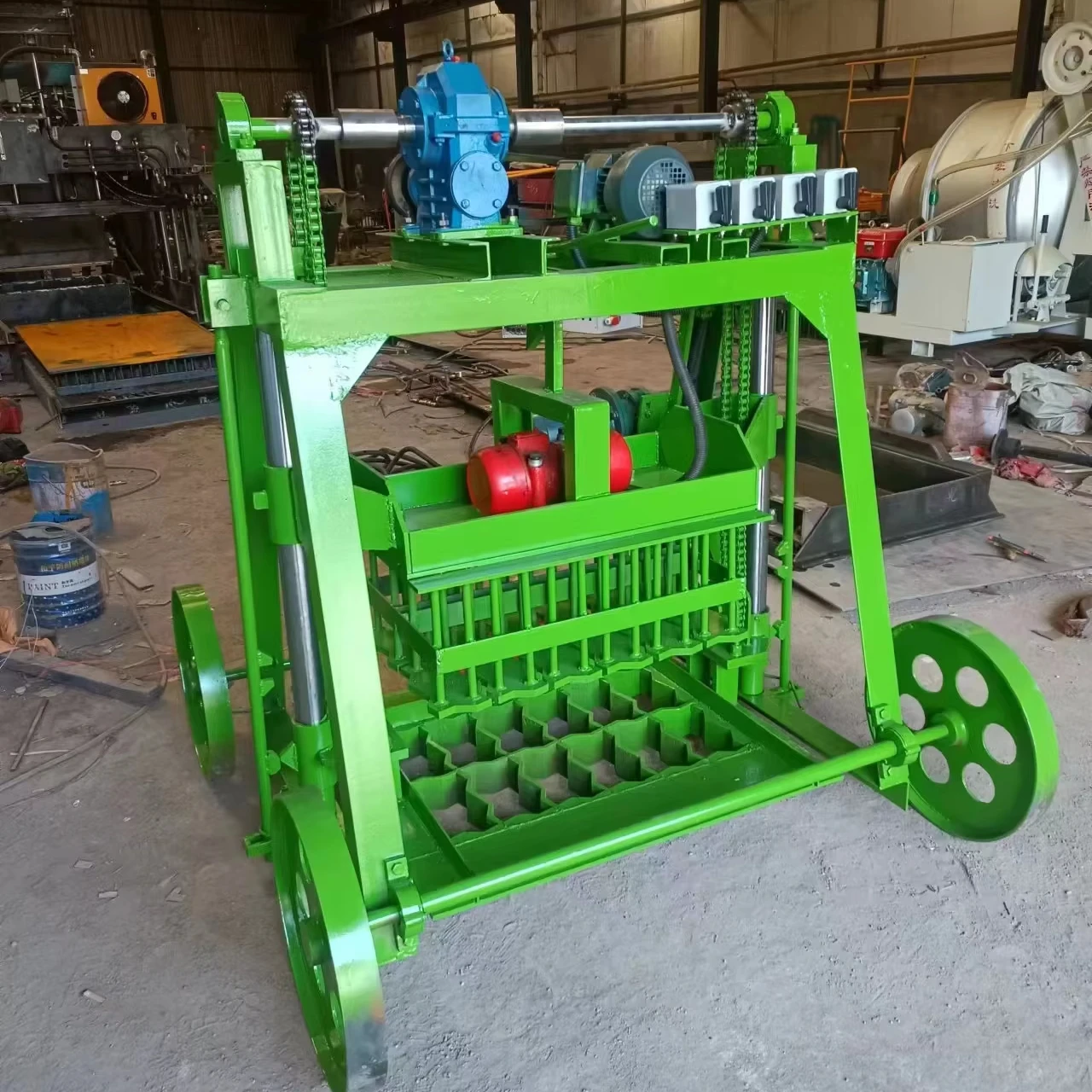
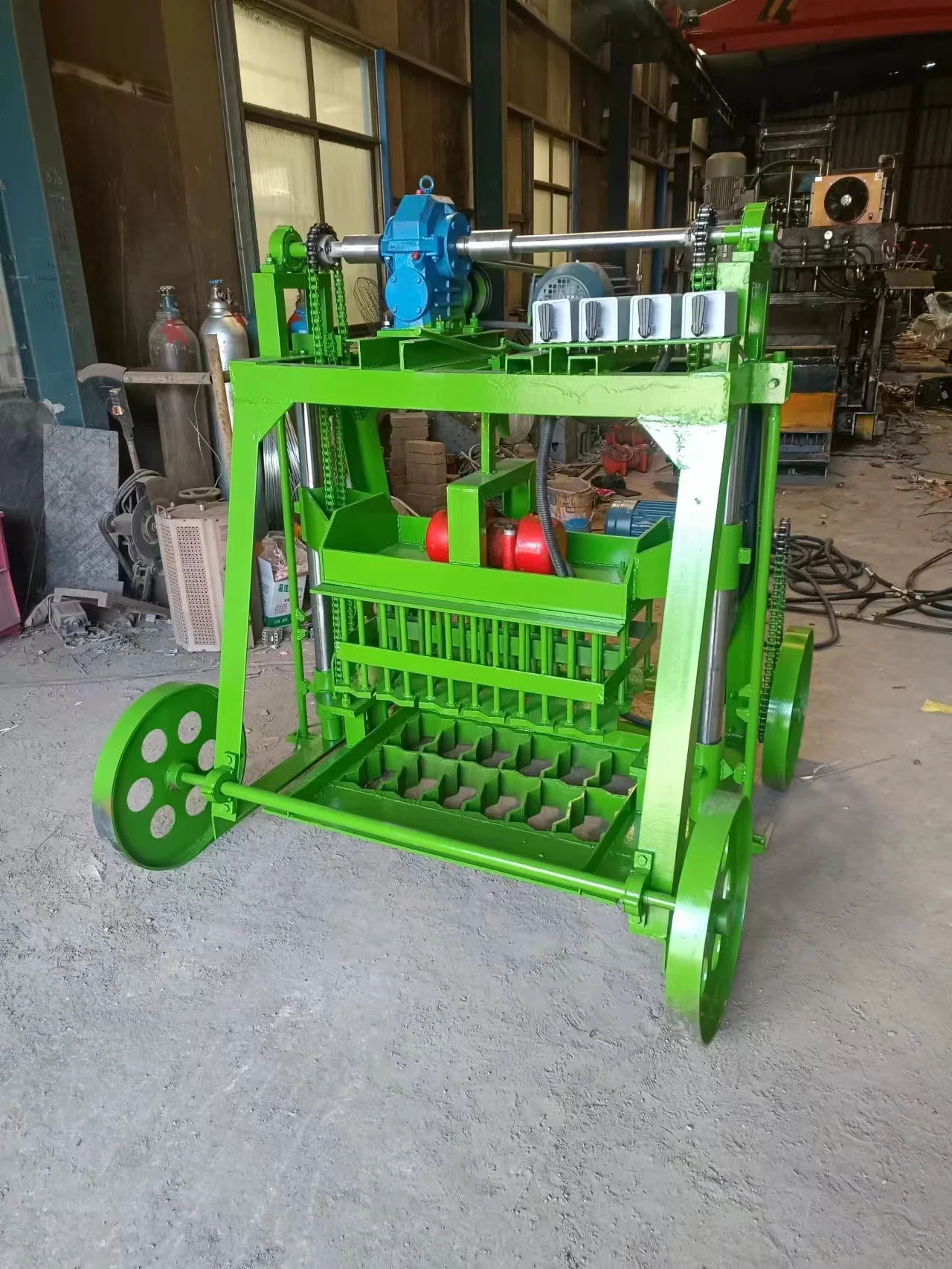
Precision-Guided Egg-Laying Operation — The QMJ4-45 mobile block machine’s four-pole orientation mechanism and manual jog control system eliminate dimensional drift common in entry-level equipment, delivering consistent block geometry across an entire production shift without requiring pallet infrastructure.
Technical Specifications
| Parameter | Value |
|---|---|
| Model | QMJ4-45 |
| Product Type | Mobile Egg-Laying Block Making Machine |
| Machine Power | 7.4 kW |
| Molding Cycle | 45 s |
| Output Capacity (Hollow Block) | 2400 pcs / 8 hours (basis: 400×200×200 mm, 4 pcs/mould) |
| Output Capacity (Alt. Format) | 3200 pcs / 8 hours (basis: 400×150×200 mm, 5 pcs/mould) |
| Pallet Requirement | None (egg-laying type) |
| Raw Materials | Concrete, sand, cement, fly ash, lime, gypsum |
| Machine Weight | 1 T |
| Overall Dimensions | 1550 × 1335 × 1580 mm |
| Voltage | Customizable to local standard |
| Control System | Manual force control with jog control, upgradeable to PLC |
| Orientation Mechanism | Four-pole guided press head with ultralong orientation bearing |
| Electrical & Hydraulic Components | Imported sealing parts and hydraulic components |
| Mould Versatility | Interchangeable moulds for hollow bricks, road blocks, curb stones |
Application Suitability
| Application | Material or Output |
|---|---|
| On-site hollow block production | Concrete mixes with local aggregate, sand, and cement |
| Road paver and curb stone manufacturing | High-density concrete for load-bearing exterior formats |
| First-time block plant operations | Low-capital entry with egg-laying operation, no pallet investment |
| Remote project site block supply | Mobile deployment without fixed curing yard infrastructure |
Why "Upgrade Path" Matters More Than Initial Automation Level
Many block plant operators discover that their first machine’s control system cannot scale with growing production demands, forcing a complete equipment replacement rather than a phased automation investment. The QMJ4-45 mobile block machine addresses this by starting with manual jog control while maintaining compatibility with automatic mobile block machine with PLC control upgrade path configurations as your output volume justifies the investment.
I remember a contractor in Southeast Asia who purchased a basic egg-laying machine without considering future automation needs. Six months later, when his housing project expanded, he couldn’t integrate batching accuracy or automatic pallet handling because the original control architecture lacked expansion ports. The entire machine became obsolete while still mechanically sound [NEED_CITE: control system upgrade compatibility in block making equipment]. With the QMJ4-45, the electrical cabinet and sensor mounting points are designed to accept PLC modules and automatic stacking interfaces when you’re ready to reduce manual labor dependency and improve batch-to-batch consistency.
Intelligent Control Architecture Starting Point
The base jog control system on the QMJ4-45 provides operators with immediate tactile feedback during mould closure and vibration cycles, which is essential for learning how different mix designs respond to pressure and timing. This manual foundation becomes valuable when you later add automatic mobile block machine with PLC control upgrade path modules, because operators who understand the mechanical sequence can better interpret PLC diagnostics and adjust parameters rather than treating the automation as a black box. The four-pole orientation mechanism works in concert with whatever control level you select, ensuring that precise mould alignment remains constant whether you’re running manual jog cycles or fully automated sequences.
Removing Operator Variability Through Staged Automation
The first upgrade stage typically involves adding PLC-controlled batching to eliminate the inconsistency that occurs when workers measure raw materials by volume rather than weight. Once batching accuracy stabilizes, the next phase often introduces automatic pallet feeding systems — though the QMJ4-45’s egg-laying design means you can skip pallet automation entirely and focus on automatic stacking and cubing instead. Each automation stage removes a specific manual task that introduces variability: first the mix ratio, then the material feed timing, and finally the output handling that can damage freshly formed blocks [NEED_CITE: labor reduction stages in block plant automation]. The QMJ4-45’s electrical architecture supports these additions without requiring a complete control panel replacement.
How Four-Pole Guidance Enables Consistent Automation
The ultralong orientation bearing on the QMJ4-45’s four-pole guided press head serves a critical function beyond simple mechanical stability: it ensures that every mould closure follows an identical path, which is the prerequisite for automation to deliver value. When you upgrade to PLC-controlled vibration timing and hydraulic pressure sequences, the system assumes that mechanical repeatability is already solved — and if the press head wobbles or binds, no amount of intelligent control can compensate for that mechanical variance. The four-pole design with extended bearing surfaces distributes wear evenly across the guide posts, meaning the precision you achieve on day one remains available thousands of cycles later when your automatic mobile block machine with PLC control upgrade path is fully implemented. This mechanical foundation is why the QMJ4-45 can transition from manual operation to higher automation levels without requiring a different machine frame or press assembly.
The Hidden Cost of Ignoring Control System Expandability
Purchasing a block machine based solely on its current automation level without evaluating upgrade compatibility leads to stranded assets when production requirements evolve. I’ve seen plant owners discover that their machine’s electrical cabinet has no spare capacity for additional sensors or PLC modules, forcing them to either replace the entire control system at significant cost or continue operating with manual processes that limit output consistency. The QMJ4-45’s electrical architecture reserves conduit pathways and mounting positions for future automation modules, but machines designed without this foresight offer no such accommodation [NEED_CITE: electrical cabinet expansion capacity in industrial machinery]. When the time comes to add automatic stacking or remote diagnostics, you want the upgrade to involve installing modules into prepared positions rather than cutting new holes in an enclosure that was already at capacity.
Why Procurement Here Supports Your Automation Roadmap
The QMJ4-45 is specified as part of a matched system where the machine frame, mould, and control architecture are evaluated together for upgrade compatibility, not sourced from separate suppliers who optimize only for the base configuration. Configuration decisions account for your actual mix design and target block format, ensuring that when you add PLC batching later, the material feed rates align with what your local aggregate requires rather than a generic catalogue default. Mould designs include the formats your market actually sells, with custom drawings available so your automation investment applies to products with proven demand. The automation level is selectable and phased, allowing you to start semi-automatic and upgrade as volume justifies, rather than paying for capabilities you won’t use on day one. Installation and commissioning support includes operator training on the current control level plus documentation on future upgrade procedures, so your team understands the automation roadmap from the beginning.
Documentation & Verification
- Line layout showing QMJ4-45 footprint and material flow for egg-laying operation
- Machine specification sheet with four-pole orientation mechanism details
- Mould drawing and format list covering hollow block, road block, and curb stone options
- Voltage and control language confirmation matched to your site electrical supply
- Factory test record on your target block format before shipment
- Hydraulic and electrical schematic showing upgrade pathway for future automation modules
Installation, Commissioning & Support
- Level concrete pad sized for 1550 × 1335 mm footprint with clearance for egg-laying travel path
- Dedicated electrical circuit matching confirmed voltage and frequency, rated for 7.4 kW continuous load
- Machine arrives assembled; four-pole guide posts inspected and lubricated during on-site commissioning
- Initial jog control parameter tuning against your actual mix design and local aggregate characteristics
- Operator training covering manual mould change procedure and cycle timing for each block format
- Wear parts list identifying orientation bearings and hydraulic seals specific to the QMJ4-45
Moving Forward With Your Specification
To properly configure the QMJ4-45 for your operation and map out a realistic automatic mobile block machine with PLC control upgrade path, we need to understand your target block format and daily output requirement, the specific aggregate and cement types available locally, and your site’s voltage and frequency standard. Share your current production workflow and where you see bottlenecks developing as volume increases, and we’ll identify which automation stage addresses your most pressing consistency issue first.
Frequently Asked Questions
Q: How is the 45-second cycle time verified against my target block format and local aggregate?
A: The 45-second cycle is tested during factory commissioning using a mix design that matches your local aggregate particle size and cement ratio. We adjust vibration frequency and pressing duration based on sample blocks produced from your actual materials, ensuring the cycle time delivers adequate density and strength for your specific hollow block or paver format rather than relying on generic timing assumptions.
Q: What automation upgrades are available from the base jog-control configuration, and what does each stage remove from the operator?
A: The upgrade path typically progresses through PLC-controlled batching (removing manual material measurement), automatic vibration timing sequences (removing operator judgment on cycle completion), and remote diagnostic capability (reducing troubleshooting downtime). Each stage builds on the previous one, allowing you to add automation incrementally as production volume justifies the investment and operator training capacity allows.
Q: How are voltage, frequency, and control display language confirmed before shipment?
A: These specifications are locked during the quotation phase based on your site survey data. The electrical cabinet is wired to your exact voltage and frequency standard, and any future PLC modules are specified with display language matching your operator team. Confirmation documentation is included in the shipment package so your local electrician can verify supply compatibility before energizing the machine.
Q: What mould options are available for the QMJ4-45, and how long does a format change take?
A: The QMJ4-45 accepts interchangeable moulds for hollow blocks, solid blocks, road pavers, and curb stones, with custom mould design available based on your market requirements. Format change involves removing the current mould assembly and installing the replacement tooling, a process achievable within a working shift when the correct lifting equipment and mould storage system are in place.
Q: How does egg-laying operation affect curing logistics compared to pallet-based systems?
A: Egg-laying operation eliminates pallet investment, pallet storage space, and pallet-related curing rack infrastructure entirely. Blocks are deposited directly onto the curing yard surface, which simplifies material flow but requires adequate flat space for blocks to cure in place. This approach suits first-time operations where minimizing initial capital outlay takes priority over maximizing production density per square meter of curing area.