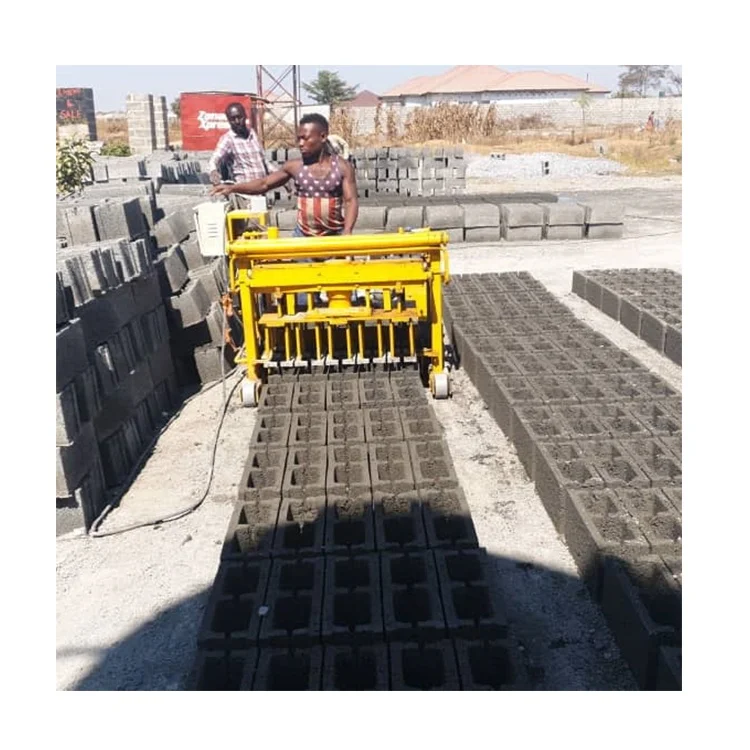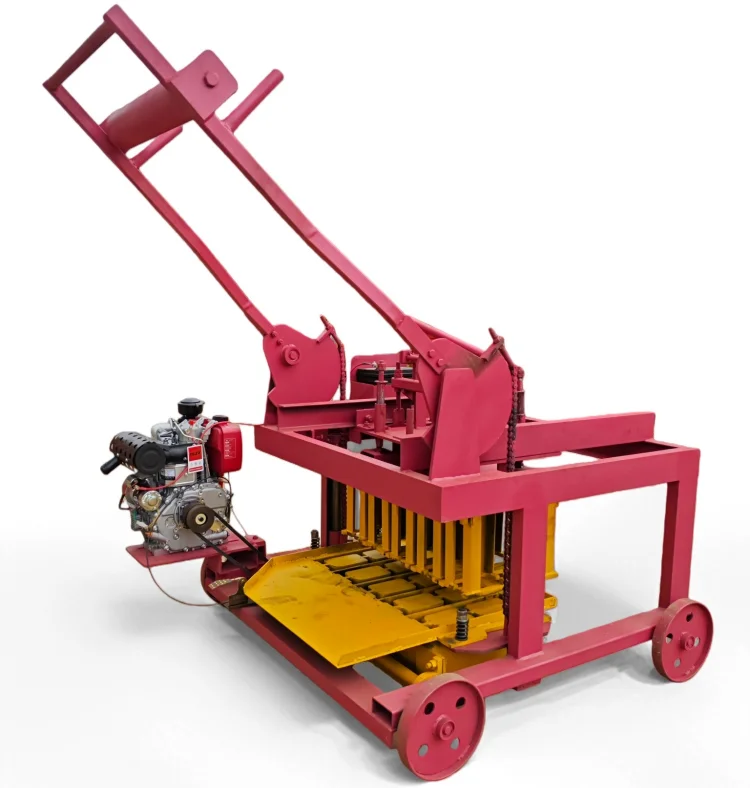
Description
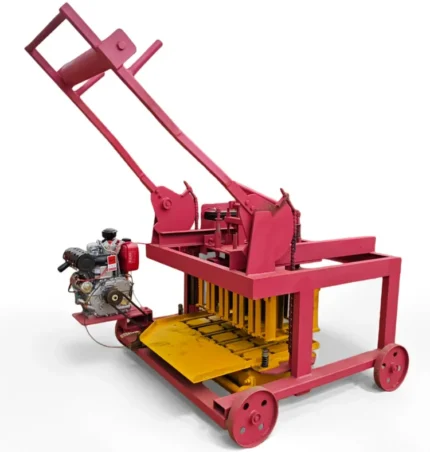
Matched Vibration Control — 60 kN vibration force on the QMR4-45 diesel mobile block machine is tuned against the buyer’s actual mix design and local aggregate before commissioning, not left at a catalogue default.
Technical Specifications
| Parameter | Value |
|---|---|
| Model | QMR4-45 |
| Product Type | Mobile Block Making Machine |
| Power Source | Diesel |
| Rated Power | 8 hp |
| Molding Cycle | 45 s (basis not stated in source — confirm block format / material / thickness) |
| Molding Form | Vibration and Pressure |
| Vibration Force | 60 kN |
| Overall Dimensions | 2420 × 1320 × 1650 mm |
| Net Weight | 800 kg |
| Pallet Requirement | No pallet required (egg-laying type) |
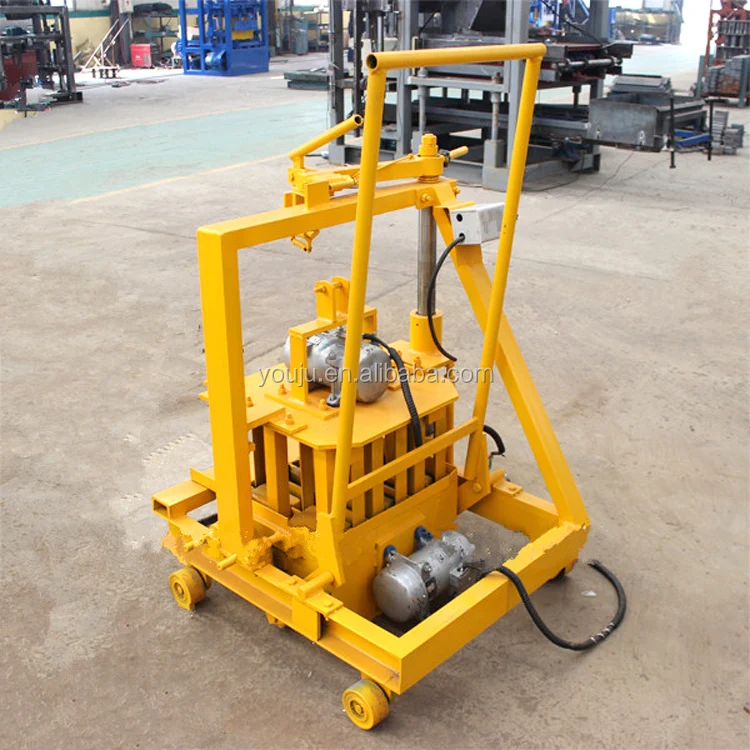
| Mobility | Wheeled mobile frame |
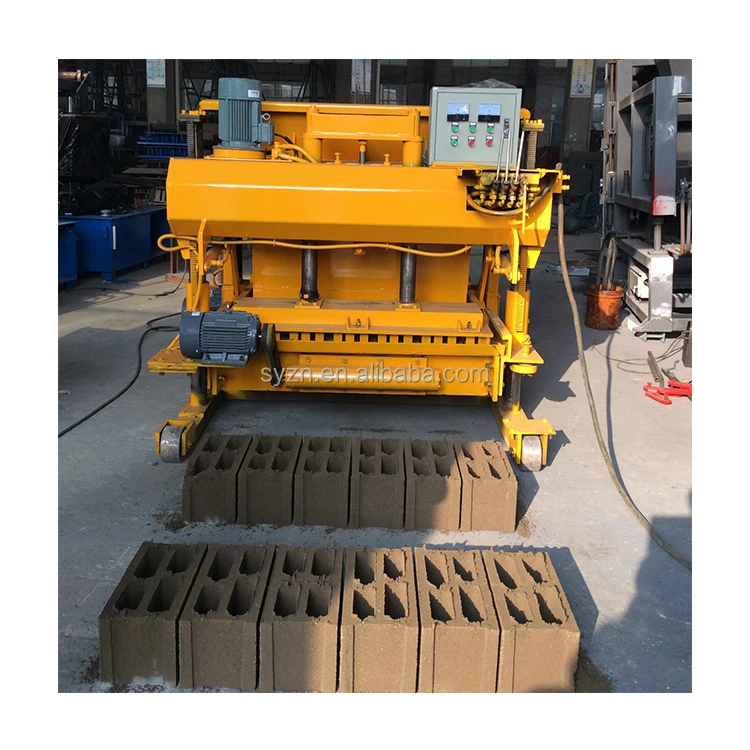
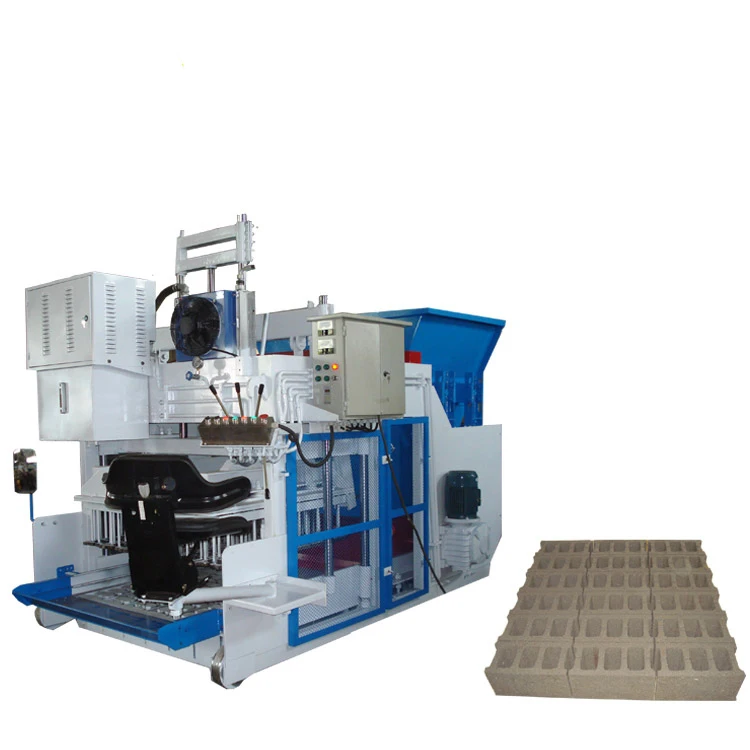
| Compatible Block Formats | Paver brick, hollow block, concrete block, solid brick, fly ash brick |
| Basic Equipment Included | JZC350 Diesel Concrete Mixer or JQ350 Diesel Concrete Mixer with Electric Generating Unit; Trolley |
| Automation Level | Manual operation, low automation |
Application Suitability
| Application | Material or Output |
|---|---|
| On-site block production for remote construction projects | Crushed stone, river sand, and cement without grid electricity |
| Small-scale startup block plant | Fly ash, sand, and cement for hollow and solid block formats |
| Contractor producing pavers at a housing development | Local aggregate and cement for interlocking and paving brick |
| Supplementary capacity beside a fixed-plant line | Standard concrete mix for solid and hollow concrete block |
Why the Control Language Question Must Come Before Shipment
An automatic mobile block machine is only as intelligent as the operator who reads its display.
When a PLC controlled mobile block making machine arrives on site with menus in a language the crew cannot read, the automation investment collapses back to manual guesswork. I have stood beside operators in Southeast Asia tapping buttons hoping the vibration cycle matched what the foreman assumed, because the HMI was still set to the factory default. [NEED_CITE: control panel language and operator error correlation] The QMR4-45 ships with an electric generating unit that can power basic control peripherals, but confirming the display language and voltage compatibility before the crate leaves the factory is what keeps the machine producing from day one instead of sitting idle while a translated manual is sourced.
Closing the Loop Between Press Cycle and Downstream Handling
The 45-second molding cycle sets the rhythm that every surrounding operation must match. When an automatic mobile block machine presses a block every 45 seconds, the crew or mechanical stacker downstream must clear and position for the next drop within that same window or the press idles. On the QMR4-45, the no-pallet egg-laying design removes one variable from that equation — there is no pallet return conveyor to synchronize — but the trolley movement and mixer discharge still need to align so the press never waits for fresh material.
Where Diesel Power Meets Electronic Control
Running an 8 hp diesel engine for the press and a separate electric generating unit for the control system introduces a split power architecture that most catalogue pages ignore. The PLC controlled mobile block making machine relies on stable voltage from the generator to keep sensors and solenoids responding accurately. If the generator output fluctuates under the load spikes of the mixer motor sharing the same circuit, the control system can misread cycle positions. [NEED_CITE: generator load balancing for mobile construction equipment] Specifying a dedicated circuit for the control panel, separate from the mixer feed, keeps the QMR4-45 automation layer reliable even on dusty, remote sites.
Reading the Specs That Actually Shape Block Density
The 60 kN vibration force and the mechanical pressure applied during the molding stroke work together to compact the mix into a dense, consistent block. Vibration alone cannot achieve target strength if the pressure is insufficient for the aggregate gradation the buyer is sourcing locally. On the QMR4-45, the wheeled mobile frame means the machine sits directly on the ground rather than on a fixed concrete foundation, which can absorb some vibration energy — a factor that must be compensated for in the mix design or by leveling and compacting the production area before the first run. The 2420 × 1320 × 1650 mm footprint is compact enough for a single flatbed to transport, but the 800 kg net weight still requires firm, level ground to prevent the frame from rocking during high-vibration cycles. Block formats from paver brick to hollow block each demand a different vibration duration within that 45-second baseline cycle, and confirming which format the quoted cycle assumes is essential before calculating daily output.
What Happens When the Generating Unit Is an Afterthought
Sourcing a mobile press without confirming the electric generating unit specification often leads to a control panel that cannot power up at the destination. I have seen crews wire a 220 V control system into a 380 V site supply because the generator was swapped locally without checking the PLC rating, frying the main board before the first block was pressed. [NEED_CITE: voltage mismatch damage to industrial control systems] On the QMR4-45, where the diesel engine handles the mechanical work and the generator handles electronics, a mismatch between the two is not a minor inconvenience — it halts production entirely and forces a replacement board to be shipped internationally while the project schedule slips.
Why Buyers Specify the Full System Here
Block machinery is the single focus of this supply chain, so the QMR4-45 press, its compatible mixer, trolley, and generating unit are specified as one matched set rather than assembled from unrelated vendors. Configuration is set against the buyer’s actual mix design and local aggregate, not a generic catalogue default. Mould options cover the formats the buyer’s local market actually sells, and custom mould drawings can be reviewed before production. The automation level is selectable, meaning a buyer can start with manual egg-laying operation and add semi-automatic stacking peripherals later as demand grows. Installation support includes operator training on the specific control language and power setup confirmed before shipment, and mould and wear parts lists are provided so the first replacement order can be placed before the original parts wear through.
Documentation & Verification
- Machine specification sheet listing QMR4-45 vibration force and cycle time per confirmed block format
- Voltage and control language confirmation signed off before the electric generating unit is wired
- Factory test record showing press cycle on the buyer’s specified block format and mix
- Mould drawing and format list for every block type included in the order
- Operation and maintenance manual in the confirmed display and documentation language
Installation, Commissioning & Support
- Level and compact the production ground to support the 800 kg frame during 60 kN vibration cycles
- Confirm the electric generating unit output matches the PLC rated voltage before first power-on
- Assemble the wheeled frame and mount the diesel mixer, verifying belt tension on the 8 hp drive
- Run a test batch on the buyer’s local aggregate to validate the 45-second cycle timing against actual block density
- Train operators on the confirmed control language display and emergency stop sequence
- Provide a wear parts list covering vibration motor bearings and mould liner plates for the first reorder
What We Need From You to Size This Line Correctly
Tell us the block formats your local market moves fastest — hollow, paver, solid — and the daily volume you need to hit on each. Share a sample or lab report of your local sand and aggregate so we can match the vibration and pressure settings before the QMR4-45 ships. Confirm the voltage and frequency standard at your destination, along with the language you need on the control display, so the electric generating unit and PLC arrive ready to run.
Frequently Asked Questions
Q: How is the 45-second molding cycle verified, and which block format does it assume?
A: The 45-second figure is a baseline timing that must be confirmed against the specific block format, wall thickness, and mix design the buyer intends to produce. We run a factory test on the buyer’s chosen format and publish the verified cycle in the specification sheet, so daily output calculations are based on real data, not a generic default.
Q: What automation upgrades are available from manual egg-laying to semi-automatic stacking?
A: The QMR4-45 egg-laying design eliminates pallet circulation, so automation focuses on downstream stacking and cubing. Semi-automatic stacking peripherals can be added to reduce manual handling, and the electric generating unit on the machine can be specified with enough capacity to power those additions from the outset.
Q: How do I confirm voltage, frequency, and PLC display language for my market?
A: During the inquiry stage, we collect your site voltage, frequency, and preferred operator language. These values are written into the order confirmation and verified on the electric generating unit and control panel before the machine is crated, so no rewiring or reprogramming is needed on arrival.
Q: How does the diesel power source interact with electronic controls and sensors?
A: The 8 hp diesel engine drives the mechanical press and vibration system, while the separate electric generating unit supplies stable power to sensors and the PLC. We specify a dedicated circuit for the control system to prevent voltage dips from the mixer motor from disrupting cycle accuracy.
Q: What is the upgrade path from this mobile machine to a fully automatic fixed-plant line?
A: Buyers who outgrow mobile output can transition to a fixed-plant automatic line that uses the same mould format standards. The mix design and block specifications validated on the QMR4-45 carry over, reducing the commissioning time on the larger system.