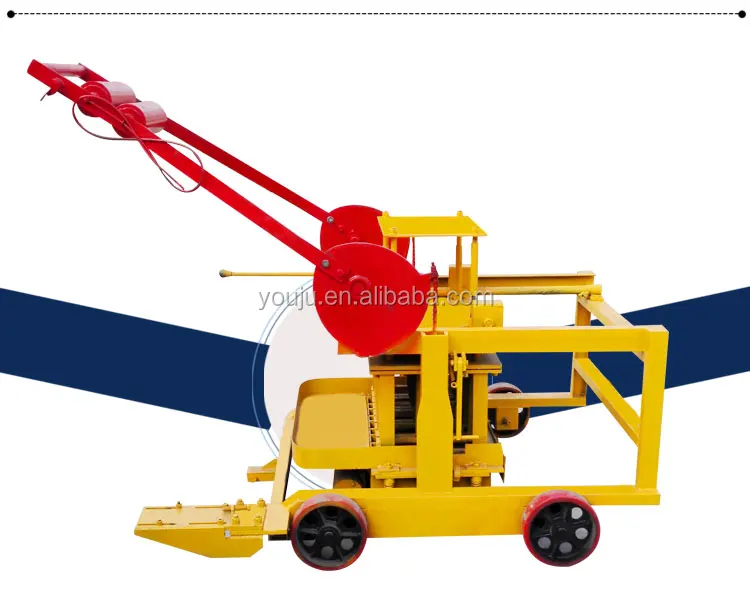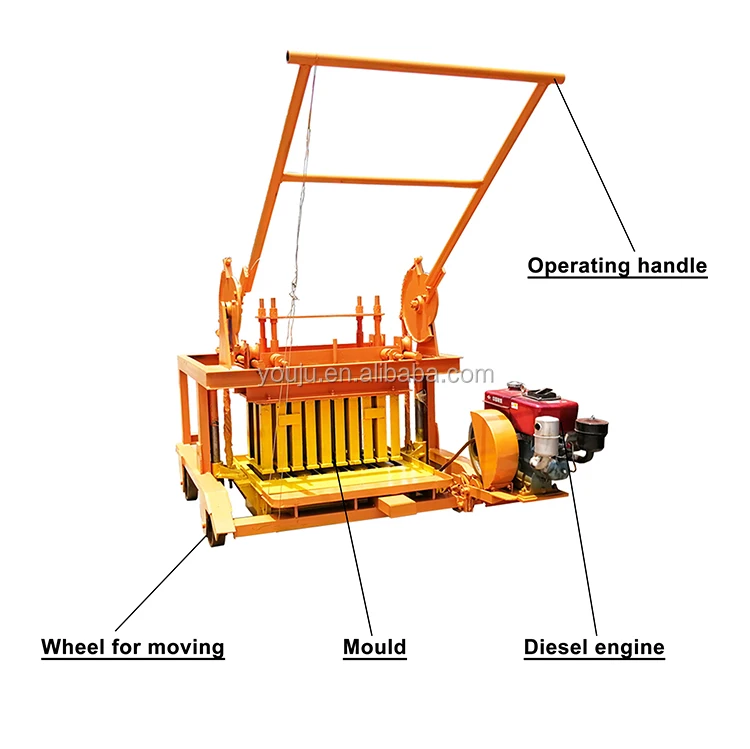
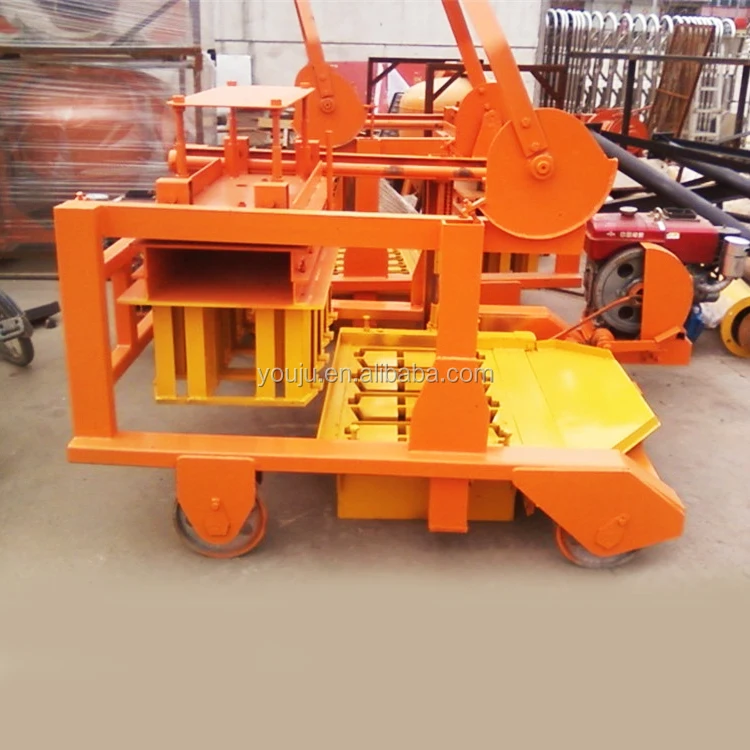
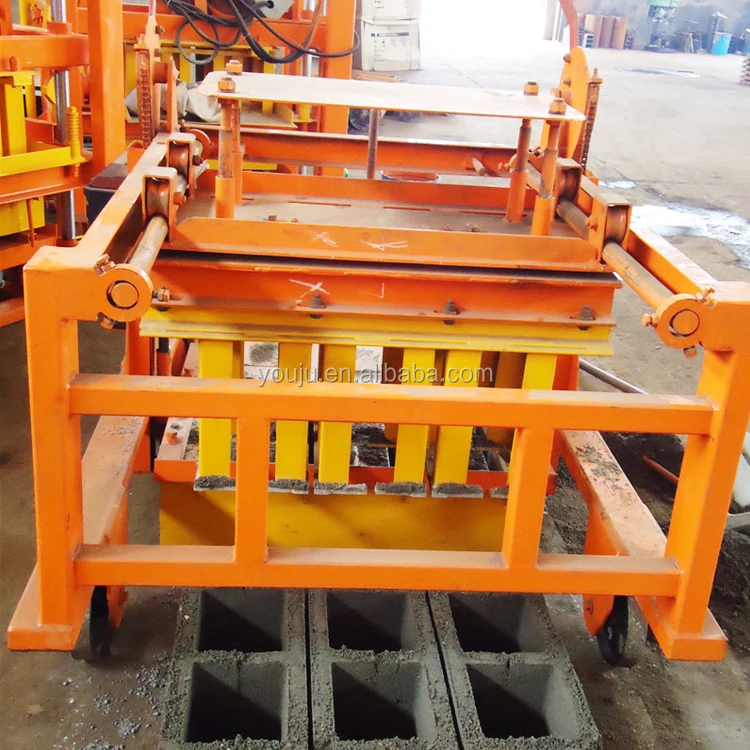
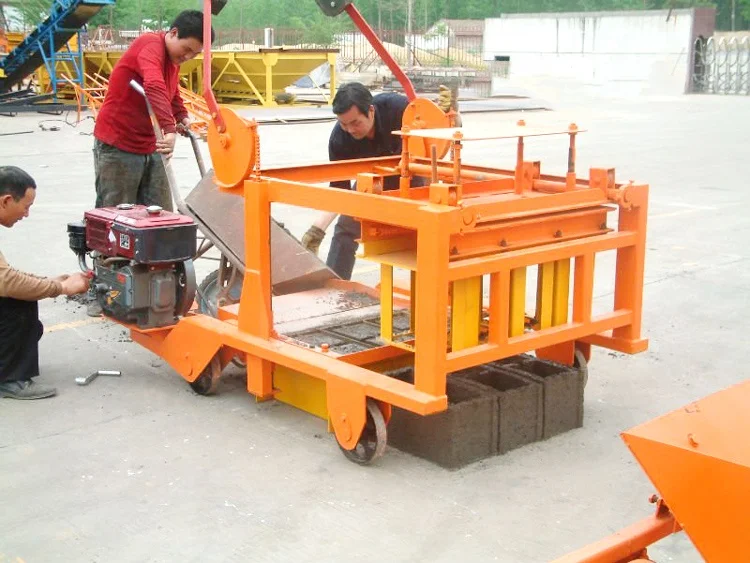
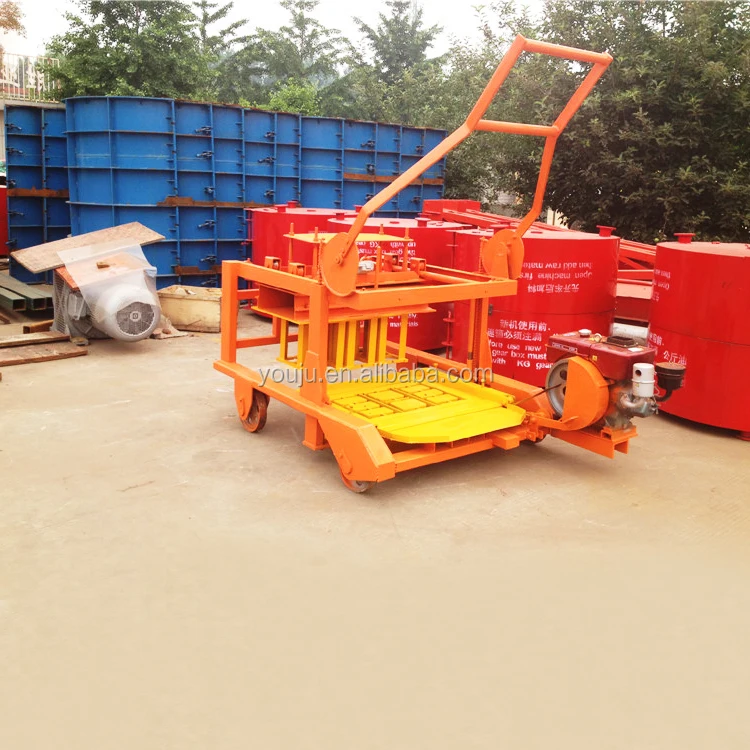
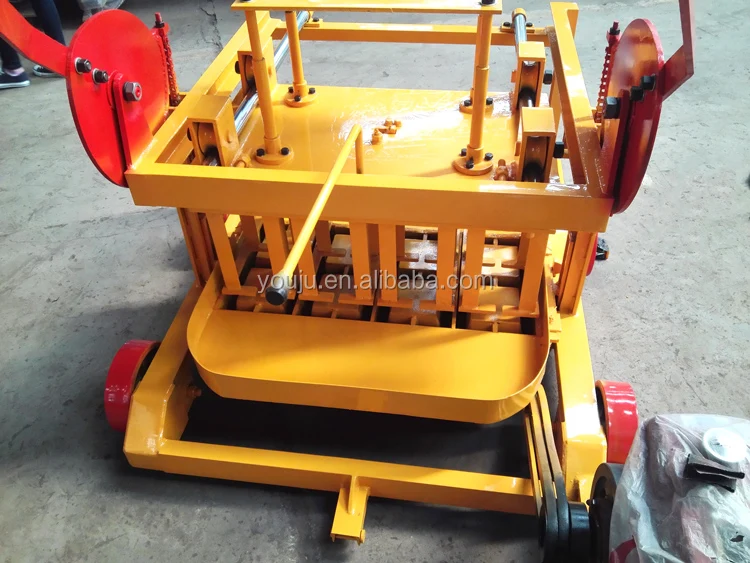
Description
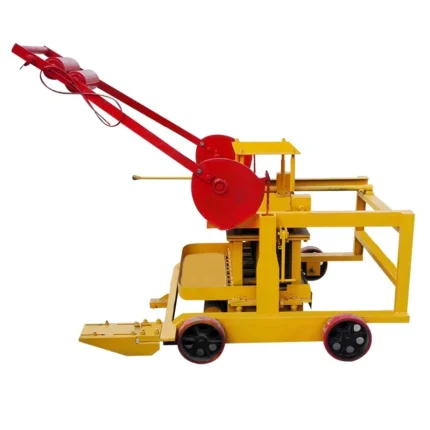
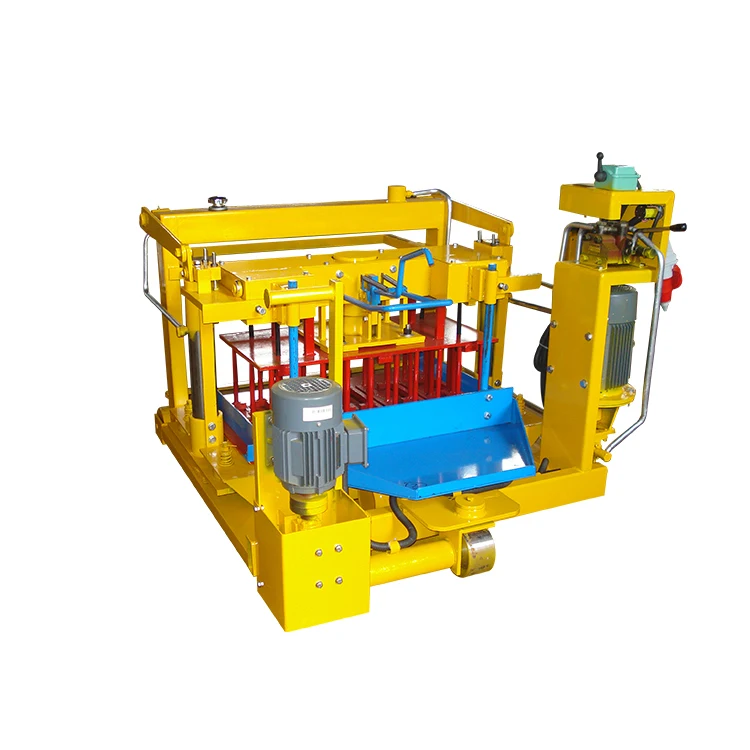
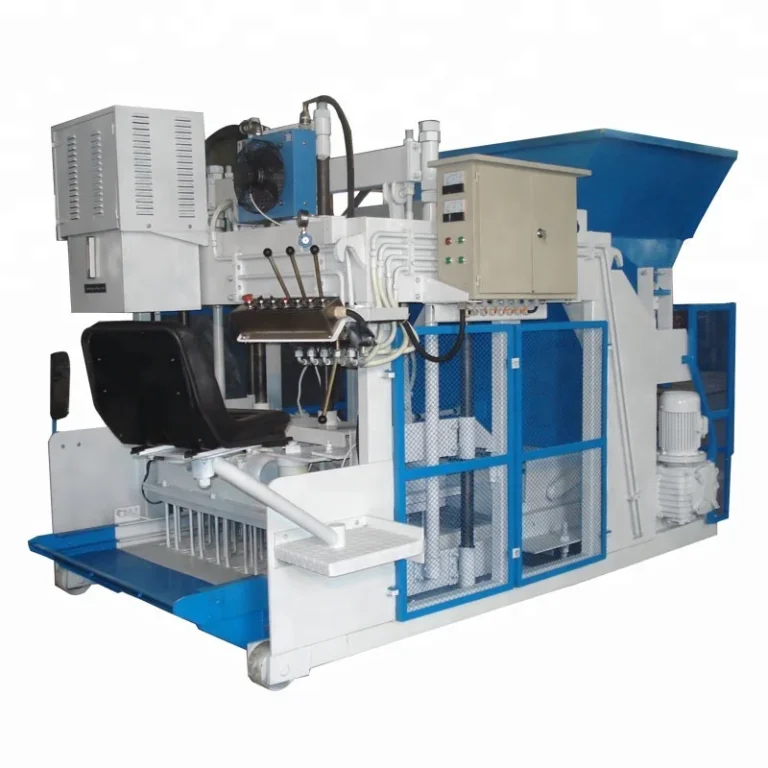
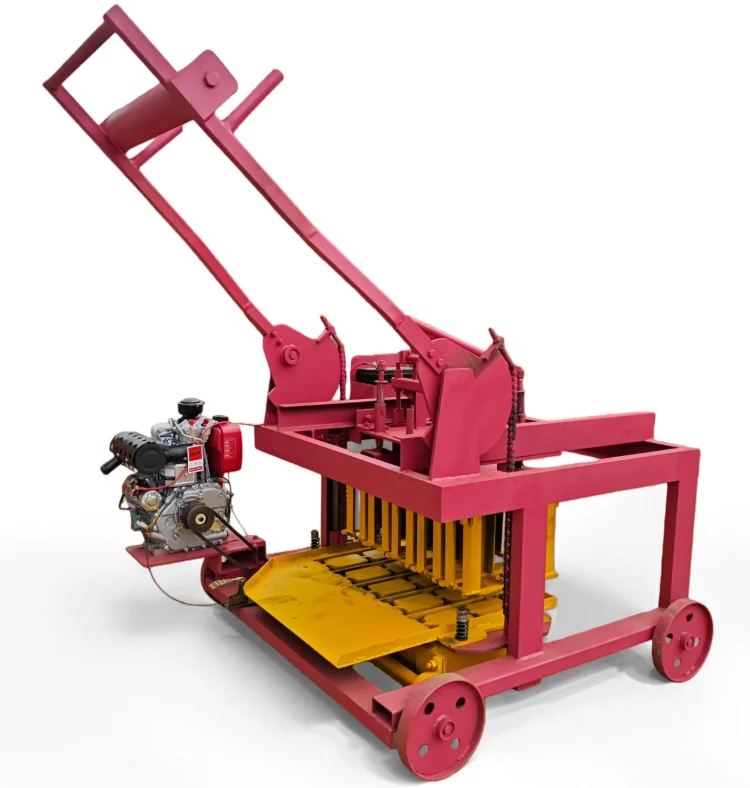
Intelligent control upgrade path — The QMR4-45 mobile block machine starts as a semi-automatic egg layer and can accept PLC-controlled batching and stacking modules as daily volume justifies the investment, keeping the initial footprint and capital outlay low while leaving room for consistency gains later.
Technical Specifications
| Parameter | Value |
|---|---|
| Model | QMR4-45 |
| Product Type | Mobile Egg Laying Block Making Machine |
| Overall Dimensions (L×W×H) | 2420×1320×1650 mm |
| Net Weight | 810 kg |
| Rated Power | 6 kW |
| Diesel Engine Option | 6 kW or 6-8 HP |
| Voltage & Frequency | 220V or 380V (frequency to be confirmed per market) |
| Control System | Semi-automatic (PLC upgrade available) |
| Moulding Cycle | 40-45 s |
| Pallet Requirement | None (egg laying type) |
| Output Capacity | 3000 pcs/day based on 400×200×200 mm hollow block, 4 pcs/mould, 8-hour shift |
| Output Capacity | 3500 pcs/day based on 400×150×200 mm hollow block, 5 pcs/mould, 8-hour shift |
| Output Capacity | 4500 pcs/day based on 400×120×200 mm hollow block, 6 pcs/mould, 8-hour shift |
| Mould Format | Hollow block (400×200×200 / 400×150×200 / 400×120×200 mm; other formats via mould change) |
| Automation Level | Semi-automatic |
| Stacking Method | Manual (egg laying on ground) |
| Assembly State | Skid-mounted mobile unit |
| Warranty | One year for the whole machine |
Application Suitability
| Application | Material or Output |
|---|---|
| On-site hollow block production for housing projects | Crushed stone, sand, cement mixes on a level concrete slab |
| Contractor self-supply on remote job sites | Local aggregate with diesel drive where grid power is unavailable |
| First-stage block plant with low capital | Standard hollow block formats with semi-automatic operation |
| Format diversification for existing producers | Alternate block sizes via mould change within a shift |
Why the Voltage Question Should Come Before the Price on a Mobile Block Machine
Confirming voltage, frequency, and PLC language before shipment prevents weeks of idle time on arrival.
I have stood on sites in the Gulf where a brand-new automatic mobile block machine sat under a tarp for three weeks because the local supply was 415V/60Hz and the motor was wound for 380V/50Hz. The contractor had already paid for shipping, customs, and a crew waiting to produce. The QMR4-45 is listed at 220V or 380V, but frequency and control display language are not preset defaults — they must be locked in during the order stage. When you evaluate a PLC controlled egg laying block machine, the electrical confirmation is not a footer line; it is the first checkpoint in the entire commissioning sequence [NEED_CITE: voltage and frequency standards by export market].
What Automation Removes from the Operator
On a manual egg layer, the operator judges mix consistency by eye, times the moulding cycle with experience, and decides when the block is ready to be moved off the curing floor. Each of those judgements introduces variation between the first block of the morning and the last block before lunch. The semi-automatic base of this automatic mobile block machine holds the moulding cycle at a consistent 40-45 seconds across all listed hollow block formats, so the vibration duration and pressure application stay the same regardless of operator fatigue.
Where the Upgrade Path Pays Off
Once daily volume passes the point where a single operator cannot feed, move, and stack without bottlenecks, adding PLC-controlled batching and automatic stacking modules converts the QMR4-45 from a labour-dependent unit into a repeatable production station. The PLC records batch weights and cycle counts, so a plant owner can trace a strength drop back to a specific material lot rather than guessing. This upgrade path means the initial purchase does not become obsolete when the business grows — the same frame and press accept additional automation stations as output targets rise [NEED_CITE: CE machinery directive requirements for industrial equipment].
Matching Vibration and Pressure to the Actual Mix
The moulding cycle of 40-45 seconds is only part of the density equation. Vibration force and hydraulic pressure together determine how tightly the aggregate particles pack inside the mould cavity. A mix with coarse crushed stone needs different vibration amplitude than one using fine dune sand, yet many catalogue quotations treat the setting as fixed. On the QMR4-45, the vibration and pressure configuration should be set against the buyer’s submitted sample and target block format before the machine leaves the factory. When the match is correct, the demoulded block holds its edges and reaches handling strength within the expected curing window. When it is wrong, blocks crack at the corners or crumble during stacking — a problem that no amount of operator skill can fix on site. The rated power of 6 kW sets the upper boundary for both the vibration motor and the hydraulic pump, so the two systems must be balanced within that envelope rather than specified independently.
The Hidden Cost of Skipping the Mix Test
I once watched a contractor in a desert climate run an egg layer with unwashed dune sand because the local supplier had quoted a mix based on river gravel. The blocks looked fine coming out of the mould but lost compressive strength within days, and an entire week of production had to be crushed and re-mixed. The QMR4-45 is compact enough to ship a sample batch of local aggregate to the factory for a test run before the machine is dispatched, and that single step eliminates the most expensive mistake in mobile block production [NEED_CITE: aggregate grading standards for concrete block manufacture]. Skipping it means discovering the mismatch after the machine is bolted to the ground and the crew is already on payroll.
Why Source This Machine Through a Block-Line Specialist
The QMR4-45 is specified as one matched system — machine, mould, and handling — rather than assembled from separate catalogue pages. Mould drawings are prepared against the exact block formats the buyer’s market sells, including custom sizes from buyer-supplied sketches. Voltage, frequency, and PLC display language are confirmed in writing before production starts, not assumed from a default list. Factory test records cover the buyer’s chosen block format and mix, so the output figures are verified rather than quoted from a brochure. Operation and maintenance manuals ship in the operator’s language, and a wear parts list identifies every replaceable component by part number so the first reorder does not require a factory phone call.
Documentation & Verification
- Line layout showing QMR4-45 footprint and curing area clearance
- Capacity calculation tied to the buyer’s selected hollow block format
- Factory test record on submitted aggregate sample before dispatch
- Hydraulic and electrical schematic matching the confirmed voltage
- Mould drawing and format list for every block size ordered
- Wear parts list with part numbers for reorder without factory contact
Installation, Commissioning & Support
- Level concrete slab required; 2420×1320 mm footprint with clearance for block ejection
- 6 kW power supply on a dedicated circuit; diesel option removes grid dependency
- Skid-mounted unit arrives assembled; no foundation bolts or pit work needed
- First run verifies 40-45 s cycle and block dimensions against mould drawing
- Operator training covers mix loading, mould change, and daily greasing points
- One-year warranty covers the full 810 kg machine including vibration motor and hydraulics
What to Prepare Before Requesting a Quotation
Send a representative sample of the aggregate you plan to use, the hollow block sizes your market requires, and your site voltage and frequency. If you already have a mixer or a curing area, include those dimensions so the line layout accounts for material flow around the QMR4-45 rather than treating the press in isolation.
Frequently Asked Questions
Q: How is daily output verified per block format, and what cycle time does each format assume?
A: Output is stated per format: 3000 pieces for 400×200×200 mm, 3500 for 400×150×200 mm, and 4500 for 400×120×200 mm, each based on a 40-45 second moulding cycle over an 8-hour shift. The quotation specifies which format the capacity figure assumes, so there is no single headline number masking a different block size.
Q: What voltage, frequency, and PLC display language will be confirmed before shipment?
A: Voltage is selectable at 220V or 380V, and frequency must match the destination grid — typically 50 Hz or 60 Hz. PLC display language is agreed during order confirmation so operators see instructions in a familiar language on day one, avoiding commissioning delays caused by menu misreads.
Q: What automation upgrades are available from the semi-automatic base?
A: The QMR4-45 accepts PLC-controlled batching, automatic pallet-free stacking assists, and remote diagnostic modules as add-on stations. The upgrade becomes worthwhile when daily volume grows beyond what one operator can feed and clear without the press sitting idle between cycles.
Q: How is the machine configured to match local aggregate and mix design?
A: Buyers submit a sample of local sand, crushed stone, or other aggregate. The factory runs a test batch, adjusts vibration force and pressure within the 6 kW envelope, and records block density and demoulding quality before final settings are locked into the shipped machine.
Q: What is the mould change procedure on site?
A: The mould is unbolted from the press frame, lifted clear, and the replacement mould is lowered and secured. The procedure is completed within a standard shift, and the mould drawing supplied with the machine shows bolt positions and alignment pins so the operator does not need factory assistance for routine format switches.