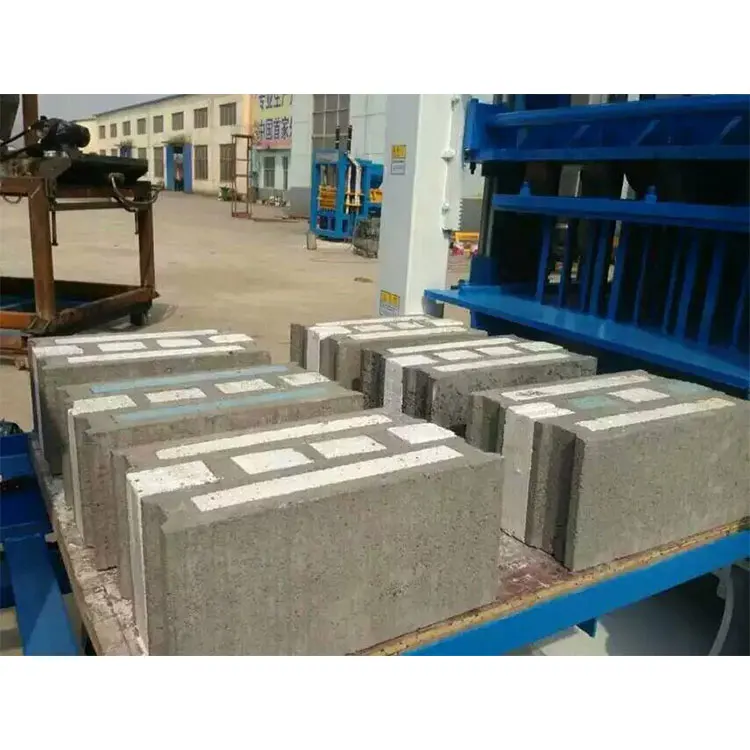


Description
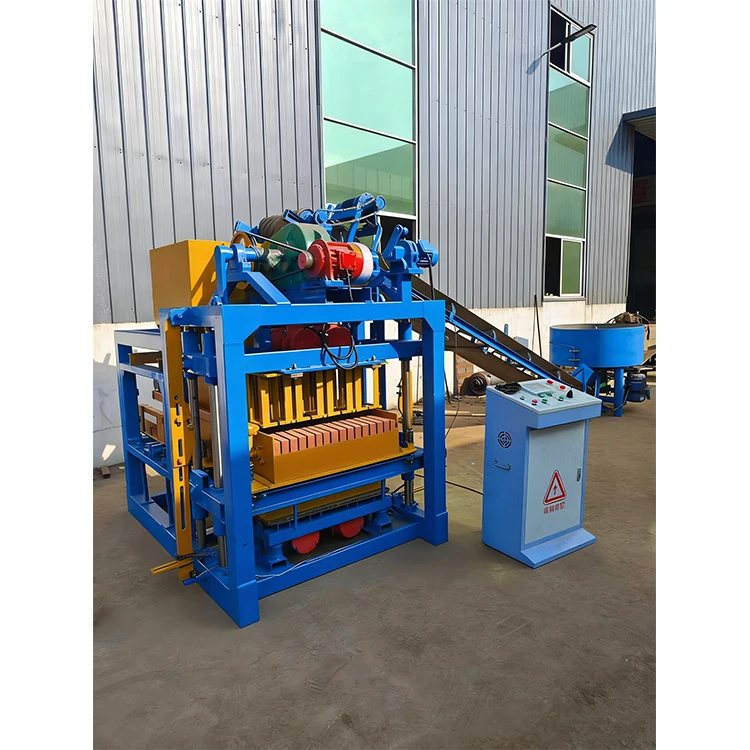
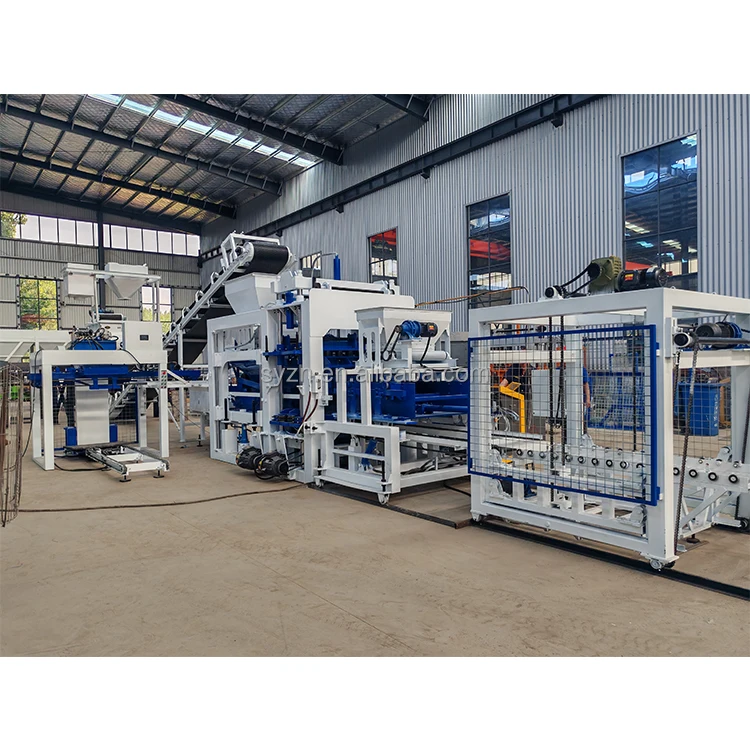
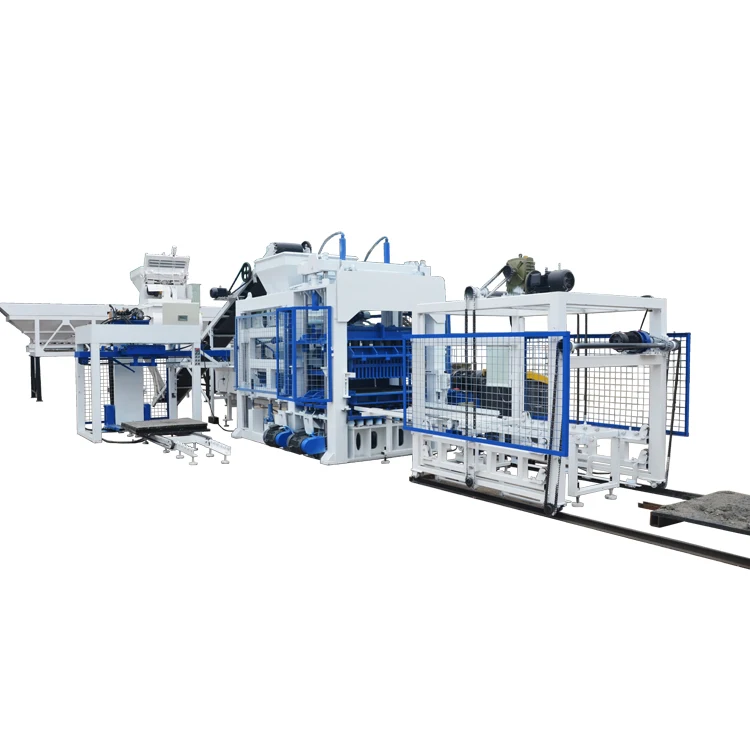
Automation Defined by the Line, Not Just the Press — Every PLC sequence and pallet movement on the Qt10-15 is mapped to your block format and target daily output, not pulled from a generic catalogue default.
Technical Specifications
| Parameter | Value |
|---|---|
| Model | Qt10-15 |
| Product Type | Fully Automatic Concrete Block Making Machine |
| Overall Dimensions (L×W×H) | 9350×2320×2950 mm |
| Rated Pressure | 21 MPa |
| Main Vibration Form | Platform Vibration |
| Vibration Frequency | 2800~4500 r/min |
| Vibration Force | 60 kN |
| Pallet Size | 1100×900 mm |
| Molding Cycle | 15-25 s (basis not stated in source — confirm block format / material / thickness) |
| Overall Power | 44 kW |
| Total Mass | 10 T |
| Demolding Method | Hydraulic |
| General Water Consumption | 8 T/Day |
| Factory Area Required | 500 m² |
| Control System | PLC with person-machine conversation interface |
| Automation Level | Fully Automatic |
Application Suitability
| Application | Material or Output |
|---|---|
| High-volume hollow block production | Crushed stone, sand, cement, fly ash |
| Solid block manufacturing for load-bearing walls | Gravel, slag, cement mixes |
| Interlocking paver and colored paver runs | Fine aggregates with pigment additives |
| Kerbstone and curb production | Coarse aggregate blends with high cement content |
What "15-25 Seconds per Cycle" Actually Means for Your Daily Output
A cycle time is only useful when tied to the exact block format you intend to produce.
I spent years fielding calls from plant owners who bought an automatic concrete block making machine PLC controlled based on a headline cycle time, only to find their actual daily output fell far short once they switched from a standard hollow block to a thicker interlocking paver. The 15-25 second range printed on a spec sheet assumes a specific block geometry, mix consistency, and pallet condition — change any one of those variables and the number shifts. Buyers need a capacity calculation that names the format behind every output figure [NEED_CITE: capacity verification methodology for block forming equipment].
Removing the Operator from the Sequence
On the Qt10-15, the PLC with person-machine conversation interface handles the full press cycle: material feed timing, vibration duration, hydraulic pressure application, and demolding sequence. This removes the variability that comes from manual button-pressing, where one operator’s rhythm differs from the next shift’s. For a plant owner moving up from semi-automatic operation, the consistency gain shows up in block-to-block density and dimensional tolerance rather than raw speed. The automatic concrete block making machine PLC controlled logic also stores recipe parameters, so switching between a hollow block mix and a paver mix does not require re-tuning from scratch.
Where the Line Stops Waiting for the Press
Platform vibration at 2800~4500 r/min with 60 kN force needs material arriving at the mould cavity on time, every cycle. If the batching station delivers late or the pallet feeder jams, the press sits idle and the cycle time on paper becomes meaningless. The Qt10-15 is specified as part of a coordinated line where raw material feeding, pallet feeding, and downstream stacking are timed to the press rhythm [NEED_CITE: line synchronization standards for automatic block plants]. The 44 kW overall power draw covers the press, hydraulic unit, and vibration motors — the supporting stations carry their own loads, and the total connected capacity must be confirmed before the electrical panel is built.
Reading the Numbers That Matter
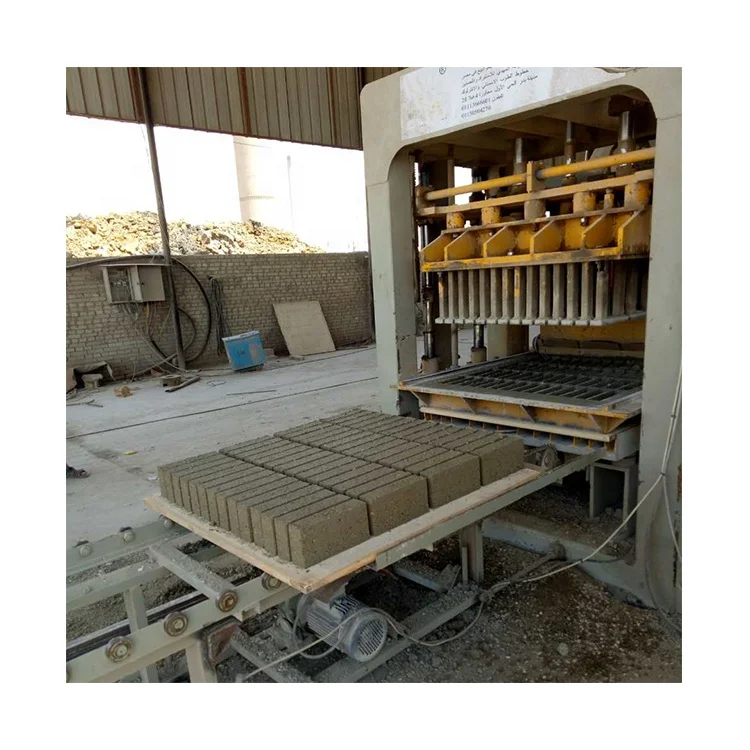
The 21 MPa rated pressure and 60 kN vibration force work together: hydraulic pressure compacts the mix from above while platform vibration settles aggregate into the mould cavity from below. If the vibration force is too low for a coarse gravel mix, the block core stays porous; if hydraulic pressure is too high for a fine fly ash blend, the block cracks on demolding. The 1100×900 mm pallet size determines how many blocks fit per cycle — a 400×200×200 mm hollow block layouts differently than a 200×100×60 mm paver, and the mould must match. The 500 m² factory area requirement accounts for the press footprint, pallet return conveyor, and a minimum curing rack zone; buyers with tighter sites need to confirm the layout before the foundation is poured.
The Cost of Skipping the Voltage Conversation
I once watched a fully automatic line sit for eleven days because a hydraulic proportional valve failed and the replacement was never packed with the shipment. The same risk applies to electrical configuration: if the Qt10-15 ships with a 380V/50Hz panel to a market running 440V/60Hz, the motors overheat and the PLC transformers burn out before the first production run. Voltage, frequency, and PLC display language must be locked in before the control cabinet is wired [NEED_CITE: voltage and frequency standards by export market]. Skipping this step turns an automation investment into a very expensive paperweight.
Why Procurement Lands Here
Block machinery is a single focus for the team behind the Qt10-15, which means the press, mould, pallet, and handling equipment are specified as one matched system rather than sourced from separate vendors. Configuration starts from your actual mix design and local aggregate, not a default setting. Mould design covers the formats your market sells, including custom drawings when standard options do not fit. The automation level is selectable, so a buyer can begin with semi-automatic pallet handling and add stacking and cubing later without replacing the press. Installation support includes operator training on the PLC interface, and the wear parts list is finalized before the machine leaves the factory so the first replacement cycle does not catch the plant off guard.
Documentation & Verification
- Line layout drawing with capacity calculation stating the block format assumed for each output tier
- PLC program description confirming display language and alarm messages in your operator’s language
- Hydraulic schematic showing valve positions, pressure settings, and hose routing for the Qt10-15
- Electrical diagram listing voltage, frequency, breaker sizes, and cable schedule matched to your site supply
- Factory test record documenting cycle times on your specified block format before dispatch
- Mould drawing and format list confirming cavity count and block dimensions for each mould supplied
Installation, Commissioning & Support
- Foundation plan sized to the Qt10-15 mass of 10 T and vibration load, with anchor bolt layout
- Dedicated electrical circuit rated for 44 kW plus starting surge, with voltage confirmed before panel build
- Pallet return conveyor and stacking station aligned to the 1100×900 mm pallet during on-site assembly
- PLC parameter tuning on your local aggregate and mix design during first production run
- Operator training on the person-machine conversation interface covering recipe storage and alarm response
- Wear parts and hydraulic seal kit shipped with the machine, itemized against the Qt10-15 bill of materials
What to Send with Your Inquiry
Provide the block format or formats you plan to produce, along with your target daily output for each. Include the local aggregate types available — crushed stone, river sand, fly ash, slag — and the cement grade you source. Confirm your site voltage and frequency, the PLC display language your operators read, and the curing space and forklift you already have on site.
Frequently Asked Questions
Q: How is the daily output verified, and which block format does the 15-25 second cycle assume?
A: The molding cycle range depends on block geometry, wall thickness, and mix workability. We provide a capacity calculation that names the exact block format — for example, a 400×200×200 mm hollow block versus a 200×100×60 mm paver — so the daily output figure matches what you will actually run on the Qt10-15.
Q: Does the automation package cover pallet feeding, stacking, and cubing?
A: The Qt10-15 is available in configurations ranging from automatic press operation with manual pallet handling through to fully automatic pallet feeding, stacking, and cubing. The automation level is confirmed during the proposal stage so the line matches your labor plan and budget.
Q: How are voltage, frequency, and PLC language set before the machine ships?
A: We confirm your site voltage, frequency, and preferred PLC display language before the control cabinet is wired. The Qt10-15 person-machine conversation interface is then programmed with alarm messages and menu labels in that language, avoiding confusion during commissioning.
Q: How are vibration force and hydraulic pressure matched to my local aggregate?
A: The 60 kN vibration force and 21 MPa hydraulic pressure are adjusted against your specific mix design and aggregate gradation. On the Qt10-15, this tuning happens during factory testing if sample material is available, or during on-site commissioning using your local raw materials.
Q: Can I start semi-automatic and upgrade to fully automatic later?
A: Yes. The Qt10-15 platform supports adding automatic pallet feeding, stacking, and cubing as separate stations after the initial installation. The PLC architecture allows these modules to be integrated without replacing the main press or control cabinet.