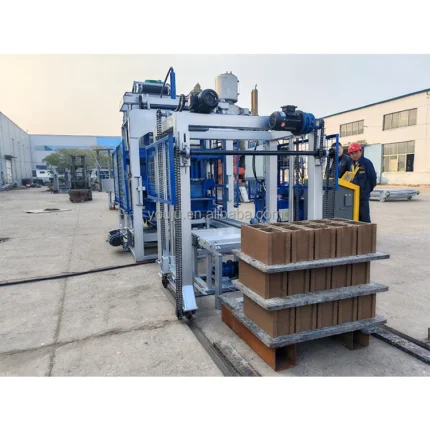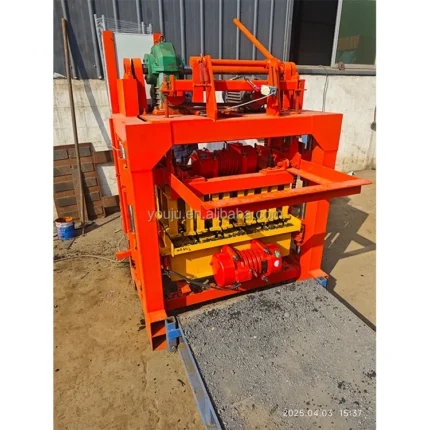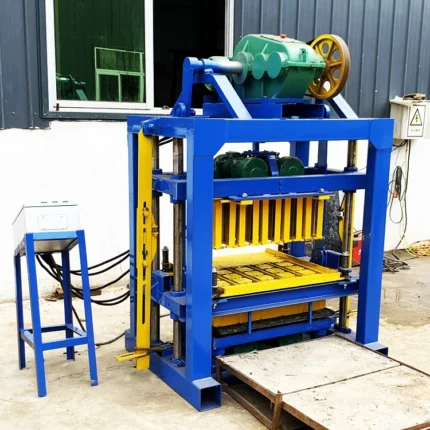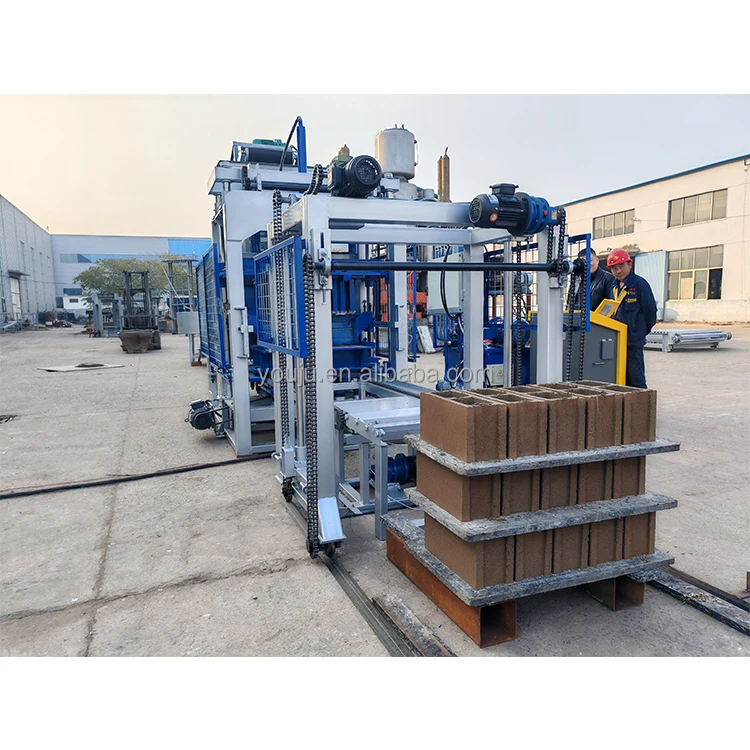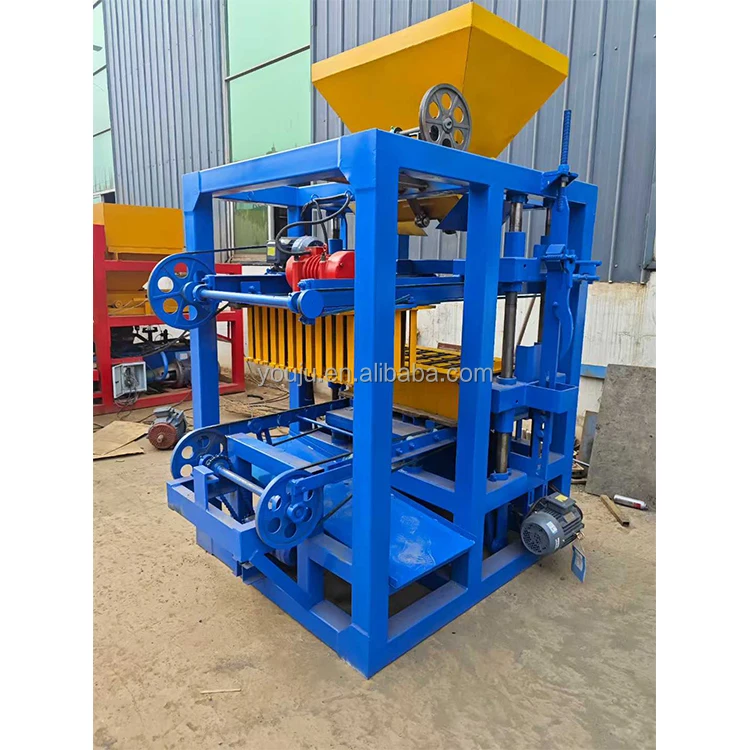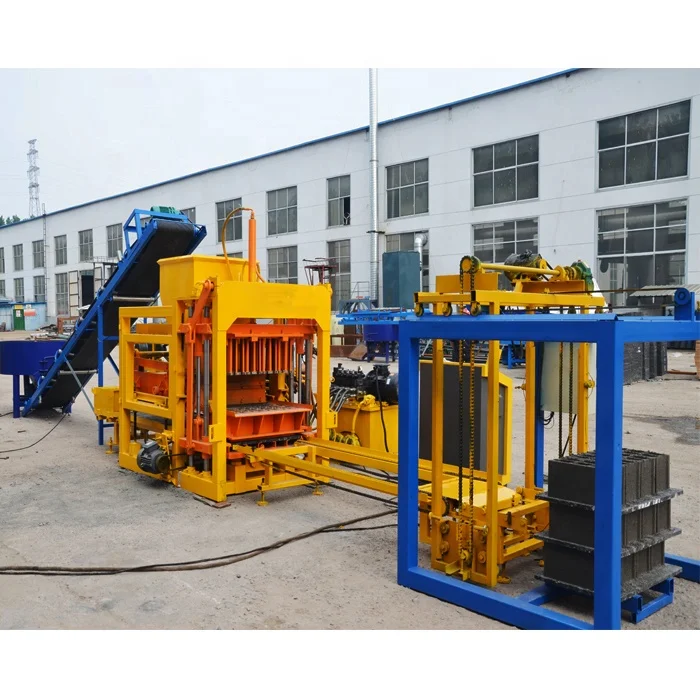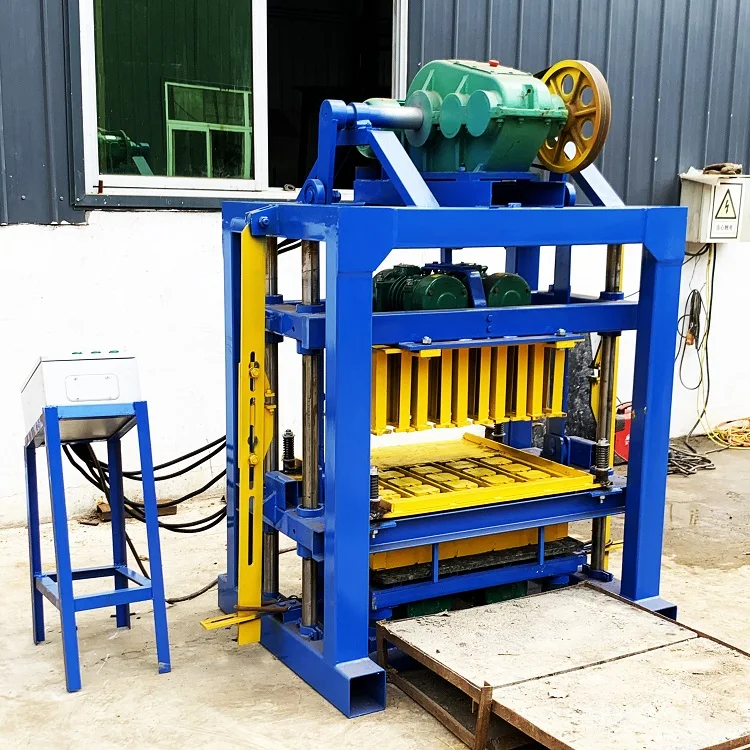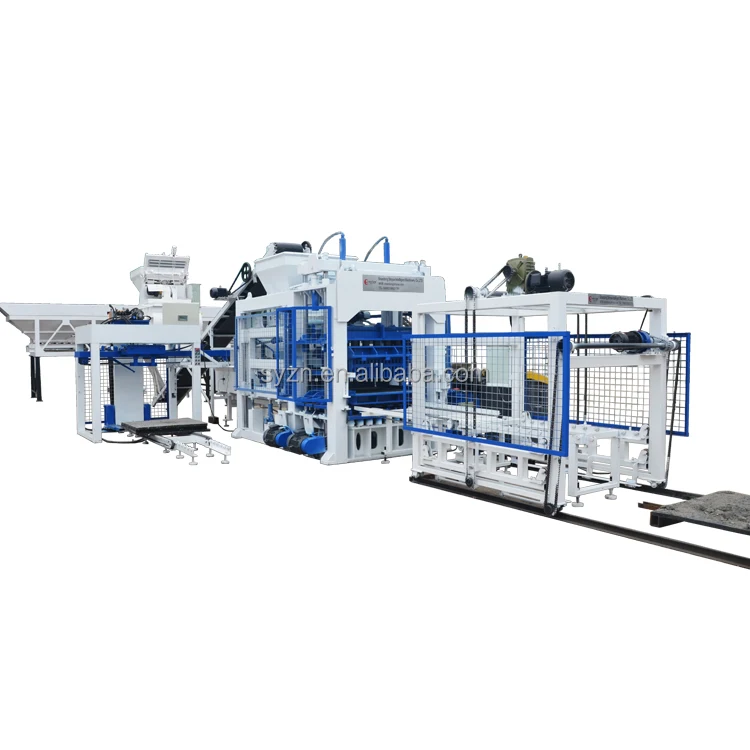
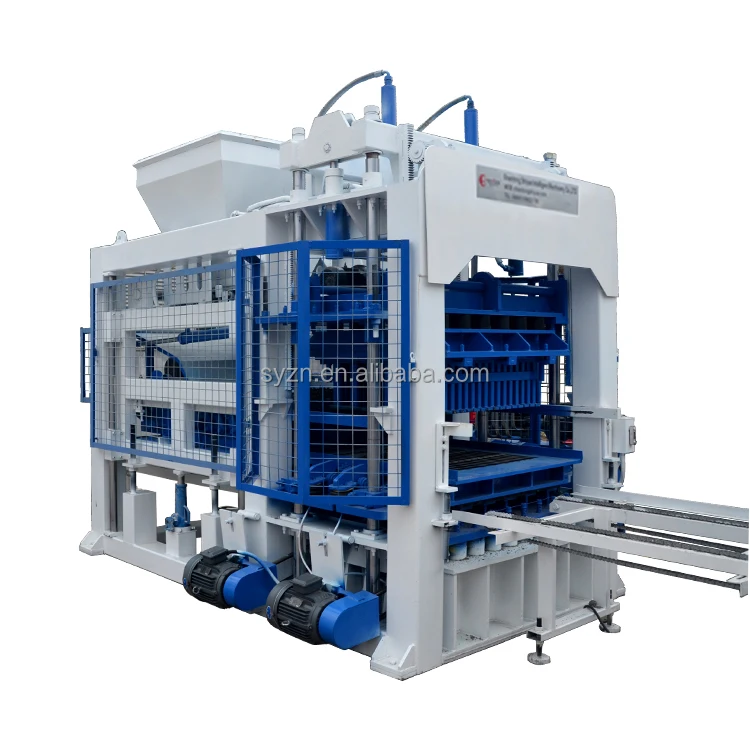
Description
Four-axis vibration tuning — Control logic adjusts frequency and amplitude to the buyer’s actual mix design rather than locking the press into a single factory default.
Technical Specifications
| Parameter | Value |
|---|---|
| Model | QT10-15 |
| Product Type | Stationary Block Machine |
| Automation Level | Full Automatic |
| Control System | PLC with frequency conversion control |
| Vibration Technology | Four-axis synchronized vibration, dynamic and static table |
| Vibration Acceleration | 20g |
| Feeding System | 360° rotating press-in arch breaker |
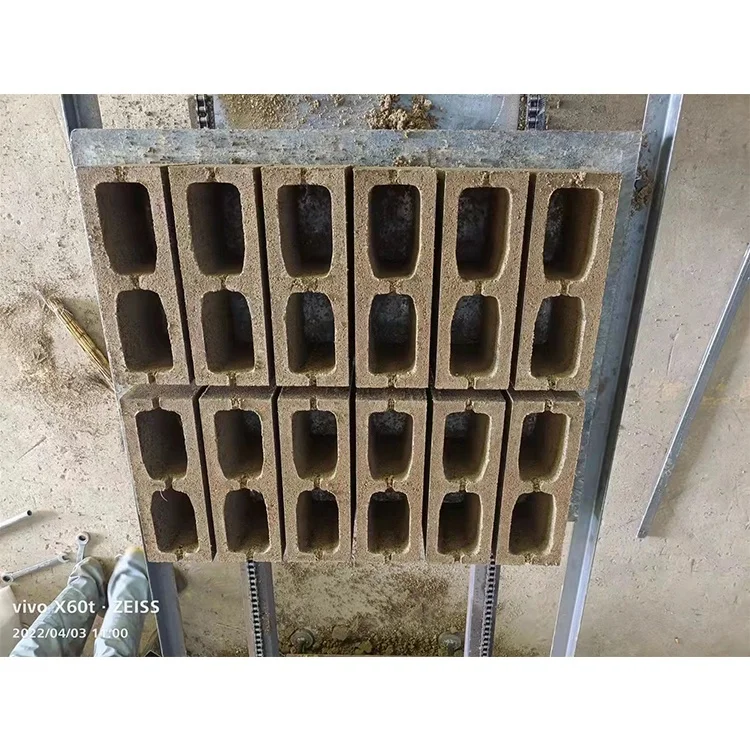
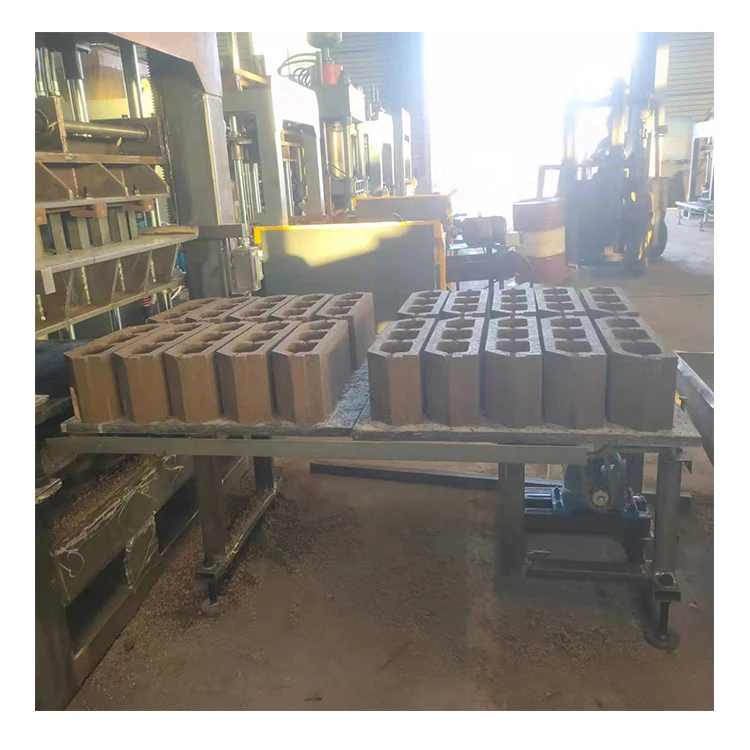
| Mould Format Compatibility | Hollow blocks, interlock bricks, solid wall blocks, porous bricks, pavement bricks, slope protection bricks |
| Mould Change System | Replaceable configurations for multiple block formats |
| Noise Reduction | Flexible vibration reduction on pressure head; adjustable air bag vibration reduction in mold box |
| Output Capacity | (basis to be confirmed per block format and mix) |
| Cycle Time | (basis to be confirmed per block format and mix) |
| Pallet Size | (basis to be confirmed) |
| Hydraulic Pressure | (basis to be confirmed) |
| Voltage & Frequency | (basis to be confirmed) |
Application Suitability
| Application | Material or Output |
|---|---|
| Hollow block production for load-bearing walls | Crushed stone, cement, sand, fly ash |
| Interlocking paver manufacturing | Granite aggregate, basalt, colored cement |
| Solid wall block production | Volcanic aggregate, river sand, quarry dust |
| Porous brick production for permeable paving | Lightweight aggregate, graded stone, cement |
| Pavement block production for roadways | Crushed gravel, coarse sand, cement |
| Slope protection brick production | Heavy aggregate mix, reinforced concrete blend |
Why "Cycles per Hour" Is the Wrong Question for an Automatic Stationary Block Machine PLC Controlled
The only capacity number that matters is the one tied to your exact block format, pallet size, and local aggregate blend.
A press might complete a cycle in a timeframe that looks impressive on paper, but if the vibration profile was tuned for river sand and the buyer is running crushed volcanic rock, the blocks come out under-compacted and the operator spends half the shift adjusting the feed. I watched a crew in Colombia run their first batch on a stationary press and pull crumbling blocks off the pallet because the PLC parameters matched a Shandong quarry, not their local supply. The automatic stationary block machine PLC controlled system must be programmed around the real material before it ever leaves the factory. [NEED_CITE:]
Frequency Conversion Drive and Mix Matching
The frequency conversion motor on the vibration table lets the operator adjust the vibration profile instead of running at a fixed speed. For a dense interlocking paver running coarse basalt, the automatic stationary block machine PLC controlled logic can hold a lower frequency with higher amplitude to settle the aggregate fully. For a lighter porous brick, a higher frequency with shorter duration prevents over-compaction. This degree of control means the same press produces consistent blocks across formats without mechanical gearbox changes.
Four-Axis Synchronized Vibration Across the Mould Surface
The 20g vibration acceleration is distributed through four synchronized shafts running beneath the dynamic and static table sections. When the mould cavity is wide — such as a 400mm paving slab — uneven vibration would leave soft zones at the edges and dense zones at the center. The four-axis layout evens out the force so every block on the pallet meets the same density target. This is where the automatic stationary block machine PLC controlled system earns its name: the PLC monitors shaft synchronization and flags imbalance before the operator sees it in block quality. [NEED_CITE:]
Feeding System and Density Variation
The 360° rotating press-in arch breaker prevents material bridges inside the feed hopper, pushing aggregate into the mould cavity from multiple angles. Without this, fine cement tends to pool at one end of the mould while coarse stone collects at the other, creating blocks that vary in weight and strength across a single pallet. The arch breaker ensures each cavity fills uniformly, which is critical when producing interlocking pavers where dimensional tolerance must stay within a narrow range for the blocks to fit together on site.
Vibration Dampening and Component Longevity
Flexible dampening on the pressure head and adjustable air bag vibration reduction on the mould box absorb shock that would otherwise travel into the machine frame. This keeps working noise lower in the plant and reduces fatigue cracking on welded joints. Over years of daily production, the difference shows up as fewer structural repairs and longer intervals between mould replacements.
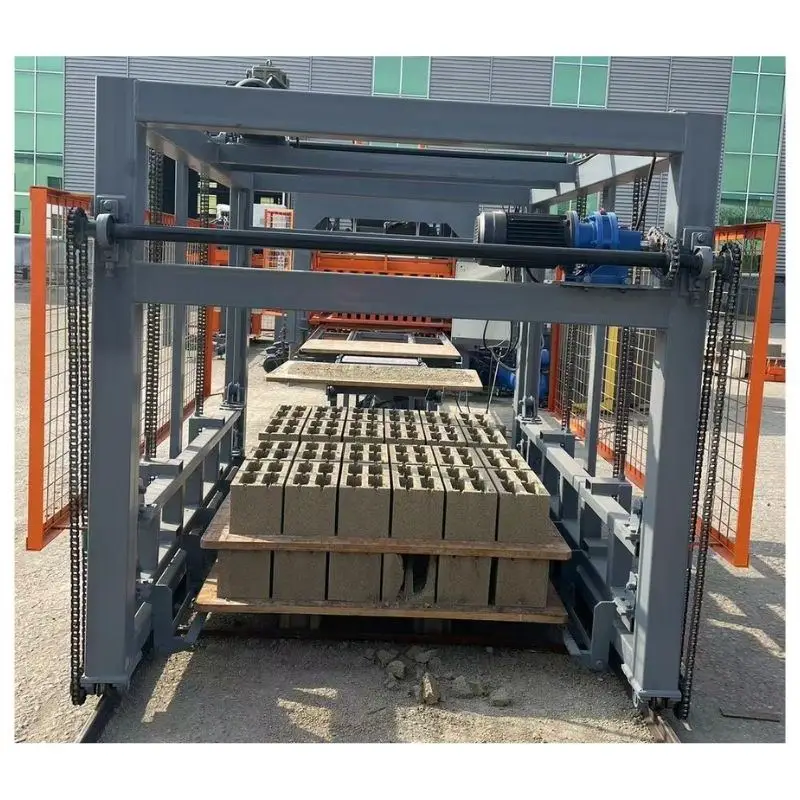
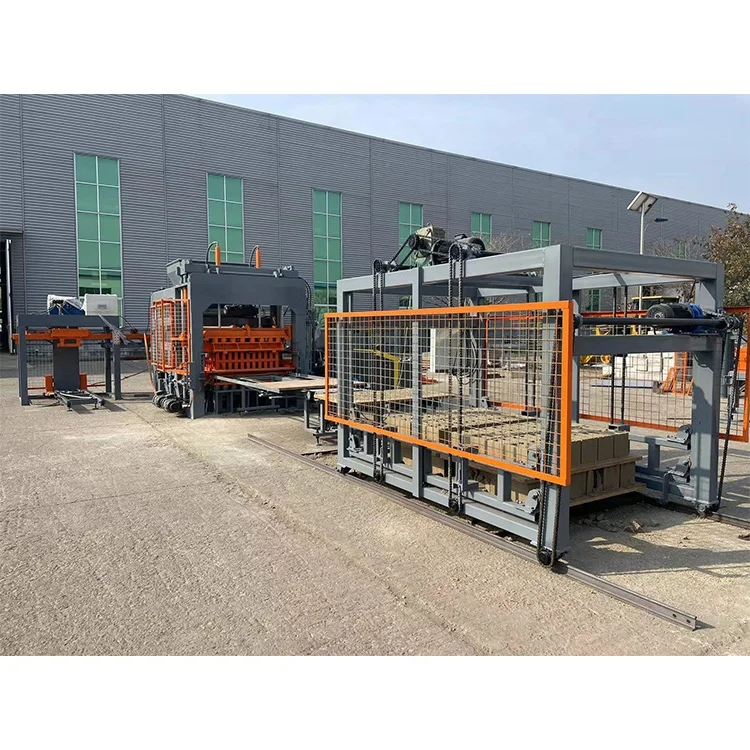
What Happens When Automation Stops at the Press
A buyer who specs a fully automatic press but leaves pallet circulation, stacking, and curing rack handling to manual labor ends up with a bottleneck right at the discharge end. The press completes its cycle, but blocks sit waiting for a worker to pull the pallet, stack it on a rack, and wheel it to the curing area. I have walked into plants where a high-output press was producing at a fraction of its rated speed because the downstream stations were never designed to keep pace. The cost is not just lost volume — it is inconsistent curing times that affect block strength across the batch. [NEED_CITE:]
Engineering and Support Structure Behind This Machine
Block machinery is the single production focus here, which means the press, mould, pallet, and handling equipment are specified as one matched system rather than pulled from separate vendors. The QT10-15 configuration is set against the buyer’s actual mix design and target block format, not a catalogue default. Mould design covers the formats the buyer’s market sells, including custom drawings when standard sizes do not match. The automation level can start at core press control and expand to include automatic stacking and cubing as the plant scales. Installation includes on-site commissioning with operator training, and wear parts lists are provided before the first production run. [NEED_CITE:]
Documentation & Verification
- Line layout and capacity calculation stating the QT10-15 block format and cycle time assumed
- Factory test record showing output per format run on the buyer’s target mix design
- Mould drawing and format compatibility list for all ordered block types
- Hydraulic and electrical schematic matching the confirmed voltage and frequency
- PLC display language confirmation documented before production begins
- Wear parts and mould list with reorder part numbers for first replacement cycle
Installation, Commissioning & Support
- Foundation plan matching QT10-15 overall dimensions and dynamic load from four-axis vibration
- Dedicated power circuit sized to the confirmed voltage, frequency, and total connected load
- Machine arrives in dismantled modules for container loading; reassembly supervised on site
- PLC parameters programmed to buyer’s mix and block format during commissioning week
- Operator training covers mould change procedure, recipe storage, and fault diagnostics
- First spare set of hydraulic seals and vibration shaft bearings included with shipment
What to Include in Your Inquiry
Share your target block formats with dimensions, the daily output you need per format, and your local aggregate source with a sieve analysis if available. Specify your existing pallet size and curing area layout so the QT10-15 configuration matches what is already on the ground. Confirm your plant voltage, frequency, and preferred PLC display language to avoid commissioning delays after the automatic stationary block machine PLC controlled system arrives.
Frequently Asked Questions
Q: How do I verify the QT10-15 output capacity for my specific block format and mix design?
A: Request a capacity calculation that names the exact block format, pallet size, and cycle time assumed. The factory test record should show a production run using your target mix — not a generic catalogue material — so the daily output figure reflects what the automatic stationary block machine PLC controlled system will actually produce in your plant.
Q: What automation level is included, and how do I add pallet circulation later?
A: The base configuration covers press automation with PLC-controlled feeding, vibration, and discharge. Automatic pallet feeding, stacking, and cubing are added as modular stations. The control architecture supports integrating these downstream stations without replacing the main PLC, so the plant can scale automation as production volume grows.
Q: How are voltage, frequency, and PLC language confirmed before production?
A: These are locked in during the quotation stage and written into the production order. The PLC display language, motor nameplate voltage, and control transformer rating are all verified against the buyer’s written confirmation before the QT10-15 enters final assembly, preventing commissioning delays at the destination.
Q: What is the cycle time per block format, and does it match upstream batching?
A: Cycle time varies by block format, wall thickness, and vibration duration set for the mix. The line layout document should show the QT10-15 cycle alongside the mixer discharge rate and pallet return speed so no station waits on another. Any mismatch is corrected by adjusting PLC timing before the machine ships.
Q: Which wear parts ship with the machine, and what is the reorder process?
A: The first spare set includes hydraulic seals, vibration shaft bearings, and feed system wear plates. A numbered wear parts list is provided so reorder requests reference exact part numbers. Lead times for replacement moulds and hydraulic components are confirmed in the quotation so the buyer can plan inventory around local shipping routes.