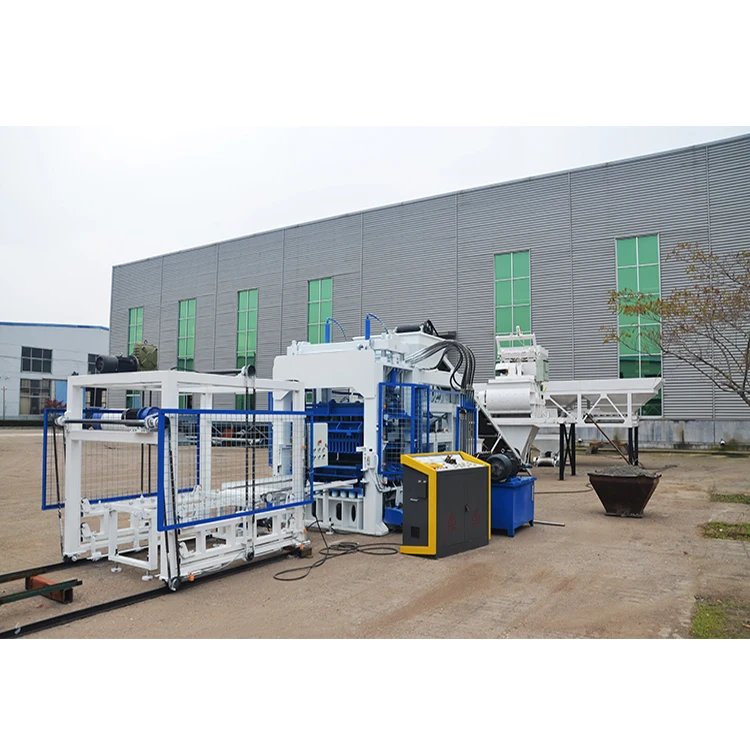
Description
Verified Throughput per Mould — the QT10-15 automatic block machine PLC controlled system ties every capacity figure to a named block format and measured cycle, so daily output matches the quotation.
Technical Specifications
| Parameter | Value |
|---|---|
| Model | QT10-15 |
| Product Type | Hydraulic Automatic Concrete Block Making Machine |
| Control System | PLC control cabinet |
| Hydraulic System | Independent integrated hydraulic station |
| Vibration Mode | Vertical station mode resonance, automatic FM-AM |
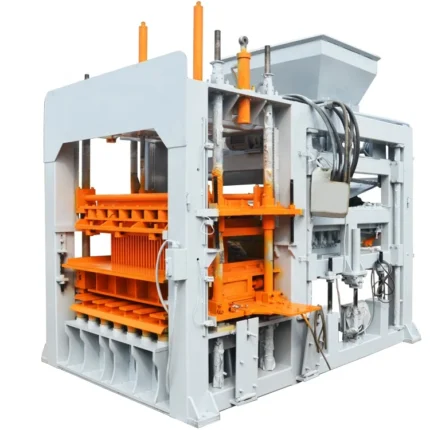
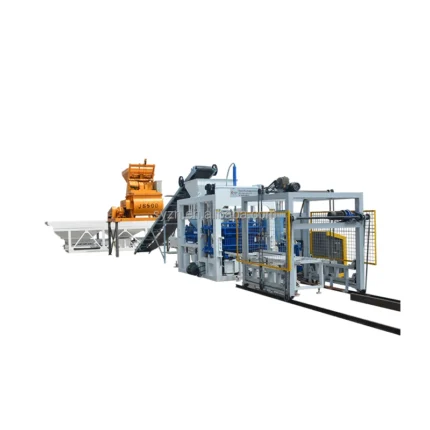
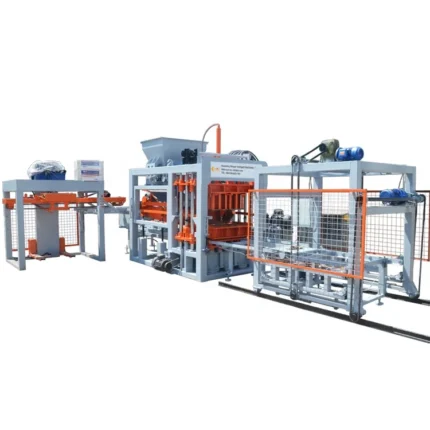
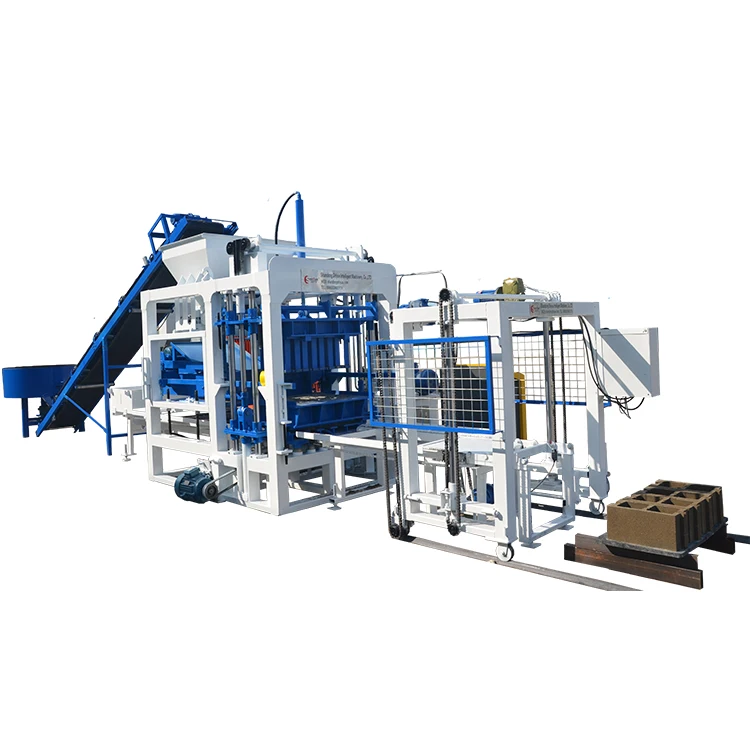
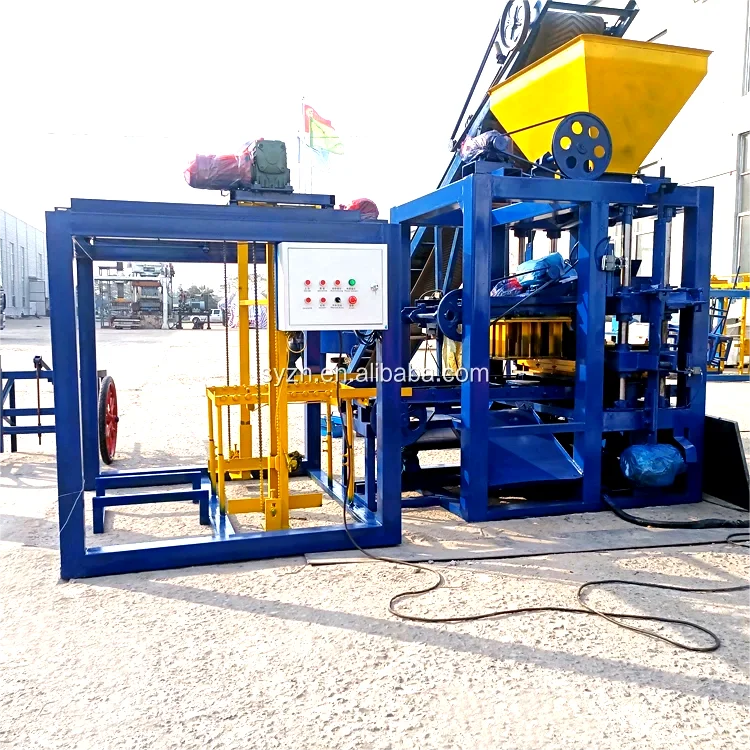
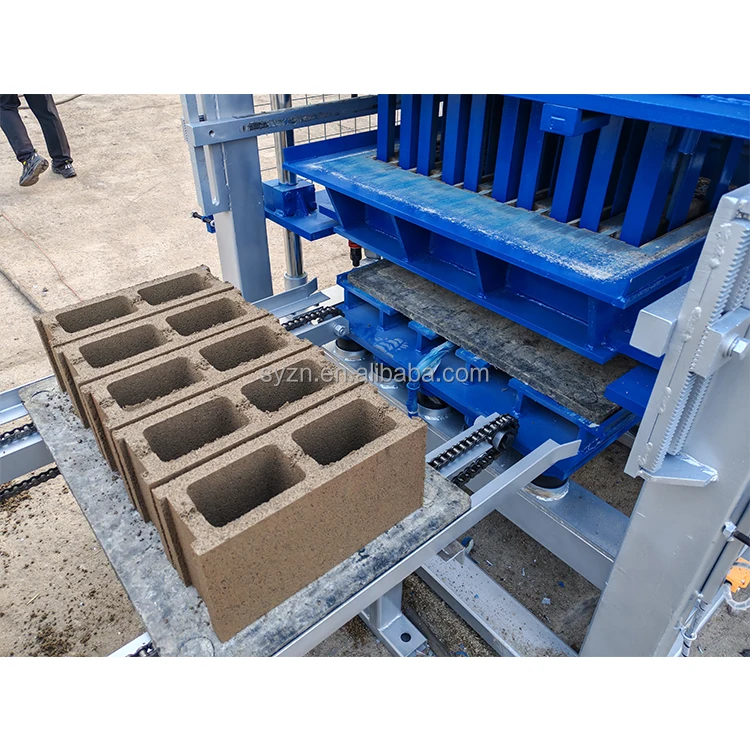
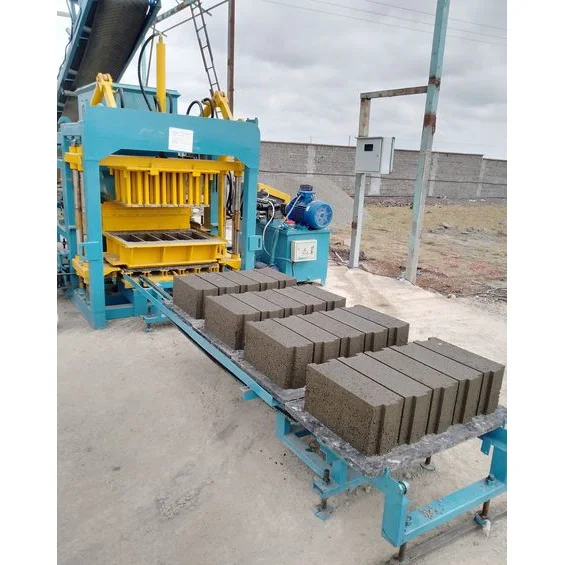
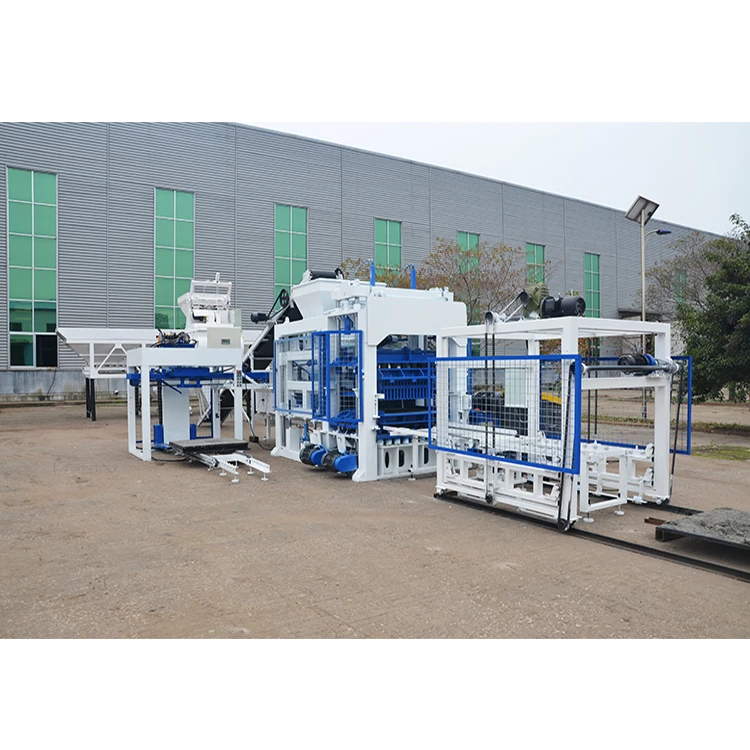
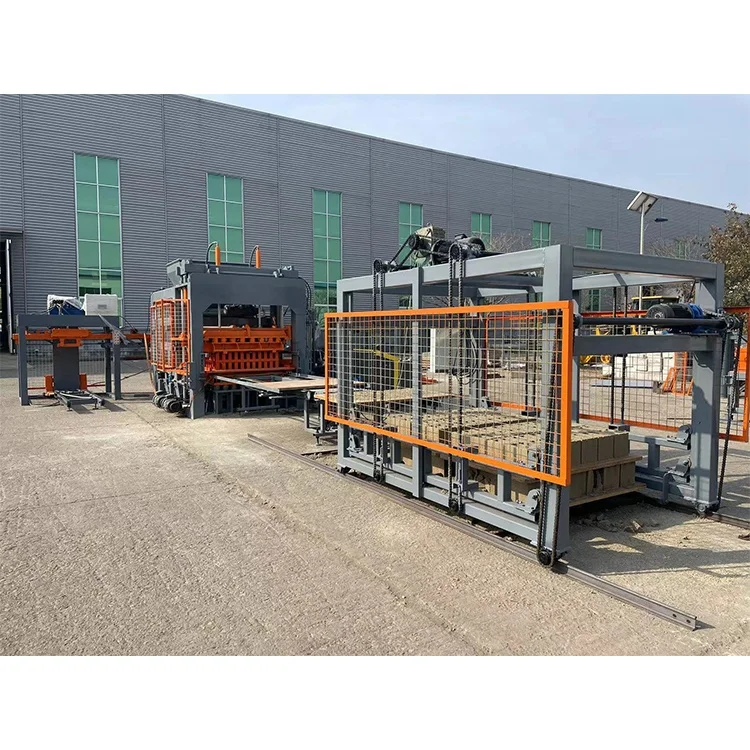
| Components Included | Pallet feed machine, block making machine, storage hopper, conveyor, hydraulic unit, PLC control cabinet |
| Mould Change | Simple replacement for multi-format production |
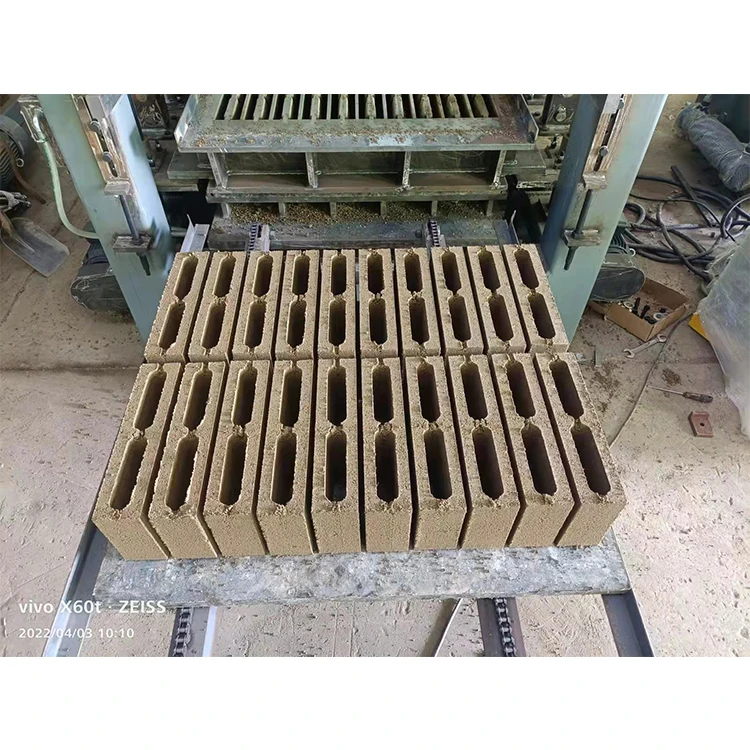
| Cycle Time (400×200×200mm hollow block) | 15–20s |
| Output Capacity (400×200×200mm hollow block, 10 pcs/mould) | 1,800–2,400 pcs/h, 14,400–19,200 pcs per 8hr shift |
| Cycle Time (400×150×200mm block) | 15–20s |
| Output Capacity (400×150×200mm block, 12 pcs/mould) | 2,160–2,880 pcs/h, 17,280–23,040 pcs per 8hr shift |
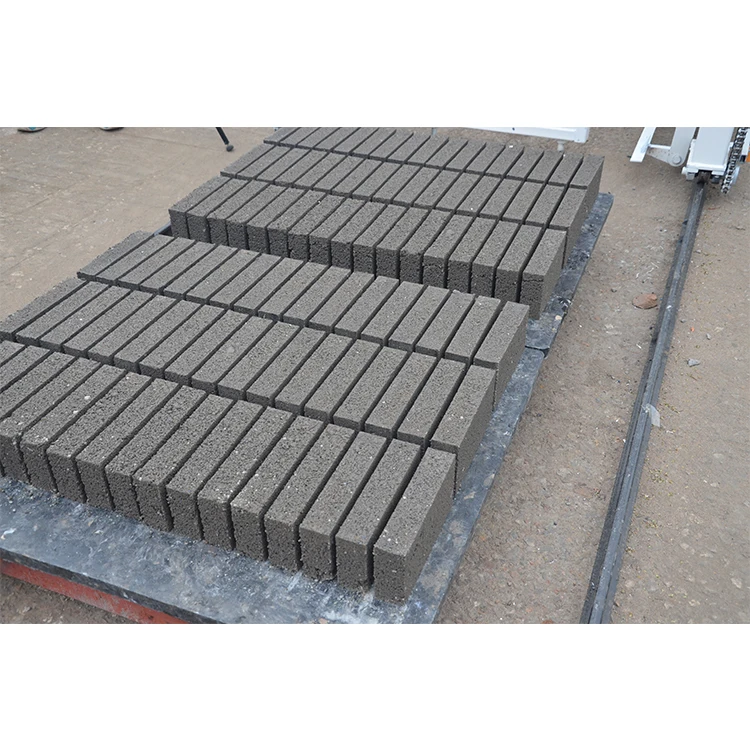
| Cycle Time (240×115×53mm solid brick) | 15–20s |
| Output Capacity (240×115×53mm solid brick, 62 pcs/mould) | 8,928–11,160 pcs/h, 71,424–89,280 pcs per 8hr shift |
| Cycle Time (200×100×60mm paver) | 20–25s |
| Output Capacity (200×100×60mm paver, 27 pcs/mould) | 5,184–6,480 pcs/h, 41,472–51,840 pcs per 8hr shift |
| Cycle Time (225×112.5×60mm interlocking brick) | 20–25s |
| Output Capacity (225×112.5×60mm interlocking brick, 24 pcs/mould) | 4,032–5,040 pcs/h, 32,256–40,320 pcs per 8hr shift |
| Automation Level | Automatic (pallet feeding, moulding, conveying included) |
| Voltage & Frequency | Configurable to site requirement (basis to be confirmed) |
| PLC Display Language | Configurable to operator language (basis to be confirmed) |
| Warranty | 1 year for whole machine (excluding spare parts) |
Application Suitability
| Application | Material or Output |
|---|---|
| Hollow block production for building walls | Crushed stone, sand, cement, and local aggregate blends |
| Solid brick manufacturing for masonry | Fine aggregate and cement mixes for high-density bricks |
| Paving block production for walkways and yards | Coarse aggregate with cement for surface wear resistance |
| Interlocking brick for landscaping and retaining walls | Graded aggregate blends suited to interlock geometry |
| Multi-cellular block for lightweight construction | Lightweight aggregate or expanded clay with cement binder |
What a "15-Second Cycle" Actually Delivers
Cycle time means nothing until you know which block format it was measured on.
I have watched plant owners quote a machine’s hourly output to their project manager, only to discover on site that the number assumed a hollow block while their contract required solid bricks. The difference between a 400×200×200mm hollow block cycle and a 240×115×53mm solid brick cycle is not a rounding error — it changes daily output by a factor of four or more [NEED_CITE: block format impact on daily throughput calculations]. The automatic QT10-15 block machine PLC controlled architecture lets you run any of these formats on one press, but the realistic output you should plan against depends entirely on the mould you install and the cycle that mould requires.
How PLC Automation Removes Operator Variance
On a semi-automatic press, the operator decides when to drop the material, when to start vibration, and when to eject the pallet. Every decision introduces a few seconds of drift between cycles. The QT10-15 PLC control cabinet sequences pallet feeding, material distribution, hydraulic compression, vibration, and pallet discharge as a single timed routine. Batch-to-batch consistency comes from the programme, not the person behind the panel. This matters especially on night shifts and in markets where skilled operators are scarce.
What the PLC Controls and What It Does Not
The automatic QT10-15 block machine PLC controlled system handles the press cycle, pallet indexing, and material feed timing. It does not replace good raw material management. If the mix moisture drifts outside the range the mould was tuned for, block density will vary regardless of how precise the cycle timing is [NEED_CITE: concrete block moisture content and compressive strength correlation]. The PLC keeps the machine side consistent; the batching side must match.
Hydraulic Pressure, Vibration, and the Density Equation
The independent integrated hydraulic station sits apart from the main frame, isolating valves and seals from the vibration zone. Vertical station mode resonance with automatic FM-AM vibration adjusts frequency and amplitude to the block format being produced. For a thick hollow block, lower frequency with higher amplitude consolidates the coarse aggregate. For a thin paver, higher frequency with lower amplitude settles fine material into the mould cavities. Getting this pairing wrong is one of the most common reasons blocks arrive at the curing rack with inconsistent strength across the same pallet.
When Automation Level Meets the Wrong Pallet
A fully automatic pallet feed system assumes pallets arrive at the infeed station in good condition and at the correct dimension. If the pallet size does not match what the line was specified for, pallets jam at the transfer point and the press sits idle. I once saw a plant running pallets that were a few millimetres too wide for the guide rails because the curing area forklift dictated a different pallet width than the machine was ordered with [NEED_CITE: pallet dimension compatibility with block machine feed systems]. The fix cost a week of production and a set of new pallets. Always confirm pallet size against both the machine specification and the curing rack layout before production starts.
Why Specifying the Control Language Matters Before Shipment
On one project, a QT10-15 unit arrived in West Africa with the default control language set to Chinese. The local operator could not read a single character on the HMI. Commissioning stalled for two days while we pushed a language update remotely. Since that incident, every unit we prepare goes through a written confirmation of PLC display language before it leaves the factory. It is a five-minute check that prevents a multi-day standstill at the other end.
Why Source Here
Block machinery is the single focus of our engineering team, which means the press, moulds, pallets, and handling equipment are specified as one matched system rather than assembled from separate suppliers. We configure the automatic QT10-15 block machine PLC controlled setup against your actual mix design and local aggregate, not a catalogue default. Custom mould design is available to your market drawings, so the formats you sell are the formats the machine produces. The automation level is selectable — you can run the press automatically now and add stacking or cubing modules later without replacing the control cabinet. Factory testing records actual cycle times per your mould before the machine is crated.
Documentation & Verification
- Line layout and capacity calculation stating the exact block format assumed for each throughput figure
- Machine specification sheet with hydraulic and electrical schematics for local maintenance reference
- Mould drawing and format list confirming cavity count and dimensional tolerances
- Voltage, frequency, and PLC display language confirmation recorded before production
- Factory test record showing measured cycle times on your specified mould before dispatch
Installation, Commissioning & Support
- Foundation plan provided based on the QT10-15 overall dimensions and dynamic load from vibration
- Dedicated electrical circuit sized to the unit’s rated power with confirmed voltage and frequency
- Machine shipped in dismantled state with labelled components for reassembly sequencing on site
- Commissioning includes PLC parameter tuning to your mix design and target block format
- Operator training covers mould change procedure, cycle adjustment, and fault code reading on the PLC
- Wear parts and mould list supplied with recommended replacement intervals based on production volume
What to Include in Your Inquiry
Tell us which block format you intend to produce as your primary product and your target daily output for that format. Include your local voltage and frequency, the language your operators need on the PLC display, and a sample or description of your available aggregate. If you plan to add automatic stacking or cubing later, mention that so the control cabinet can be specified with the necessary I/O capacity from the start.
Frequently Asked Questions
Q: How is the QT10-15 capacity verified per block format, and what cycle time assumptions are used?
A: Every output figure we quote is tied to a specific mould and block dimension. For a 400×200×200mm hollow block with 10 cavities, the cycle is 15–20 seconds, yielding 1,800–2,400 pieces per hour. For solid bricks or pavers, the mould cavity count and cycle differ, so the hourly rate changes accordingly. We provide a capacity calculation sheet listing each format separately.
Q: What automation functions does the PLC control handle, and what remains operator-dependent?
A: The PLC manages the full press cycle — pallet indexing, material feed timing, hydraulic compression, vibration sequence, and pallet discharge. The operator still handles raw material loading into the storage hopper, mould changeovers when switching formats, and pallet supply at the infeed station. Adding automatic stacking or cubing modules can further reduce manual steps in the line.
Q: How are voltage, frequency, and PLC language confirmed before the machine enters production?
A: We require written confirmation of your site voltage, frequency, and preferred PLC display language before the control cabinet is built. These values are locked into the production order so the correct transformer, motor, and HMI language pack are installed at the factory. A confirmation document is sent back for your records.
Q: What is the upgrade path if I start with this automatic configuration and later add stacking or cubing?
A: The PLC control cabinet can be specified with spare I/O channels at the time of initial order. When you are ready to add an automatic stacker or cubing unit, the new module connects to the existing PLC without a cabinet replacement. The upgrade is primarily a mechanical installation with programme expansion, not a full control system swap.
Q: How does the independent hydraulic station protect against vibration and dust contamination over time?
A: The hydraulic station is mounted separately from the main press frame, so the high-frequency vibration generated during compaction does not transfer into valves and seals. This isolation reduces wear on hydraulic components and keeps oil cleaner for longer. Routine filter changes remain necessary, but the service intervals are more predictable compared to an integrated station design.