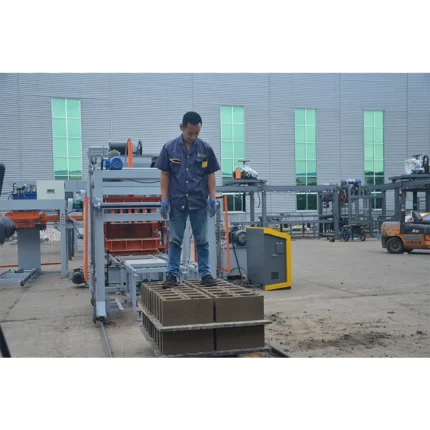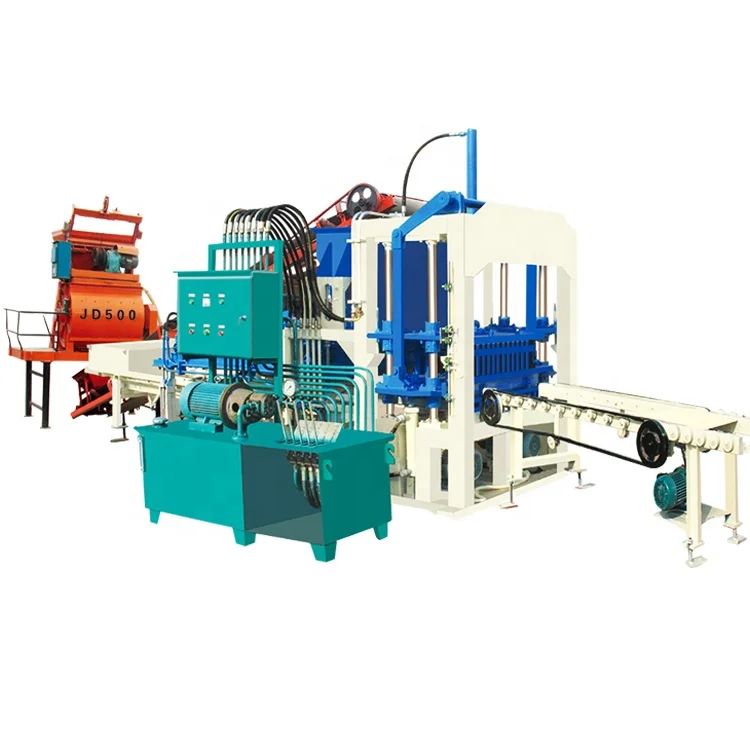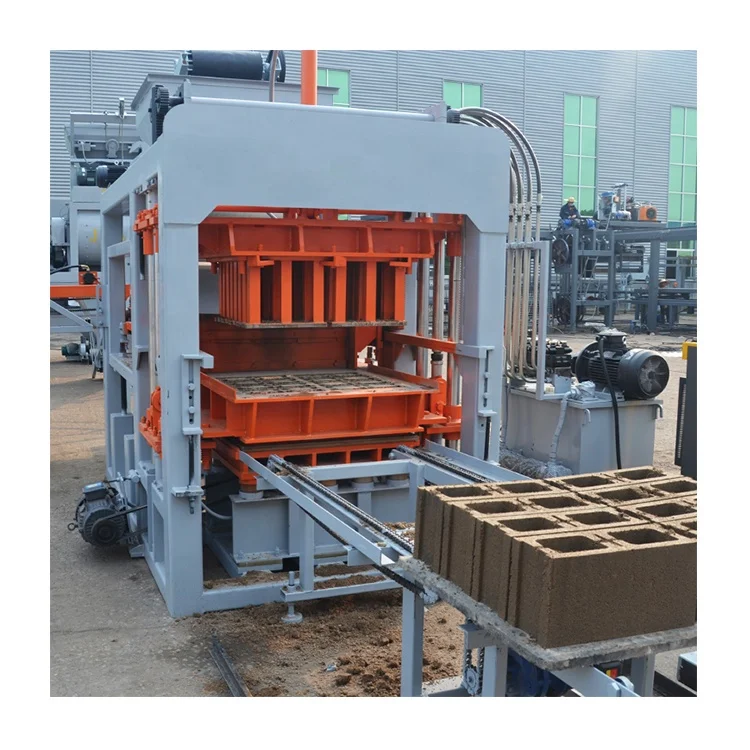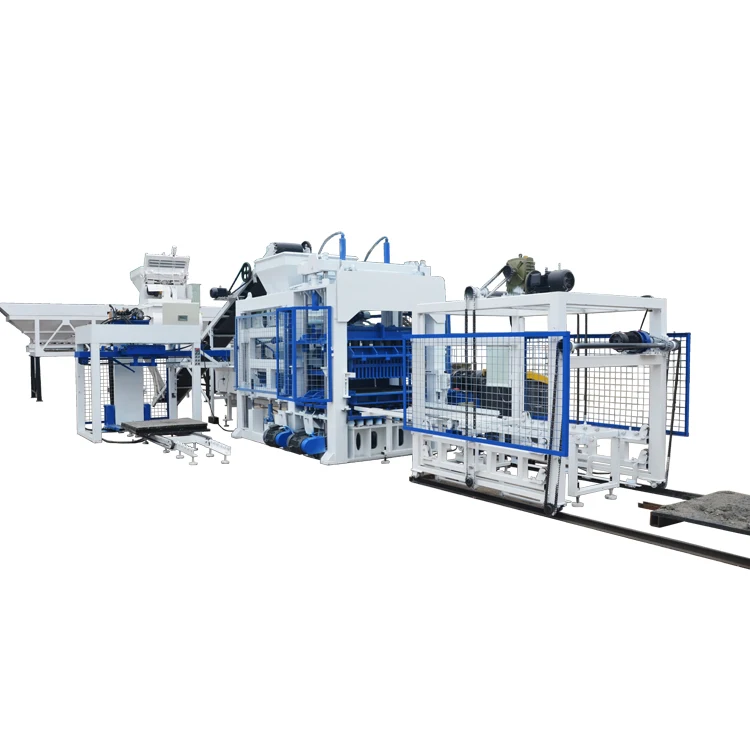
Description
Control Logic Matched to Local Aggregate — PLC parameters are set against the buyer’s actual mix design and vibration response, not left at factory defaults that assume ideal sand.
Technical Specifications
| Parameter | Value |
|---|---|
| Model | QT15-15 |
| Product Type | Fully Automatic Concrete Block Production Line |
| Moulding Cycle (Hollow block 400×200×200mm) | 15-20s |
| Output per Mould (Hollow block 400×200×200mm) | 15 pcs |
| Output Capacity (Hollow block 400×200×200mm) | 2,700-3,600 pcs/h |
| Daily Output (Hollow block 400×200×200mm, 8hr shift) | 21,600-28,800 pcs |
| Moulding Cycle (Solid brick 240×115×50mm) | 15-20s |
| Output per Mould (Solid brick 240×115×50mm) | 80 pcs |
| Output Capacity (Solid brick 240×115×50mm) | 14,400-19,200 pcs/h |
| Daily Output (Solid brick 240×115×50mm, 8hr shift) | 115,200-153,600 pcs |
| Control System | PLC with human-machine interface dialogue system |
| Vibration System | Vertically synchronous vibration, frequency conversion and braking, double vibration sources |
| Feeding System | Semi-closed screen reticular rotational forced feeding unit |
| Hydraulic System | Computer-controlled flow pressure, special hydraulic loading unit |
| Steel Structure | Super-strong steel frame with imported original parts |
| Automation Level | Fully automatic, mass production capable |
| Pallet Size | (basis to be confirmed) |
| Hydraulic Pressure (MPa) | (basis to be confirmed) |
| Vibration Force (kN) | (basis to be confirmed) |
| Rated Power (kW) | (basis to be confirmed) |
| Voltage & Frequency | (basis to be confirmed) |
| Mould Change Time | (basis to be confirmed) |
| Overall Dimensions (L×W×H) | (basis to be confirmed) |
| Net Weight | (basis to be confirmed) |
| Stacking Method | (basis to be confirmed) |
| Standards | CE (confirm applicability for this model) |
Application Suitability
| Application | Material or Output |
|---|---|
| High-volume hollow block production for building material plants | Crushed stone, sand, cement, fly ash, water |
| Solid brick manufacturing for construction supply | River sand, stone dust, cement |
| Porous and paver block production | Aggregate blends, pigment, cement |
| Large-scale automatic block and paver production lines | Multi-format output across an 8-hour shift |
What "Automatic" Really Means When the Mix Changes
An automatic block production line PLC controlled is only as intelligent as the parameters loaded into it before the first cycle runs.
I have watched plant owners sign for a fully automatic line based on a sample capacity figure, only to find that their local aggregate carries a higher clay content than the factory test sand. The pre-loaded PLC recipes then overfeed, under-vibrate, or mistime the hydraulic press, and the first two months look nothing like the brochure. The gap is not mechanical failure; it is a control logic mismatch that no one checked before the container shipped [NEED_CITE: aggregate variability and PLC recipe tuning in concrete block production].
How the PLC Manages Signal Flow Across the Line
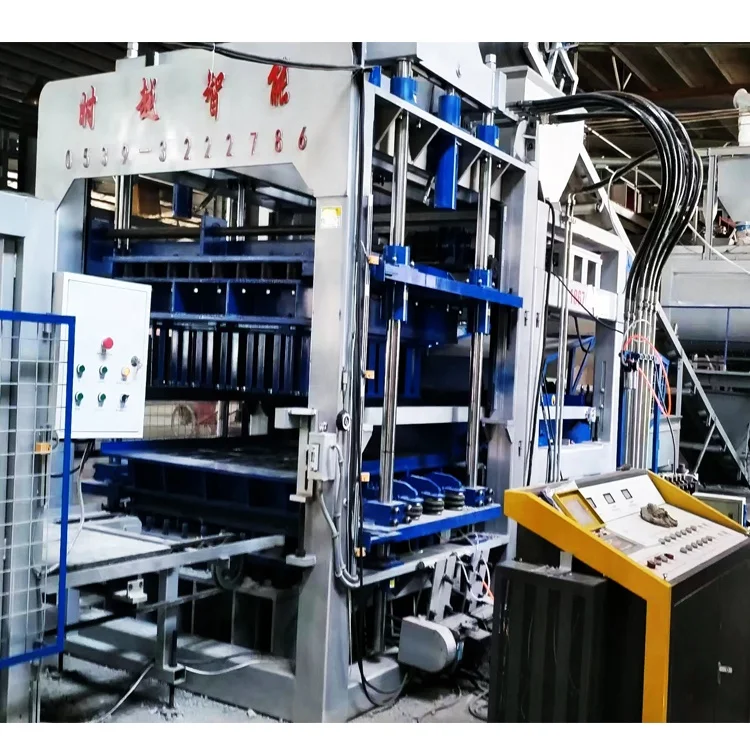
The human-machine interface dialogue system on this automatic block production line PLC controlled unit processes signals from the feeding, vibration, and hydraulic stations in sequence. Rather than treating each station as an independent timer, the PLC coordinates the rotational forced feeding unit with the vibration start point, ensuring the mould cavity is filled to a consistent depth before compaction begins. When the mix behaves differently, operators adjust feed time and vibration frequency from the interface without rewriting the base programme.
Tuning Vibration to the Mould, Not the Catalogue
The vertically synchronous vibration system uses double vibration sources with frequency conversion and braking. This matters because a hollow block mould and a solid brick mould demand different energy profiles; the former needs deep penetration through tall cores, while the latter requires surface densification across a wide face. The frequency conversion allows the operator to select the vibration profile that matches the current mould, and the braking function stops resonance from carrying into the next cycle [NEED_CITE: vibration frequency tuning for concrete block mould formats].
Reading the Specs That Actually Shape Daily Output
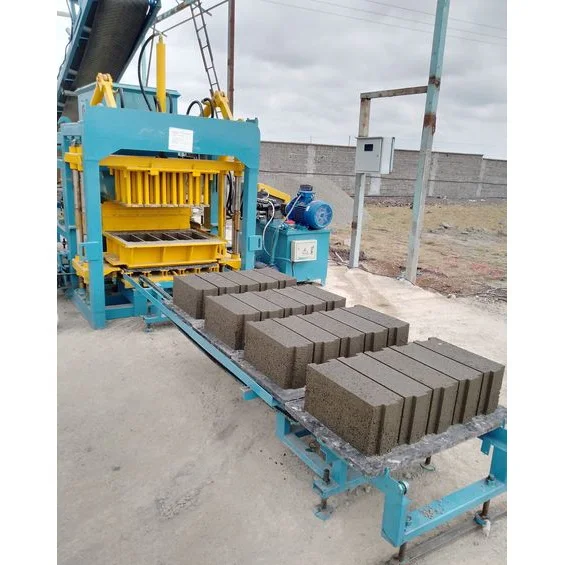
The moulding cycle of 15-20 seconds for a 400×200×200mm hollow block sets the press rhythm, but the line’s real pace depends on how quickly the forced feeding unit fills the cavity and how fast the pallet advances afterward. The semi-closed screen reticular design pushes material into deep mould corners that gravity feeding leaves uneven, which directly affects block density and the vibration time needed to reach target strength. The computer-controlled hydraulic flow pressure adjusts to the mould height and mix stiffness, preventing under-pressured blocks on one end and over-pressured flash on the other. Together, these parameters determine whether the 2,700-3,600 pieces per hour capacity for hollow blocks is achievable on your specific material.
The Cost of Skipping the Voltage and Language Conversation
When a plant receives a machine with a PLC display in a language the operators cannot read, commissioning stalls until someone translates every menu and alarm code. A mismatch in voltage or frequency can trip breakers on the first start or degrade the hydraulic pump over weeks of low-voltage operation. These are not defects; they are unconfirmed specifications that delay production and create service calls that could have been prevented with a single email before fabrication [NEED_CITE: industrial equipment voltage and frequency standards by destination market].
Why Sourcing the Line as One System Matters
Shiyue configures the QT15-15 as a matched system where the PLC, vibration, hydraulic pressure, and feeding unit are set against each other rather than assembled from separate suppliers. The capacity calculation document ties every output number to a specific block format and cycle, so daily planning is based on the moulds the buyer will actually run. Automation level is selectable, allowing a plant to begin with semi-automatic pallet handling and add stacking later without replacing the press. Mould design covers the formats the local market demands, including custom drawings when standard sizes do not match regional building codes. Installation includes operator training on the specific control logic loaded for the buyer’s mix.
Documentation & Verification
- Line layout and capacity calculation stating the block format assumed for each output figure
- PLC programme parameter sheet showing vibration and feed settings per mould type
- Hydraulic and electrical schematic for local maintenance and troubleshooting
- Voltage, frequency, and PLC display language confirmation record before production
- Factory test record run on material matching the buyer’s aggregate report
- Mould drawing and format list with changeover procedure included
Installation, Commissioning & Support
- Foundation plan matched to the QT15-15 steel frame footprint and vibration load distribution
- Dedicated power circuit sized for the rated power and voltage confirmed for the destination market
- PLC display language and alarm codes verified against operator requirements before dispatch
- First-run parameter tuning on the buyer’s local aggregate to validate the pre-loaded PLC recipes
- Operator training covering mould change procedure, feed time adjustment, and fault code response
- Wear parts list identifying hydraulic seals and vibration mounts with replacement intervals
What to Share Before Requesting a Quotation
Provide the block formats your market sells most, including exact dimensions and the daily volume you need per format. Share a recent aggregate analysis so the vibration and feeding parameters can be set before the PLC is programmed. Confirm your site voltage, frequency, and the language your operators will need on the control display to avoid commissioning delays.
Frequently Asked Questions
Q: How is the quoted output capacity verified, and which block format is each number based on?
A: Every capacity figure on the specification sheet is tied to a specific block format, mould size, and cycle time. The hollow block output of 2,700-3,600 pieces per hour is based on a 400×200×200mm block at a 15-20 second cycle, while solid brick output is calculated separately at the same cycle range.
Q: What automation level is included in the standard configuration?
A: The QT15-15 is supplied as a fully automatic press with PLC control. Pallet feeding, stacking, and cubing stations are configurable based on the buyer’s automation target, and the line can start semi-automatic and add handling equipment later.
Q: Can the PLC language and voltage be configured for the destination market before shipment?
A: Yes. The PLC display language, voltage, and frequency are confirmed during the order process and set before the machine leaves the factory. This prevents commissioning delays caused by unreadable menus or electrical incompatibility at the plant site.
Q: How long does a mould change take on this line?
A: Mould change time depends on the specific mould mounting system selected for the configuration. The procedure and estimated changeover duration are documented in the format list supplied with the quotation so buyers can plan production shifts around format switches.
Q: How is the vibration system tuned to local aggregate?
A: The frequency conversion system allows operators to adjust vibration profiles through the PLC interface. Before shipment, the factory can pre-load recipes based on the buyer’s aggregate report, and on-site commissioning includes fine-tuning against the actual material received at the plant.