

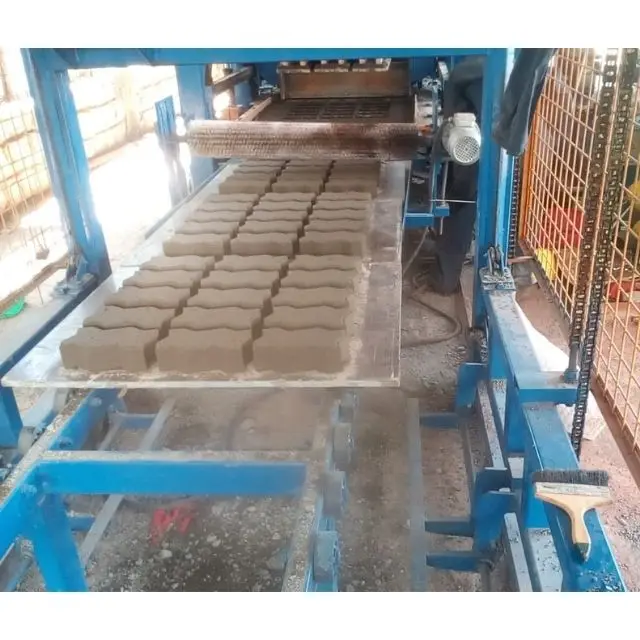
Description
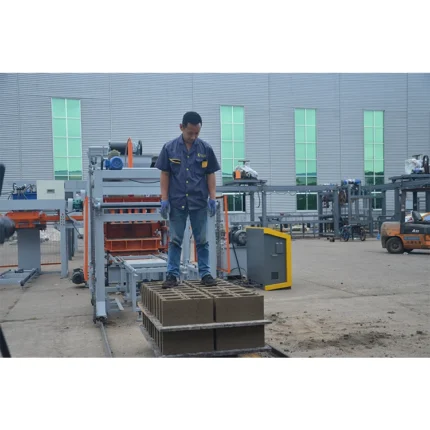
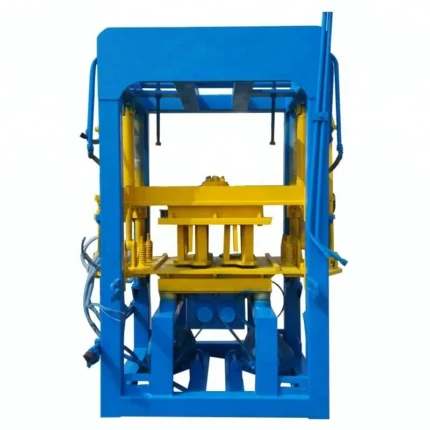
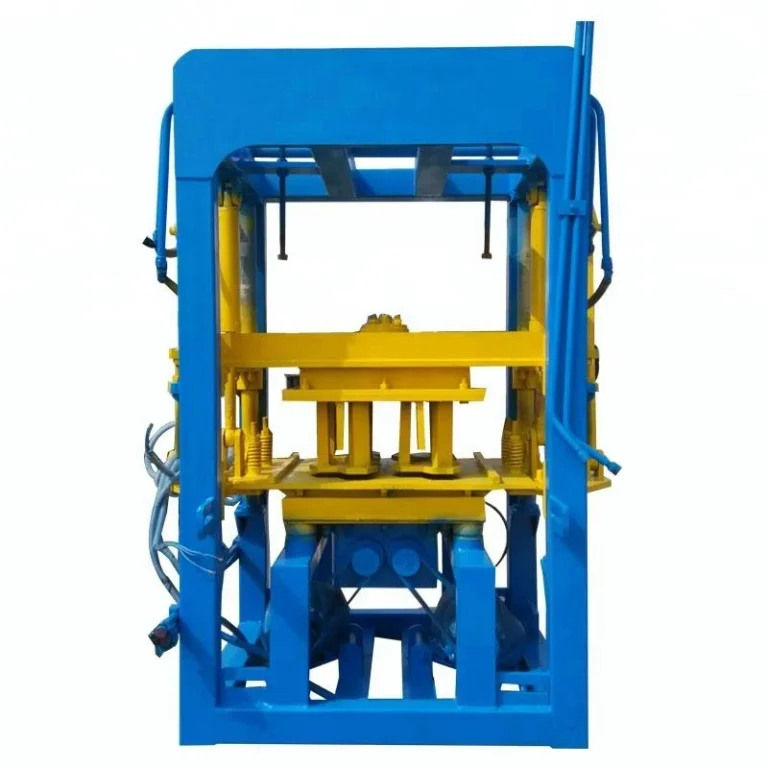
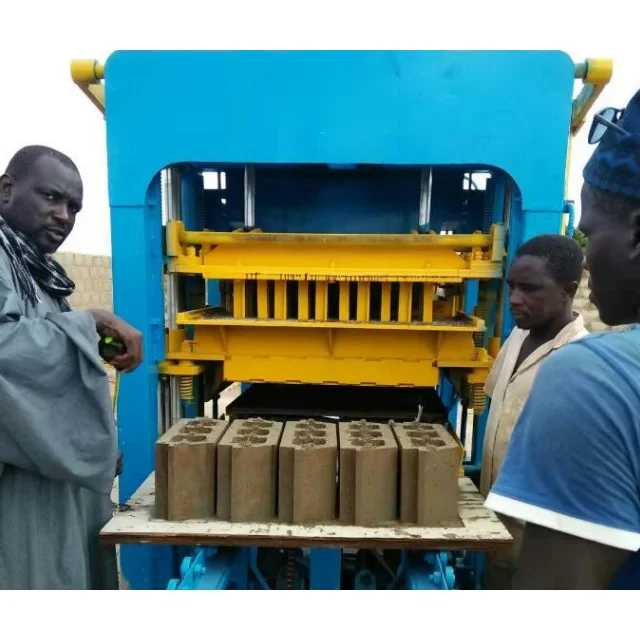
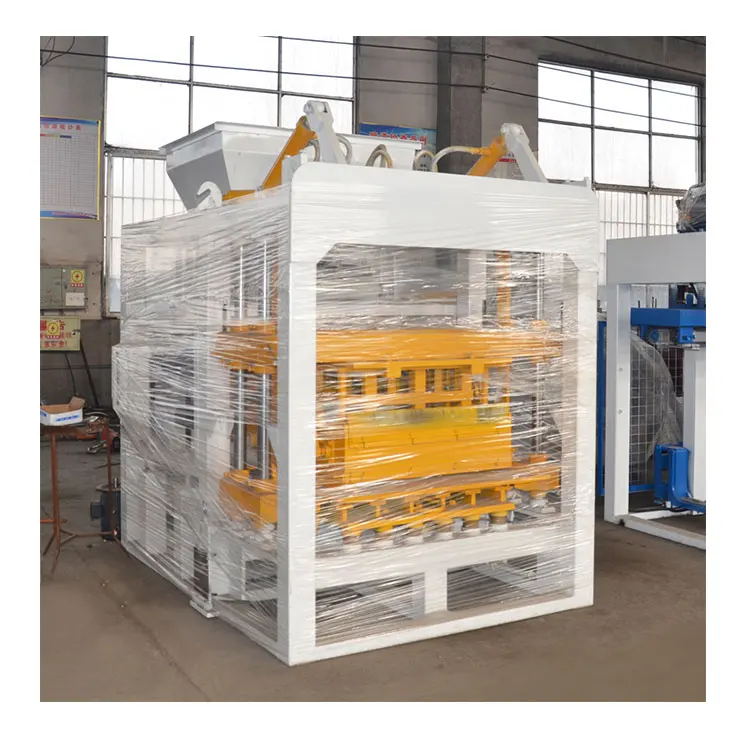
Matched System Integration — the QT4-15 block machine, mould, pallet, and handling equipment are specified together so the press is never left waiting on upstream or downstream stations.
Technical Specifications
| Parameter | Value |
|---|---|
| Model | QT4-15 |
| Product Type | Automatic Concrete Block Making Machine |
| Overall Dimensions (L×W×H) | 7100 x 1600 x 2610 mm |
| Rated Pressure | 16 MPa |
| Vibration Form | Platform Vibration |
| Pallet Size | 1020 x 570 mm |
| Molding Cycle | 15-25s (basis not stated in source — confirm block format / material / thickness) |
| Overall Power | 27.5 kW |
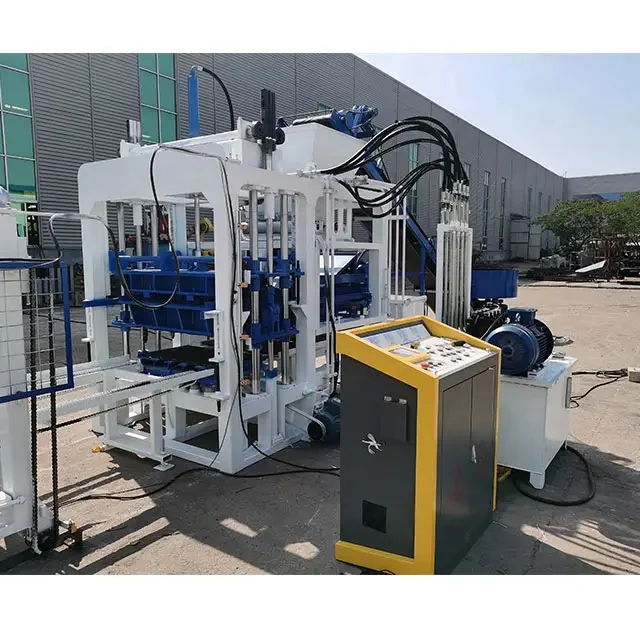
| Control System | PLC electronic console |
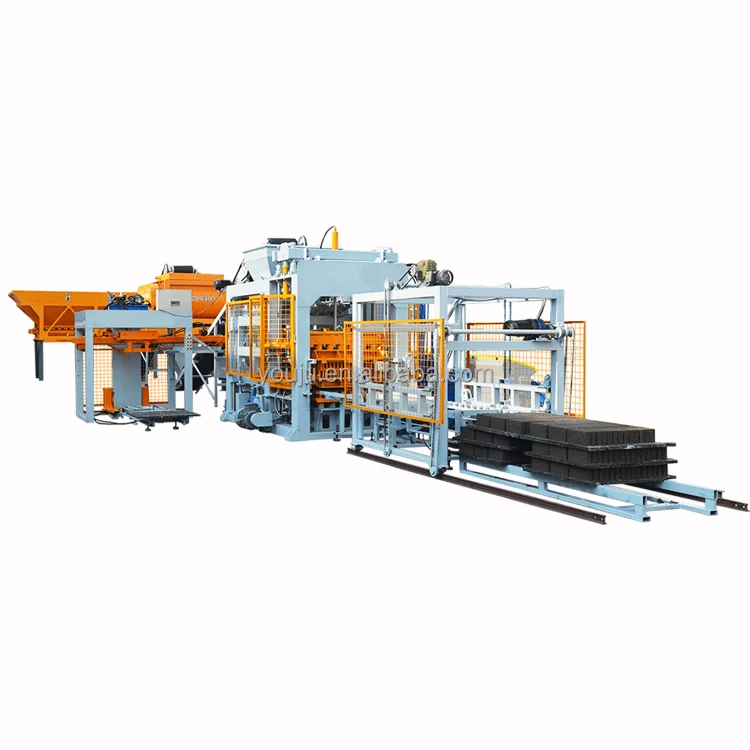
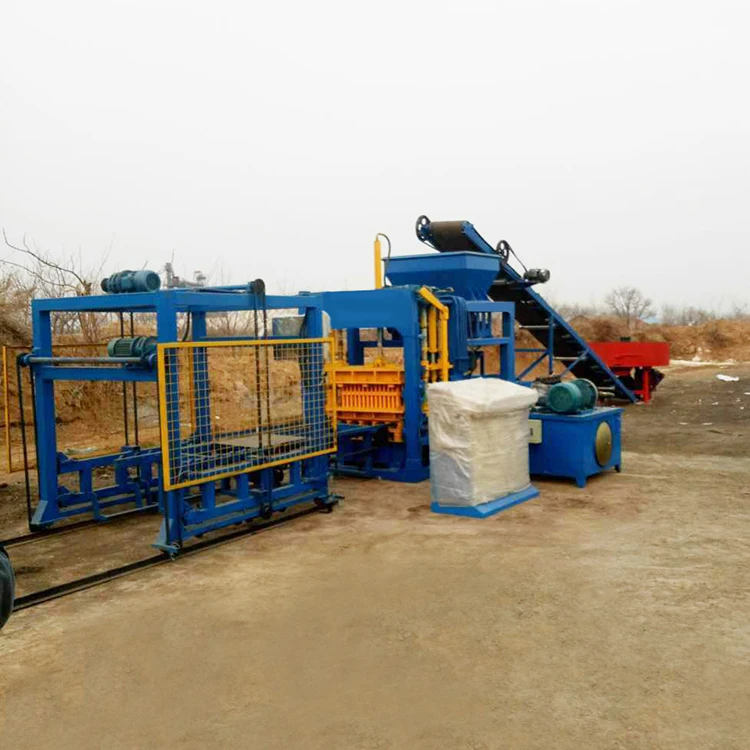
| Automation Level | Automatic (pallet feeder, material feeder, molding, block conveyor) |
| Material Feeder System | Hopper, feeding box, feeding platform, conveyor system |
| Block Receiver | Frame, convey system, idler wheels, motor and reducer with triangle belt |
| Mould Change Method | Manual bolt release, conveyor-assisted mould extraction |
Application Suitability
| Application | Material or Output |
|---|---|
| Hollow block production | Crushed stone, sand, cement, and fly ash aggregates |
| Interlocking block forming | Graded aggregate with cement binder for dry-cast mix |
| Paving block manufacturing | High-density mix designs with fine and coarse aggregate |
| Solid brick production | Standard concrete mix with locally sourced raw materials |
What PLC Control Language Means for Your First Production Run
A smart console is useless if the operator cannot read the screen.
I have watched a brand-new automatic QT4-15 block making machine PLC controlled sit idle in an Ecuador plant for two full days because the HMI was still in Chinese. The local crew would not touch a single parameter they could not read. Voltage and frequency had been confirmed, pallets were staged, aggregate was stockpiled — yet the line waited until I flew in and swapped the language pack. That delay cost the contractor a full weekend pour schedule [NEED_CITE: control interface language requirements for exported industrial machinery].
The lesson is simple: the automatic QT4-15 block making machine PLC controlled must ship with the display language your operators actually speak. Confirming this in writing before production starts is not a detail — it is the difference between commissioning on day one and burning through a week of downtime.
Sequence Logic That Replaces Manual Pallet Handling
The QT4-15 coordinates pallet feeding, material distribution, hydraulic pressing, and block discharge through a single PLC cycle. Each station triggers the next only after the previous step completes, which prevents the press from firing on an empty pallet or the conveyor from pulling a block before full compaction. For plants moving up from semi-automatic operation, this removes the operator who used to shove pallets by hand and watch for jam-ups between stations.
Where Automation Removes the Human Variable
Consistency in block strength comes from repeating the same vibration duration, hydraulic dwell, and material feed volume across every cycle. On a semi-automatic machine, an operator pulling pallets and timing the feed introduces small variations that compound across a shift. The automatic QT4-15 block making machine PLC controlled locks those parameters into the program, so the block pressed at hour eight matches the block pressed at hour one — provided the mix design entering the hopper stays the same [NEED_CITE: factors affecting concrete block compressive strength consistency].
Reading the Specs That Actually Shape Output
The 16 MPa rated hydraulic pressure works together with platform vibration to compact the mix. Higher pressure alone will not produce a dense block if the vibration frequency and amplitude are not matched to the aggregate particle size in your local supply. The 1020 x 570 mm pallet size determines how many blocks fit per cycle — a pallet that is too small for your curing racks means double handling after the line, and a pallet material that warps in your climate will crack green blocks during the first 24 hours. The 27.5 kW overall power draw tells you the transformer and cable run you need before the machine arrives, not after. Molding cycle figures of 15-25 seconds apply to specific formats and thicknesses; a thin paving block will cycle faster than a tall hollow block because the material depth and vibration penetration differ. Always ask which format the quoted cycle time assumes.
When the Wrong Configuration Costs More Than the Machine
A buyer who skips voltage and frequency confirmation may receive a 380 V / 50 Hz machine in a country running 220 V / 60 Hz, which burns out motors on first start-up. Selecting pallet material without considering local humidity and curing temperature leads to warped boards and uneven blocks within weeks. Choosing a mould for a format your market does not buy leaves the machine running only one product while the flexibility you paid for sits on a shelf [NEED_CITE: common commissioning failures in exported concrete block equipment].
Why Source the QT4-15 Through This Line
Block machinery is the single focus here, so the QT4-15 press, mould, pallet, and conveyor are specified as one matched system rather than assembled from unrelated suppliers. Configuration is set against your actual mix design and local aggregate, not pulled from a catalogue default. Mould design covers the formats your market sells, with custom drawings available when standard options do not fit. Automation level is selectable, so you can begin with the QT4-15 base automation and add stacking or cubing later as volume grows. Installation support includes operator training on the PLC console so your crew can run the line independently from day one.
Documentation & Verification
- Line layout showing QT4-15 station spacing and pallet flow path
- Capacity calculation stating the exact block format and cycle time assumed
- Mould drawing and format list matched to your target product range
- Voltage, frequency, and PLC display language confirmed before production
- Factory test record measuring actual cycle time on your chosen block format
- Packing photographs documenting dismantling and container loading condition
Installation, Commissioning & Support
- Foundation pad sized to the 7100 x 1600 mm footprint with vibration isolation
- Dedicated power circuit rated for 27.5 kW at your confirmed voltage and frequency
- Machine shipped partially dismantled; reassembly supervised on site by technician
- First-run parameter tuning on PLC console against your live mix and aggregate
- Operator training covering mould change, pallet feed, and fault clearing procedures
- Wear parts and hydraulic seal kit supplied for initial operating period
What We Need to Quote Accurately
Send your target block format and dimensions, the daily volume you need to hit, and the raw materials available locally — including aggregate grading and cement type. Confirm your site voltage, frequency, and the language your operators will need on the PLC display. If you already have pallets or curing racks, share the dimensions so the pallet feed and block conveyor can be matched to what is already on your floor.
Frequently Asked Questions
Q: How is the 15-25s molding cycle verified, and for which block format does it apply?
A: The 15-25 second range depends on the block format, material depth, and mix design. A thin paving block cycles faster than a tall hollow block. Before order confirmation, we run a factory test on your specific target format and provide the measured cycle time in the test record so the daily output calculation reflects reality, not a catalogue average.
Q: What PLC language options are available, and can the interface be configured before shipment?
A: The PLC electronic console on the automatic QT4-15 block making machine PLC controlled can be set to your local language before the machine leaves the factory. We confirm the required display language in writing during the order process. Shipping a machine with an unreadable interface has caused avoidable commissioning delays, so this step is non-negotiable in our pre-production checklist.
Q: How does QT4-15 automation compare to semi-automatic machines in terms of manual steps eliminated?
A: The QT4-15 automates pallet feeding, material distribution, hydraulic pressing, and block conveying into a single PLC-governed sequence. Semi-automatic machines typically require an operator to load pallets and move finished blocks by hand. Removing those manual steps reduces operator dependency and keeps cycle parameters consistent across every shift.
Q: What is the upgrade path if a buyer starts with partial automation?
A: The QT4-15 is designed so that automatic stacking, curing rack handling, and cubing stations can be added to the existing PLC sequence later. The base machine already governs pallet feed through block discharge, so upstream and downstream automation modules integrate into the same control logic without replacing the press or rewiring the console.
Q: How are vibration force and hydraulic pressure matched to local aggregate?
A: The 16 MPa rated pressure and platform vibration settings are adjusted against the buyer’s actual mix design and aggregate particle size. A coarse aggregate needs different vibration amplitude and dwell time than a fine sand mix. We request a sample mix description before finalizing the PLC parameters so the machine arrives tuned to your raw materials, not a generic default.