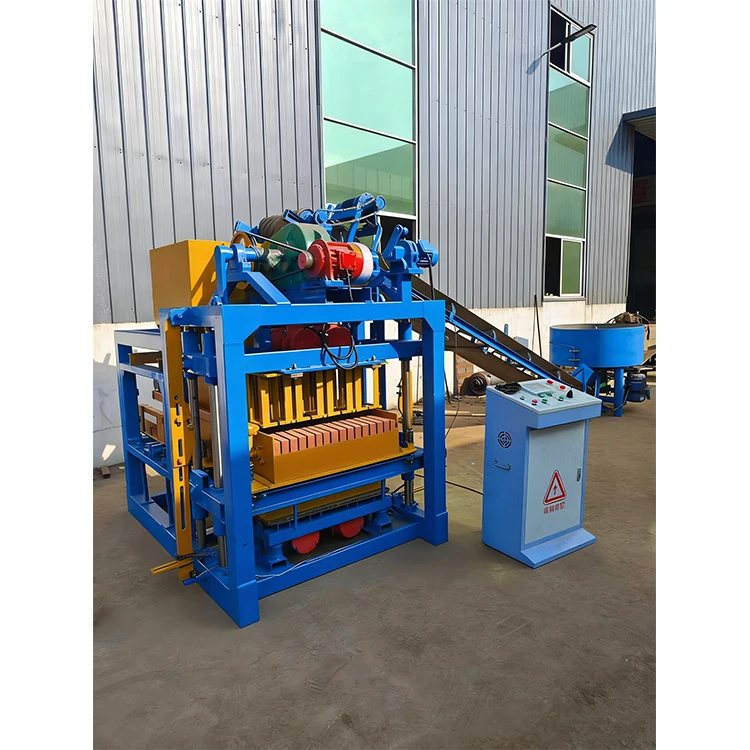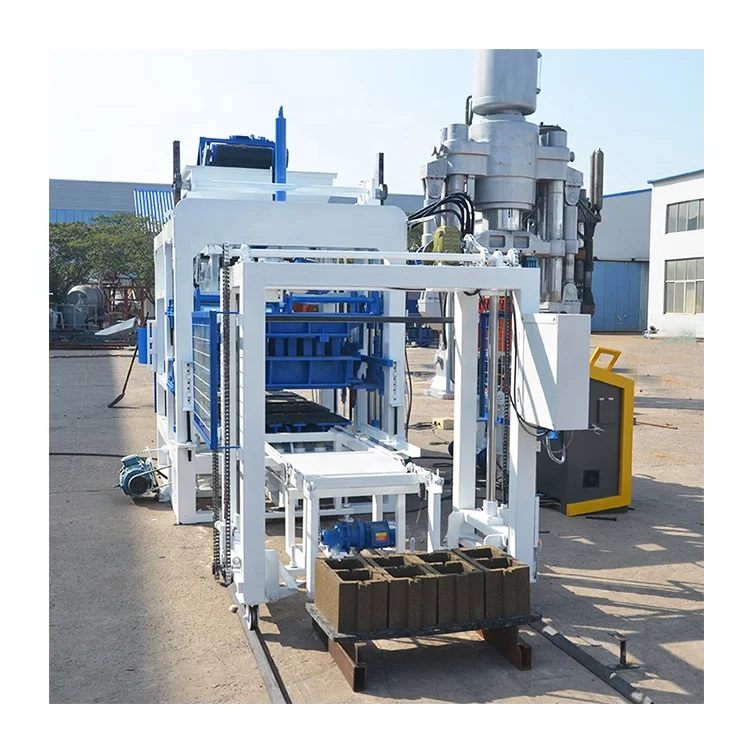
Description
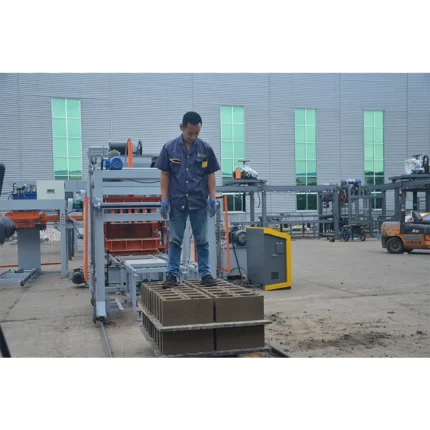
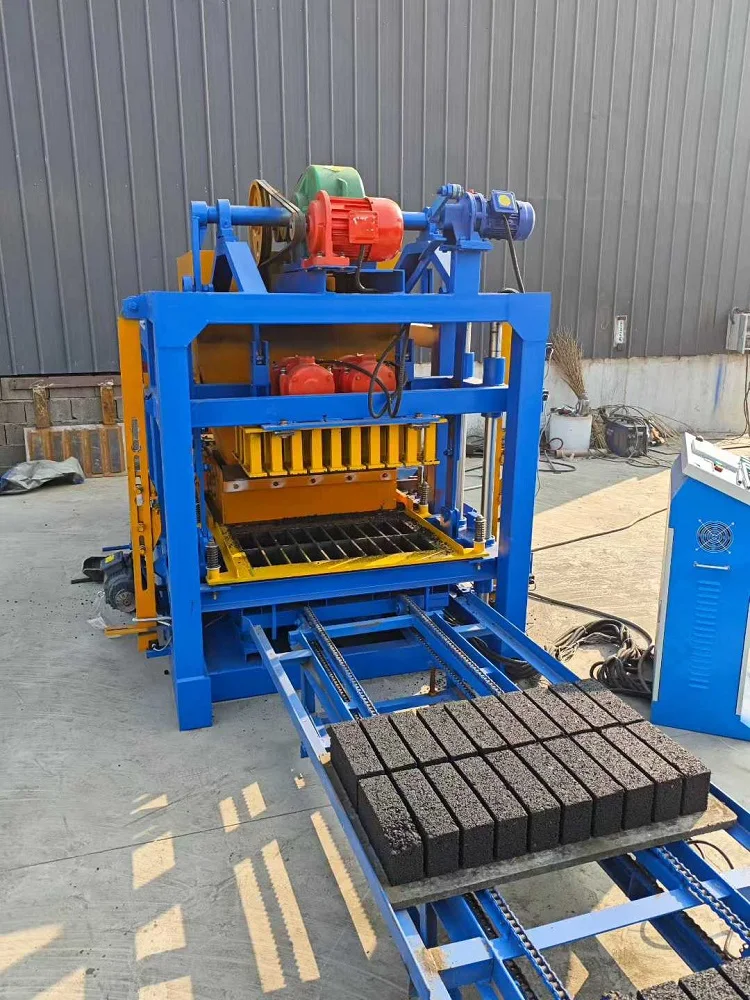
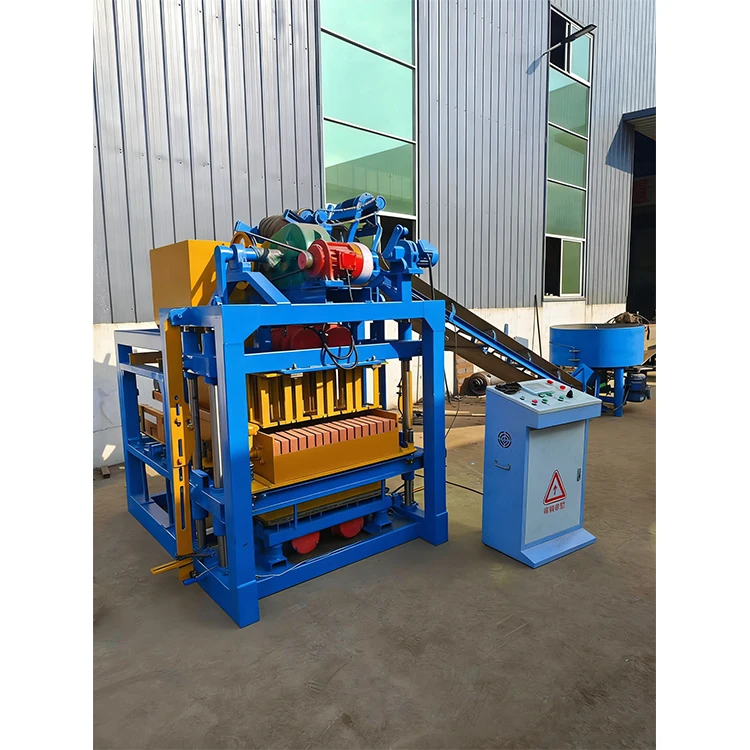
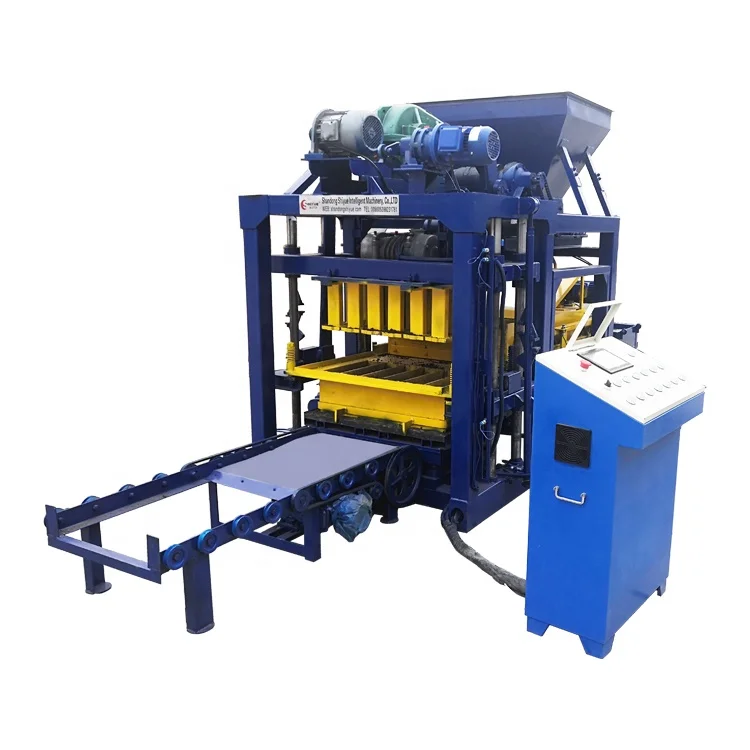
System-Matched Configuration — the QT4-16 is specified as a complete intelligent production cell where PLC logic, hydraulic pressure and vibration profile are tuned together rather than sourced separately and bolted on.
Technical Specifications
| Parameter | Value |
|---|---|
| Model | QT4-16 |
| Product Type | Automatic Hydraulic Concrete Block Making Machine |
| Overall Dimensions (L×W×H) | 7400×1950×2800 mm |
| Rated Pressure | 21 MPa |
| Main Vibration Form | Platform Vibration |
| Vibration Frequency | 2800–4500 r/min |
| Vibration Force | 40 kN |
| Pallet Size | 900×550 mm |
| Molding Cycle | 15–20 s (basis not stated in source — confirm block format / material / thickness) |
| Total Mass | 5 T |
| Demolding Method | Hydraulic |
| Factory Area | 600 m² |
| Control System | PLC intelligent control with man-machine interface, logic control, malfunction diagnosis and remote control function |
| Machine Frame | Manganese steel (China national standard) |
| Voltage & Frequency | To be confirmed per destination market |
| Display Language | To be confirmed before shipment |
| Automation Level | Full automatic |
| Key Features | Fault diagnosis system with warning signals, remote diagnostics capability, hydraulic demolding, platform vibration |
Application Suitability
| Application | Material or Output |
|---|---|
| Hollow block production | Crushed stone, sand, cement, fly ash |
| Solid block manufacturing | Gravel, sand, cement blends |
| Paving block and colored paver runs | Aggregate with pigment additives |
| Interlocking brick and curbstone | Crushed stone, slag, cement mixes |
| On-site contractor production | Local aggregate sourced near project site |
Why the Voltage Question Must Come Before the Shipment Date
An automatic concrete block making machine PLC controlled from a panel that cannot speak to the local grid is a five-tonne paperweight.
I once watched a QT4-16 sit on a curing yard for eleven days because the destination site ran 60 Hz while the control cabinet was wired for 50 Hz. The PLC threw a frequency mismatch alarm on first power-up and the main board overheated before anyone reached for the manual. That delay cost the contractor an entire foundation pour sequence [NEED_CITE: voltage and frequency standards by export market]. Since then I insist on written confirmation of voltage, frequency and panel language before any machine leaves the factory floor. A three-line email avoids what would otherwise be weeks of idle capital and frustrated crews.
Closing the Loop Between Sensor and Actuator
The QT4-16’s PLC does not simply start and stop the press. It reads vibration frequency, hydraulic line pressure and pallet position on every stroke, then adjusts the next cycle’s parameters to stay inside the tolerance window. This closed-loop behaviour is what separates a true automatic concrete block making machine PLC controlled system from a relay-sequenced press that repeats the same timer values regardless of material condition.
Remote Diagnostics Without a Site Visit
When the fault diagnosis system triggers a warning, the remote control function lets a technician off-site inspect logic states and sensor readings before a flight is booked. On projects in remote development zones, this means a pressure transducer drift or a misaligned pallet proximity switch can be identified and corrected through configuration changes rather than an emergency visit. The operator sees a plain-language alarm on the man-machine interface, and the maintenance log records the event automatically for trend analysis [NEED_CITE: remote monitoring adoption in distributed block plants].
What the Numbers Mean on the Shop Floor
The 21 MPa rated pressure combined with 40 kN of platform vibration force determines the green strength of every block leaving the mould. Insufficient pressure leaves voids in the core; excessive vibration on a lean mix causes surface spalling. The PLC allows both values to be profiled per block format, so a hollow block and a dense paver each receive the compaction sequence they actually need. The 900×550 mm pallet size dictates the curing rack spacing the buyer must prepare in advance — a mismatch here means either wasted rack slots or pallets that cannot be forked into existing aisles. Manganese steel frame construction absorbs the repeated vibration loading without fatigue cracking over multi-year production campaigns.
The Cost of Skipping the Configuration Conversation
When a buyer orders a block machine by catalogue number without disclosing their local aggregate gradation, the mould cavity fills unevenly and the resulting blocks fail compressive strength tests at the site lab. I have seen entire production runs demolished because the mix design was assumed rather than confirmed [NEED_CITE: common causes of block compressive strength failure]. The PLC can compensate within a band, but it cannot correct a fundamentally wrong sand-to-cement ratio. Similarly, choosing a pallet material without considering the buyer’s existing curing environment leads to warping in high-humidity yards and premature replacement cycles.
Why Procurement Conversations Start Here
Block machinery is our single focus, so the QT4-16 is never quoted as a standalone press — pallet, mould, hydraulic power unit and PLC cabinet are specified as one matched system. We configure the control logic against the buyer’s actual target block format and local aggregate, not a default catalogue program. Mould design covers the formats the buyer’s market actually moves, with custom cavity drawings available. The automation level is selectable, meaning a plant can commission the QT4-16 in semi-automatic mode and add stacking or cubing modules later. Installation support includes on-site commissioning and operator training so the PLC’s full capability is used from day one.
Documentation & Verification
- Factory test record run on buyer’s specified block format before dispatch
- Voltage, frequency and PLC display language confirmation sheet signed prior to shipment
- Hydraulic and electrical schematic matching the as-built QT4-16 configuration
- Mould drawing and format list covering every cavity in the order
- Operation and maintenance manual in confirmed display language
- Wear parts and mould catalogue with part numbers for reordering
Installation, Commissioning & Support
- Foundation pad must support 5 T static load across the 7400×1950 mm footprint with anchor bolt pockets
- Dedicated power circuit required at confirmed voltage and frequency with phase sequence verified before PLC power-on
- Machine ships in modular sections; reassembly on site follows the provided hydraulic and electrical schematic
- First-run commissioning includes PLC parameter tuning for the buyer’s mix design and target block format
- Operator training covers man-machine interface navigation, alarm response and mould change procedure
- Wear parts list identifies high-wear hydraulic seals and vibration mounts with recommended replacement intervals
Before You Request a Quotation
Please confirm the block formats your market moves most, the local aggregate types available and any compressive strength specifications the end product must meet. We also need the site’s voltage, frequency and preferred PLC display language so the QT4-16 arrives ready to run. If you have existing pallets, curing racks or upstream mixers, share their dimensions and capacities so we can match the line configuration around them.
Frequently Asked Questions
Q: How is the PLC display language configured, and can it be changed on site?
A: The display language is confirmed during the order process and programmed before factory testing. Changing it after installation is possible if the controller’s firmware supports the target language pack, but this must be verified before shipment to avoid commissioning delays. We document the installed language on the confirmation sheet.
Q: What block format does the 15–20 second molding cycle assume?
A: That cycle range is published without a stated basis, so it must be validated against the buyer’s specific block format, material and wall thickness. Hollow blocks with thin webs typically cycle faster than dense solid pavers. We provide a per-format capacity calculation during the proposal stage so daily output expectations are realistic.
Q: How does remote diagnostics work, and what connectivity is required?
A: The fault diagnosis system logs alarms and sensor states that can be read remotely when the site provides a stable network connection at the control cabinet. This allows off-site technicians to review logic states, identify misaligned sensors and adjust parameters without a site visit, reducing unplanned downtime on remote projects.
Q: What is the upgrade path from semi-automatic to full automatic operation?
A: The QT4-16 can be commissioned with manual pallet handling and later fitted with automatic pallet feeding, stacking and cubing modules. Existing line components such as mixers and conveyors are retained if their cycle times match the press. The PLC program is updated to manage the added stations.
Q: How are voltage and frequency confirmed to prevent commissioning delays?
A: We require written confirmation of the site’s supply voltage, frequency and phase configuration before production begins. The control cabinet is then wired and tested at those exact values during the factory test, and the confirmation is documented in the shipment file so there are no surprises on power-up.