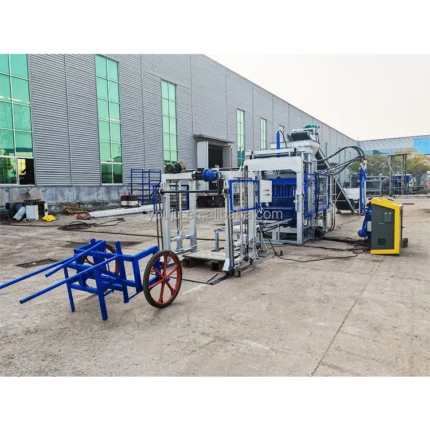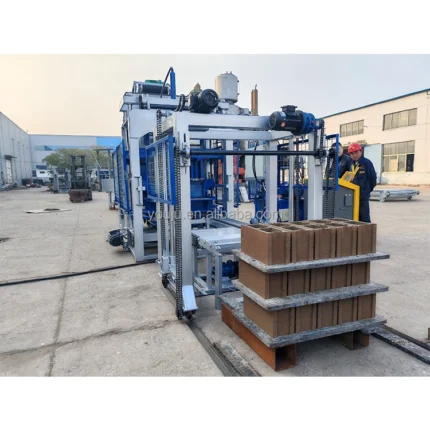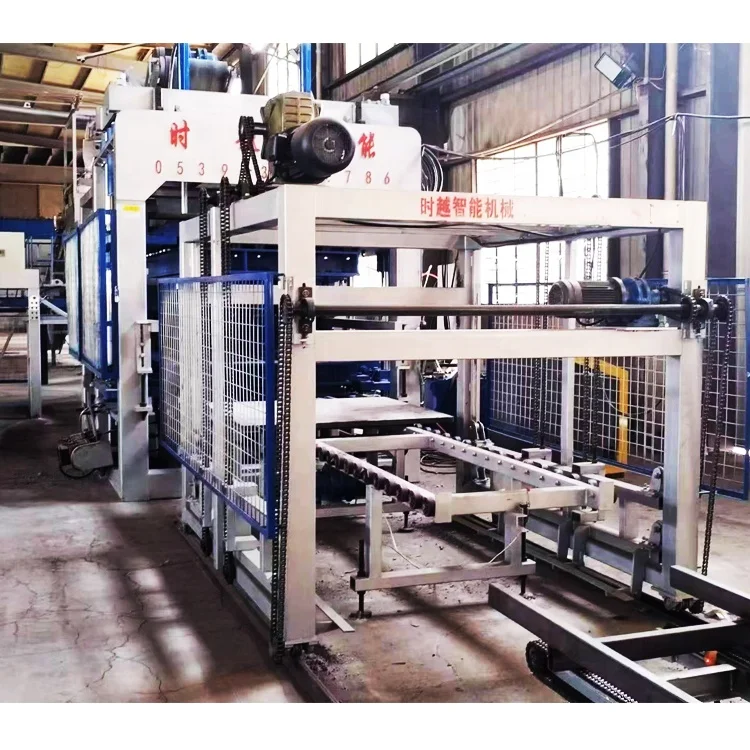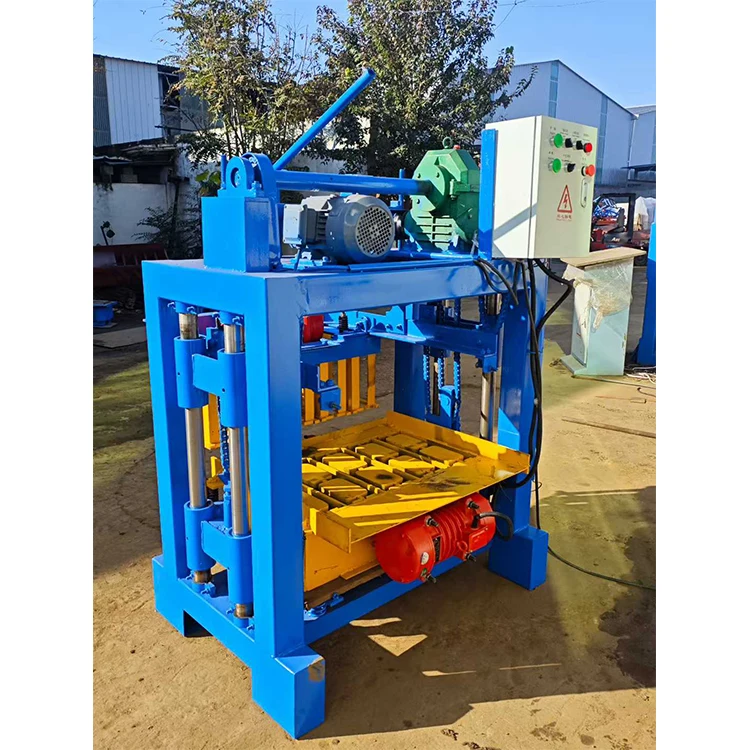


Description
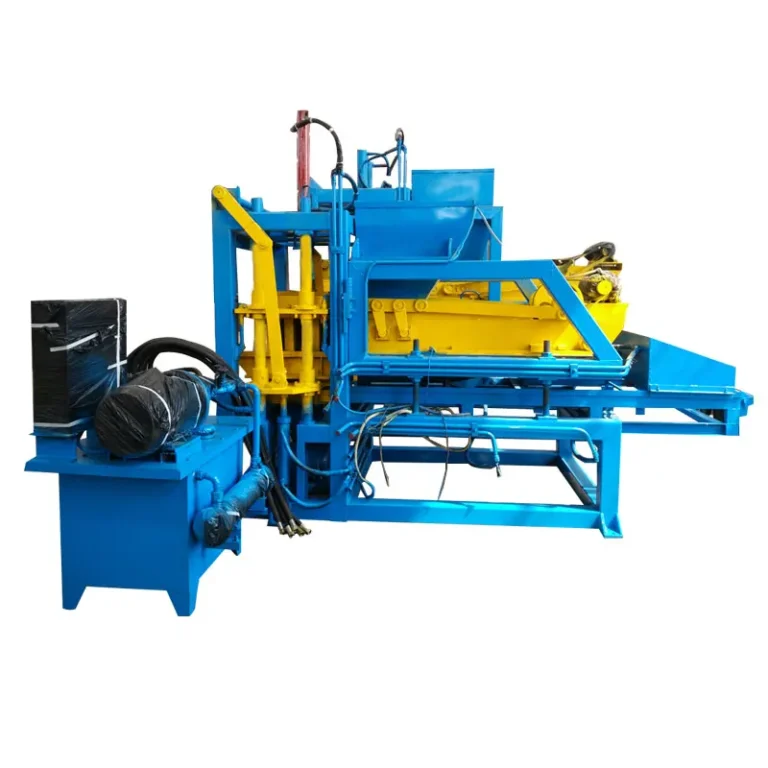
Matched System Logic — QT4-16 stationary block press configured with PLC control matched to the buyer’s actual mix design, local aggregate and target block format rather than a catalogue default.
Technical Specifications
| Parameter | Value |
|---|---|
| Product Type | Stationary Concrete Block Making Machine |
| Model | QT4-16 |
| Overall Dimensions | 7400 × 1950 × 2800 mm |
| Total Mass | 5 T |
| Rated Pressure | 21 MPa |
| Vibration Force | 40 kN |
| Vibration Frequency | 2800–4500 r/min |
| Main Vibration Form | Platform Vibration |
| Pallet Size | 900 × 550 mm |
| Molding Cycle | 15–20 s (basis not stated in source — confirm block format / material / thickness) |
| Demolding Method | Hydraulic |
| Control System | PLC intelligent control with man-machine interface, complete logic control, production program, malfunction diagnosis system, and remote control function |
| Factory Area Required | 600 m² |
| Raw Materials | Crushed stone, sand, cement, dust, fly ash, gravel, slag |
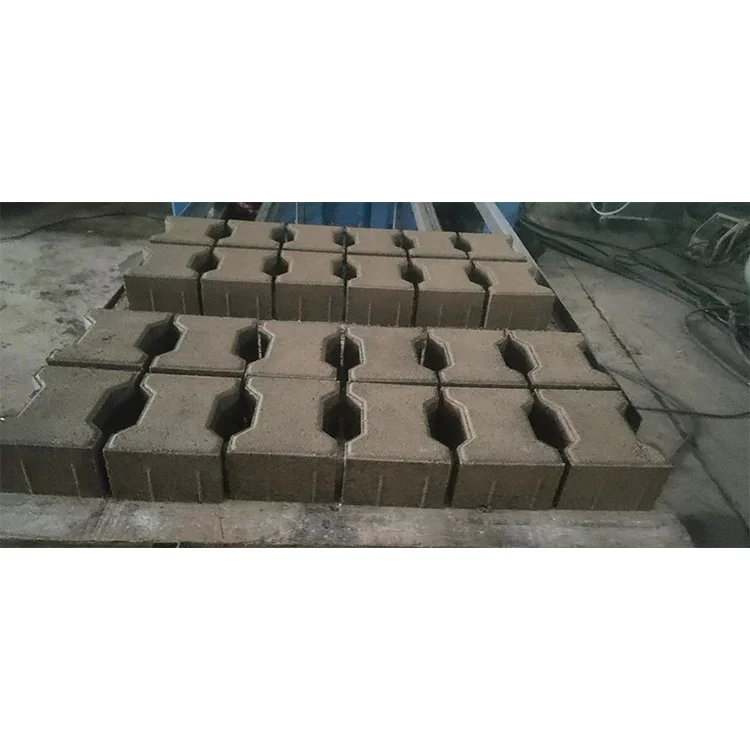
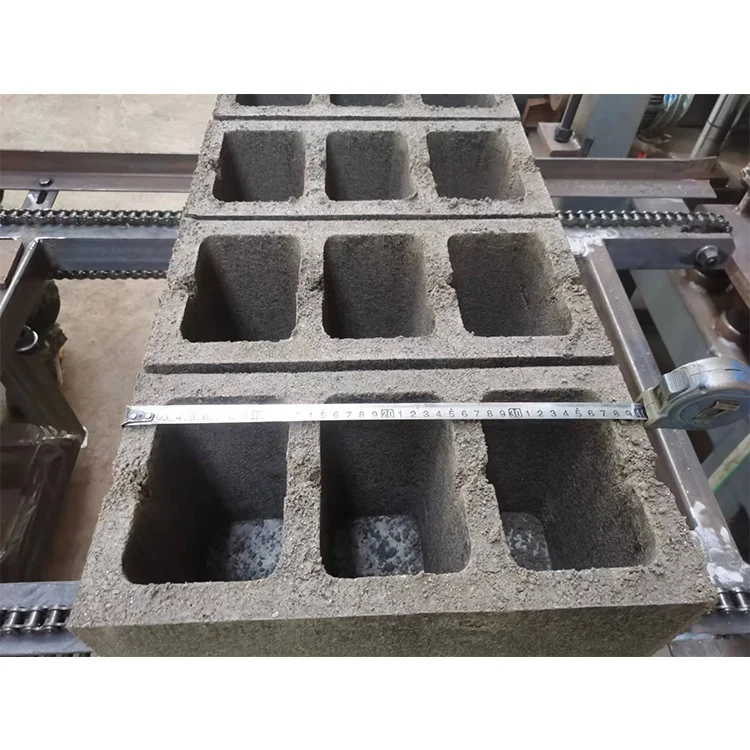
| Applied Products | Concrete blocks, hollow/solid blocks, pavers, interlocking blocks, curbstone, colored pavers |
| Language Options | To be confirmed before production |
| Voltage & Frequency | To be confirmed before commissioning |
Application Suitability
| Application | Material or Output |
|---|---|
| Hollow block production for masonry walls | Crushed stone, sand, cement, fly ash |
| Solid block manufacturing for load-bearing structures | Gravel, sand, cement blends |
| Interlocking paver production for walkways and driveways | Crushed stone, cement, colored pigments |
| Curbstone forming for road and pavement edges | Coarse aggregate, cement, slag |
| Colored paver runs for architectural landscaping | Sand, cement, pigment additives |
| On-site block production for housing projects | Locally sourced aggregate and cement |
Why the PLC Question Must Come Before the Capacity Claim
The automatic QT4-16 block making machine PLC controlled system replaces operator guesswork with programmed logic — but only when configured against the buyer’s real production variables.
I once stood next to a stationary block press in a South African yard watching an operator manually adjust cycle times every twenty minutes because the control program had been loaded with a default mix profile. The local crushed stone had a clay content the factory default never anticipated, and vibration cycles that worked in the showroom produced under-compacted blocks on that site [NEED_CITE: effect of aggregate clay content on vibration compaction]. A programmable logic controller only removes inconsistency if someone first maps the buyer’s material behaviour, target block density and pallet handling rhythm into the production program. Quoted cycle times without a stated block format are not capacity — they are a starting point for negotiation.
Programmable Logic That Replaces Operator Memory
The QT4-16 ships with a PLC intelligent control system managing complete logic control and production program storage. Instead of relying on a senior operator to remember the vibration duration for hollow blocks versus pavers, the man-machine interface holds separate program profiles for each format. The automatic QT4-16 block making machine PLC controlled interface lets a new operator select the product type and run the cycle without recalibrating pressure and timing from scratch. Batch-to-batch consistency in block density and dimensions depends on this stored logic far more than on hydraulic pressure alone.
Fault Diagnosis and Remote Scrutiny in Practice
The malfunction diagnosis system monitors sensor states and triggers warning signals when a hydraulic valve, limit switch or vibration motor deviates from expected behaviour. On projects I have visited in West Africa, a maintenance technician could read the fault code on the HMI and trace it to a specific solenoid before the line had been down long enough to cool [NEED_CITE: PLC fault diagnosis response in block production environments]. The remote control function allows off-site monitoring of production counts and machine status, which matters when the buyer’s technical manager is not on the factory floor every shift. This layer of visibility is what separates a machine that runs from one that runs predictably.
What the Spec Sheet Numbers Actually Mean on the Floor
The 21 MPa rated hydraulic pressure and 40 kN vibration force work together — pressure compacts the mix vertically while platform vibration at 2800–4500 r/min settles fine aggregate into voids. If vibration frequency is set too high for a coarse gravel mix, the aggregate segregates and block faces show stone clustering. The 900 × 550 mm pallet size determines how many blocks form per cycle, but it also must match the curing racks and forklift tines the buyer already has on site. A pallet that is too wide for the existing curing area means blocks are stacked by hand before they cure, undoing any consistency the press delivered. The 15–20 s molding cycle is a range, not a single figure, and where a buyer sits within that range depends entirely on block thickness and mix workability.
What Misconfigured Automation Actually Costs
A PLC without the correct language loaded on the HMI display means the operator cannot read fault codes during commissioning, turning a ten-minute diagnostic into a multi-day email exchange with the supplier. Voltage and frequency specified after the machine is built force transformer additions or motor rewinds on arrival — costs that never appeared in the original quotation [NEED_CITE: voltage mismatch consequences in exported industrial machinery]. Buyers who skip the line layout confirmation discover that the pallet return conveyor does not clear the curing rack height they built, leaving wet blocks stranded on the press table. These are not machine defects. They are specification gaps that surface only after the container is unpacked.
Why the Configuration Process Matters Here
Block machinery as a single focus means the QT4-16 press, mould, pallet and handling equipment are specified as one matched system rather than assembled from separate suppliers. Configuration is set against the buyer’s actual mix design and local aggregate, not a catalogue default, so the PLC production program starts from real material data. Automation level is selectable, allowing a buyer to begin with semi-automatic pallet handling and add stacking or cubing modules later without replacing the press. Mould design covers the formats the buyer’s market actually sells, including custom drawings for non-standard block profiles. Installation and commissioning support includes operator training on the PLC interface, so the diagnosis system is understood before the first production run.
Documentation & Verification
- Line layout and capacity calculation stating the block format assumed for cycle time
- Machine specification sheet with confirmed voltage, frequency and PLC display language
- Hydraulic and electrical schematic for on-site PLC and valve servicing
- Mould drawing and format list matched to buyer’s target products
- Factory test record run on buyer’s specified mix before dispatch
- Operation and maintenance manual covering PLC program backup and restore
Installation, Commissioning & Support
- 600 m² factory area must accommodate 7400 mm press length plus pallet return and curing rack clearance
- Voltage and frequency confirmed before production to avoid motor or transformer rework on arrival
- PLC display language set at factory so fault diagnosis is readable from first power-on
- Hydraulic system commissioned at 21 MPa with vibration frequency tuned to buyer’s aggregate gradation
- Operator training covers HMI program selection, fault code reading and cycle time adjustment
- Wear parts list and mould inventory provided for first replacement cycle planning
What to Prepare Before Requesting a Quotation
Share the target block formats and dimensions your market sells most, along with the local aggregate type and any fly ash or slag percentages in your mix. Confirm your site voltage, frequency and the language your operators read on a control screen. Note your existing curing rack dimensions and forklift specifications so pallet sizing aligns with what is already on the ground.
Frequently Asked Questions
Q: How is realistic daily output calculated for the QT4-16?
A: Daily output depends on the specific block format, mix design and pallet cycle rhythm — not a single headline number. The quoted molding cycle of 15–20 s is a range that shifts with block thickness and material workability. A capacity calculation should state which block format it assumes, so buyers can compare against their actual product mix rather than a best-case showroom run.
Q: What must be confirmed about voltage and PLC language before shipment?
A: Voltage and frequency vary by country, and the PLC display language must match what the operator reads. If these are not locked before production, the machine may arrive needing a transformer or an unreadable HMI. Confirming both items during the quotation stage prevents commissioning delays once the machine is on site.
Q: What does the malfunction diagnosis system actually cover?
A: The system monitors hydraulic valves, limit switches and vibration motor states, displaying fault codes on the man-machine interface when a component deviates from expected behaviour. The remote control function allows off-site status checks. This means a technician can identify a faulty solenoid or sensor without waiting for the supplier to visit the plant.
Q: Can the QT4-16 be upgraded to full automatic stacking later?
A: The automation level is selectable at purchase and expandable afterward. A buyer can start with manual or semi-automatic pallet handling and add automatic stacking and cubing modules as production volume grows. The PLC architecture supports these additions without requiring a press replacement or major rewiring.
Q: How does PLC control affect block consistency across shifts?
A: Stored production programs hold vibration duration, pressure and timing for each block format, removing reliance on operator memory. When a new shift starts, the operator selects the product profile and the machine runs the same parameters. This reduces density and dimensional variation between batches produced by different operators or at different times of day.