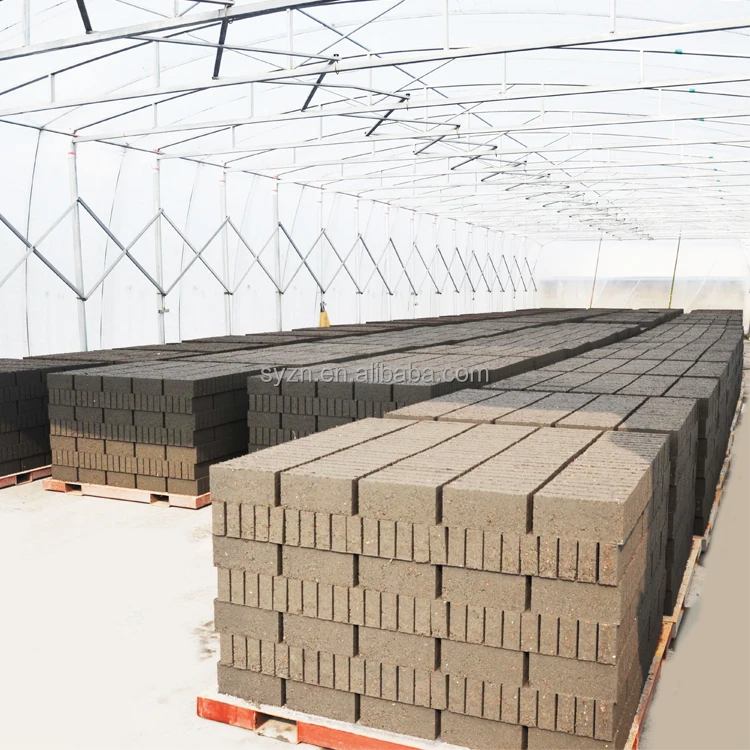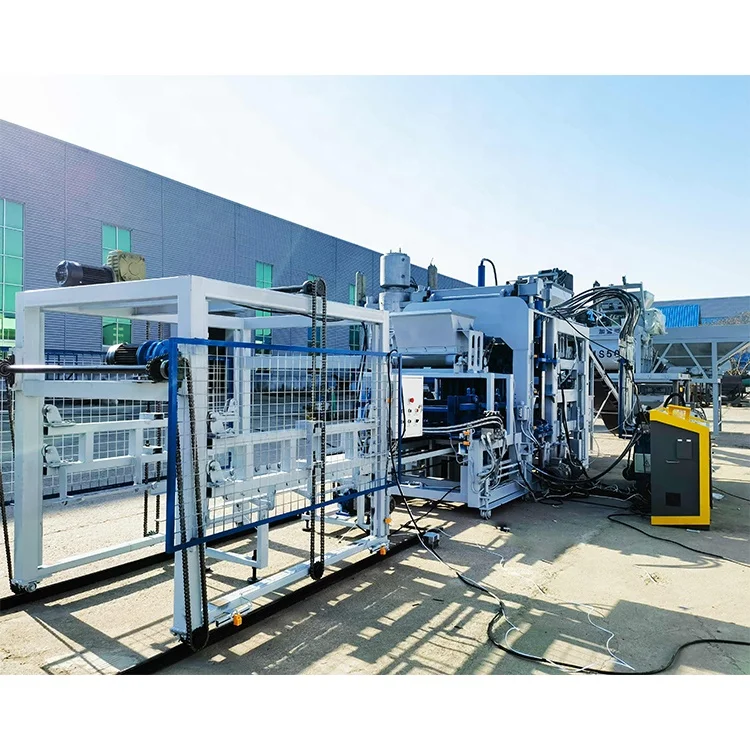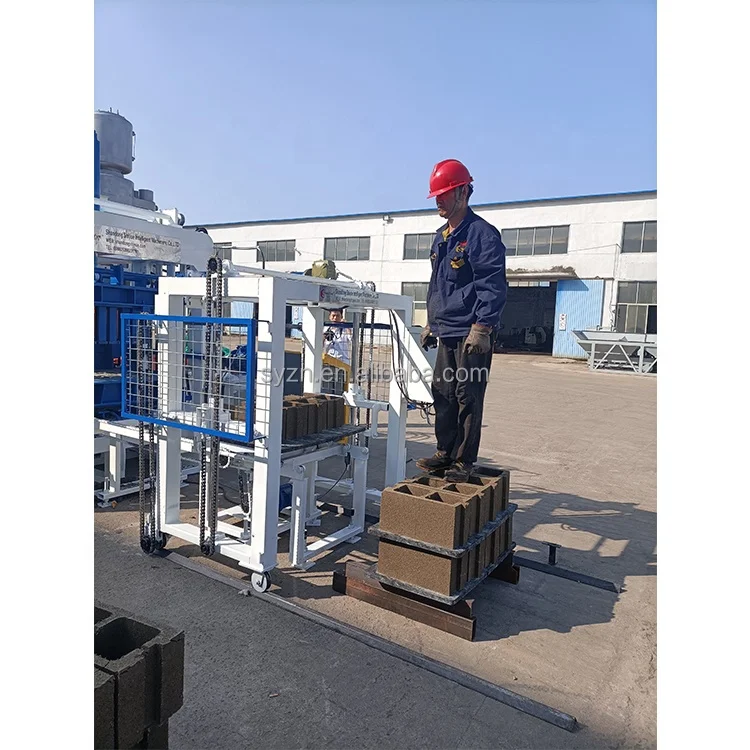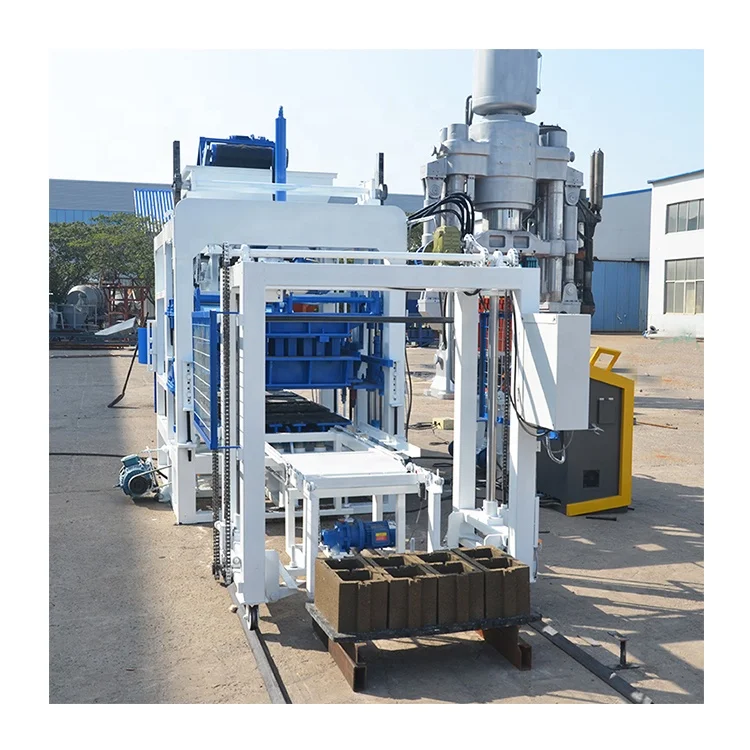


Description
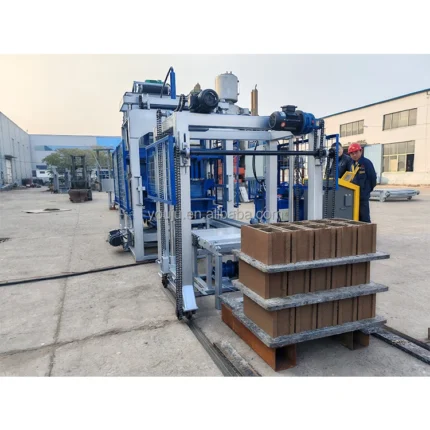
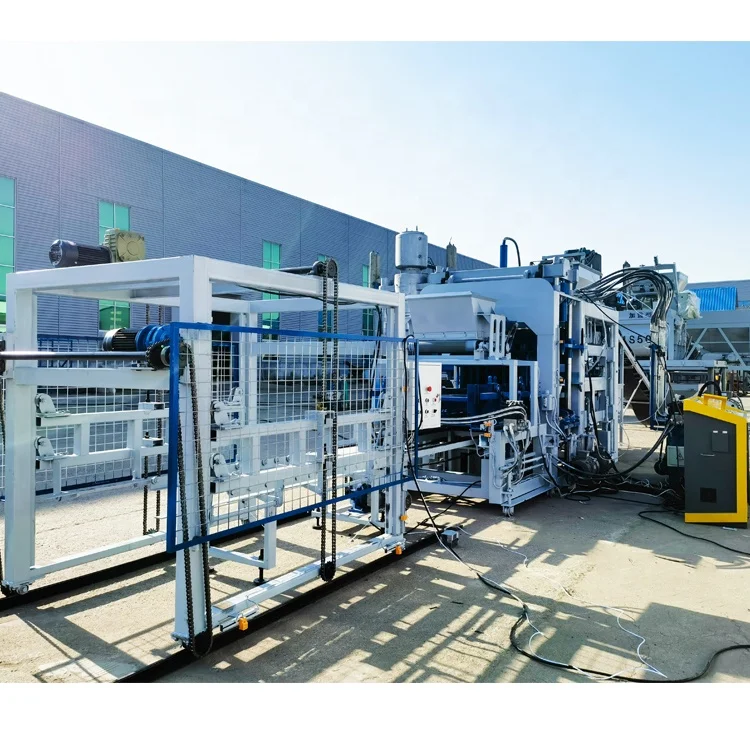
Automation scope locked in writing — every pallet feed, stack and cube action on the QT4-18 is specified line-by-line before production, so the press never waits on manual handling.
Technical Specifications
| Parameter | Value |
|---|---|
| Model | QT4-18 |
| Product Type | Fully Automatic Concrete Block Making Machine |
| Machine Power | 27.5 kW |
| Hydraulic Pressure | 20 MPa |
| Main Vibration Form | Platform Vibration |
| Molding Cycle | 15–25 seconds (basis not stated in source — confirm block format / material / thickness) |
| Machine Weight | 5800 kg |
| Overall Dimensions (L×W×H) | 7100 × 1600 × 2610 mm |
| Control System | Full automatic PLC (type / language not stated in source) |
| Voltage | Customized to buyer’s local standard (basis not stated in source — confirm voltage & frequency) |
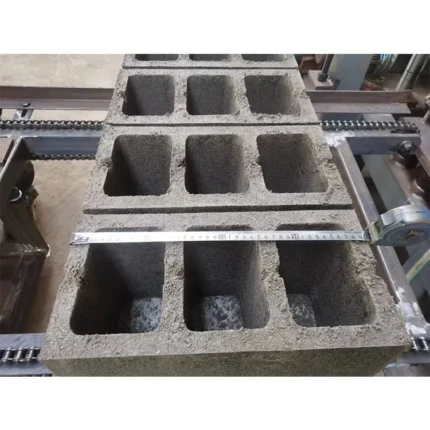
| Mould Compatibility | Hollow blocks, porous blocks, standard blocks, color-face bricks, through-body tiles, lock linkage blocks, road curb bricks |
| Mould Treatment | Precise line cutting, carburizing and heat treatment |
| Machine Frame | Welded thick steel rectangle construction, vibration-resistant |
| Output Capacity (Hollow Block 400×200×200 mm) | 5,760–7,680 pcs/day (4 pcs/mould, 15–20 s cycle) |
| Output Capacity (Porous Block 240×115×90 mm) | 25,200–33,600 pcs/day (14 pcs/mould, 15–20 s cycle) |
| Output Capacity (Standard Block 240×115×53 mm) | 59,300–67,200 pcs/day (28 pcs/mould, 15–17 s cycle) |
| Pallet Size | To be confirmed to match curing area and forklift |
| Stacking Method | To be confirmed (automatic or manual) |
| Mould Change Time | To be confirmed |
| Language Options | To be confirmed before production |
| Key Features | PLC-controlled full-automatic cycle, interchangeable moulds, platform vibration |
Application Suitability
| Application | Material or Output |
|---|---|
| Structural hollow block production | Crushed stone, cement, sand — 400×200×200 mm hollow blocks at 4 pcs/mould |
| Porous brick manufacturing for wall infill | Lightweight aggregate and cement blends — 240×115×90 mm format |
| Standard solid brick runs for residential builds | Dense aggregate mixes — 240×115×53 mm at 28 pcs/mould |
| Paving and interlocking block production | High-strength mixes for road curbs, through-body tiles and lock linkage formats |
| Color-face layered brick for architectural facades | Two-layer feed with pigment-dosed face mix |
What "Full Automatic" Actually Covers on a QT4-18 Line
The automatic QT4-18 block making machine PLC controlled scope must be defined station-by-station before the order is signed, not left to a catalogue label.
I have arrived at plants in West Africa where the press itself ran on PLC, but pallets were still being fed by hand and stacked on the curing rack by two workers with gloves. The buyer had paid for "full automatic" and received an automated press in a manual line. The cycle times on paper never matched reality because the bottleneck had simply shifted downstream. [NEED_CITE: scope of automation definitions in block machinery contracts] When the automatic QT4-18 block making machine PLC controlled configuration is locked down in the proposal, every station from raw material batching through cubing is accounted for — and any station left manual is stated in writing so the buyer knows exactly where labour is still needed.
What PLC Control Removes from the Operator
The QT4-18 PLC manages moulding cycle timing, hydraulic pressure application and vibration sequence without operator input during the run. This takes the three variables most responsible for block-to-block density variation — dwell time, pressure ramp and vibration duration — out of the hands of whoever is working the shift. Once the parameters are set and saved per mould format, the automatic QT4-18 block making machine PLC controlled system repeats them identically across every cycle, whether it is the first hour of Monday or the last hour of Friday.
Where Batch Consistency Actually Comes From
Consistency on a block line is not just about the press repeating a cycle. It is about every station upstream and downstream keeping pace so the press is never starved of mix or waiting on a pallet. The 27.5 kW power rating and 20 MPa hydraulic pressure define what the QT4-18 can compact, but if the mixer batch size does not match the mould volume per cycle, or the pallet feeder cannot keep up with a 15-second cycle, the press sits idle and daily output drops. [NEED_CITE: block plant line balancing principles] This is why the line layout must be calculated around the slowest station, not the press cycle alone.
Reading the Specs That Matter for Your Plant
The 20 MPa hydraulic pressure paired with platform vibration determines the compaction force available for your specific mix design. Denser aggregates require higher pressure to achieve structural strength, while lighter porous blends need less pressure but more precise vibration control. The 5800 kg machine weight and welded thick-steel rectangular frame resist the sustained vibration forces generated across thousands of cycles per day — a lighter frame would develop fatigue cracking at the weld points within months. The 7100 × 1600 × 2610 mm footprint defines the minimum bay width and overhead clearance needed, and the pallet size must be confirmed against the curing rack dimensions and forklift tine width already on site.
The Cost of Getting the Automation Boundary Wrong
When pallet feeding is left manual on a line quoted as full automatic, two workers spend the shift sliding pallets into position at a pace the press can exceed but the humans cannot sustain. Block output drops, and the buyer blames the machine. [NEED_CITE: common block plant automation scope disputes] When stacking and cubing are not included, cured blocks are handled by hand off the rack — adding breakage, slowing turnover and requiring more floor space than planned. These are not machine failures; they are specification gaps that surface only after commissioning.
Why Source the QT4-18 Through This Configuration Process
Block machinery is our single focus, so the QT4-18 press, mould, pallet and handling equipment are specified as one matched system rather than assembled from separate suppliers. Configuration is set against your actual mix design and local aggregate, not a catalogue default — the 20 MPa pressure and platform vibration are calibrated to the material you can actually source. Mould design covers the formats your market sells, with carburizing and heat treatment applied to extend service life under your production volume. Automation level is selectable, so a buyer can start with the QT4-18 in semi-automatic operation and add pallet feeding or stacking later without replacing the press. Voltage, frequency and PLC display language are confirmed in writing before production begins, so the machine powers on and the operator reads the menu on day one.
Documentation & Verification
- Line layout with capacity calculation stating which block format each pcs/day figure assumes
- Machine specification sheet covering the QT4-18 power, pressure, dimensions and mould list
- Voltage and PLC display language confirmation signed off before production starts
- Hydraulic and electrical schematic matching the confirmed control wiring configuration
- Factory test record run on your specified block format before dispatch
- Packing photographs and customs documentation support for the QT4-18 shipment
Installation, Commissioning & Support
- Foundation pad sized for the 7100 × 1600 mm QT4-18 footprint with vibration isolation
- Dedicated power circuit matching confirmed voltage and frequency before the machine arrives
- Press arrives dismantled for container loading with reassembly supervised on site
- PLC parameters set and saved per mould format during commissioning with the operator present
- Mould change procedure trained using the actual interchangeable moulds in your format range
- Wear parts list for hydraulic seals and mould surfaces with reorder thresholds defined
Before You Request a Quote
Send the block formats your market currently sells and the daily volume you need per format. Confirm the local voltage and frequency at the site, the PLC display language your operators read, and whether pallet feeding, stacking and cubing should be included in the scope or handled separately.
Frequently Asked Questions
Q: How is the PLC control language and remote diagnostics capability confirmed before shipment?
A: The PLC brand, model and display language are specified in writing during the proposal stage, not left to a default setting. A voltage and control wiring diagram is matched to the buyer’s site supply and included in the factory test record. Remote diagnostics capability depends on the PLC model selected and is confirmed as an option before production begins.
Q: What does "full automatic" actually include — pallet feeding, stacking and cubing, or the press alone?
A: The automation scope for the QT4-18 is defined station-by-station in the quotation. Any station left manual — such as pallet feeding or stacking — is stated explicitly so the buyer knows where labour is still required. The press cycle itself is PLC-controlled regardless of the surrounding automation level chosen.
Q: How do I verify the stated cycle time against my specific block format and mix design?
A: The 15–25 second cycle range depends on block format, material and thickness. A capacity calculation sheet is provided stating which format each cycle time and daily output figure assumes. During commissioning, cycle parameters are tuned to the buyer’s actual mix and saved in the PLC per mould format.
Q: What is the upgrade path if I start semi-automatic and add automatic pallet handling later?
A: The QT4-18 press is specified with an upgrade path in mind. Mechanical interfaces for automatic pallet feeding and stacking can be included in the initial build even if those stations run manually at first, allowing the buyer to add automation later without replacing the press or modifying the frame.
Q: How are mould change procedures handled under PLC control, and what is the realistic changeover time per format?
A: Mould change time depends on the format and operator familiarity. Under PLC control, the press parameters for each mould are saved and recalled automatically, removing the need to manually reset cycle timing and pressure. The physical mould swap itself is trained during commissioning using the buyer’s actual mould set.