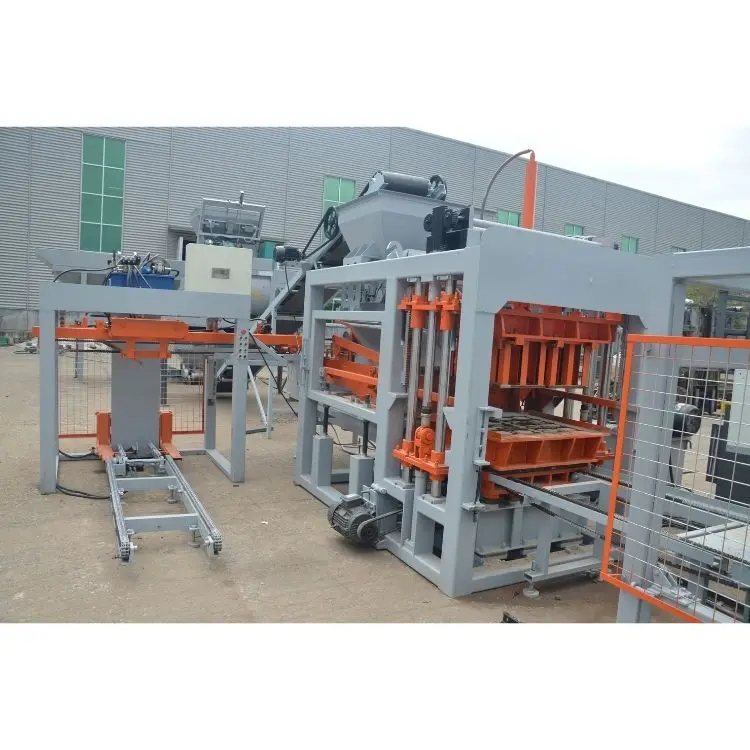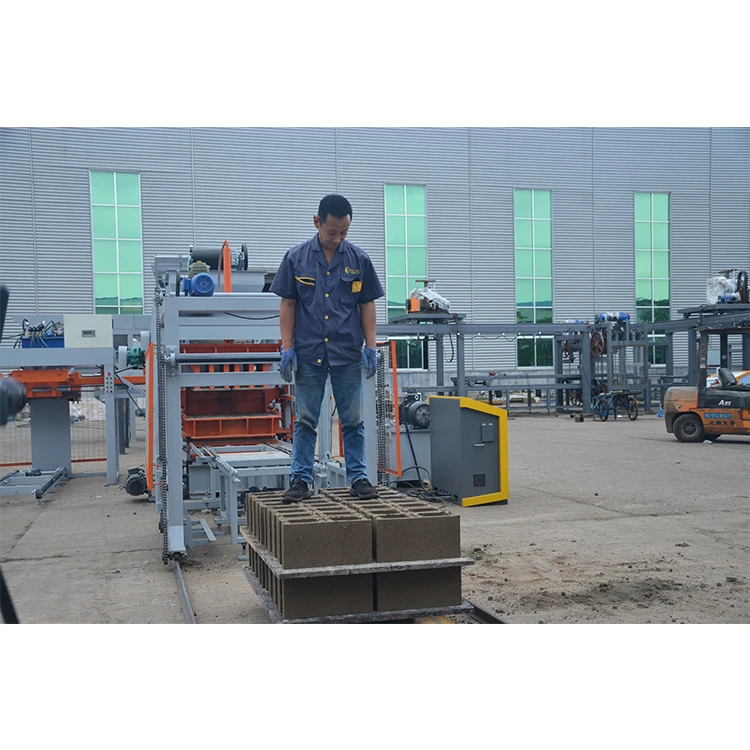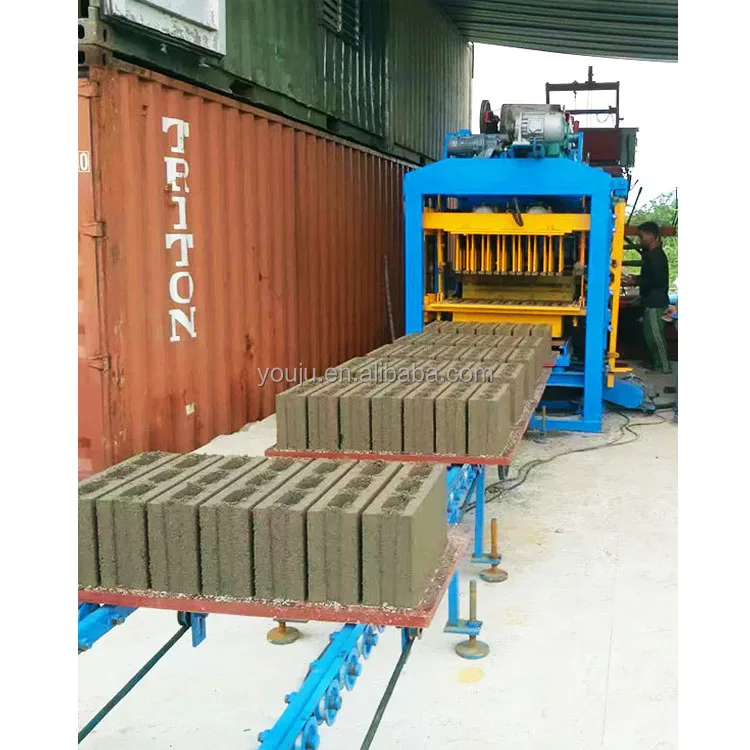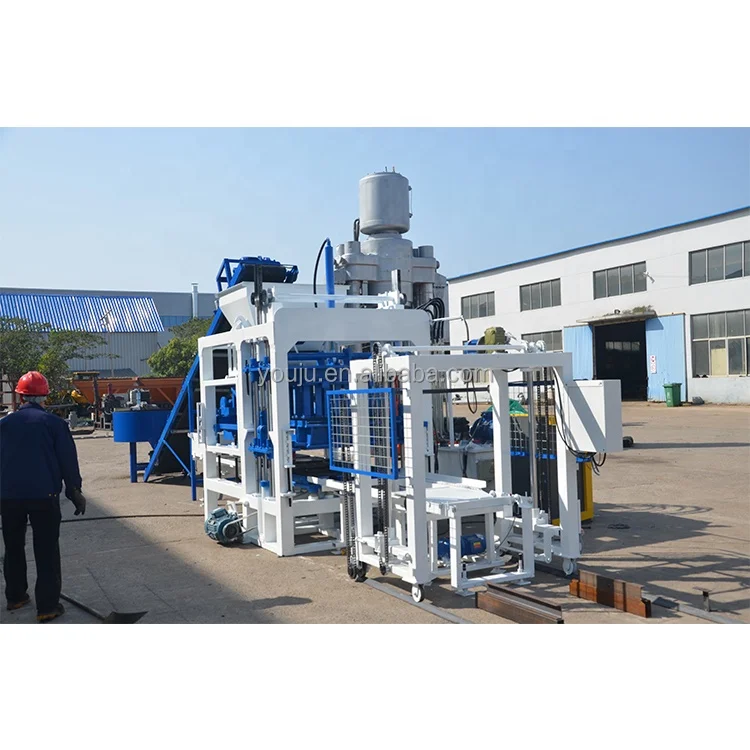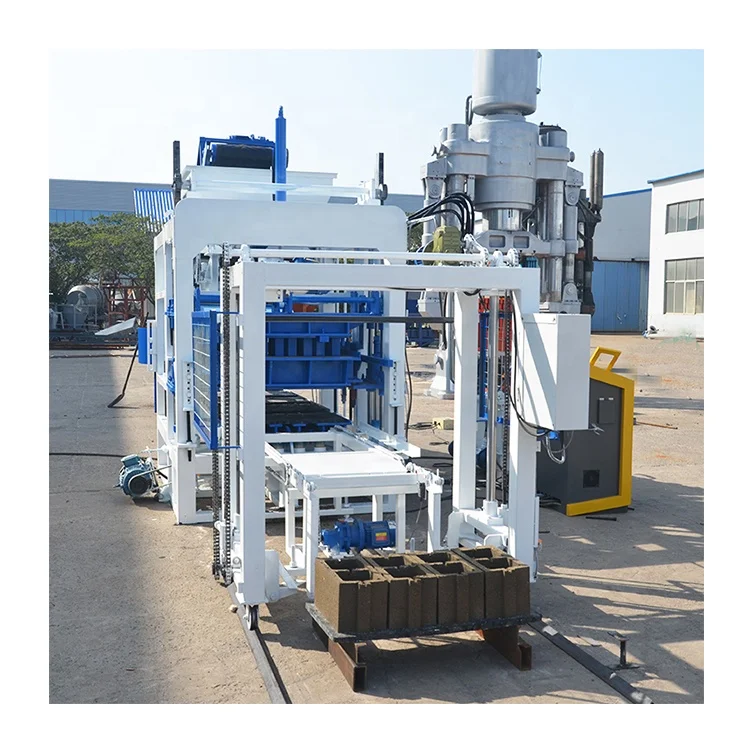


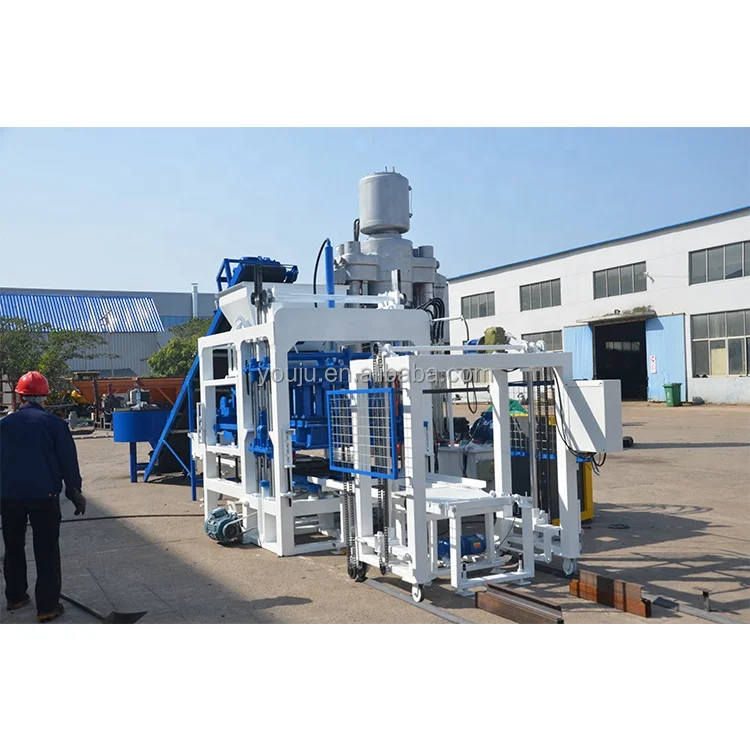


Description
Intelligent Control Integration — The QT4-18 pairs PLC logic with a frequency converter so operators adjust vibration profiles on-screen rather than guessing lever positions during shift changes.
Technical Specifications
| Parameter | Value |
|---|---|
| Model | QT4-18 |
| Product Type | Automatic Concrete Block Making Machine |
| Overall Dimensions (L×W×H) | 2500×1750×2200mm |
| Rated Hydraulic Pressure | 16MPa |
| Vibration Form | Platform Vibration |
| Pallet Size | 950×550mm |
| Molding Cycle | 18-25s (basis to be confirmed) |
| Overall Power | 27.5kW |
| Control System | PLC with frequency converter |
| Electrical Components | Schneider brand |
| Mould Lifting Mechanism | Double-sided synchronous gears |
| Automation Level | Automatic pallet feeding, demoulding, block conveying |
| Supporting Equipment Options | JQ500 pan mixer, 8m/6m belt conveyor, stacker, cement silo, batching plant, extra moulds |
Application Suitability
| Application | Material or Output |
|---|---|
| Hollow block production | Crushed stone, sand, cement, fly ash |
| Solid block manufacturing | Dense aggregate blends for load-bearing walls |
| Paving block forming | Fine aggregate mixes with pigment layers |
| On-site contractor production | Locally sourced sand and gravel with portable batching |
Why the PLC Language Must Be Confirmed Before the Crate Is Nailed Shut
An unreadable HMI turns a fully automatic line into a very expensive manual press on day one.
I once watched a plant in Southeast Asia lose three full production days because the PLC display shipped in Chinese-only text. The crew could not navigate a single menu, let alone recall stored recipes or adjust vibration timing. A technician had to fly in just to swap the language pack — a fix that costs almost nothing when caught before dispatch but burns serious money after arrival [NEED_CITE: industrial HMI language configuration practices]. An automatic concrete block making machine PLC controlled is only as intelligent as the operator can read.
What the Frequency Converter Actually Does for Your Blocks
The frequency converter on the QT4-18 lets you dial vibration intensity up or down in small increments directly from the PLC screen. Different aggregate blends — river sand versus crushed basalt, for instance — respond to different vibration amplitudes. Too little energy and the mix does not fully consolidate; too much and the cement paste separates from the coarse fraction. Having adjustable frequency control means one automatic concrete block making machine PLC controlled can handle several mix designs without mechanical reconfiguration.
Recipe Storage and Shift-to-Shift Consistency
Modern PLC systems in this class store multiple production recipes so that when a mould change happens, the operator selects the matching programme instead of re-entering pressure, vibration duration, and feed timing by hand. This removes the biggest source of batch-to-batch variation: human memory across shift handovers [NEED_CITE: PLC recipe management in concrete product manufacturing]. The QT4-18’s PLC architecture supports this workflow, keeping density and dimensional tolerances stable whether the Monday morning crew or the Friday night crew is running the press.
Reading the Specification Sheet Beyond the Headline Numbers
The 16MPa rated hydraulic pressure works in tandem with platform vibration to compact the concrete mix inside the mould cavity. Higher pressure alone does not guarantee stronger blocks — the vibration must fluidise the mix so particles rearrange under load. The 950×550mm pallet size dictates how many blocks form per cycle and must align with the curing rack dimensions and forklift capacity already on your floor. The 27.5kW overall power draw tells your electrician whether the existing transformer can handle start-up current or needs an upgrade. Mould lifting through double-sided synchronous gears keeps the mould box level during extraction, preventing the edge damage that causes rejects downstream.
When Automation Stops Short of What You Expected
A buyer pays for an automatic line and then discovers that stacking and curing rack handling were never in the quotation. Blocks arrive at the end of the conveyor and sit there until someone moves them by hand — exactly the bottleneck the purchase was meant to eliminate [NEED_CITE: scope gaps in block machine quotations]. Confirming which stations are automatic and which still need manual pallet transfer protects you from staffing the line with the same headcount you had before.
Why Source This Configuration From Shiyue
Block machinery is the single focus here, so the QT4-18 is specified as one matched system — press, mould, pallet, and handling — rather than assembled from separate vendors. Configuration starts from your actual mix design and local aggregate, not a catalogue default. Mould design covers the formats your market actually buys, with custom drawings when standard options do not fit. Automation level is selectable, meaning you can begin with the automatic core and add stacking or cubing modules later. Installation support includes operator training so your crew is running independently before the technician leaves site.
Documentation & Verification
- Line layout showing capacity calculation against your target block format
- Machine specification sheet with confirmed voltage and control language
- Mould drawing and format list matched to your local aggregate
- Factory test record captured before crate closure
- Hydraulic and electrical schematic for your maintenance team
- Packing photographs for insurance and receiving inspection
Installation, Commissioning & Support
- Foundation plan referencing the 2500×1750mm footprint and dynamic load from platform vibration
- Dedicated electrical circuit sized for 27.5kW total draw plus motor start-up surge
- Control language confirmed in writing before HMI programming begins
- First-run parameter tuning on your specific aggregate blend during commissioning
- Operator training covering recipe selection, mould change procedure, and daily maintenance checkpoints
- Wear parts list identifying hydraulic seals, vibration springs, and mould liner replacements
What We Need From You to Size This Line Correctly
Send us your target block formats with dimensions, the daily output you need to hit, and the aggregate materials available within hauling distance of your plant. Include your site voltage and frequency, the language your operators read, and whether you already have curing racks and forklifts that the pallet size must match. If you are replacing an existing press, tell us what it produces now and where the bottleneck shows up.
Frequently Asked Questions
Q: What block format was assumed when stating the 18-25 second cycle time?
A: The source does not state which block format the 18-25 second cycle time assumes. Cycle time varies significantly between a standard hollow block, a solid paver, and a thinner partition block because each requires a different fill depth, vibration duration, and compaction stroke. Always request a capacity calculation that names the exact format so you can verify realistic daily output.
Q: Can the PLC store multiple recipes for different block types?
A: Yes, the PLC architecture on this class of machine supports recipe storage so operators can recall saved parameters when switching moulds. Adjustable values typically include vibration frequency, vibration duration, hydraulic pressure hold time, and feed cycle count. Confirm the exact number of recipe slots available and whether operators can edit them without requiring a programmer on-site.
Q: How does the frequency converter adjust vibration intensity?
A: The frequency converter changes the electrical input frequency to the vibration motor, which alters motor speed and therefore vibration amplitude. This lets you fine-tune consolidation energy to match your aggregate blend — coarser crushed stone generally needs higher amplitude while fine sand responds to shorter, sharper vibration bursts. Tuning happens through the PLC screen without mechanical adjustment.
Q: Does the automatic configuration include stacking and curing rack handling?
A: The QT4-18 automatic level covers pallet feeding, demoulding, and block conveying to the line exit. Stacking, curing rack handling, and cubing are supporting equipment options available separately. Clarify which downstream stations you need included in the quotation so your line does not end with blocks waiting on the conveyor for manual transfer.
Q: Is there an upgrade path to fully automatic stacking and cubing later?
A: Yes, the automation level is selectable and can be expanded. A plant that starts with the automatic press core and manual stacking can add an automatic stacker and cubing system when production volume justifies the investment. The PLC control platform accommodates these additions, though conveyor heights and line layout should allow space for future modules from the initial installation.