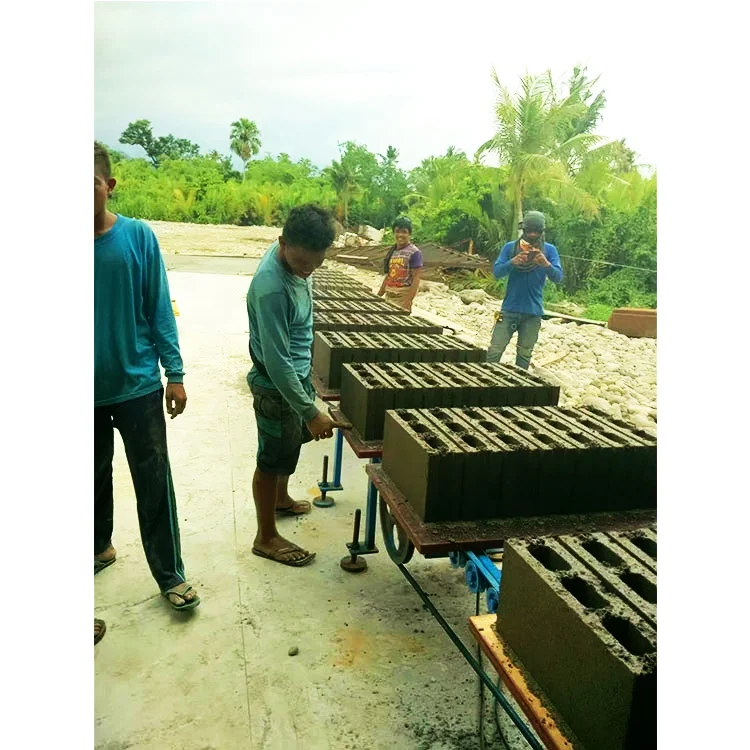


Description
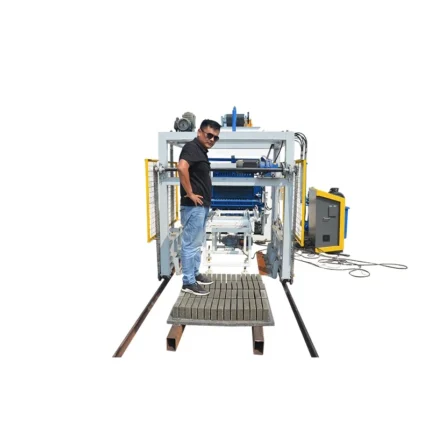
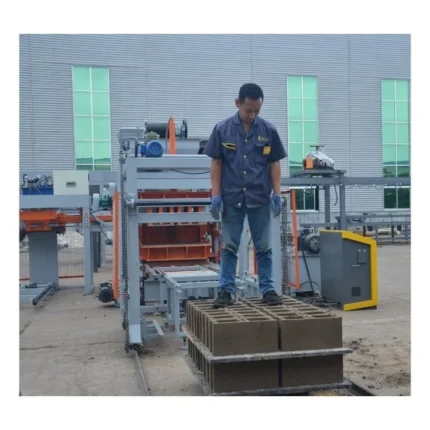
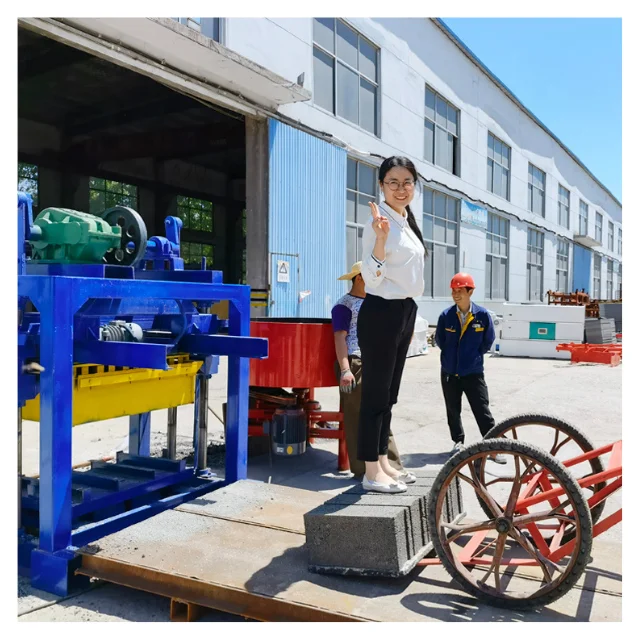
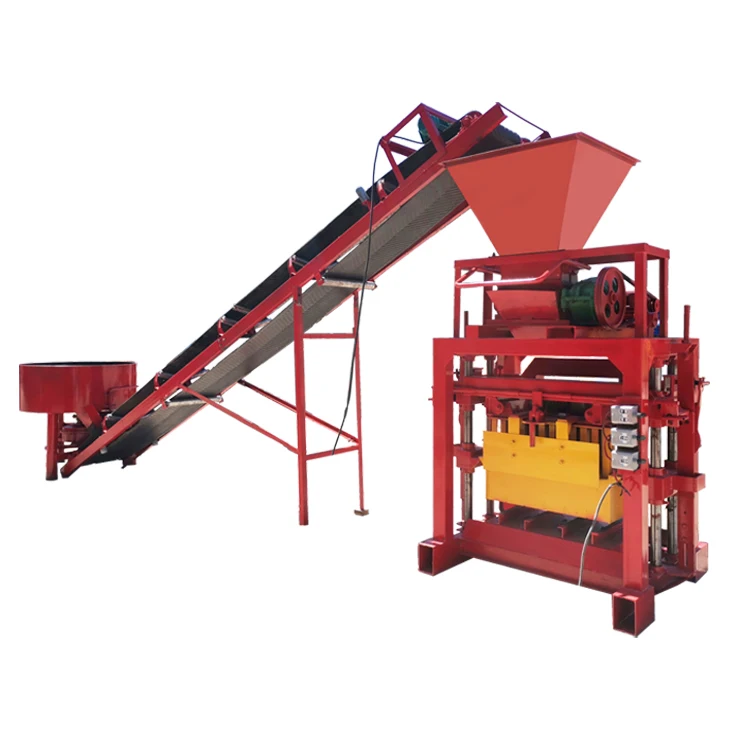
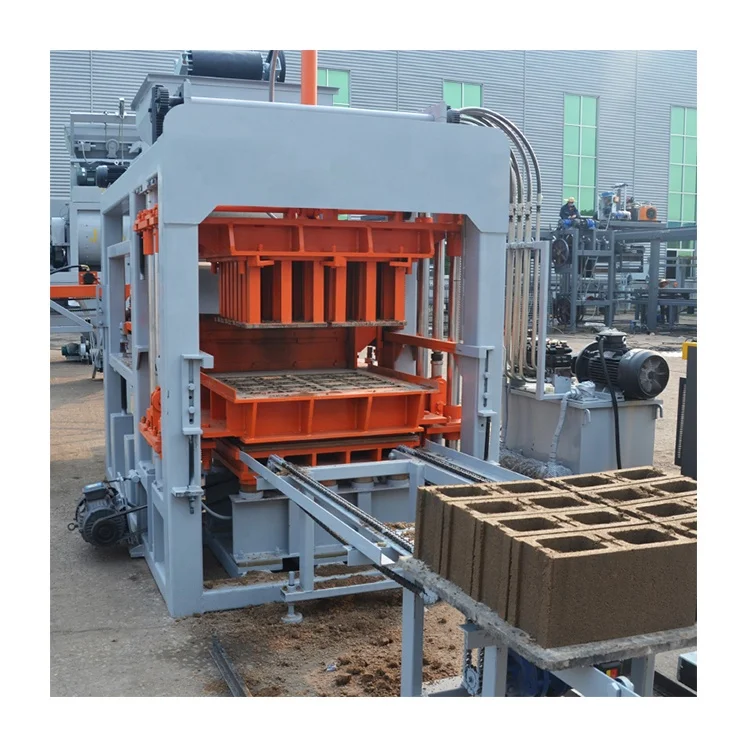
Matched Control System — Qt4-25a configured as a coordinated package where PLC logic, vibration force, and hydraulic pressure are tuned together rather than assembled from unrelated components.
Technical Specifications
| Parameter | Value |
|---|---|
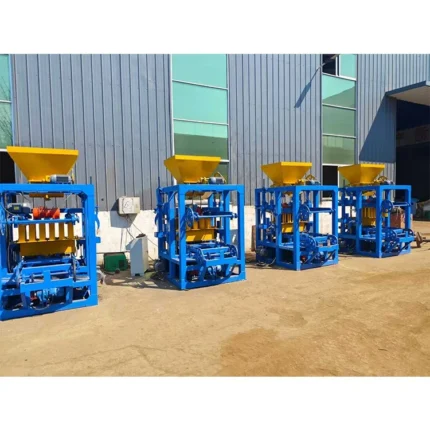
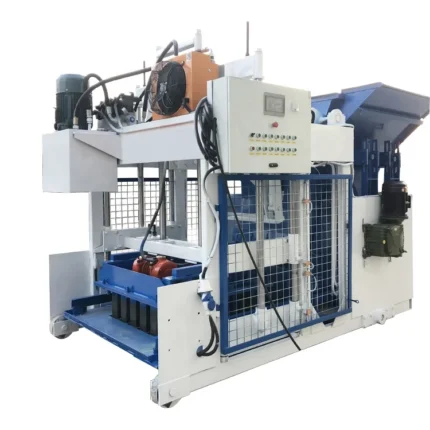
| Product Type | Automatic Hollow Block Making Machine |
| Model | Qt4-25a |
| Overall Dimensions (L×W×H) | 7100×1600×2610 mm |
| Net Weight | 5800 kg |
| Rated Power | 27.5 kW |
| Voltage & Frequency | 380V (frequency and voltage adjustable to buyer’s site supply) |
| Control System | PLC (brand and model to be confirmed with buyer) |
| Vibration Force | 60 kN |
| Pallet Size | 1020×850×40 mm |
| Mould Format Options | 400×200×200 mm hollow block; 400×150×200 mm hollow block; 225×112.5×53 mm solid brick |
| Output Capacity (400×200×200 mm hollow block) | 960 pcs/h based on 4 pcs per mould |
| Output Capacity (400×150×200 mm hollow block) | 1440 pcs/h based on 6 pcs per mould |
| Output Capacity (225×112.5×53 mm solid brick) | 3840 pcs/h based on 16 pcs per mould |
| Daily Output (8-hour shift, 400×200×200 mm) | 7680 pcs/day |
| Daily Output (8-hour shift, 400×150×200 mm) | 11520 pcs/day |
| Daily Output (8-hour shift, 225×112.5×53 mm) | 30720 pcs/day |
| Automation Level | Automatic (scope of pallet feeding, stacking, cubing to be confirmed) |
| Warranty | 1 year |
| Standards | ISO 9001:2008, CE |
Application Suitability
| Application | Material or Output |
|---|---|
| Hollow cement block production | Crushed stone, sand, cement, and fly ash mixes for load-bearing and partition walls |
| Solid brick manufacturing | Dense aggregate blends for building material distributors and masonry supply |
| On-site block production for housing projects | Local sand and cement combinations cured in project staging areas |
| Format expansion for existing block plants | Additional hollow and solid formats using the same pallet footprint |
Why PLC Language Confirmation Matters More Than You Think
The automatic block making machine PLC controlled interface only reduces errors when the operator can actually read it.
I worked a project in the Gulf where the control cabinet arrived with a Chinese-language HMI. The local crew could not navigate the alarm screens, so every fault call went through a translator on the phone. What should have been a two-minute reset took twenty minutes, and those gaps accumulated across a ten-hour shift [NEED_CITE: PLC display language options for export machinery]. With the Qt4-25a, the PLC display language and HMI screenshot are confirmed before production starts, not discovered after the container is opened. The automatic block making machine PLC controlled setup should match the team that will run it every day.
Control Logic and Batch Consistency
The Qt4-25a uses PLC control to govern the press cycle sequence, coordinating vibration timing, hydraulic pressure application, and mould movement within each stroke. When the automatic block making machine PLC controlled system is properly specified, the operator does not need to manually judge when to advance each stage. This removes the variability that comes from different crew members running the press at slightly different rhythms, and it holds the cycle parameters constant from the first pallet to the last one of the shift.
Automation Scope Must Be Defined Station by Station
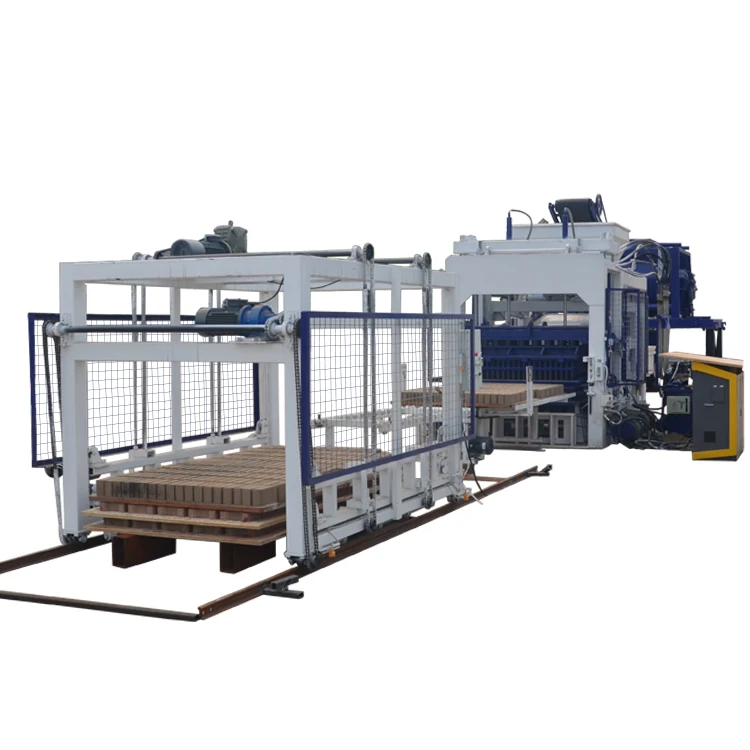
The "automatic" label on a block press can mean anything from automated cycling with manual pallet handling to a fully integrated line with automatic stacking and cubing. For the Qt4-25a, the automation scope covers the press cycle itself, while pallet feeding, stacking, and cubing are confirmed as separate line items depending on the buyer’s plant layout and investment plan [NEED_CITE: block plant automation tiers and labour requirements]. A buyer can start with the press in automatic mode and add upstream or downstream automation later, provided the pallet size and conveyor interfaces are specified with that upgrade path in mind.
Reading the Numbers Behind the Capacity Claims
The vibration force on the Qt4-25a is rated at 60 kN, and this figure must work together with hydraulic pressure to compact the mix into a consistent block. A press with high vibration but insufficient hydraulic hold will produce blocks that look dense on the surface but crumble at the edges. The pallet size of 1020×850×40 mm defines how many blocks sit on each board and must align with the curing rack spacing and forklift capacity already on site. If the buyer’s existing racks are built for a different pallet dimension, the mismatch forces a choice between re-racking the entire yard or running a non-standard pallet through the press. The 27.5 kW rated power covers the vibration motor, hydraulic pump, and conveyor drives running together, so the site supply must account for starting current on top of the continuous load.
What Happens When Pallet and Curing Do Not Match
When a block plant orders a press without checking pallet dimensions against the curing area, the result is either idle rack space or boards that cannot fit. I have seen sites where the forklift was too small for the pallet weight fully loaded with wet blocks, so the crew carried boards by hand to the yard. Output from the press kept coming, but the bottleneck simply moved to the end of the line [NEED_CITE: pallet handling bottlenecks in block production]. The Qt4-25a pallet size must be verified against the buyer’s existing curing infrastructure before the machine is built.
Why This Source Configures Rather Than Ships Default
The Qt4-25a is specified around the buyer’s actual block format and local aggregate, not a fixed catalogue build. The PLC brand, control language, and HMI layout are locked in during the proposal stage so the arriving machine matches the site crew. Voltage and frequency are confirmed against the local grid rather than assumed at 380V/50Hz. Mould options are selected for the formats that sell in the buyer’s market, and custom mould designs can be built from buyer-supplied drawings. The press, moulds, pallets, and handling equipment are quoted as a matched set, which prevents the gaps that appear when each element comes from a separate supplier. Factory testing runs the actual target format before dispatch, with cycle time and block density recorded for that specific mould and mix.
Documentation & Verification
- Machine specification sheet confirming Qt4-25a voltage, frequency, and PLC display language for your site
- Mould drawing and format list showing pieces per mould for each block size you will produce
- Pallet specification matched to your curing rack dimensions and forklift load capacity
- Factory test record with actual cycle time and block density for your target format before shipment
- Hydraulic and electrical schematic in the language your maintenance team uses
Installation, Commissioning & Support
- Foundation must support the Qt4-25a operating weight and vibration force of 60 kN without resonance transfer
- Electrical supply must deliver 27.5 kW continuous plus motor starting current at the confirmed voltage and frequency
- PLC display language and alarm codes verified during commissioning before operator handover
- Mould change procedure trained on-site so format switches do not consume unscheduled shift time
- Wear parts list provided with part numbers for hydraulic seals and vibration components specific to this model
- Operator training covers PLC navigation, cycle adjustment, and daily inspection routines for the Qt4-25a
What to Share Before Requesting a Quote
To configure the Qt4-25a for your line, the useful starting points are the block formats your market buys, the daily volume you need per format, and the aggregate and cement sources available at your site. Share your local voltage and frequency, the PLC language your operators read, and whether you need pallet feeding and stacking included or already have handling equipment in place. This information shapes the proposal far more than a general enquiry about the automatic block making machine PLC controlled package.
Frequently Asked Questions
Q: What does "automatic" include on the Qt4-25a — are pallet feeding, stacking, and cubing part of the package?
A: The automatic designation covers the press cycle control through PLC, including vibration timing and hydraulic sequencing. Pallet feeding, stacking, and cubing are separate line items confirmed during the proposal based on your plant layout and budget. This approach lets you start with the press in automatic mode and add handling automation later if your line is planned for it.
Q: How is the PLC display language confirmed before the machine is built?
A: During the proposal stage, we request the language your operators and maintenance team read. The PLC brand, HMI layout, and alarm screen text are then locked into the build specification. If your crew changes or you expand to a second shift with different language needs, the HMI can typically be switched on-site, which we confirm for the selected PLC model.
Q: What is the actual cycle time per format on the Qt4-25a?
A: Cycle time depends on the block format, mix design, and target density. The capacity figures are 960 pcs/h for 400×200×200 mm hollow blocks based on 4 pcs per mould, 1440 pcs/h for 400×150×200 mm hollow blocks based on 6 pcs per mould, and 3840 pcs/h for 225×112.5×53 mm solid bricks based on 16 pcs per mould. Actual cycle seconds per format are recorded during factory testing.
Q: Can the Qt4-25a be upgraded from semi-automatic handling to full automation later?
A: Yes, provided the line layout accounts for future conveyor and stacker integration from the start. The pallet size of 1020×850×40 mm and the press output rate define the conveyor speed and stacker capacity needed later. We specify these interfaces during the initial proposal so the upgrade path does not require structural changes to the press.
Q: How are vibration force and hydraulic pressure matched to my local aggregate?
A: We ask for details on your sand type, aggregate grading, and cement ratio during the proposal. The 60 kN vibration force and hydraulic pressure settings are then adjusted to compact your specific mix to the required block density. Factory testing runs your target format with a representative mix, and the results are documented before the machine ships.