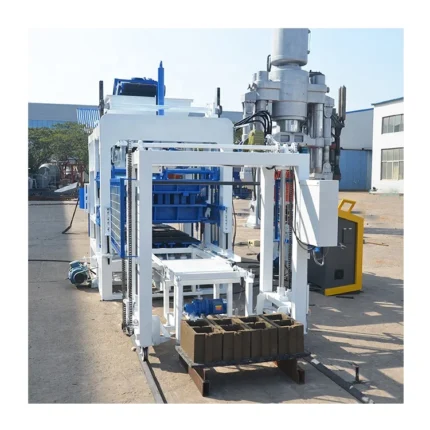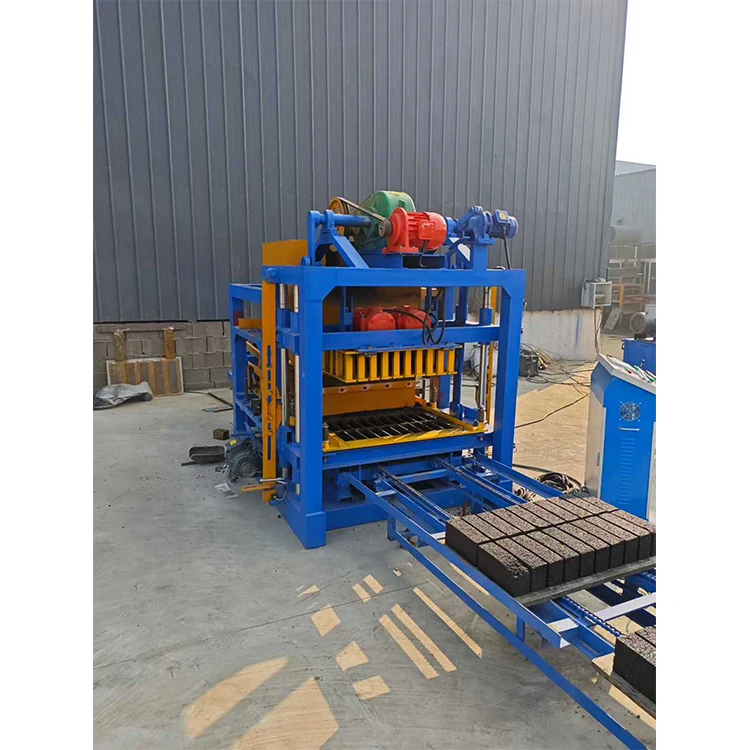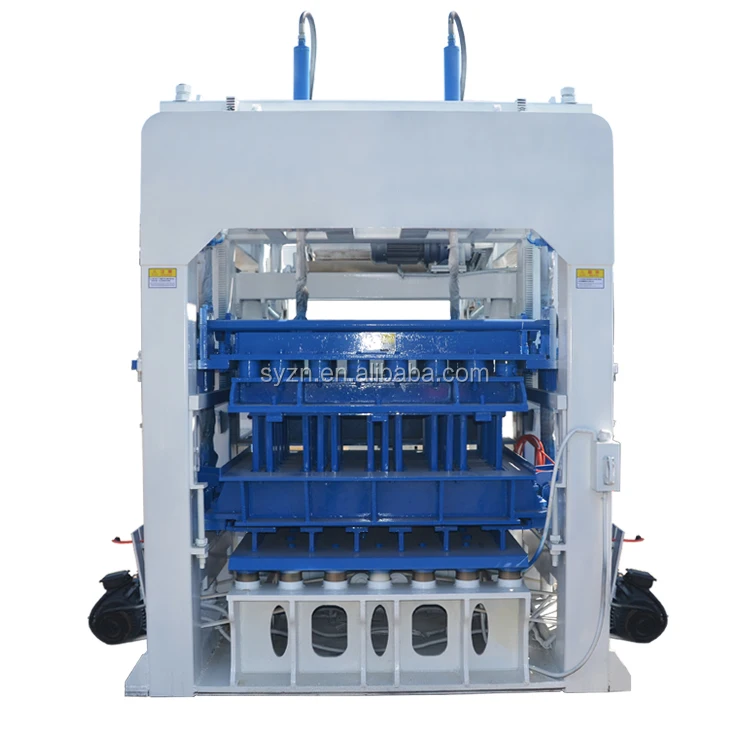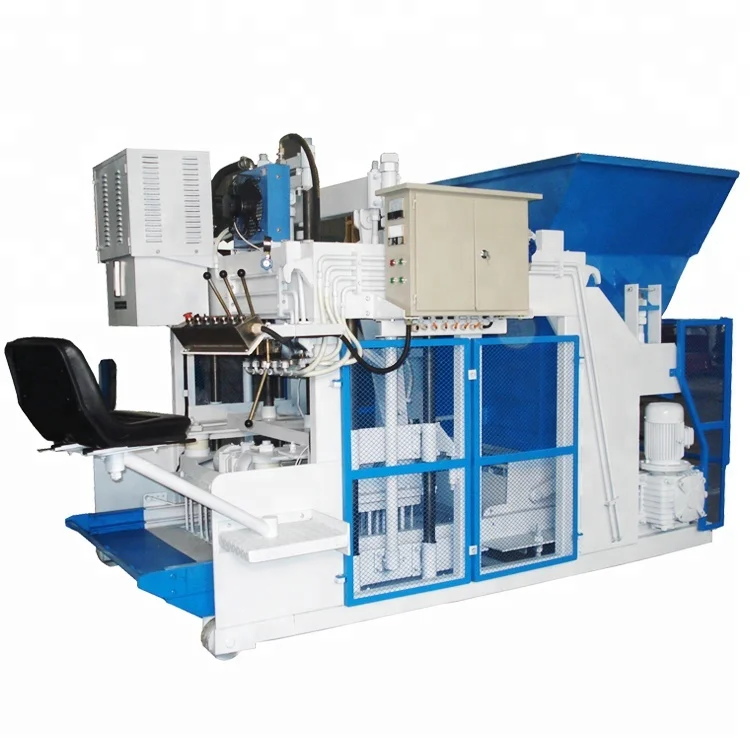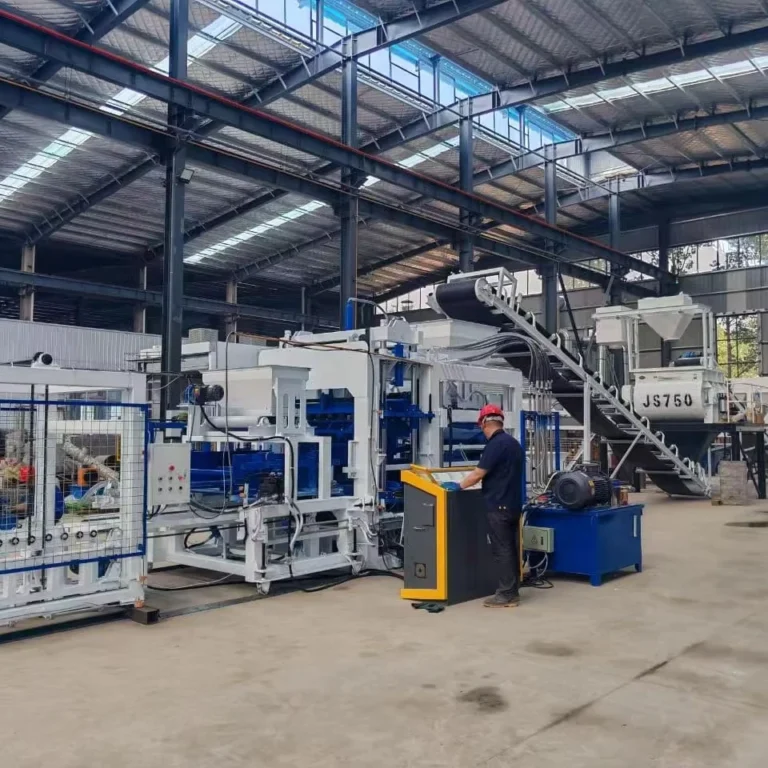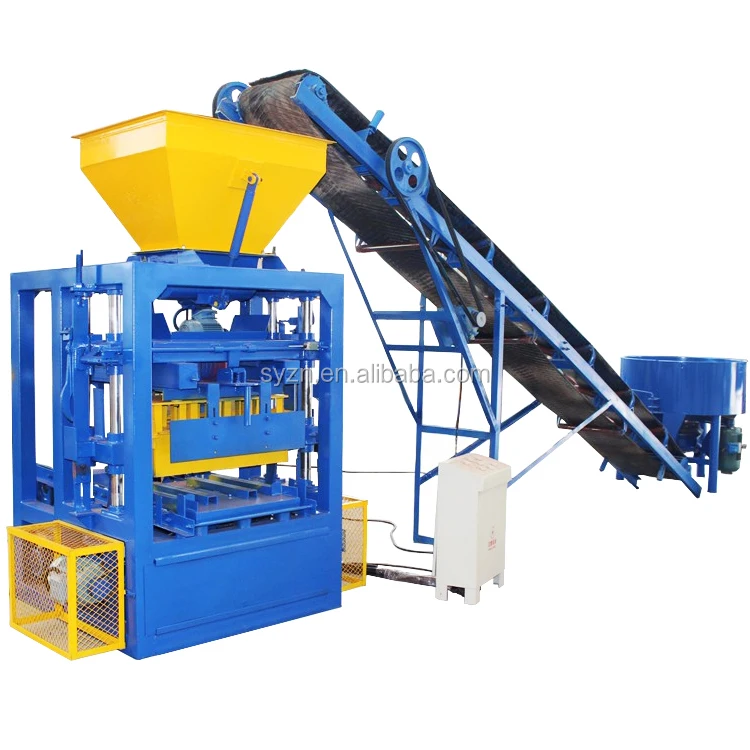
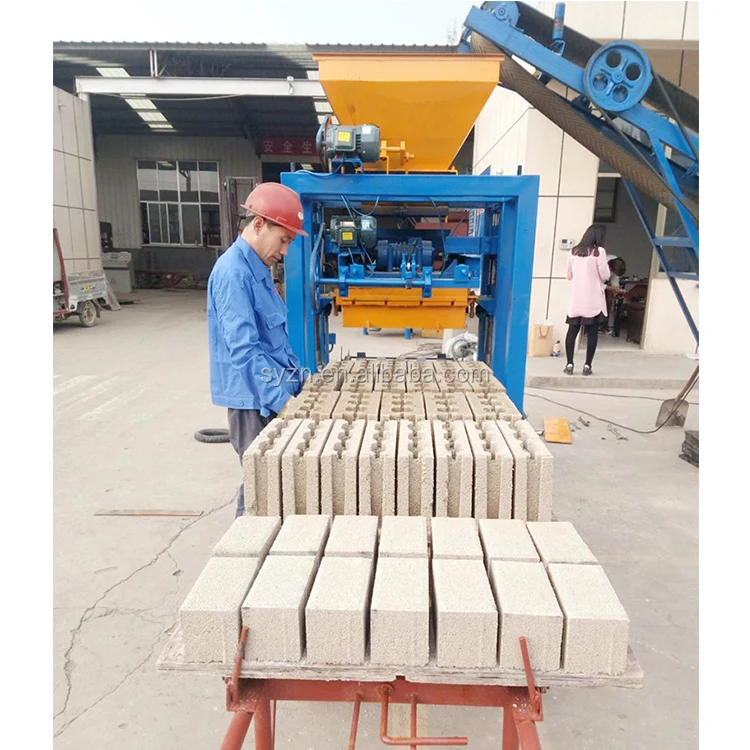
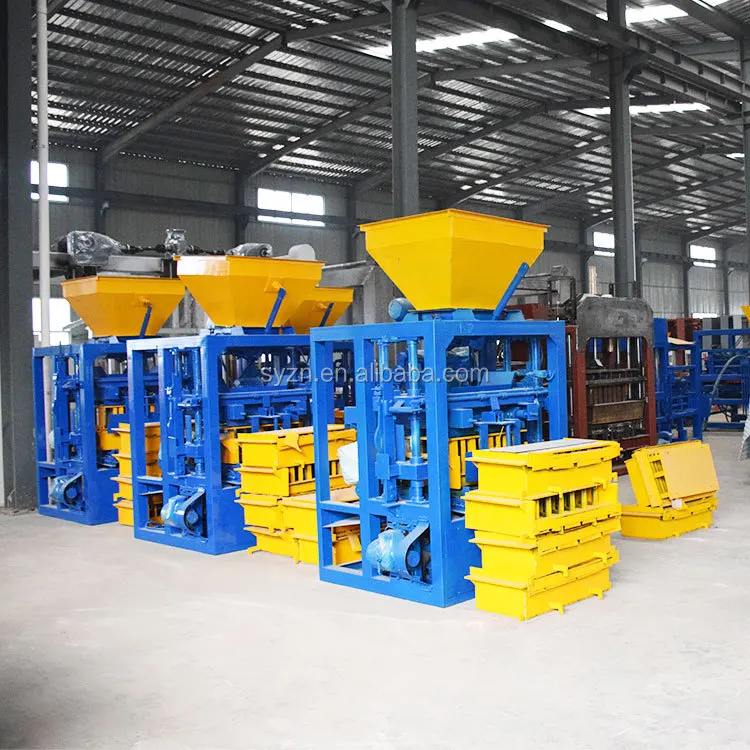

Description
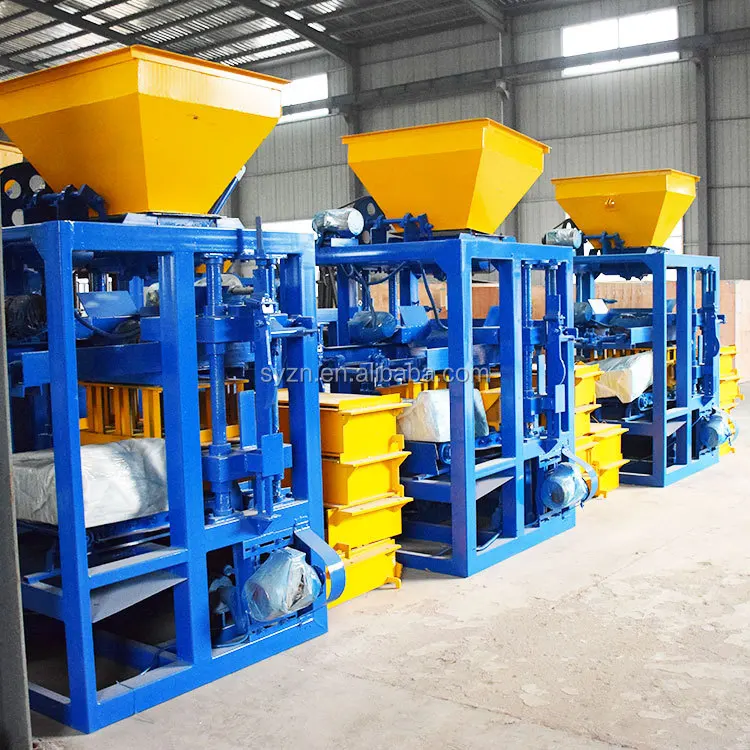
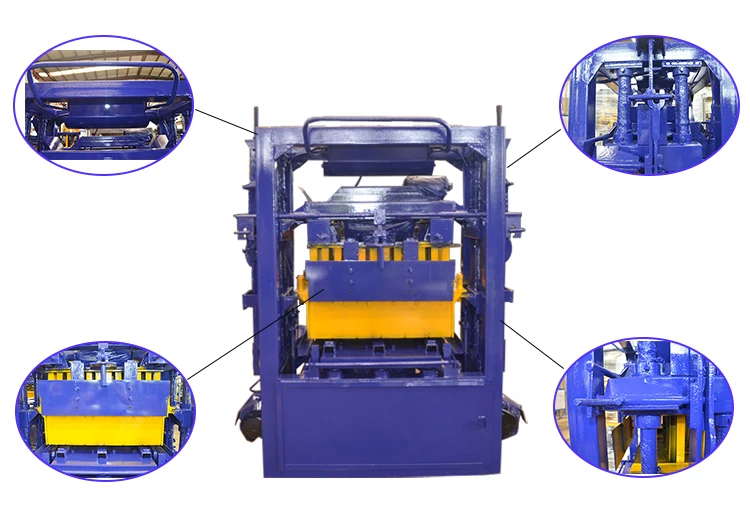
Automation Baseline — The Qt4 -26 is configured as a semi-automatic starting point with a defined upgrade path, allowing buyers to add PLC-controlled batching, automatic stacking, and cubing later without replacing the press itself.
Technical Specifications
| Parameter | Value |
|---|---|
| Model | Qt4 -26 |
| Product Type | Semi-automatic Block Machine |
| Overall Dimensions (L×W×H) | 2060 × 1730 × 2580 mm |
| Rated Pressure | 26 MPa |
| Main Vibration Form | Platform Vibration |
| Vibration Frequency | 4500 r/min |
| Vibration Force | 40 KN |
| Pallet Size | 880 × 480 × 25 mm |
| Molding Cycle | 15–20 s (basis not stated in source — confirm block format / material / thickness) |
| Total Power | 19.75 kW |
| Host Machine Power | 14.25 kW |
| Total Mass | 2 T |
| Demolding Method | Semi-automatic |
| Mixer Model | JQ350 |
| Control System | Semi-automatic (PLC details configurable) |
| Applied Products | Concrete blocks, hollow/solid blocks, pavers, interlocking blocks, curbstone, colored pavers |
| Raw Material | Crushed stone, sand, cement, dust, fly ash, gravel, slag |
| Voltage & Frequency | Configurable (to be confirmed before production) |
| Language Options | Configurable (to be confirmed before production) |
| Standards | CE |
Application Suitability
| Application | Material or Output |
|---|---|
| Hollow block production for residential walls | Crushed stone, sand, cement, fly ash |
| Solid block manufacturing for load-bearing structures | Gravel, sand, cement, slag |
| Interlocking brick for paving and landscaping | Cement, dust, fine aggregate |
| Paver and colored paver production | Cement, sand, pigment, crushed stone |
| Curbstone for road and site edging | Coarse aggregate, cement, sand |
Why the Voltage Question Must Come Before the Price
A control system spec’d without confirming on-site power is a commissioning delay waiting to happen.
I spent years moving from the assembly floor to helping buyers select the right configuration, and one job in West Africa stays with me. A semi-automatic block machine was shipped with a standard 380V/50Hz setup. When it arrived at the mining site, the local generator ran at 440V. The entire control system failed, and the buyer waited weeks for a replacement transformer while the project schedule collapsed. Voltage, frequency, and PLC display language are not minor line items on a quotation — they determine whether the machine starts when the container is opened [NEED_CITE: voltage and frequency standards by export market]. Assuming a catalogue default for an automatic block machine is how expensive downtime begins.
The Control Layer: What Semi-Automatic Actually Means
On this press, semi-automatic demolding means the operator initiates each cycle stage manually while the platform vibration and hydraulic pressure run to set parameters. The PLC controls the vibration duration and pressure hold, so block density stays consistent from the first piece to the last within a batch. For a plant owner moving up from a fully manual operation, this removes the most variable human decision — when to stop vibrating — while keeping the investment controlled.
Where the Upgrade Path Opens Up
Starting from this baseline, buyers can layer in automatic pallet feeding, stacking, and cubing as volume grows. The press itself does not need replacing; the surrounding stations are added to the existing cycle. This is how a first-time block plant entrepreneur scales without writing off the original machine. The key is specifying the PLC with enough I/O headroom at the outset so that adding sensors and actuators later does not require a full control cabinet swap [NEED_CITE: PLC expansion module compatibility across control platforms].
Reading the Numbers That Matter
The rated pressure of 26 MPa and vibration force of 40 KN work together to compact the mix. Vibration settles the aggregate into the mould cavity, while hydraulic pressure squeezes out trapped air and locks the particles into contact. If either value is too low for the buyer’s specific mix — say, a coarse slag blend with low cement content — block edges crumble on demolding. The vibration frequency of 4500 r/min is tuned for standard concrete; running it on a very fine fly-ash-dominant mix without adjustment can cause segregation rather than compaction. The 880 × 480 mm pallet size must match the curing racks and forklifts already on site, or the buyer faces a secondary equipment purchase before the first block is cured.
The Cost of Skipping Configuration
When vibration force and hydraulic pressure are left at factory defaults instead of matched to the buyer’s local aggregate, block strength varies across every batch. A buyer producing interlocking pavers one day and hollow blocks the next will find that a single pressure setting does not serve both formats equally. Mould change is another pressure point — if the system relies on manual bolts rather than a quick-lock mechanism, a format switch can consume most of a shift, erasing the flexibility the buyer paid for. Pallet handling left entirely manual means output is stacked by hand at the end of the line, which caps daily volume regardless of what the press cycle time allows [NEED_CITE: block production line bottleneck analysis in semi-automatic configurations].
Why This Machine Is Spec’d Here
Block machinery is a single focus, so the press, mould, pallet, and handling equipment are specified as one matched system rather than assembled from separate suppliers. The configuration is set against the buyer’s actual mix design and target block format, not a catalogue default. Moulds are designed for the formats the buyer’s market actually sells, including custom drawings when a standard format does not fit. The automation level is selectable — a buyer can start with this semi-automatic press and add automatic stacking later. Installation support includes operator training so the crew understands the control logic from day one.
Documentation & Verification
- Line layout and capacity calculation stating the block format assumed for the Qt4 -26
- Machine specification sheet with voltage, frequency, and PLC language confirmed in writing
- Mould drawing and format list covering all block types in the buyer’s product range
- Factory test record showing cycle time and block strength for the buyer’s specified format
- Hydraulic and electrical schematic matching the as-built configuration of the press
Installation, Commissioning & Support
- Foundation must support the 2 T total mass plus dynamic vibration loads during platform operation
- Dedicated power circuit rated for the 19.75 kW total draw, with voltage confirmed before cable sizing
- Machine ships partially dismantled; reassembly on site includes platform alignment and vibration calibration
- First-run commissioning covers PLC parameter setting for the buyer’s confirmed block format and mix
- Operator training addresses mould change procedure, cycle initiation sequence, and daily maintenance checkpoints
What to Send With Your Inquiry
To configure the Qt4 -26 correctly, share your target block formats with dimensions, the daily output you need per format, and the local raw materials you plan to use. Confirm the on-site voltage and frequency, and tell us which language the PLC display should run in. If you have existing curing racks or forklifts, send the pallet dimensions they accept so the 880 × 480 mm pallet can be verified or adjusted.
Frequently Asked Questions
Q: How is the 15–20 second molding cycle verified for each block format?
A: The 15–20 s figure is a baseline that assumes a specific block format, mix, and thickness. Before shipment, a factory test is run using the buyer’s confirmed format and target mix. The actual cycle time for that combination is recorded in the test report so the buyer knows the realistic output before the machine arrives.
Q: What automation upgrades are available from this semi-automatic baseline?
A: Automatic pallet feeding, stacking, and cubing can be added as separate stations alongside the press. The PLC should be specified with spare I/O capacity at the outset. These upgrades pay off when daily volume exceeds what manual pallet handling can keep pace with.
Q: How are voltage, frequency, and PLC language confirmed before production?
A: These are confirmed in writing during the quotation stage, not assumed from a catalogue default. A video call with the buyer’s on-site electrician verifies the actual power supply and required language before the control cabinet is wired.
Q: How is vibration force matched to local aggregate and mix design?
A: The 40 KN vibration force and 26 MPa hydraulic pressure are adjusted against the buyer’s specific aggregate grading and cement content during commissioning. A test batch is produced, and pressure and vibration duration are tuned until block strength meets the buyer’s target.
Q: What is the path from semi-automatic to fully automatic stacking and cubing?
A: The press remains in place while automatic pallet feeders, stackers, and cubing units are installed at the line ends. The existing PLC is expanded with additional modules to control the new stations, converting the line stage by stage without replacing the core machine.